

Top HVAC energy saving practices for lower bills
TL;DR:
- Regular HVAC maintenance and filter replacement can save up to 15% on energy costs without system upgrades.
- Implementing smart thermostats and behavioural controls enhances efficiency, reducing heating bills by up to 15%.
- Addressing insulation and building fabric is essential for maximizing HVAC savings in both residential and commercial settings.
Heating, ventilation, and air conditioning systems account for roughly 40–60% of total energy use in UK homes and commercial buildings, yet most owners feel paralysed when it comes to cutting those costs. Energy bills have climbed sharply over recent years, and the pressure to shrink your carbon footprint has never been greater. The good news is that you don’t need to replace everything overnight. A layered approach, starting with low-cost fixes and building towards smarter technology, can deliver substantial savings at every stage, whether you own a semi-detached in Suffolk or a mid-sized office in Norfolk.
Table of Contents
- Start with maintenance and quick wins
- Smarter controls and behavioural adjustments
- Boosting savings with insulation and building upgrades
- Major impact: Upgrading to heat pumps and efficient systems
- Optimising commercial HVAC for business energy savings
- Our perspective: What truly delivers lasting HVAC savings
- Considering an HVAC upgrade? Take the next step
- Frequently asked questions
Key Takeaways
| Point | Details |
|---|---|
| Maintenance is vital | Regular servicing and filter changes deliver up to 15% savings and prevent costly breakdowns. |
| Smart controls pay off | Thermostats and schedule tweaks save 8–15% on bills with minimal investment. |
| Insulation unlocks value | Good insulation maximises efficiency for any HVAC upgrade, especially heat pumps. |
| Heat pumps cut emissions | Switching to heat pumps or hybrid systems slashes energy use when sized and installed correctly. |
| Commercial gains from automation | Businesses see the biggest rewards by optimising setpoints and using smart controls or BMS. |
Start with maintenance and quick wins
The easiest savings come from what you already have. Start here before investing in upgrades.
Most people underestimate just how much a poorly maintained HVAC system costs them month after month. A clogged filter forces the unit to work harder, consuming more electricity and wearing out components faster. Regular maintenance including filter replacement and professional servicing is the single most reliable foundation for HVAC efficiency, and it costs very little compared to the alternatives.
Following HVAC servicing best practices from the start of each year sets the tone for everything else. Here’s what that looks like in practice:
- Replace air filters every three months (or more often in dusty commercial settings)
- Book a professional service annually to check refrigerant levels, inspect electrical components, and clean coils
- Ensure all supply and return vents are clear of furniture, curtains, and equipment
- Check that outdoor condenser units have at least 60cm of clearance around them
- Bleed radiators if you notice cold spots at the top
“A well-serviced HVAC system doesn’t just last longer, it runs more efficiently every single day it’s in operation.”
These steps apply equally to a small terraced house and a large retail space. The step by step maintenance process isn’t complicated, but it does need consistency. Research consistently shows that up to 15% of running costs can be saved through maintenance alone, which on a typical annual bill of £1,500 to £2,000 means a potential saving of £225 to £300 per year without replacing a single component.
Pro Tip: Set a recurring reminder on your phone for filter checks every 12 weeks. It takes five minutes and it’s one of the best financial decisions you’ll make as a property owner.
Good maintenance and longer lifespan go hand in hand. Systems that receive annual servicing regularly outlast neglected counterparts by five years or more, deferring the cost of replacement significantly.
Smarter controls and behavioural adjustments
Once you’ve mastered the basics, smarter controls and a few habit tweaks raise the bar quickly.
Smart thermostats are arguably the most cost-effective single upgrade available to UK homeowners and small business owners right now. Smart thermostats and heating controls enable precise scheduling, learn user habits, and allow remote adjustments via smartphone, saving between 8–15% on energy bills compared to traditional timer-based controls.
That percentage translates into real money. One widely cited figure is that each 1°C reduction in your heating setpoint saves roughly 8% on heating costs, equivalent to £90 to £110 per year for an average UK home. Consider that many households run their heating at 22°C when 19–20°C would be entirely comfortable with the right clothing choices, and the maths becomes compelling.
Key benefits of smart thermostat systems include:
- Learning mode: The system observes your routines and adjusts automatically, no manual programming required
- Zone control: Heat or cool only the rooms that are occupied, preventing wasted energy in empty spaces
- Remote access: Adjust your system from anywhere, so you’re not heating an empty building after an unexpected change of plan
- Energy reports: Monthly summaries show exactly where your consumption is going, making it easy to identify further savings
- Integration: Many models connect with smart speakers and building management platforms for seamless control
Statistic: A household dropping its thermostat from 22°C to 20°C and using a smart scheduling programme could save over £200 per year without any physical upgrades to the system itself.
Manual adjustments work well for tighter budgets. Simply setting your boiler or air conditioning unit to heat or cool only during occupied hours, and turning it off 30 minutes before leaving rather than at the point of departure, captures meaningful savings immediately. Understanding the energy savings explained by combining controls with behavioural changes shows that the two are far more powerful together than either is alone.
Pro Tip: If you’re upgrading to a smart thermostat, look for models compatible with your existing system before purchasing. Incompatible wiring is the most common reason installations stall unnecessarily.
Boosting savings with insulation and building upgrades
Controls help, but stopping heat loss at the source unlocks the next level of savings.
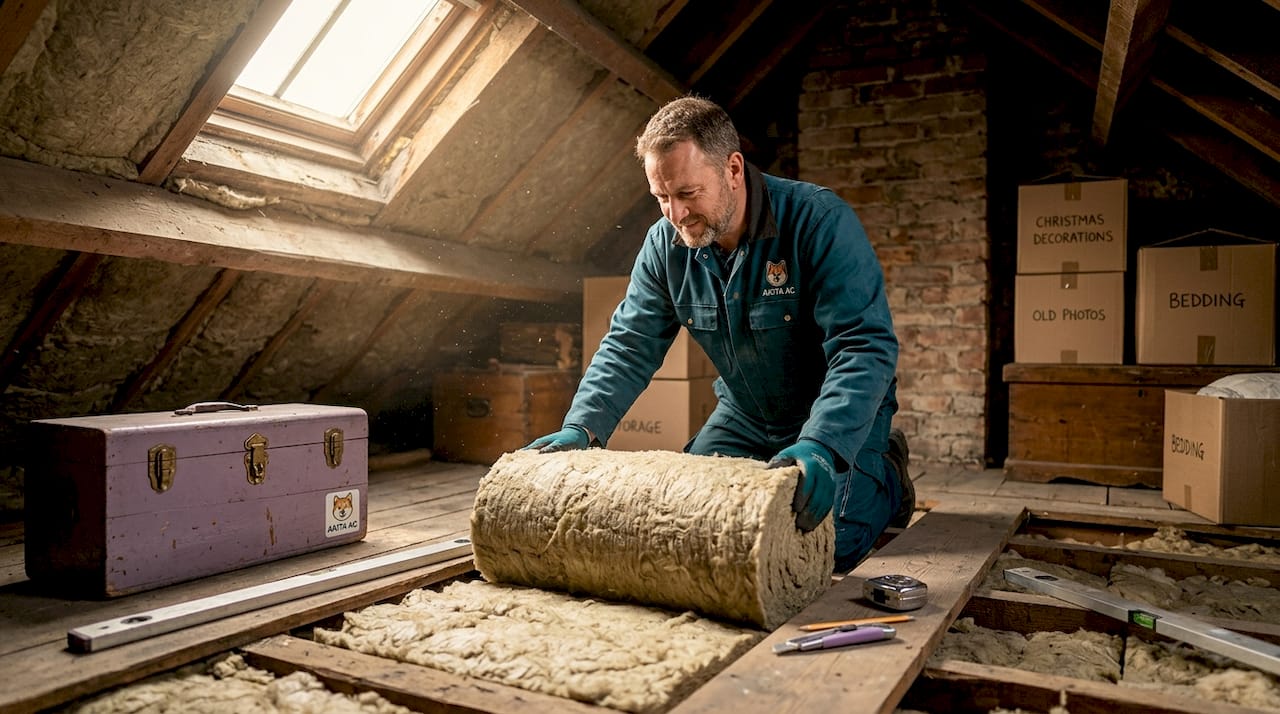
Think of your building as a bucket with holes in it. A powerful HVAC system can keep filling that bucket, but it’s always fighting a losing battle if the holes aren’t addressed. Proper insulation and draught-proofing reduce heat loss dramatically, allowing HVAC systems to work less and maintain comfortable temperatures more easily.
Here’s a practical sequence to follow:
- Loft insulation: Adding or topping up loft insulation to the recommended 270mm depth is often the highest-impact building improvement available, cutting heat loss through the roof by up to 25%
- Wall insulation: Cavity wall insulation costs around £300–£1,000 for a typical semi-detached and can save £250 per year or more on heating bills
- Draught-proofing doors and windows: Self-adhesive foam strips and door brushes cost very little and immediately reduce cold draughts that force heating systems to work harder
- Radiator reflector panels: Fitting foil-backed reflector panels behind radiators on external walls bounces heat back into the room rather than letting it escape through the wall
- Hot water cylinder jacket: A 75mm British Standard cylinder jacket costs around £30 and saves approximately £40 per year on water heating costs alone
- Pipe lagging: Insulating hot water pipes, particularly in unheated spaces like lofts and garages, prevents heat loss between the boiler or heat pump and the destination
Understanding how HVAC shapes energy savings makes it clear that insulation improvements and system upgrades are mutually reinforcing. A well-insulated building doesn’t just save energy directly; it also allows you to downsize your HVAC equipment, reducing both capital costs and running costs simultaneously.
“Insulation is the foundation of any energy efficiency strategy. Without it, even the best HVAC equipment is working against physics rather than with it.”
Major impact: Upgrading to heat pumps and efficient systems
Building upgrades set the stage, but modern HVAC technology brings even bigger savings with smart investment.
Heat pumps represent the most significant step change available in UK heating and cooling efficiency right now. Where a gas boiler converts roughly 90p of every £1 of fuel into heat, a well-installed heat pump delivers £3 to £4 of heat energy for every £1 of electricity consumed. That’s three to four times more efficient, and the gap widens as the electricity grid decarbonises further. Upgrading to heat pumps is particularly effective when paired with good insulation and low-temperature radiators or underfloor heating.
The UK government’s Boiler Upgrade Scheme currently provides grants of up to £7,500 towards the typical £11,000 installation cost of an air source heat pump, making the net outlay comparable to a premium boiler replacement. That’s a significant shift in the economics.
| System type | Typical efficiency | Best suited to | Approximate annual saving vs gas boiler |
|---|---|---|---|
| Air source heat pump | 300–400% (COP 3–4) | Well-insulated homes, low-temp systems | £500–£1,200 |
| Hybrid heat pump/gas | 150–250% (blended) | Older or poorly insulated homes | £200–£600 |
| High-efficiency AC with heat recovery | 200–350% | Commercial premises, mixed use buildings | £400–£1,000 |
| Modern inverter AC (cooling only) | 350–600% SEER | Homes needing cooling, offices | Cooling cost reduction of 30–50% |
Correct HVAC system sizing is absolutely critical and often underestimated. An oversized heat pump short-cycles, never reaching optimal efficiency and wearing out prematurely. An undersized unit struggles on cold days and runs constantly. Room-by-room heat loss calculations at the design outdoor temperature are the correct method for sizing any heat pump installation, ensuring the system meets 100% of demand without excess capacity.
Pro Tip: Ask any installer for a full heat loss survey before accepting a quote. If they suggest a system size without one, consider it a red flag worth investigating further.
When choosing an efficient HVAC system, also consider the range of air conditioning options available, particularly if your property needs year-round climate control rather than heating alone.
Optimising commercial HVAC for business energy savings
While homes see big wins, commercial buildings can unlock huge value with specialised controls and strategies.
Commercial HVAC systems can account for up to 50% of total energy use in a typical business premises. That makes HVAC optimisation one of the highest-return activities available to any business owner trying to cut overheads and meet sustainability targets.
The tools available to commercial operators go well beyond a smart thermostat:
- Building Management Systems (BMS): These platforms automate temperature, ventilation, and lighting adjustments based on time of day, occupancy, and external conditions. A well-configured BMS can reduce HVAC energy use by 20–30% without any physical equipment changes
- Zoning and occupancy sensors: Dividing larger spaces into zones and using occupancy sensors ensures you’re only conditioning areas that are actually in use. A 500-square-metre office with half its desks empty on Fridays has no reason to heat or cool the entire floor
- Airflow and vent optimisation: Blocked or imbalanced airflow forces fans to work harder. Annual balancing and duct inspection can recover significant wasted energy
- Setpoint management: Commercial buildings often run temperatures outside the comfort zone needed, wasting energy. The sweet spot for most UK offices is 19–21°C in winter and 22–24°C in summer
| Optimisation tactic | Estimated energy saving | Implementation cost |
|---|---|---|
| BMS installation or upgrade | 20–30% | £2,000–£15,000 |
| Occupancy-based zone control | 10–20% | £500–£3,000 |
| Schedule adjustment (nights/weekends off) | 8–15% | £0–£200 |
| Setpoint reduction by 1°C | 6–10% | £0 |
| Annual airflow balancing | 5–10% | £200–£800 |
Understanding the range of system types for businesses helps you identify which combination of technologies will deliver the best return for your specific premises.
Pro Tip: If you have a BMS that’s more than ten years old, it may be worth investing in an upgrade. Older systems often run on fixed schedules that ignore occupancy, wasting energy every single night and weekend.
Our perspective: What truly delivers lasting HVAC savings
Having worked across residential and commercial properties throughout Suffolk, Norfolk, and Essex, we’ve seen patterns repeat themselves consistently. Here’s our honest view on what actually works versus what sounds good in a brochure.
The most common reason energy savings never materialise isn’t a lack of technology or investment. It’s neglect of the basics. We visit properties with expensive systems installed just two or three years ago that are running at a fraction of their rated efficiency because filters haven’t been changed, coils haven’t been cleaned, and nobody has checked the refrigerant charge since installation.
Installation quality and correct sizing matter far more than brand names or the newness of the equipment. A mid-range unit installed correctly and sized precisely will outperform a premium brand that’s been oversized and undersupported year after year.
Heat pumps are genuinely excellent technology, but they’re not a universal solution dropped into any home or business and expected to perform miracles. For UK homeowners, prioritising low-cost controls and maintenance before committing to capital upgrades is the sensible sequence. Heat pumps require flow temperatures at or below 55°C to achieve their rated efficiency, which means the building fabric must support low-temperature distribution systems. In poorly insulated properties, heat pumps underperform noticeably, and hybrid systems that balance a heat pump with a gas boiler for peak demand days often offer a more realistic transition path.
The insight we’d offer that most articles skip over is this: behaviour and controls are responsible for 8–15% of savings at near-zero cost, yet they’re consistently deprioritised in favour of more exciting equipment conversations. Before any client spends money on new hardware, our HVAC diagnostics guide offers a structured way to understand exactly what your system is doing and where the real losses are occurring.
Always assess the building fabric before committing to any capital upgrade. In the UK climate, that assessment pays for itself many times over.
Considering an HVAC upgrade? Take the next step
You’ve now got a clear roadmap: start with maintenance, layer in smarter controls, address insulation, and then invest in efficient systems where the numbers stack up. The next question is how to put it into action without guesswork or wasted spend.

At Akita, we work with homeowners and businesses across Suffolk, Norfolk, and Essex to design and install HVAC systems that deliver genuine, measurable savings. Whether you’re looking at domestic air conditioning installation for your home, a full commercial air conditioning installation for your business premises, or simply want to start with a fixed price AC installation to understand your options, we offer transparent pricing, flexible finance, and the expertise to get sizing right from day one. Get in touch to discuss your project and find out which energy-saving upgrades make the most sense for your property.
Frequently asked questions
How often should I replace my HVAC air filters?
Replace air filters every three months as a standard rule, though commercial or high-use settings may need monthly checks to maintain peak efficiency and prevent costly breakdowns.
Do smart thermostats really save money?
Yes. Smart thermostats save 8–15% on energy bills by optimising heating and cooling schedules around your actual occupancy patterns rather than fixed timers.
Is it worth upgrading to a heat pump if my home isn’t well insulated?
In poorly insulated properties, heat pumps underperform because they need low flow temperatures to reach rated efficiency. Improving insulation first, or choosing a hybrid system, is usually the more practical path.
How do I know if my HVAC system is correctly sized?
Your system should be sized using room-by-room heat loss calculations at the design outdoor temperature, ensuring it meets 100% of demand without excess capacity that causes short-cycling.
What’s the fastest way for businesses to reduce HVAC energy costs?
The quickest wins come from optimising setpoints and schedules and using BMS or occupancy-based controls to stop conditioning empty spaces, which can deliver savings of 8–30% with minimal upfront cost.