

HVAC Servicing Best Practices 2026: Save 15% Energy Costs
Selecting the right HVAC servicing methods in Suffolk, Norfolk, and Essex can feel overwhelming. You want energy efficiency, cost savings, and reliable performance tailored to local climate conditions. This guide walks you through expert-backed best practices that optimize system performance, slash energy bills, and enhance indoor comfort. We’ll cover selection criteria, maintenance schedules, eco-friendly upgrades, smart controls, and financing options to help you make informed decisions.
Table of Contents
- 1. Regular Scheduled Maintenance
- 2. Use of Eco-Friendly Refrigerants and Materials
- 3. Integration of Smart HVAC Control Systems
- 4. Appropriate Servicing Frequency Based on Usage
- 5. Advanced Servicing Techniques for Indoor Air Quality
- 6. Pricing, Financing, and Service Membership Options
- Summary Comparison and Situational Recommendations
- FAQs on HVAC Servicing Best Practices
Key Takeaways
| Point | Details |
|---|---|
| Regular servicing saves energy and extends lifespan | Routine maintenance cuts energy costs by up to 15% and extends system life by 20%. |
| Eco-friendly refrigerants cut emissions | Switching to low-GWP refrigerants reduces environmental impact by 22% and ensures UK F-Gas compliance. |
| Smart controls add significant savings | Adaptive thermostats deliver up to 12% extra energy savings through occupancy-based adjustments. |
| Tailored servicing frequency reduces failures | Membership plans aligned with usage reduce breakdowns by 40% and cut emergency repair costs. |
How to Choose the Right HVAC Servicing Approach
Your HVAC servicing strategy should match your building type, usage patterns, and regional climate. Energy efficiency impact ranks highest for most Suffolk, Norfolk, and Essex property owners. Energy-efficient HVAC systems reduce bills and environmental footprint simultaneously.
Cost considerations matter too. Upfront servicing costs vary from £100 to £250 annually for residential properties, while commercial systems require larger investments. Financing options make comprehensive servicing accessible without straining cash flow.
Recommended servicing frequency depends on building type and system usage intensity. Residential properties typically need annual servicing, while commercial buildings benefit from twice-yearly maintenance. High-use environments like retail spaces or office buildings demand more frequent attention to maintain peak efficiency.
Compatibility with smart and eco-friendly technology shapes long-term value. Modern HVAC systems integrate seamlessly with adaptive controls and low-global-warming-potential refrigerants. If you’re upgrading, prioritize servicing providers who understand these technologies.
Certified and regionally experienced providers ensure compliance with UK regulations and local climate needs. Suffolk HVAC specialists understand coastal moisture challenges and temperature variations unique to East Anglia.
Pro Tip: Request a detailed servicing plan that outlines specific tasks, timeline, and expected efficiency improvements before committing.
1. Regular Scheduled Maintenance
Proactive maintenance forms the foundation of HVAC efficiency. Regular servicing reduces energy costs by up to 15% by keeping components clean and calibrated. Clean filters, properly charged refrigerant, and lubricated motors work together to minimize energy waste.
System lifespan extends by approximately 20% when you maintain consistent servicing schedules. Commercial systems especially benefit from twice-yearly inspections that catch small issues before they become expensive failures.
Emergency repair events drop by 25% with scheduled maintenance. Technicians identify worn components during routine visits, allowing you to replace parts proactively rather than dealing with midnight breakdowns during heatwaves.
Regular HVAC maintenance includes filter replacement, refrigerant level checks, electrical connection inspections, and thermostat calibration. These tasks take 1 to 2 hours but deliver year-round performance improvements.
Servicing frequency impacts both cost and reliability. Annual residential maintenance costs £100 to £150 on average. HVAC maintenance plans often bundle multiple visits at discounted rates, improving budget predictability.
Key maintenance tasks include:
- Filter inspection and replacement every 3 months
- Refrigerant charge verification and adjustment
- Electrical connection tightening and testing
- Condensate drain cleaning and inspection
- Thermostat accuracy verification
Pro Tip: Schedule servicing during shoulder seasons (spring and autumn) when demand is lower and technicians have more availability for thorough inspections.
2. Use of Eco-Friendly Refrigerants and Materials
UK F-Gas regulations mandate phasedowns of high-global-warming-potential refrigerants. Eco-friendly refrigerants reduce warming potential by 22% compared to older R410A systems while maintaining cooling performance.
Compliance with environmental regulations protects you from fines and ensures your system remains serviceable long-term. Technicians can no longer top up certain older refrigerants, making proactive upgrades essential for system longevity.
Greenhouse gas emission reductions from refrigerant upgrades contribute to regional sustainability targets across Suffolk, Norfolk, and Essex. Local authorities increasingly prioritize building efficiency in planning decisions and business certifications.
Supports for refrigerant transitions include government guidance and trade-in programmes from manufacturers. Energy-efficient HVAC systems using modern refrigerants qualify for enhanced warranty coverage and financing options.
Long-term regulatory compliance becomes simpler when you adopt current-generation refrigerants now. Future F-Gas restrictions will tighten further, making early adoption a strategic advantage.
Benefits of eco-friendly refrigerants:
- Lower global warming potential meets current and future regulations
- Similar or better cooling efficiency compared to older alternatives
- Enhanced equipment warranties from manufacturers
- Reduced environmental liability for commercial properties
- Improved corporate sustainability reporting metrics
3. Integration of Smart HVAC Control Systems
Smart thermostats and adaptive controls transform HVAC efficiency. Smart controls deliver up to 12% additional energy savings by learning occupancy patterns and adjusting temperatures automatically.
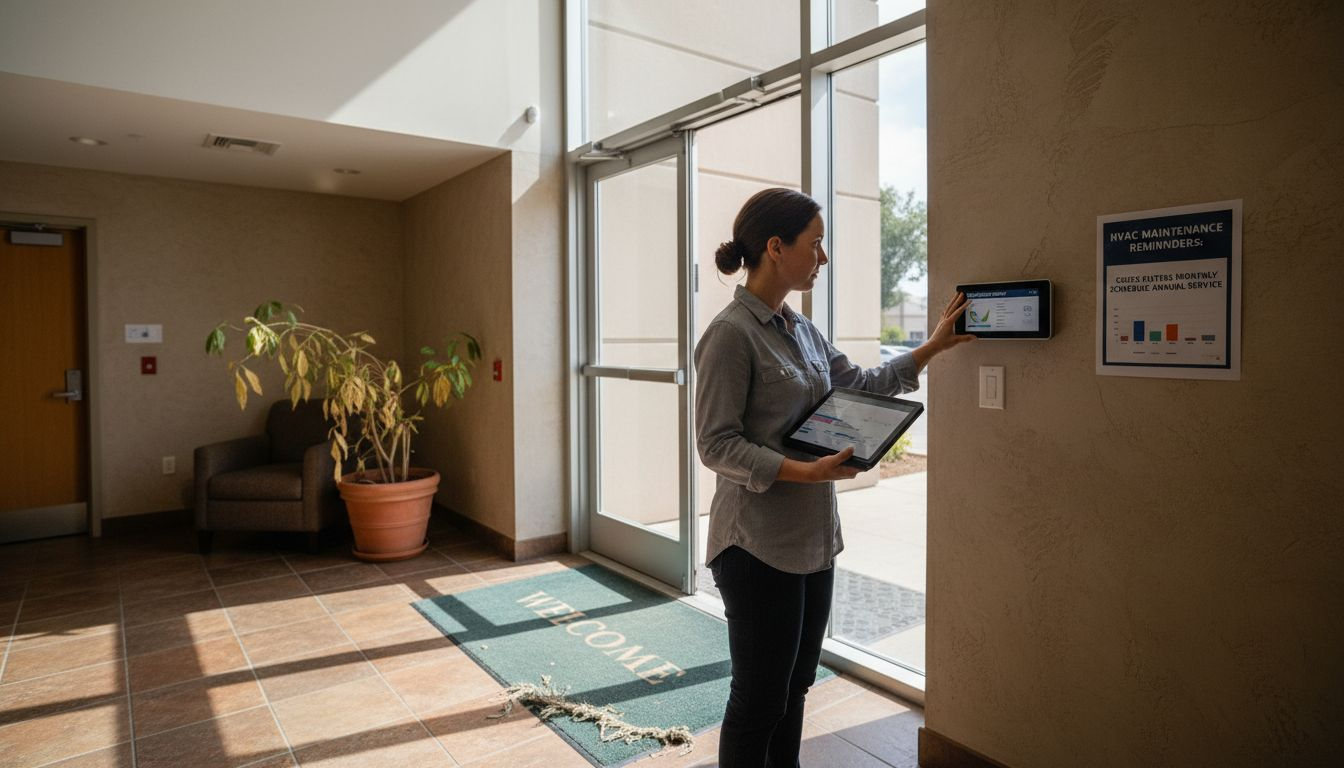
Adaptation to usage patterns means your system runs less during empty periods while maintaining comfort when occupied. Sensors detect room-by-room activity in larger buildings, directing cooling only where needed.
Remote monitoring and diagnostics catch performance drift before energy waste accumulates. You receive alerts about filter changes, unusual runtime patterns, or efficiency drops through smartphone apps. This visibility reduces service calls and extends component life.
Compatibility with existing HVAC infrastructure varies by system age and brand. Most post-2020 installations support smart control retrofits without major modifications. Norfolk HVAC specialists can assess your current setup and recommend compatible upgrades.
Improved user comfort and control come from granular temperature scheduling. Set different temperatures for workdays versus weekends, or adjust settings remotely when plans change. Multi-zone systems benefit most from smart control integration.
Smart control features that maximize savings:
- Occupancy sensors that reduce runtime in empty spaces
- Weather-responsive adjustments based on outdoor conditions
- Usage pattern learning that optimizes temperature scheduling
- Remote access for on-the-go adjustments
- Energy reporting dashboards showing consumption trends
Pro Tip: Start with a single smart thermostat in your most-used space to test functionality before expanding to whole-building integration.
4. Appropriate Servicing Frequency Based on Usage
Aligning service frequency with HVAC usage intensity optimizes both performance and cost-effectiveness. CIBSE recommends twice-yearly servicing for commercial systems experiencing constant loads during business hours.
Residential properties typically need annual comprehensive servicing plus seasonal filter checks. Light commercial spaces like small offices fall between these extremes, benefiting from 18-month intervals with quarterly filter maintenance.
Scheduled servicing reduces emergency repairs by 25% by catching wear before components fail. Emergency callouts cost 2 to 3 times more than planned maintenance visits, making prevention financially smart.
Membership plans reduce unexpected failures by 40% through priority scheduling and multi-visit discounts. Maintenance plan benefits extend beyond cost savings to include faster response times and parts discounts.
Differences between residential and commercial needs stem from usage intensity and consequence of failure. Commercial downtime affects revenue and employee comfort, justifying more frequent attention.
Recommended servicing intervals:
- Residential properties: Annual comprehensive service plus quarterly filter checks
- Light commercial (small offices, shops): Service every 18 months with monthly filter inspections
- Heavy commercial (restaurants, data centres): Twice-yearly comprehensive service with continuous monitoring
- Industrial facilities: Quarterly inspections with monthly preventive tasks
| Building Type | Annual Services | Filter Checks | Estimated Cost |
|---|---|---|---|
| Residential | 1 | 4 | £100-£150 |
| Light Commercial | 2 | 12 | £200-£350 |
| Heavy Commercial | 2+ | 12+ | £400-£800 |
| Industrial | 4+ | 24+ | £1000+ |
5. Advanced Servicing Techniques for Indoor Air Quality
Advanced filtration improves indoor air quality by up to 30% through HEPA filters and UV sterilization. These technologies capture smaller particles including allergens, bacteria, and volatile organic compounds that standard filters miss.
Regular filter replacement remains critical even with advanced systems. Clogged HEPA filters restrict airflow and force your HVAC system to work harder, negating efficiency gains. Replace or clean filters according to manufacturer schedules, typically every 3 to 6 months.
Health benefits from improved indoor air quality include reduced respiratory issues, better sleep quality, and fewer sick days for commercial building occupants. HVAC maintenance benefits extend beyond temperature control to comprehensive environmental quality.
Long-term cost savings from reduced pollutants include lower cleaning costs and extended interior finishes lifespan. Dust accumulation decreases when advanced filtration captures particles before circulation.
Compatibility with existing HVAC systems varies. Most ducted systems accommodate upgraded filters without modifications. Ductless mini-splits may need add-on air purifiers for similar benefits.
Advanced air quality enhancements:
- HEPA filtration capturing 99.97% of particles 0.3 microns or larger
- UV-C sterilization killing airborne pathogens in ductwork
- Activated carbon filters removing odours and VOCs
- Humidity control preventing mould growth
- Fresh air integration increasing oxygen levels
| Technique | Air Quality Improvement | Installation Cost | Annual Maintenance |
|---|---|---|---|
| HEPA Filters | 25-30% | £150-£300 | £80-£120 |
| UV Sterilization | 15-20% | £200-£400 | £40-£60 |
| Activated Carbon | 10-15% | £100-£200 | £60-£90 |
| Humidity Control | 20-25% | £300-£600 | £50-£80 |
6. Pricing, Financing, and Service Membership Options
Typical residential servicing costs range from £100 to £250 annually depending on system complexity and service scope. Commercial systems require £200 to £800 yearly based on equipment quantity and usage intensity.
Flexible financing increases maintenance investment willingness by 35% by spreading costs across monthly payments. This accessibility encourages property owners to invest in comprehensive servicing rather than deferring maintenance.
Service memberships reduce unexpected failures by 40% through scheduled visits and priority response. HVAC maintenance plans bundle multiple services at discounted rates while guaranteeing availability during peak demand.
Flexible payment options improve affordability for both residential and commercial clients. Interest-free financing over 12 to 36 months makes major servicing investments manageable without depleting cash reserves.
Memberships improve budget predictability by converting variable repair costs into fixed monthly fees. You know exactly what HVAC maintenance will cost each year, simplifying financial planning for homeowners and businesses.
Financial considerations for servicing:
- Upfront annual payment typically offers 10-15% discount versus monthly
- Financing terms range from 12 to 60 months depending on total cost
- Membership plans include parts discounts of 15-20% on repairs
- Commercial contracts often include emergency callout coverage
- Energy savings frequently offset servicing costs within first year
Summary Comparison and Situational Recommendations
The five best practices deliver different benefits depending on your priorities. Regular maintenance provides the broadest impact across energy savings, lifespan, and reliability. Eco-friendly refrigerants primarily address regulatory compliance and environmental goals.
Smart controls offer the highest energy savings potential when combined with occupancy variability. Buildings with inconsistent usage patterns see 10% to 15% combined savings from maintenance plus smart controls. Membership plans suit properties where downtime carries high costs or inconvenience.
| Practice | Energy Savings | Upfront Cost | Lifespan Impact | Best For |
|---|---|---|---|---|
| Regular Maintenance | 10-15% | £100-£250/yr | +20% | All properties |
| Eco Refrigerants | 3-5% | £300-£800 | +10% | Regulatory compliance |
| Smart Controls | 8-12% | £200-£500 | +15% | Variable occupancy |
| Optimized Frequency | 5-8% | Plan dependent | +25% | Commercial properties |
| Advanced Filtration | 2-4% | £150-£600 | +5% | Air quality priority |
Recommendations by building type:
Residential properties benefit most from annual maintenance combined with smart thermostats. This combination delivers 20% to 25% energy savings at reasonable cost. Add advanced filtration if occupants have allergies or respiratory sensitivities.
Commercial buildings should prioritize twice-yearly maintenance with membership plans. Energy-efficient upgrades including eco-friendly refrigerants justify investment through lower operating costs and improved sustainability reporting.
Air quality-focused users need advanced filtration plus frequent filter replacement. Healthcare facilities, schools, and hospitality venues see direct benefits from UV sterilization and HEPA filtration protecting occupants.
Optimize Your HVAC with Akita AC Servicing Solutions
Ready to implement these best practices in your Suffolk, Norfolk, or Essex property? Akita AC specializes in comprehensive HVAC servicing designed for regional climate conditions. Our maintenance plans combine scheduled servicing, eco-friendly upgrades, and smart control integration at transparent prices.
We offer flexible financing that spreads costs across manageable monthly payments without interest charges on approved credit. Our certified technicians understand coastal moisture challenges and temperature variations unique to East Anglia, ensuring your system performs optimally year-round.
Membership options include priority scheduling, parts discounts, and annual efficiency reports tracking your energy savings. Whether you need residential comfort or commercial reliability, our team designs servicing solutions matching your usage patterns and budget. Affordable installation services complement our maintenance expertise for complete climate control support.
FAQs on HVAC Servicing Best Practices
What is the optimal HVAC servicing frequency for mixed-use buildings?
Mixed-use buildings typically need twice-yearly comprehensive servicing due to varied occupancy patterns and extended operating hours. Residential portions can follow annual schedules while commercial spaces receive spring and autumn maintenance to handle seasonal demand peaks.
Are eco-friendly refrigerants mandatory in the UK?
UK F-Gas regulations mandate phasedowns of high-GWP refrigerants but don’t require immediate replacement of existing charges. However, certain older refrigerants can no longer be used for topping up systems, making proactive upgrades necessary when refrigerant loss occurs.
What are the benefits of upgrading to smart HVAC controls?
Smart controls reduce energy consumption by 8% to 12% through occupancy-based adjustments and remote monitoring. You gain smartphone access to temperature settings, receive maintenance alerts, and view detailed energy usage reports that identify optimization opportunities.
How does financing make HVAC servicing more affordable?
Flexible financing spreads servicing costs across 12 to 36 monthly payments rather than requiring large upfront payment. This approach increases maintenance investment willingness by 35% and helps property owners maintain comprehensive servicing schedules without straining cash flow.
What should I look for in a certified HVAC service provider?
Prioritize providers with F-Gas certification, public liability insurance, and regional experience in Suffolk, Norfolk, or Essex climates. Check for transparent pricing, membership plan options, and positive customer reviews emphasizing reliability and communication. Regional specialists understand local moisture levels and temperature patterns affecting system performance.