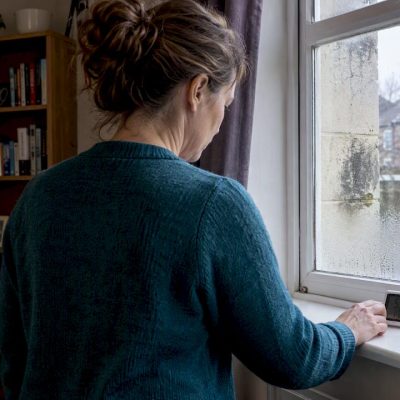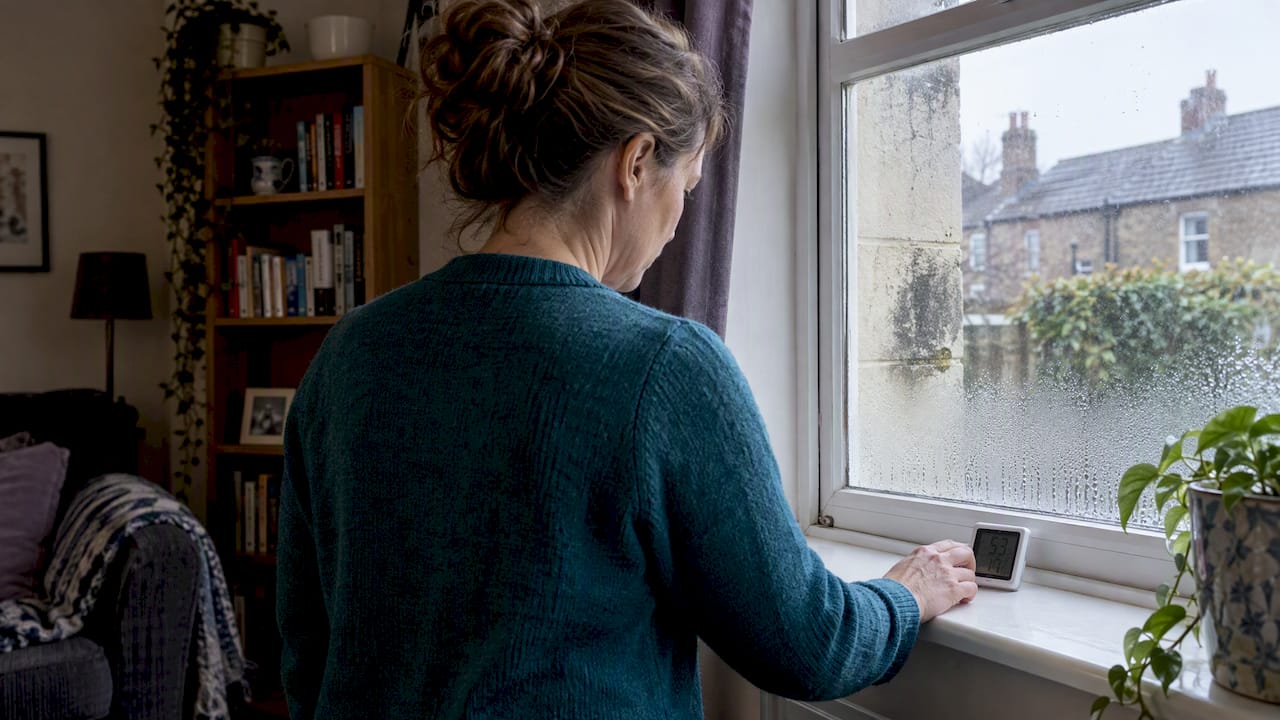
The ideal indoor relative humidity for most UK homes sits within a moderate range that supports comfort and health, typically falling around the midpoint between low and high humidity levels. Winter often pushes this lower because of heating, while summer can push it higher. Check your current level with a hygrometer today, then adjust from there.
TL;DR:
- Regularly measuring humidity with a digital hygrometer helps identify whether levels are too low below 30% or too high above 60%, guiding appropriate adjustments.
- Ventilation through extract fans and outdoor drying significantly lowers moisture levels, while appliances like dehumidifiers or humidifiers should only be used after source control.
- Structural or ventilation issues may cause persistent humidity problems, requiring a professional assessment to identify leaks, cold bridges, or underperforming airflow systems.
- High indoor humidity above 70% risks condensation and mould, especially if cold surfaces or poor ventilation areas are involved, even if overall room humidity seems acceptable.
Table of Contents
- Why indoor humidity matters for your health and your home
- Risks and causes of low humidity in your home
- High humidity, mould and allergens: what triggers the risk
- Seasonal and room-by-room humidity targets
- How to measure indoor humidity properly
- Practical ways to control humidity at home
- When persistent humidity problems need a professional
- Our practical take on fixing humidity problems
- Getting a professional assessment for ongoing humidity issues
- FAQ
- Sources
Why indoor humidity matters for your health and your home
Indoor humidity is not just a comfort setting. It shapes the air you breathe, the condition of your walls and furniture, and how well your home resists damp and mould over time. A peer-reviewed review discussing indoor environmental quality links humidity levels with respiratory health outcomes, which is why occupational and building bodies treat it as something worth managing rather than ignoring.
The goal is not to chase one perfect number. It is to avoid the extremes at either end, because both dry air and damp air bring separate sets of problems. The Chartered Institution of Building Services Engineers (CIBSE) notes that humidification or dehumidification needs shift with the seasons, and that control systems in many buildings need to respond to those shifts rather than hold a fixed setting year round.
What staying in range actually protects:
- Respiratory comfort, particularly for people with asthma or allergies.
- Wooden floors, furniture and musical instruments, which shrink or swell with moisture swings.
- Paint, plaster and wallpaper, which can crack, peel or stain.
- Soft furnishings and mattresses, which can harbour dust mites in damp conditions.
Risks and causes of low humidity in your home
Air that is too dry, generally below 30% relative humidity, dries out skin, eyes, and the lining of your nose and throat. It can make sleep less comfortable and leave wooden floors and furniture creaking or cracking as the material loses moisture. A Stanford University news report summarising recent research found that low indoor humidity can increase the airborne survival and transmission potential of some respiratory viruses, which gives a practical health reason to avoid letting your home run too dry through winter.
Common culprits behind low indoor humidity include:
- Central heating running for long stretches without any added moisture source.
- Cold, dry outdoor air replacing warmer indoor air through draughts or open windows.
- Over-ventilation in winter, particularly extractor fans left running longer than needed.
- Open fires or wood burners, which pull moisture from the surrounding air.
Pro Tip: If your skin feels tight or static shocks become frequent in winter, check your hygrometer before reaching for a humidifier. You may just need to turn the heating down slightly and let a kettle or drying rack do the rest.
High humidity, mould and allergens: what triggers the risk

Humidity above 60% starts to create the conditions mould needs: moisture sitting on cold surfaces long enough for spores to take hold. Condensation forms when warm, moist air meets a surface below the dew point, commonly cold single-glazed windows, external wall corners and spots with poor airflow such as behind wardrobes. Once that moisture lingers, mould can establish within a day or two in the right conditions, and dust mites, which thrive in damp, warm environments, multiply alongside it, adding another allergen source for anyone sensitive to them.
Everyday habits that commonly push humidity too high include:
- Drying laundry on radiators or airers inside closed rooms.
- Cooking or showering without switching on extract fans.
- Blocked or painted-over trickle vents that used to allow background airflow.
- Draught-proofing and insulation upgrades that reduce natural ventilation without a mechanical replacement.
Seasonal and room-by-room humidity targets
Relative humidity is tied to temperature, so the same amount of moisture in the air reads as a higher percentage in a cold room than a warm one. CIBSE’s technical guidance uses this relationship to explain why a fixed RH target without a temperature context can mislead homeowners trying to compare rooms.
Sensible targets by season and room:
- Winter: aim for relative humidity somewhat lower than in summer, as heated air naturally dries out.
- Summer: maintain a higher relative humidity range due to more humid outdoor air.
- Bedrooms: a moderate relative humidity level tends to support better sleep, alongside cooler room temperatures.
- Kitchens and bathrooms: temporary increases in humidity during activities like cooking or showering are normal if ventilation quickly reduces the moisture levels afterwards.
How to measure indoor humidity properly
A hygrometer is the only reliable way to know your actual humidity level rather than guessing from how the air feels. Digital hygrometers are generally more accurate and easier to read than analogue dial versions, and many combine a thermometer, which helps you interpret RH alongside room temperature as described above.
To get a useful reading:
- Place the hygrometer away from windows, external doors, kitchens and direct sunlight, all of which skew the reading.
- Position it at roughly chest height in a frequently used room, such as a living room or bedroom.
- Use two or three sensors for an average UK home: one in a bedroom, one in a kitchen or bathroom, and one in a main living space.
- Log readings over 24 to 72 hours rather than reacting to a single number, since humidity naturally rises and falls with cooking, showering and weather.
- Compare morning and evening readings to spot patterns tied to heating cycles or daily routines.
Practical ways to control humidity at home
Ventilation is the first and cheapest line of defence. Running extract fans in kitchens and bathrooms during and after cooking or showering removes moisture before it spreads to colder surfaces elsewhere. Opening a window for ten to fifteen minutes after a shower, rather than leaving the door open, clears steam without cooling the whole house. Drying laundry outdoors or in a well-ventilated room with the door shut and a window cracked makes a bigger difference than most people expect.
Where ventilation alone is not enough:
- A portable dehumidifier helps in persistently damp rooms, such as cellars or north-facing bedrooms, but it treats the symptom rather than the source of excess moisture. Our guide on how dehumidifiers work covers the different types and what to expect from each.
- A humidifier can help in very dry, heavily heated homes during winter, though overuse risks tipping a room into the high-humidity range, so pairing it with a hygrometer matters.
- Heating settings interact with RH constantly: a slightly lower thermostat setting combined with good ventilation often controls humidity more effectively than any single appliance.
Pro Tip: Before buying any appliance, fix the moisture source first. A dehumidifier running constantly in a room with a leaking pipe or blocked airbrick is treating a symptom that will keep coming back.
Our piece on why humidity control matters for your home walks through these steps with more detail on everyday habits, and a partner resource on humidity and HVAC explains how ventilation and airflow choices affect whole-house humidity beyond single rooms.
When persistent humidity problems need a professional
Some humidity issues will not respond to fan upgrades or better drying habits, and that is the point to bring in a professional rather than keep buying appliances. Recurring mould in the same spot after cleaning, condensation that returns within days of wiping it away, or damp patches that persist through a dry spell all point to a structural or ventilation issue rather than a simple habit fix.
A proper building-services or HVAC assessment typically checks:
- Whole-house ventilation rates against the size and occupancy of the property.
- Extractor fan performance, since underpowered or poorly ducted fans often look fine but move far less air than they should.
- Cold bridges in insulation where condensation repeatedly forms.
- Whether a whole-house humidification or dehumidification system would outperform portable units long-term.
The outcome is usually one of a few fixes: rebalanced ventilation, a stronger extractor fan, an integrated HVAC humidity control system, or, where damage has already set in, a referral for damp remediation work. Our overview of humidity control in HVAC systems explains how these integrated options work for homes that need more than a portable fix.
Our practical take on fixing humidity problems
Most homeowners reach for a dehumidifier or humidifier before checking whether ventilation is doing its job, and that order of operations usually wastes money. An appliance can mask a symptom for months while a blocked vent or an underpowered extractor fan keeps feeding the underlying problem. We would always look at source control and airflow first: fix the extraction, clear the vents, change the drying habits, and only then decide whether a dedicated appliance earns its place.
Integrated HVAC humidity control tends to make sense once a property has a pattern of recurring condensation or mould that survives basic fixes, or where a renovation has sealed up natural ventilation routes that used to keep moisture in check. At that point, a whole-house approach is often more cost-effective over several years than cycling through portable units that never quite solve the problem. We would rather talk through what is actually happening in your home before recommending anything.
— Akita
Getting a professional assessment for ongoing humidity issues
When ventilation fixes and appliance tweaks have not solved a damp or condensation problem, a proper assessment is often the quickest way to stop guesswork. We offer domestic air conditioning installation, alongside maintenance and repair services for existing systems that may be struggling to keep humidity in check.

A site visit lets us check ventilation rates, extractor performance and whether a heat pump or integrated system would manage humidity more reliably than portable units, particularly in homes where we carry out most of our installation and servicing work. If your home has a recurring damp or mould pattern that nothing seems to shift, get in touch through our domestic air conditioning page to arrange a quote.
FAQ
Is 70% humidity too high for a room?
At that level, moisture is likely condensing on cold surfaces somewhere in the room, so ventilation or a dehumidifier should bring it down promptly.
Is 50% humidity in a house normal for the UK?
It is close to the midpoint most industry guidance points to for balancing comfort, health and protection of building materials.
Is 63% humidity in a house a good level?
A reading of 63% is slightly above the typical recommended range and worth monitoring rather than ignoring. If it persists in the same room, particularly a bathroom or kitchen without a working extractor fan, it is worth improving ventilation before it becomes a mould risk.
Will mould grow at 55% humidity?
The bigger risk is localised: a cold surface or badly ventilated corner can condense moisture even when the average reading for the room looks fine, so spot-checking cold spots still matters.
Sources
Recommended
Speak to Akita Air Conditioning
Find out more about our air conditioning installation, or see how we work with homes and businesses in Suffolk and the surrounding area.
Ready to talk about your property? Book a free survey and one of our engineers will assess your space and recommend the right system for it.