Unpredictable weather across Suffolk and Essex highlights a real need for reliable indoor comfort. Overlooking regular care for your home’s heating and cooling can lead to sudden breakdowns, higher bills, or discomfort during extreme temperatures. With energy costs rising, homeowners increasingly value affordable maintenance plans that prioritise both performance and long-term savings. Discover practical strategies to keep your air conditioning system efficient, reduce unexpected expenses, and support a comfortable atmosphere year-round.
Table of Contents
- Defining Air Conditioning Maintenance Plans For UK Homes
- Types Of Maintenance Plans And Inclusions
- How Scheduled Servicing Improves System Longevity
- Cost, Savings, And Eco-Friendly Benefits Explained
- Common Mistakes And What To Avoid
- Measuring success and maintaining your air conditioning plan long-term
- Step-by-step guide to executing your air conditioning maintenance plan
- What we’ve learned from years of air conditioning maintenance work
Every install by our team comes with a 12-month installation warranty, plus up to 5 years’ manufacturer warranty when the system has its annual service. Join the Comfort Club.
Key Takeaways
| Point | Details |
|---|---|
| Importance of Air Conditioning Maintenance | Regular maintenance plans enhance system reliability, efficiency, and longevity while reducing overall costs noticeably. |
| Plan Types | Homeowners should consider preventive, predictive, and corrective maintenance plans to suit their specific needs and budget. |
| Scheduled Servicing Benefits | Consistent servicing can extend air conditioning system lifespan noticeably, helping to avoid costly repairs and replacements. |
| Common Mistakes to Avoid | Neglecting routine inspections and ignoring minor issues can lead to major problems and increased expenses. |
Defining Air Conditioning Maintenance Plans for UK Homes
In the United Kingdom, Air conditioning maintenance plans represent strategic approaches designed to ensure optimal performance and longevity of heating, ventilation, and air conditioning systems in residential properties. These structured programmes go beyond simple repairs, focusing on proactive management and systematic upkeep of complex climate control infrastructure.
According to maintenance engineering guidelines, effective air conditioning maintenance plans typically incorporate several key components that protect homeowners’ investments and ensure reliable comfort:
- Regular professional system inspections
- Scheduled preventative maintenance tasks
- Performance diagnostic assessments
- Comprehensive documentation of system health
- Legal compliance verification
The Royal Institution of Chartered Surveyors (RICS) emphasises that planned preventative maintenance involves more than sporadic interventions. Systematic maintenance requires structured approaches that anticipate potential issues before they escalate into costly repairs. These plans help UK homeowners achieve several critical objectives:
- Minimise unexpected system failures
- Optimise energy efficiency
- Extend equipment operational lifespan
- Maintain manufacturer warranty conditions
- Ensure consistent indoor comfort levels
Professional maintenance reduces long-term air conditioning repair costs noticeably and prevents premature system replacement.
Maintenance frequency varies depending on specific system types, age, and manufacturer recommendations. Most residential air conditioning systems benefit from comprehensive professional servicing at least twice annually – typically before major seasonal transitions.

Pro tip: Schedule your air conditioning maintenance during shoulder seasons like spring and autumn to secure better engineer availability and potentially lower service rates.
Types of Maintenance Plans and Inclusions
Air conditioning maintenance plans in the UK come in several distinct categories, each designed to address different system needs and homeowner preferences. Comprehensive maintenance approaches range from basic service agreements to comprehensive performance management strategies that ensure optimal system functionality and longevity.
Three primary types of maintenance plans dominate the residential air conditioning market:
-
Preventive Maintenance Plans
- Regular scheduled inspections
- Annual or bi-annual system check-ups
- Proactive component assessment
- Minor adjustments and cleaning
-
Predictive Maintenance Plans
- Advanced diagnostic testing
- Performance trend analysis
- Sophisticated monitoring technologies
- Early warning system for potential failures
-
Corrective Maintenance Plans
- Reactive repair services
- Component replacement coverage
- Reduced labour rates for registered customers
According to air conditioning system guidelines, typical maintenance plan inclusions encompass a wide range of critical services. Professional engineers typically conduct comprehensive assessments that involve:
- Detailed system performance evaluations
- Electrical connection inspections
- Refrigerant level checks
- Air filter replacements
- Lubrication of moving components
- Calibration of thermostatic controls
Professional maintenance plans can reduce unexpected system breakdowns noticeably and extend equipment lifespan significantly.
The specific inclusions vary depending on the complexity of your air conditioning system, with more advanced plans offering enhanced diagnostic capabilities and broader coverage. Homeowners should carefully review plan details to understand exactly what services are provided.
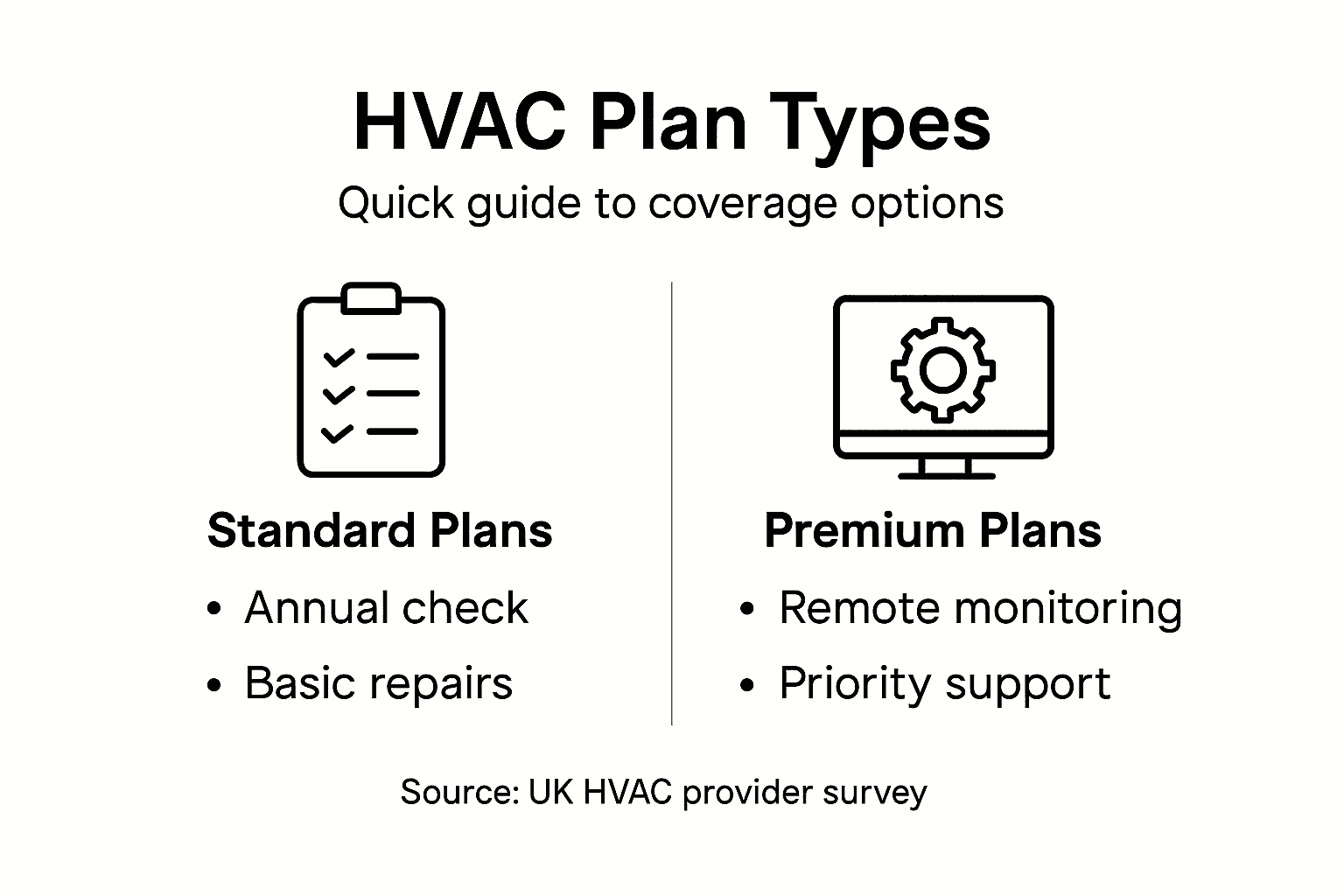
For clarity, here’s a comparison of the main air conditioning maintenance plan types and their typical homeowner benefits:
| Plan Type | Monitoring Methods | Typical Coverage | Homeowner Impact |
|---|---|---|---|
| Preventive | Scheduled visits | Basic upkeep and minor fixes | Reduced risk of surprise failures |
| Predictive | Technology-driven analytics | Early fault detection, performance alerts | Maximised system efficiency, fewer disruptions |
| Corrective | On-demand repairs | – | Quick response, lower unexpected costs |
Pro tip: Request a detailed breakdown of maintenance plan inclusions and compare multiple providers to ensure you’re receiving comprehensive system care.
How Scheduled Servicing Improves System Longevity
Air conditioning system performance maintenance represents a critical strategy for extending the operational lifespan of heating and cooling equipment in UK homes. Regularly scheduled servicing acts as a preventative approach that identifies potential issues before they transform into costly, comprehensive repairs.
The comprehensive benefits of scheduled servicing include multiple critical improvements:
- Identification of minor mechanical wear
- Early detection of potential component failures
- Optimisation of system energy efficiency
- Reduction of unexpected breakdown risks
- Preservation of manufacturer warranty conditions
Professional engineers during scheduled maintenance typically conduct thorough assessments that involve:
- Comprehensive system performance diagnostics
- Detailed component functionality checks
- Precision calibration of operational parameters
- Cleaning of critical system elements
- Lubrication of moving mechanical parts
- Electrical connection and safety inspections
System efficiency directly correlates with regular maintenance intervals.
Regular maintenance can extend air conditioning system lifespan noticeably, representing substantial long-term financial savings for homeowners.
Modern air conditioning systems are complex technological investments that require systematic care. Professional servicing ensures that all intricate components function harmoniously, preventing premature wear and maintaining optimal performance throughout the system’s lifecycle.
Pro tip: Maintain a detailed service log documenting each maintenance session to track your system’s performance history and identify potential emerging issues.
Cost, Savings, and Eco-Friendly Benefits Explained
Energy efficiency programmes demonstrate that strategic air conditioning maintenance offers substantial financial and environmental advantages for UK homeowners. Modern maintenance plans go beyond simple equipment servicing, providing comprehensive approaches that simultaneously reduce utility expenses and minimise carbon footprints.
The financial benefits of proactive air conditioning maintenance include multiple compelling advantages:
- Reduced energy consumption noticeably
- Lower energy bills expenditures
- Decreased repair and replacement costs
- Extended equipment operational lifespan
- Improved system performance efficiency
Environmental benefits are equally significant, with well-maintained air conditioning systems contributing to broader sustainability objectives:
- Minimised greenhouse gas emissions
- Reduced overall energy demand
- Lower carbon footprint per household
- Supporting national climate action goals
- Promoting sustainable technological practices
Energy efficiency represents a critical consideration for environmentally conscious homeowners.
Properly maintained air conditioning systems can reduce household energy expenditure noticeably, representing substantial long-term financial and environmental savings.
Government incentive programmes increasingly support homeowners investing in energy-efficient technologies. These initiatives recognise that individual household choices contribute significantly to broader environmental sustainability efforts.
To help UK homeowners maximise value, below is a summary of key financial and environmental benefits from regularly maintained air conditioning systems:
| Benefit Type | Financial Impact | Environmental Impact | Long-Term Result |
|---|---|---|---|
| Reduced energy bills | noticeably lower annual costs | Lower carbon dioxide emissions | Stronger household savings |
| Fewer repairs | – | Less waste from replacements | Increased equipment lifespan |
| Enhanced system efficiency | Sustained peak performance | Support for national climate goals | Improved comfort and sustainability |
Pro tip: Request a detailed energy efficiency assessment during your next air conditioning maintenance session to identify potential additional savings opportunities.
Common Mistakes and What to Avoid
Air conditioning maintenance standards reveal numerous critical errors UK homeowners frequently make when managing their climate control systems. Understanding these potential pitfalls can help prevent costly repairs and system inefficiencies.
The most common maintenance mistakes include:
- Neglecting regular professional inspections
- Ignoring minor performance issues
- Delaying filter replacements
- Skipping annual system diagnostics
- Attempting DIY repairs without expertise
Professional engineers consistently identify several recurring problems that compromise air conditioning system performance:
- Incorrect thermostat calibration
- Inadequate refrigerant level management
- Overlooking electrical connection integrity
- Failing to clean critical system components
- Inconsistent maintenance documentation
System reliability depends on proactive management. Homeowners who adopt reactive approaches typically experience higher long-term expenses and increased risk of complete system failure.
Approximately most of unexpected air conditioning system breakdowns result directly from inadequate maintenance practices.
Effective maintenance requires systematic documentation, regular professional assessments, and a commitment to addressing potential issues before they escalate. Understanding these common mistakes empowers homeowners to make informed decisions about their climate control infrastructure.
Pro tip: Maintain a detailed maintenance log documenting every service session, including observed issues, repairs performed, and recommended future actions.
Secure Reliable Comfort and Lower Your Air Conditioning Costs Today
The article highlights the critical challenge UK homeowners face in maintaining air conditioning systems that deliver consistent comfort without incurring unexpected repair costs or energy waste. Key concerns such as preventing system failures, optimising energy efficiency, and extending equipment lifespan resonate strongly with those who want hassle-free, cost-effective climate control. With terms like “preventative maintenance,” “scheduled servicing,” and “energy efficiency” emphasised, it becomes clear that professional, systematic care is essential to avoid costly breakdowns and achieve lasting savings.
At Akita Air Conditioning, we understand these pain points and offer tailored solutions designed to meet your specific air conditioning needs. Our services go beyond simple fixes by incorporating comprehensive maintenance plans that protect your investment and enhance system performance. From expert installation to detailed diagnostics and ongoing servicing, our eco-friendly and energy-efficient systems help reduce your energy bills while supporting sustainability goals.
Experience the peace of mind that comes with professional care. Discover how Akita Air Conditioning keeps your heating and cooling systems running smoothly year-round. Benefit from transparent pricing and a membership plan that safeguard your equipment reliability.
Looking for expert solutions to lower your air conditioning maintenance costs and enjoy reliable comfort? Act now to protect your home or business with professional maintenance plans designed for your system’s longevity and efficiency.
Contact Akita today to schedule your first service or learn about our maintenance memberships. Visit Akita air conditioning and make your climate control upgrades stress-free and cost-effective.
Measuring success and maintaining your air conditioning plan long-term
Tracking performance metrics transforms your maintenance plan from a task list into a strategic asset. Measuring success helps you refine your approach and demonstrate the value of your efforts.
Monitor three key performance indicators monthly: energy consumption, system runtime, and indoor temperature stability. Compare your electricity bills year over year, accounting for weather variations. A well-maintained system should show stable or decreasing energy usage despite similar weather patterns. Sudden spikes indicate developing problems requiring investigation.
System runtime data reveals efficiency trends. Modern systems cycle appropriately to maintain temperature whilst dehumidifying. Excessive cycling or continuous runtime suggests sizing issues, refrigerant problems, or failing components. Smart thermostats track runtime automatically, generating reports showing daily and monthly patterns.
Temperature stability matters more than absolute temperature. Your system should maintain setpoint within one degree consistently. Wide temperature swings indicate airflow restrictions, refrigerant issues, or failing controls. Document any comfort complaints from occupants as these often precede measurable system failures.
Documentation methods and tools
- Physical logbook kept near the system for quick task recording
- Spreadsheet tracking dates, tasks, costs, and observations
- CMMS software automating reminders and generating compliance reports
- Mobile apps designed specifically for air conditioning maintenance scheduling
- Cloud storage for photos, receipts, and professional service reports
Digital documentation offers advantages for multi-property managers or commercial applications. CMMS platforms send automatic reminders, track multiple systems simultaneously, and generate audit-ready reports instantly. For single-property homeowners, a simple spreadsheet or dedicated notebook works perfectly well.
Compliance documentation proves essential for F-Gas and TM44 inspections. Inspectors need evidence of leak checks, refrigerant quantities, and maintenance frequency. Missing documentation can result in fines or failed inspections.
| Monitoring tool | Best for | Key features | Typical cost |
|---|---|---|---|
| Physical logbook | Single properties | Simple, always accessible | Priced at survey |
| Spreadsheet | 1-5 properties | Customisable, free software | Free |
| CMMS software | 5+ properties | Automated, comprehensive | Priced at survey |
| Smart thermostat | Any property | Real-time data, remote access | Priced at survey |
Pro Tip: Photograph your system’s data plate showing model and serial numbers, then store the image with your maintenance records for quick reference during service calls.
Calculate your annual energy savings by comparing bills before and after implementing your maintenance plan. This quantifies the return on your time and money investment.
Review your maintenance plan annually to identify improvement opportunities. Are certain tasks taking longer than expected? Do specific seasons create recurring problems? Adjust task frequency and timing based on actual experience rather than generic recommendations. Your plan should evolve as you learn your system’s unique characteristics.
Exploring comprehensive Air conditioning maintenance plan benefits helps justify the ongoing commitment required. Beyond energy savings, proper maintenance preserves property value, ensures occupant comfort, and provides peace of mind through reliable operation. Following a detailed UK AC maintenance guide keeps your approach current with evolving best practices and regulatory requirements.
Long-term success requires consistency more than perfection. Missing occasional tasks happens, but returning to your schedule quickly prevents minor lapses from becoming major problems. The compound benefits of sustained maintenance far exceed sporadic intensive efforts.
Step-by-step guide to executing your air conditioning maintenance plan
Executing your maintenance plan systematically ensures nothing gets overlooked. Breaking tasks into monthly, quarterly, and annual schedules makes the workload manageable and maintains consistent system performance.
Monthly maintenance routine
- Inspect and clean or replace air filters depending on type and condition
- Check condensate drain pans and pipes for blockages or standing water
- Clear leaves, grass clippings, and debris from outdoor unit surroundings
- Verify thermostat displays correct temperature and responds to adjustments
- Listen for unusual sounds like grinding, squealing, or rattling during operation
These tasks take 15-20 minutes and prevent most of common air conditioning problems. Dirty filters alone reduce efficiency noticeably, forcing your system to work harder and consume more electricity. Setting a monthly calendar reminder ensures you never skip this crucial step.
Pro Tip: Take photos of your outdoor unit monthly to track debris accumulation patterns and identify the best times for thorough cleaning.
Quarterly inspection checklist
- Examine visible ductwork for gaps, disconnections, or damage
- Test all vents and vents to ensure unobstructed airflow
- Inspect insulation on refrigerant lines for deterioration
- Check outdoor unit for rust, corrosion, or physical damage
- Verify electrical connections are tight and free from corrosion
A small duct leak wastes conditioned air and increases energy consumption, whilst corroded electrical connections create fire risks. These inspections complement your monthly tasks by examining components that change more slowly.
Refer to an air conditioner maintenance checklist tailored for UK homes to ensure you’re covering all critical points. Regional climate variations mean coastal properties need different attention than inland locations.
Annual professional servicing
Schedule comprehensive professional maintenance every spring before cooling season begins. Starting with a preventive schedule of annual professional servicing alongside your DIY tasks creates a robust maintenance programme. Engineers will:
- Measure refrigerant charge and check for leaks using specialised equipment
- Clean evaporator and condenser coils thoroughly
- Test electrical components including capacitors and contactors
- Calibrate thermostats and verify control sequences
- Inspect and adjust dampers for optimal airflow distribution
- Lubricate motors and check belt tension where applicable
What we’ve learned from years of air conditioning maintenance work
That logic is understandable, but it is exactly backwards. Air conditioning systems fail quietly. The compressor does not announce that it is struggling. The refrigerant does not send an alert when it drops below the correct level. By the time you notice a problem, the damage is already done.
Property managers often underestimate how much institutional knowledge matters. When the same engineer services a system year after year, they build a picture of how that system behaves. They notice when something has changed. That continuity is genuinely valuable, and it is something reactive repair contracts cannot replicate.
Our honest advice: do not wait for a breakdown to think about maintenance. The cost of a plan is predictable and modest. The cost of ignoring it is neither.
Akita
Frequently Asked Questions
What are the key components of an air conditioning maintenance plan?
An air conditioning maintenance plan typically includes regular professional inspections, scheduled preventative maintenance tasks, performance diagnostic assessments, comprehensive documentation of system health, and verification of legal compliance.
How often should I schedule air conditioning maintenance?
It is generally recommended to schedule comprehensive professional servicing of air conditioning systems at least twice a year, typically before major seasonal transitions, to ensure optimal performance and longevity.
What are the benefits of preventive maintenance for air conditioning systems?
Preventive maintenance can minimise unexpected system failures, optimise energy efficiency, extend equipment lifespan, maintain manufacturer warranty conditions, and ensure consistent indoor comfort levels.
What common mistakes should I avoid in air conditioning maintenance?
Common mistakes include neglecting regular professional inspections, ignoring minor performance issues, delaying filter replacements, skipping annual system diagnostics, and attempting DIY repairs without proper expertise.
How does regular air conditioning maintenance improve energy efficiency?
Regular maintenance can noticeably reduce energy by maintaining clean filters, optimal refrigerant charge, and properly functioning components. Dirty filters force systems to work harder, increasing electricity consumption noticeably. Refrigerant leaks reduce cooling capacity whilst increasing compressor runtime. Clean coils transfer heat efficiently, reducing the energy needed to achieve target temperatures. Proper maintenance ensures your system operates at designed efficiency rather than degrading over time.
What does an air conditioning maintenance plan typically include?
A standard plan covers filter cleaning, refrigerant checks, fan and electrical inspections, and condensate drain clearance.
How much can I save with an air conditioning maintenance plan?
A maintenance plan typically costs less than that per year, making it cost-effective after just one avoided breakdown.
Our team installs Mitsubishi Electric and Daikin systems in homes across Suffolk and Essex. Every install starts with a free heat-load survey and is carried out by F-gas certified engineers under our REFCOM registration (REF1023379). Entry installs start from £1,750, and VAT on domestic installs is 0% until 31 March 2027, then 5%. Book a free survey.
Recommended
Article generated by BabyLoveGrowth