

Step by step HVAC maintenance for energy savings in 2026
Homeowners and business managers across the UK are seeing energy bills climb as HVAC systems deteriorate from inconsistent upkeep. Regular HVAC maintenance saves energy and extends lifespan, yet many neglect basic checks until costly breakdowns occur. This guide provides a practical, step by step approach to maintaining your heating, ventilation and air conditioning systems for maximum efficiency, legal compliance, and long term savings in 2026.
Table of Contents
- Introduction To HVAC Maintenance In The UK
- Prerequisites And Preparation For Effective HVAC Maintenance
- Step By Step HVAC Maintenance Process
- Common Mistakes And How To Avoid Them
- Maintenance Scheduling And Timelines
- Expected Outcomes: Energy Savings And System Longevity
- When To Seek Professional Help
- Discover Professional Air Conditioning Services In The UK
- Frequently Asked Questions
Key takeaways
| Point | Details |
|---|---|
| Filter changes prevent inefficiency | Replace or clean filters every 1 to 3 months to avoid airflow loss and maintain peak performance. |
| UK regulations mandate inspections | Systems over 12kW require EPB energy assessments every 5 years, and refrigerant work needs F-Gas certification. |
| Planned maintenance extends lifespan | A structured schedule can add up to 10 years to your HVAC system’s operational life. |
| Professional help is essential | Certified engineers must handle refrigerants, electrical faults and compliance checks to avoid legal issues. |
| Energy savings reach 30% | Proper upkeep can cut energy bills by nearly one third while improving indoor air quality. |
Introduction to HVAC maintenance in the UK
Maintaining your HVAC system isn’t just about comfort. It directly affects energy consumption, system longevity and compliance with UK law. Neglected units consume more power, break down sooner and risk regulatory penalties. Annual professional inspection maintains heat pump efficiency and warranty, covering electronics, water pumps, compressors, pipes and antifreeze chemicals.
Why regular maintenance matters:
- Energy efficiency improves, lowering monthly bills
- System lifespan extends by years, delaying replacement costs
- Indoor air quality stays healthier with clean filters and ducts
- Legal compliance avoids fines and maintains warranty coverage
UK regulations require specific attention. Air conditioning systems over 12kW need energy efficiency inspections by accredited assessors under EPB rules every five years. F-Gas regulations demand certified engineers for any refrigerant handling. These aren’t optional checks but legal requirements that protect both environment and property owners.
“Proper HVAC maintenance reduces energy waste, prevents environmental harm from refrigerant leaks, and ensures compliance with stringent UK standards that have tightened considerably in recent years.”
Financial benefits stack up quickly. Well maintained systems use less energy, avoiding the 20 to 40 percent efficiency losses from dirty filters or blocked coils. Emergency repairs cost far more than preventative servicing. Warranties often require documented professional inspections, so skipping maintenance can void coverage just when you need it most.
The environmental impact deserves consideration too. Efficient systems produce fewer carbon emissions, supporting UK climate targets. Refrigerant leaks from poorly maintained units harm the atmosphere. Regular checks catch problems early, minimising waste and environmental damage whilst keeping your property comfortable year round.
Prerequisites and preparation for effective HVAC maintenance
Before touching any HVAC equipment, gather the right tools and knowledge. Rushing in unprepared wastes time and risks damaging expensive components. Understanding your system’s specifications and legal boundaries prevents costly mistakes.
Essential tools and equipment:
- Replacement air filters matching your system’s size and type
- Safety gloves and eye protection
- Screwdrivers (flathead and Phillips)
- Vacuum cleaner with attachments for debris removal
- Soft brush for cleaning coils and vents
- Torch for inspecting dark corners and ducts
Know your HVAC model number, capacity and installation date. This information appears on the unit’s data plate and helps when ordering parts or consulting professionals. Check whether you have a heat pump, air conditioning unit, or combined system, as maintenance steps vary slightly.
Pro Tip: Take photos of your HVAC unit’s data plate and store them on your phone. You’ll have model numbers and specifications instantly available when calling for parts or professional help.
Understand legal restrictions before attempting any work. Non F-Gas certified engineers violate UK law when handling refrigerants, risking fines and warranty voidance. Homeowners can perform basic tasks like filter changes and visual inspections, but refrigerant systems require qualified professionals.
Safety precautions checklist:
- Turn off power at the breaker before inspecting indoor units
- Wear protective equipment when handling dirty filters or components
- Never attempt refrigerant work without proper certification
- Keep outdoor units clear of debris and vegetation
- Ensure adequate ventilation when working indoors
Scheduling matters significantly for maintenance effectiveness. Early spring servicing prepares systems for summer cooling demands, whilst autumn checks ensure heating readiness for winter. Avoid peak seasons when engineers charge premium rates and have longer wait times.
| Task | Recommended Frequency | Season |
|---|---|---|
| Filter inspection | Monthly | Year round |
| Professional servicing | Annually | Spring or autumn |
| Outdoor unit cleaning | Quarterly | After storms |
| Duct inspection | Every 2 years | Any season |
Regular HVAC maintenance in the UK requires planning but delivers substantial returns. Allocate a maintenance budget covering filters, professional visits and potential minor repairs. Most annual servicing costs less than a single emergency callout, making prevention financially sensible.
Step by step HVAC maintenance process
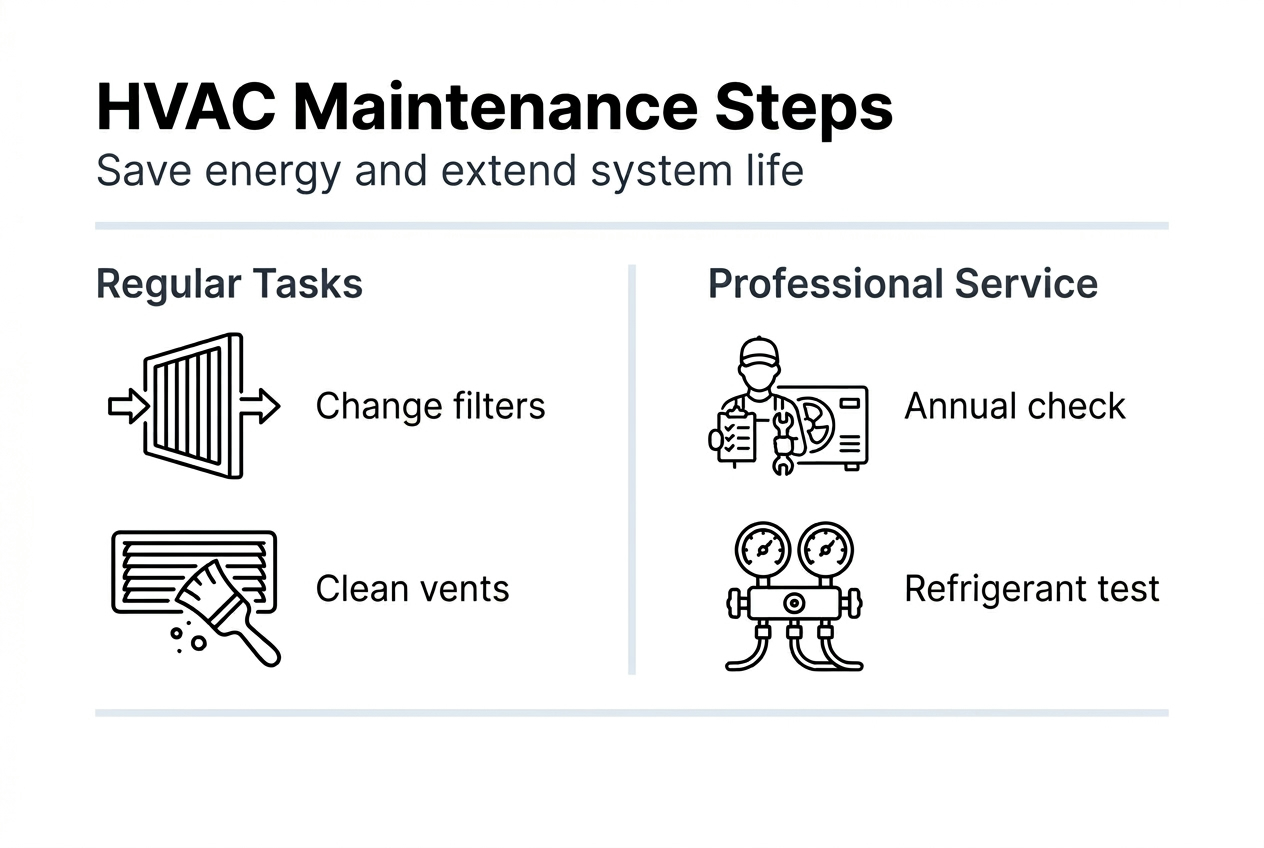
Systematic maintenance keeps HVAC systems running efficiently between professional visits. These tasks suit confident homeowners and facility managers who want to reduce energy waste and catch problems early.
Step 1: Filter maintenance
Dirty air filters significantly reduce HVAC airflow and efficiency, requiring cleaning or replacement every 1 to 3 months. Locate filter access panels, usually behind return air grilles or inside air handling units. Remove filters carefully to avoid spreading trapped dust.

Inspect each filter under good light. Disposable filters showing heavy dirt buildup need immediate replacement. Washable filters require rinsing under warm water until water runs clear, then complete air drying before reinstallation. Mark filter change dates on your calendar to maintain consistency.
Step 2: Outdoor unit inspection
Examine external condensers or heat pump units monthly. Clear leaves, grass clippings and debris from around the unit, maintaining at least 60cm clearance on all sides. Check that protective grilles remain intact and fins aren’t bent or damaged.
Gently clean coils with a soft brush or low pressure hose, working from inside outward to avoid pushing dirt deeper. Never use high pressure washers, which can damage delicate fins and reduce heat transfer efficiency. Ensure the unit sits level on its pad to prevent vibration and drainage issues.
Step 3: Ventilation and ductwork checks
Walk through your property checking all supply and return vents. Remove vent covers and vacuum visible dust buildup. Inspect dampers to ensure they open and close freely without obstruction. Blocked vents force systems to work harder, wasting energy and stressing components.
Look for signs of air leaks around ductwork connections, particularly in unconditioned spaces like attics. Seal obvious gaps with appropriate tape or mastic. Major duct problems require professional assessment, but simple sealing saves considerable energy.
| Maintenance Task | Frequency | DIY or Professional |
|---|---|---|
| Filter replacement | 1 to 3 months | DIY |
| Outdoor unit cleaning | Quarterly | DIY |
| Duct inspection | Annually | Professional |
| Refrigerant check | Annually | Professional only |
| Electrical testing | Annually | Professional only |
Step 4: Heating system bleeding
For properties with radiators or hydronic heating, bleeding removes air pockets that reduce efficiency. Use a radiator key to open bleed valves slightly until water flows steadily without air bubbles. Start with radiators furthest from the boiler, working toward the nearest.
Check system pressure after bleeding and top up if necessary according to manufacturer specifications. Low pressure reduces heat output whilst excessive pressure risks damage. Most residential systems operate between 1 and 1.5 bar when cold.
Step 5: Annual professional servicing
Annual professional inspection maintains efficiency and warranty, covering refrigerants, electrical components and antifreeze levels. Schedule certified engineers for comprehensive checks that homeowners cannot legally or safely perform themselves.
Pro Tip: Book professional servicing in March or October when demand is lower. Engineers have more availability, often offer better rates, and can spot issues before peak season stress reveals them through breakdown.
Professionals calibrate thermostats, test safety controls, measure refrigerant pressures and clean components requiring specialist access. They also document findings for warranty purposes and compliance records. Residential HVAC maintenance checklists and commercial HVAC maintenance workflows differ slightly in complexity but follow similar principles.
Common mistakes and how to avoid them
Even well intentioned maintenance efforts can backfire when common errors creep in. Recognising these pitfalls helps you maintain effectiveness whilst staying safe and legal.
Mistake 1: Skipping filter changes
Neglecting filter replacement causes 20 to 40 percent efficiency loss and increased energy consumption. Busy schedules make this easy to forget, but dirty filters force systems to work harder, raising bills and shortening component life. Set phone reminders or link filter changes to other regular tasks like paying utility bills.
Mistake 2: DIY refrigerant work
Non F-Gas certified engineers handling refrigerants risk legal fines and warranty voidance. Refrigerants require specialised equipment, knowledge and certification. Even checking pressures improperly can release harmful gases or damage systems. Always hire qualified professionals for any refrigerant related work.
Mistake 3: Ignoring outdoor unit clearance
Blocked condensers and heat pumps struggle to exchange heat efficiently. Plants growing too close, stored items and accumulated debris all restrict airflow. Maintain generous clearance around outdoor units and trim vegetation regularly. Poor airflow reduces capacity by 10 to 15 percent whilst increasing compressor wear.
Mistake 4: Delaying professional inspections
Homeowner maintenance complements but never replaces professional servicing. Hidden problems like refrigerant leaks, electrical faults and component wear require expert diagnosis. Annual inspections cost far less than emergency repairs from deferred maintenance. HVAC servicing best practices in 2026 emphasise prevention over reaction.
Pro Tip: Create a simple HVAC maintenance log noting filter changes, professional service dates and any issues observed. This documentation helps identify patterns, satisfies warranty requirements and assists engineers in diagnosing recurring problems.
Mistake 5: Overlooking thermostat settings
Incorrect thermostat programming wastes energy even when systems run perfectly. Review settings seasonally, ensuring heating and cooling schedules match actual occupancy. Modern smart thermostats learn preferences but still benefit from periodic review to catch drift or changed routines.
“The costliest HVAC mistakes aren’t dramatic failures but gradual efficiency losses from neglected basics. Small oversights compound over months into substantial unnecessary energy consumption and premature component replacement.”
Maintenance scheduling and timelines
Consistent timing transforms reactive repairs into proactive management. A structured schedule ensures nothing gets overlooked whilst spreading costs predictably throughout the year.
Monthly or quarterly filter checks and seasonal professional inspections maintain energy efficiency and system reliability. Frequency depends on usage intensity, local air quality and system type. Commercial properties with constant operation need more frequent attention than residential systems used seasonally.
Recommended maintenance timeline:
- Monthly: Visual inspection of outdoor unit, filter condition check
- Quarterly: Filter replacement, outdoor unit cleaning, vent inspection
- Bi-annually: Thermostat calibration, ductwork visual check
- Annually: Professional comprehensive servicing by certified engineer
- Every 2 years: Detailed duct cleaning if needed
- Every 5 years: EPB compliance inspection for systems over 12kW
Early spring servicing prepares cooling systems before summer demand peaks. Catching refrigerant leaks, worn components or efficiency losses in March prevents uncomfortable failures during July heatwaves. Similarly, autumn checks ensure heating reliability before winter cold arrives.
| Month | Recommended Tasks | Priority Level |
|---|---|---|
| March | Professional spring service | High |
| April to August | Monthly filter checks | Medium |
| September | Professional autumn service | High |
| October to February | Monthly filter checks | Medium |
| Year round | Outdoor unit clearance | Medium |
Digital calendar reminders eliminate the “I’ll do it later” trap that derails maintenance schedules. Set recurring alerts for filter checks and book professional visits months ahead when diaries are less busy. Many HVAC service providers offer maintenance contracts with scheduled visits, removing the burden of remembering dates.
Proper scheduling extends system lifespan significantly. UK AC maintenance guidance for 2026 shows that consistent upkeep can add up to 10 years of reliable operation. That’s substantial value from relatively modest investment in filters and annual servicing.
Expected outcomes: energy savings and system longevity
Diligent maintenance delivers measurable benefits that justify the time and cost involved. Understanding these outcomes motivates consistent effort and helps evaluate whether your maintenance strategy works effectively.
Regular maintenance reduces energy bills by up to 30 percent and extends system lifespan by up to 10 years. These aren’t theoretical benefits but documented results from comparing maintained versus neglected systems. The energy savings alone typically exceed annual maintenance costs within the first year.
Quantifiable benefits include:
- Energy consumption drops by 15 to 30 percent through improved efficiency
- System lifespan extends from 10 to 15 years up to 20 to 25 years
- Emergency repair frequency decreases by 60 to 70 percent
- Indoor air quality improves measurably with clean filters and ducts
- Warranty coverage remains valid through documented professional servicing
Comfort improvements often prove more noticeable than energy savings. Well maintained systems maintain consistent temperatures without hot or cold spots. Humidity control works properly. Air circulation feels fresher without musty odours from mouldy filters or dirty ducts.
Energy savings reach 30% with proper HVAC maintenance
Environmental benefits align with personal savings. Efficient systems produce fewer carbon emissions per unit of heating or cooling delivered. Preventing refrigerant leaks protects the ozone layer and reduces greenhouse gas releases. Benefits of HVAC maintenance for UK homeowners extend beyond individual properties to broader sustainability goals.
Reliability increases dramatically with preventative care. Systems fail far less often during peak demand periods when you need them most. Component replacements become planned upgrades rather than emergency expenses. Property value benefits too, as prospective buyers appreciate documented maintenance histories showing responsible system management.
When to seek professional help
Knowing your limits prevents dangerous situations and expensive mistakes. Certain tasks absolutely require qualified professionals regardless of your DIY confidence or experience level.
Handling refrigerants and electrical work requires F-Gas certified engineers to comply with UK law. This isn’t optional or negotiable. Attempting refrigerant work without proper certification risks legal penalties, environmental harm, personal injury and warranty voidance. The short term cost savings aren’t worth these risks.
Situations requiring professional attention:
- Any refrigerant leak, low pressure or charging need
- Electrical component failures, tripped breakers or wiring issues
- Compressor problems including unusual noises or failure to start
- Thermostat malfunctions beyond simple battery replacement
- EPB compliance inspections for systems over 12kW
- Warranty service or manufacturer required maintenance
Strange noises signal problems needing expert diagnosis. Grinding, squealing or banging sounds indicate worn bearings, loose components or failing motors. Catching these early prevents catastrophic failures that damage multiple parts simultaneously.
Refrigerant leaks show as ice buildup on coils, reduced cooling capacity or hissing sounds near connections. Never attempt repairs yourself. Certified engineers have proper equipment to recover existing refrigerant, locate leaks, make repairs and recharge systems correctly.
“Professional HVAC engineers bring specialised diagnostic equipment, comprehensive training and legal certification that homeowners cannot replicate. Their expertise catches subtle problems before they escalate into expensive emergencies.”
Performance degradation deserves professional assessment when basic maintenance doesn’t restore efficiency. Rising energy bills, inconsistent temperatures or frequent cycling all indicate problems beyond filter changes and cleaning. HVAC servicing best practices for 2026 emphasise early intervention to minimise repair costs.
Budget for annual professional servicing as essential rather than optional. Typical residential service visits cost £100 to £200 but prevent repairs often exceeding £500 to £1,000. Commercial systems need larger budgets reflecting their complexity and criticality to business operations.
Discover professional air conditioning services in the UK
Whilst regular DIY maintenance keeps systems running well between professional visits, expert support ensures long term efficiency and compliance. Akita Air Conditioning specialises in installation, maintenance and repair across Essex, Suffolk, Norfolk and East Anglia, delivering the technical expertise and regulatory knowledge UK properties require.
Our professional air conditioning installers handle everything from initial system selection through ongoing maintenance schedules tailored to your property’s specific needs. We understand UK F-Gas and EPB regulations intimately, ensuring your systems stay compliant whilst operating at peak efficiency. Regular servicing packages prevent costly breakdowns and maintain warranty coverage, with transparent pricing and flexible scheduling that fits your calendar. Whether you need air conditioning installation in East Anglia for a new property or comprehensive maintenance for existing systems, our certified engineers deliver reliable solutions that reduce energy costs and extend equipment lifespan. Contact us today to discuss how professional HVAC support can transform your property’s comfort and efficiency.
Frequently asked questions
How often should I replace or clean my HVAC air filters?
Replace or clean filters every 1 to 3 months depending on usage intensity and environmental conditions. Homes with pets, high dust levels or constant system operation need monthly attention, whilst less demanding environments can extend to quarterly changes. Inspect filters monthly regardless of schedule, replacing them immediately if they appear heavily soiled before the planned interval.
What legal certifications are required for HVAC maintenance in the UK?
F-Gas certification is mandatory for anyone handling refrigerants in HVAC systems, with non-compliance risking substantial fines and warranty voidance. Systems over 12kW capacity require energy efficiency inspections by accredited assessors every 5 years under EPB regulations. Professional servicing must be documented to maintain warranty validity and demonstrate regulatory compliance.
Can I perform all HVAC maintenance myself?
Homeowners and facility managers can safely handle basic tasks including filter changes, outdoor unit cleaning and visual inspections. However, refrigerant work, electrical repairs and compliance inspections require qualified, certified professionals by law. Annual professional servicing remains essential even when you perform routine maintenance tasks yourself.
What are the signs that I need to call a professional HVAC engineer?
Call professionals immediately for unusual noises like grinding or squealing, visible refrigerant leaks, inconsistent temperatures despite thermostat adjustments, or unexplained increases in energy bills. Electrical issues including tripped breakers, burning smells or failing to start also demand expert attention. Delaying professional help when these symptoms appear typically increases repair costs substantially whilst risking safety and comfort.