

Why Regular HVAC Maintenance Matters for UK Homes
For many Suffolk homeowners, keeping an energy-efficient HVAC system running smoothly can feel like a guessing game. The reality is that regular, professional maintenance delivers benefits beyond comfort, saving money and improving indoor air quality. By understanding the hidden complexity behind HVAC systems and tackling common misconceptions, you unlock a smarter, cost-effective approach for your home. This guide explains the real impact of maintenance, helping you protect your investment and your family’s wellbeing.
Table of Contents
- Defining HVAC Maintenance And Common Misconceptions
- Types Of HVAC Systems And Maintenance Requirements
- How Routine Maintenance Improves Efficiency And Air Quality
- Financial Benefits And Cost-Saving Impacts
- Risks Of Neglecting Maintenance And Compliance Obligations
Key Takeaways
| Point | Details |
|---|---|
| Importance of HVAC Maintenance | Regular inspection and servicing of HVAC systems ensure thermal comfort, energy efficiency, and improved indoor air quality. |
| Common Misconceptions | Believing maintenance is only needed when issues arise or that filter changes suffice can lead to costly repairs and inefficiencies. |
| System-Specific Attention | Different HVAC systems require tailored maintenance approaches; neglecting this can waste resources and reduce system lifespan. |
| Financial Benefits of Regular Maintenance | Regular servicing can lead to significant savings on energy bills and avoid expensive emergency repairs while extending equipment life. |
Defining HVAC Maintenance and Common Misconceptions
HVAC maintenance sounds straightforward, but many Suffolk homeowners misunderstand what it actually involves and why it matters. Let’s clarify what we’re talking about and bust some myths along the way.
What HVAC Maintenance Really Is
HVAC maintenance refers to the regular inspection, cleaning, and servicing of your heating, ventilation, and air conditioning system. It’s about keeping every component working properly so your home stays comfortable year-round.
Think of it like servicing your car. You wouldn’t skip oil changes and expect your engine to run smoothly for years, right? Your HVAC system works the same way.
Proper maintenance preserves three essential outcomes:
- Thermal comfort (maintaining consistent temperature throughout your home)
- Energy efficiency (reducing power consumption and bills)
- Indoor air quality (removing contaminants and allergens)
These aren’t separate benefits—they’re interconnected. A well-maintained system delivers all three simultaneously.
The System’s Hidden Complexity
Your HVAC system involves sophisticated mechanics that most people never consider. It relies on thermodynamics, fluid mechanics, and heat transfer principles working in harmony.
When one component falters—a dirty filter, refrigerant leak, or worn fan belt—it cascades through the entire system. This complexity is why maintenance matters so much.
Common Misconceptions That Cost Homeowners Money
Myth 1: “I only need maintenance when something breaks.”
This is backward thinking. Waiting for failure means your system works harder before it breaks, consuming more energy and costing you money. Regular maintenance prevents most failures before they happen.
Myth 2: “Changing the filter is enough.”
Filter changes are part of maintenance, but they’re just one small piece. Your system needs professional inspection of refrigerant levels, electrical connections, ductwork, and component performance.
Myth 3: “Ventilation doesn’t matter as much as heating and cooling.”
Ventilation is equally critical. Poor ventilation traps moisture, dust, and pollutants indoors, affecting both comfort and health. Modern systems balance all three functions together.
Myth 4: “Maintenance is too expensive to justify.”
Skip maintenance now, pay dearly later. Regular servicing extends system life and prevents costly repairs, often saving thousands in unexpected breakdowns.
What Professional Maintenance Includes
When you schedule a service visit, technicians perform specific checks:
- Inspect and test all electrical connections and components
- Verify refrigerant charge levels
- Clean or replace air filters
- Check thermostat calibration
- Examine ductwork for leaks and blockages
- Test system performance under load
These steps catch small issues before they become expensive problems.
Regular maintenance isn’t optional—it’s the difference between a reliable system and a costly breakdown in January when you need it most.
Pro tip: Schedule your annual service in autumn, before winter peak demand, to identify issues while technicians aren’t overwhelmed and your system is working hardest.
Types of HVAC Systems and Maintenance Requirements
Not all HVAC systems are the same. Different homes in Suffolk require different solutions, and each type has its own maintenance needs. Understanding your system type is the first step to keeping it running efficiently.
Common System Types in UK Homes
Most residential properties use one of several core system configurations. Your specific setup depends on your home’s design, age, and heating source.
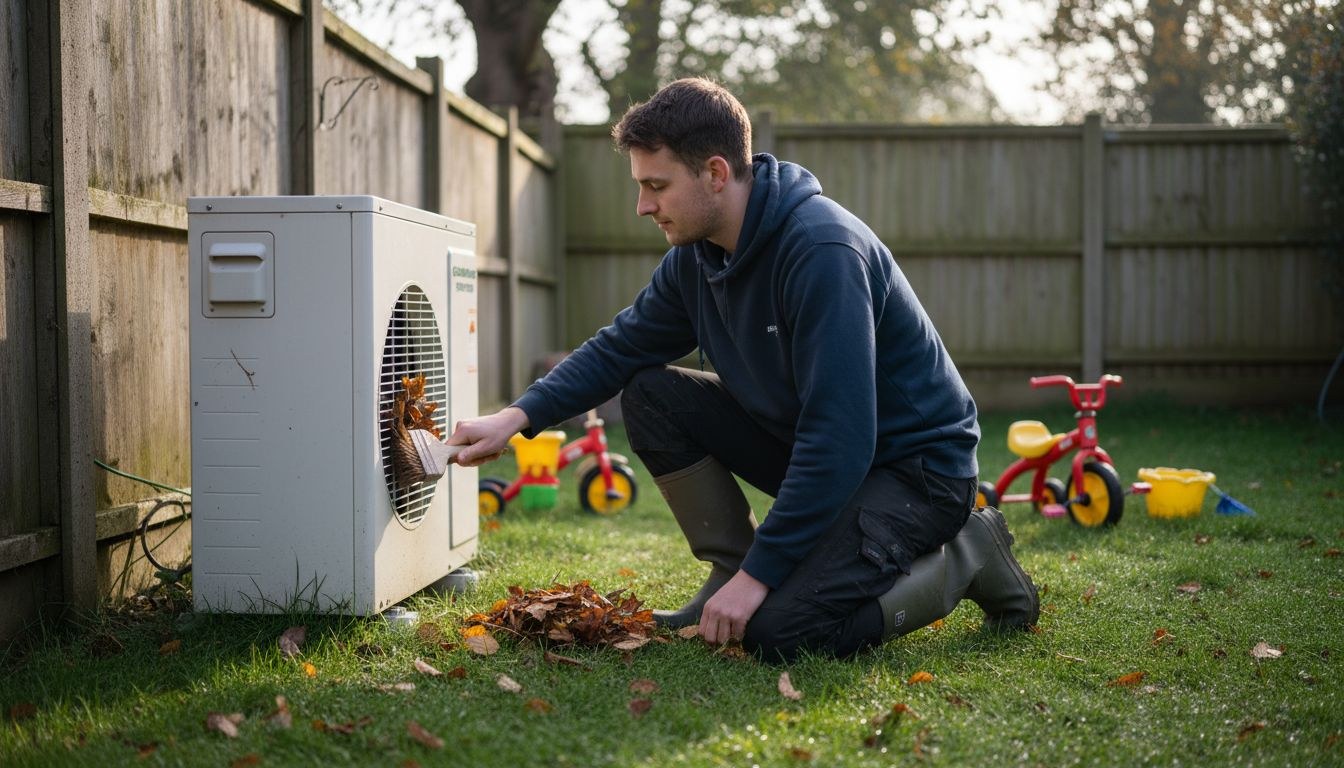
Air source heat pumps are increasingly popular in Suffolk. They extract warmth from outside air and pump it indoors, even in cold weather. They’re efficient but require regular cleaning of outdoor units and refrigerant checks.
Gas boilers with radiators remain widespread in older homes. These systems heat water that circulates through radiators. Maintenance involves annual boiler servicing, bleeding radiators, and checking pump function.
Combination boilers (combi systems) provide heating and hot water from a single compact unit. They require annual inspections and filter replacements to maintain efficiency.
Split air conditioning systems are becoming more common in UK homes. These consist of an outdoor condenser unit and indoor wall-mounted evaporators. They need regular filter cleaning and refrigerant level checks.
Each system type involves different maintenance procedures and component requirements that professionals must follow precisely.
Here’s a summary of typical maintenance focus areas for different UK residential HVAC system types:
| System Type | Key Focus Areas | Typical Service Interval |
|---|---|---|
| Air Source Heat Pump | Outdoor unit cleaning, refrigerant | Outdoor: monthly, Tech: annual |
| Gas Boiler + Radiators | Combustion analysis, scale removal | Annual inspection |
| Combination Boiler | Filter checks, safety inspection | Annual service |
| Split Air Conditioning | Filter cleaning, coil sanitation | Filters: monthly, Tech: annual |
Maintenance Varies by System Type
Your maintenance schedule depends directly on what you own. A heat pump requires different attention than a traditional boiler.
Heat pump maintenance includes:
- Cleaning outdoor unit fins monthly during operation season
- Professional refrigerant level checks annually
- Defrost cycle verification in winter
- Checking electrical connections and capacitors
Boiler system maintenance involves:
- Annual safety inspection and efficiency test
- Flue gas analysis to verify combustion
- Pressure and temperature relief valve testing
- Scale removal from internal components
Split system maintenance requires:
- Monthly filter cleaning or quarterly replacement
- Coil cleaning to prevent algae growth
- Refrigerant charge verification
- Condensate drain line flushing
Your system’s specific maintenance schedule should match its design and operational demands—one-size-fits-all approaches often miss critical care points.
Why System-Specific Maintenance Matters
Using the wrong maintenance approach wastes time and money. A heat pump doesn’t need the same checks as a gas boiler, and treating them identically creates gaps in care.
Professional technicians understand these differences. They follow established industry standards to ensure your specific system receives appropriate attention.
When you schedule service, mention your exact system type. This helps technicians bring the right tools and spare parts, avoiding callbacks and delays.
Pro tip: Keep your system’s model number and installation documentation easily accessible—sharing these details with your engineer ensures they can tailor maintenance precisely to your equipment.
How Routine Maintenance Improves Efficiency and Air Quality
Maintenance does more than keep your system running—it directly affects how efficiently it operates and what you’re breathing indoors. Two benefits emerge from regular care: lower energy bills and healthier air.
The Efficiency Connection
A neglected HVAC system works harder to deliver the same comfort level. Dirty filters force your system to strain, consuming more electricity and running longer than necessary.
Clean components operate at peak efficiency. When your system works as designed, it uses less energy to maintain your desired temperature, which translates directly to lower monthly bills.
Key efficiency improvements from maintenance include:
- Cleaned coils that transfer heat more effectively
- Unclogged filters that reduce airflow resistance
- Properly charged refrigerant levels in heat pumps
- Calibrated thermostats that prevent energy waste
- Sealed ductwork preventing conditioned air loss
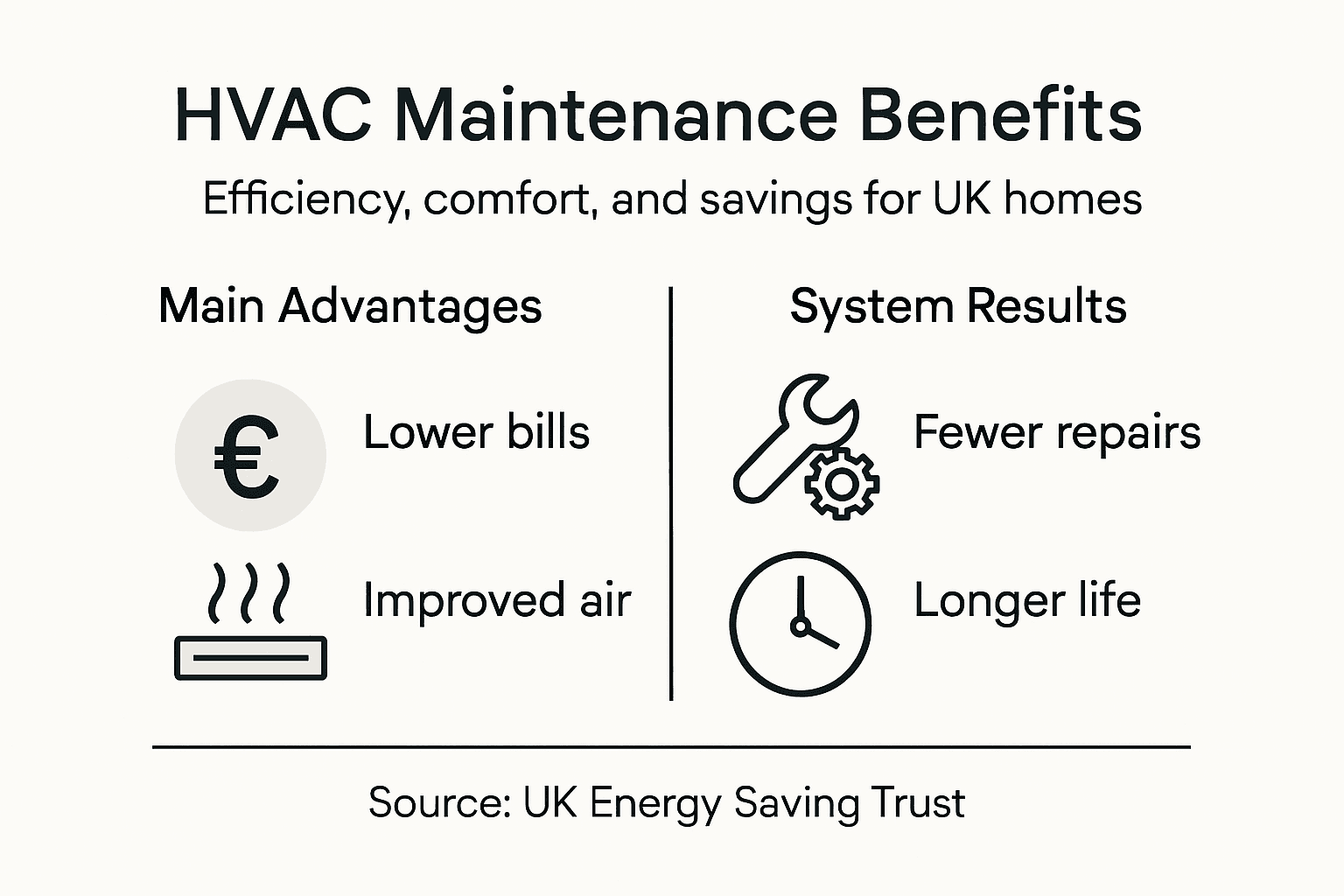
Regular maintenance can improve your system’s efficiency by 10–15% compared to neglected systems. Over a decade, that represents substantial savings.
Air Quality Matters More Than You Think
Your HVAC system doesn’t just control temperature—it manages what you breathe. Proper ventilation and air filtration directly impact indoor air quality by controlling humidity and contaminant levels.
Without maintenance, your system accumulates problems:
- Mould growth in damp coils and ducts
- Dust and allergen buildup in filters
- Bacterial colonies in condensate pans
- Pollutants recirculating through your home
These accumulations worsen asthma, allergies, and respiratory infections. Families with young children or elderly members are particularly vulnerable.
How Maintenance Cleans Your Air
Regular servicing removes contaminant sources before they multiply. Technicians clean coils where moisture collects, flush condensate drains, and replace air filters with fresh ones.
Clean and well-maintained systems reduce pollutant sources and enhance air filtration, minimising harmful airborne particulates. Your system works as designed, cycling fresh air and removing stale air effectively.
The result is measurable: better humidity control, fewer allergens, and genuinely cleaner air throughout your home.
Efficiency and air quality aren’t separate benefits—they’re linked outcomes of the same maintenance process.
Pro tip: Upgrade to HEPA-rated filters during your annual maintenance visit to capture 99.97% of particles, boosting air quality significantly beyond standard filtration.
Financial Benefits and Cost-Saving Impacts
Regular HVAC maintenance isn’t an expense—it’s an investment that pays back repeatedly. The financial benefits start accumulating from year one and compound over your system’s lifetime.
The True Cost of Neglect
Breakdowns rarely happen at convenient times. An HVAC failure in January costs far more than a routine service in October because emergency repairs command premium pricing.
Emergency callouts typically cost 40–60% more than scheduled maintenance visits. You’re paying for rush availability, after-hours labour, and expedited parts sourcing.
Worse still, catastrophic failures often require replacement rather than repair. A system that fails unexpectedly at age 12 costs thousands more than one maintained properly and lasting 15–18 years.
Energy Savings Add Up Quickly
Maintenance directly reduces your monthly energy bills. Clean coils, proper refrigerant charge, and sealed ducts mean your system consumes less electricity to maintain comfort.
Homeowners typically see 10–15% reductions in heating and cooling costs after implementing regular maintenance. On average, that represents £150–300 annual savings for a Suffolk household.
Over ten years, those savings total £1,500–3,000 from efficiency improvements alone. This isn’t accounting for avoided repairs.
To quickly compare costs, here’s how planned maintenance contrasts with neglect over a system’s life:
| Scenario | Annual Cost (Approx.) | Decade Total | Major Risk |
|---|---|---|---|
| Regular Maintenance | £150–300 | £1,500–3,000 | Minimal, predictable |
| Emergency Repairs | £400–600+ per event | £3,000–8,000 | Sudden breakdowns likely |
| Neglect & Replacement | £2,500+ (early) | £2,500–4,000+ | High, early replacement |
Planned Maintenance Prevents Expensive Breakdowns
Planned maintenance programmes lead to significant cost savings by reducing unexpected breakdowns and extending equipment lifespan. Technicians catch problems early when fixes cost £100–500, not £2,000–4,000 for emergency replacements.
Common problems caught by maintenance before they become costly:
- Low refrigerant levels (repair: £200–400; delay cost: £3,000+ compressor replacement)
- Worn fan motors (repair: £300–600; delay cost: system failure)
- Corroded electrical contacts (repair: £150–300; delay cost: unit shutdown)
- Clogged drains (repair: £100–200; delay cost: water damage)
Return on Investment Is Measurable
Preventive maintenance investments yield returns through reduced downtime and energy costs, whilst improving equipment reliability. Your annual maintenance spend—typically £150–300 for residential systems—produces savings exceeding the investment within months.
The real return emerges over time:
- Year 1–2: Energy savings and avoided minor repairs offset maintenance costs
- Year 3–5: Prevented major breakdowns justify every pound spent
- Year 6+: Extended system life means delaying expensive replacement
Spending £200 annually on maintenance to avoid a £2,500 emergency repair is simple mathematics. Prevention always costs less than cure.
Pro tip: Enrol in an annual maintenance membership plan to lock in consistent pricing and ensure you never skip a service—many providers offer prepayment discounts that further reduce long-term costs.
Risks of Neglecting Maintenance and Compliance Obligations
Neglecting HVAC maintenance isn’t just about comfort or bills—it creates legal, safety, and environmental risks that can have serious consequences for your home and household.
Safety Hazards From Neglected Systems
A poorly maintained HVAC system poses genuine safety threats. Gas boilers produce carbon monoxide when burners aren’t properly serviced, a colourless, odourless gas that causes poisoning and death.
Electrical components also degrade without care. Corroded wiring, loose connections, and worn capacitors can spark fires or cause electrical shocks. These aren’t theoretical risks—they happen regularly in unmaintained systems.
Refrigerant leaks from air conditioning systems expose household members to chemical exposure. Children are particularly vulnerable to health effects from leaked refrigerants.
Energy Efficiency and Environmental Compliance
Neglected systems consume excessive energy, increasing your carbon footprint. Poor maintenance elevates risks such as higher energy costs, system failure, and non-compliance penalties, underscoring the necessity for proactive upkeep.
The UK targets net-zero emissions by 2050. Energy-inefficient homes face increasing scrutiny through building regulations and Energy Performance Certificates (EPCs). Your HVAC system’s condition directly affects your property’s EPC rating.
When selling or renting your home, poor HVAC maintenance reduces property value and rental appeal. Buyers and tenants increasingly prioritise energy efficiency.
Regulatory Compliance Frameworks
Regulatory frameworks emphasise timely maintenance and proper system operation to meet safety, performance, and legal requirements. These standards protect consumers and ensure systems operate safely.
Compliance obligations include:
- Annual safety inspections for gas boilers (legal requirement under Building Regulations)
- Proper documentation of maintenance activities
- Use of qualified, registered engineers (Gas Safe registered for gas work)
- Adherence to manufacturer-recommended service intervals
- Refrigerant handling compliance under Environmental Protection Regulations
Non-compliance can result in enforcement action, fines, and liability if your system causes harm.
What Happens When You’re Non-Compliant
Skipping maintenance documentation leaves you exposed. If your boiler fails and causes injury or damage, lack of maintenance records strengthens liability claims against you.
Insurance companies may deny claims if maintenance wasn’t performed as required. Your home insurance policy typically stipulates annual servicing for gas appliances.
Rental properties face stricter scrutiny. Local authorities inspect privately rented homes and can issue compliance notices requiring repairs within specified timeframes. Failure to comply results in penalties.
Neglecting maintenance doesn’t just cost money—it creates legal liability, safety risks, and potential fines that far exceed the cost of regular servicing.
Pro tip: Keep detailed records of every maintenance visit, including service dates, engineer credentials, and work performed—these documents protect you legally and strengthen insurance claims if problems arise.
Keep Your Home Comfortable and Efficient with Expert HVAC Care
Understanding why regular HVAC maintenance matters is the first step toward protecting your home’s comfort, energy savings, and air quality. If you want to avoid unexpected breakdowns, reduce energy bills, and breathe cleaner air all year round, trusting professionals with system-specific maintenance is essential. Akita Air Conditioning specialises in tailored servicing for all common UK system types — from air source heat pumps to gas boilers and split air conditioning systems — making sure every component runs smoothly and efficiently.
Discover how our transparent pricing, flexible finance options, and eco-friendly solutions can give you peace of mind and long-term savings. Join one of our maintenance membership plans today and ensure expert care on your schedule. Visit Home page – Akita AC and explore our full range of services. Don’t wait for costly breakdowns to take action — secure your home’s comfort and efficiency now by contacting us through Akita Air Conditioning and book your professional HVAC service with confidence.
Frequently Asked Questions
What is HVAC maintenance?
HVAC maintenance involves regular inspection, cleaning, and servicing of your heating, ventilation, and air conditioning system to ensure efficient operation and longevity.
Why is HVAC maintenance important for my home?
Regular HVAC maintenance is crucial as it maintains thermal comfort, promotes energy efficiency, and improves indoor air quality, preventing costly repairs and extending system life.
How often should I schedule HVAC maintenance?
It’s recommended to schedule HVAC maintenance annually, ideally in autumn, to prepare your system for peak winter usage and identify issues before they escalate.
What happens if I neglect HVAC maintenance?
Neglecting HVAC maintenance can lead to higher energy bills, reduced indoor air quality, frequent breakdowns, and safety hazards, ultimately resulting in costly repairs or replacements.