

HVAC in UK homes: comfort and energy savings explained
Most homeowners believe their heating bills are high simply because energy is expensive, overlooking how outdated or poorly configured HVAC systems waste energy and compromise comfort. Modern HVAC technology, particularly heat pumps and mechanical ventilation with heat recovery, can slash energy consumption by over 40% whilst delivering superior indoor air quality and year-round comfort. This guide clarifies how HVAC systems function in UK homes, explores the most efficient technologies available in 2026, and provides practical advice on sizing, installation, and maintenance to help you reduce costs and enhance your living environment.
Table of Contents
- What Role Does HVAC Play In UK Homes?
- Energy-Efficient HVAC Technologies: Heat Pumps And MVHR Systems
- Correct Sizing, Installation, And Challenges For UK Homeowners
- Maintaining HVAC Systems For Lasting Efficiency And Comfort
- Discover Expert HVAC Installation And Services With Akita AC
- Frequently Asked Questions About HVAC In UK Homes
Key takeaways
| Point | Details |
|---|---|
| HVAC combines heating, ventilation, and cooling | These integrated systems manage temperature, air freshness, and moisture to optimise comfort and indoor air quality. |
| Heat pumps and MVHR deliver major savings | Heat pumps achieve up to 4.1 COP with 53% bill reductions, whilst MVHR recovers 75-95% of exhaust heat. |
| Correct sizing prevents waste and high bills | Data-driven heat loss calculations can halve equipment size, avoiding unnecessary costs and inefficiency. |
| Professional installation and commissioning are essential | MCS-certified installers and proper commissioning prevent short-cycling, poor airflow, and costly breakdowns. |
| Regular maintenance sustains efficiency | Annual professional check-ups and filter changes protect your investment and ensure long-term energy savings. |
What role does HVAC play in UK homes?
HVAC systems in UK homes primarily manage heating, ventilation, and air conditioning to maintain comfort, air quality, and efficiency. These integrated systems regulate indoor temperature, introduce fresh air, remove stale air, and control humidity levels throughout your home. The goal is to create a healthy, comfortable living environment regardless of outdoor conditions.
Energy consumption is a critical consideration. HVAC accounts for 40-60% of building energy use globally, making it the largest single contributor to household energy bills. In the UK, where heating dominates energy demand for much of the year, choosing efficient HVAC technology directly impacts your running costs and carbon footprint.
Modern UK homes increasingly rely on heat pumps and mechanical ventilation with heat recovery as core HVAC components. Heat pumps extract ambient heat from air or ground sources to warm your home, delivering multiple units of heat energy for every unit of electricity consumed. MVHR systems recover heat from outgoing stale air and transfer it to incoming fresh air, reducing heating demand whilst maintaining excellent indoor air quality in airtight properties.
Key benefits of properly designed HVAC systems include:
- Consistent temperature regulation across all rooms, eliminating cold spots and overheating
- Continuous supply of filtered fresh air, reducing allergens, pollutants, and condensation
- Humidity control that prevents mould growth and protects building fabric
- Significant energy savings compared to traditional boilers and passive ventilation
- Reduced carbon emissions, supporting UK climate targets and future-proofing your home
Understanding these fundamentals helps you make informed decisions when upgrading or installing new systems. The right HVAC setup transforms home comfort whilst cutting energy waste.
Energy-efficient HVAC technologies: heat pumps and MVHR systems
Heat pumps represent the most efficient heating technology available to UK homeowners in 2026. They work by extracting low-grade heat from outdoor air or ground and concentrating it to useful temperatures for space heating and hot water. The coefficient of performance measures efficiency: a COP of 4.0 means the heat pump delivers four units of heat for every unit of electricity consumed.
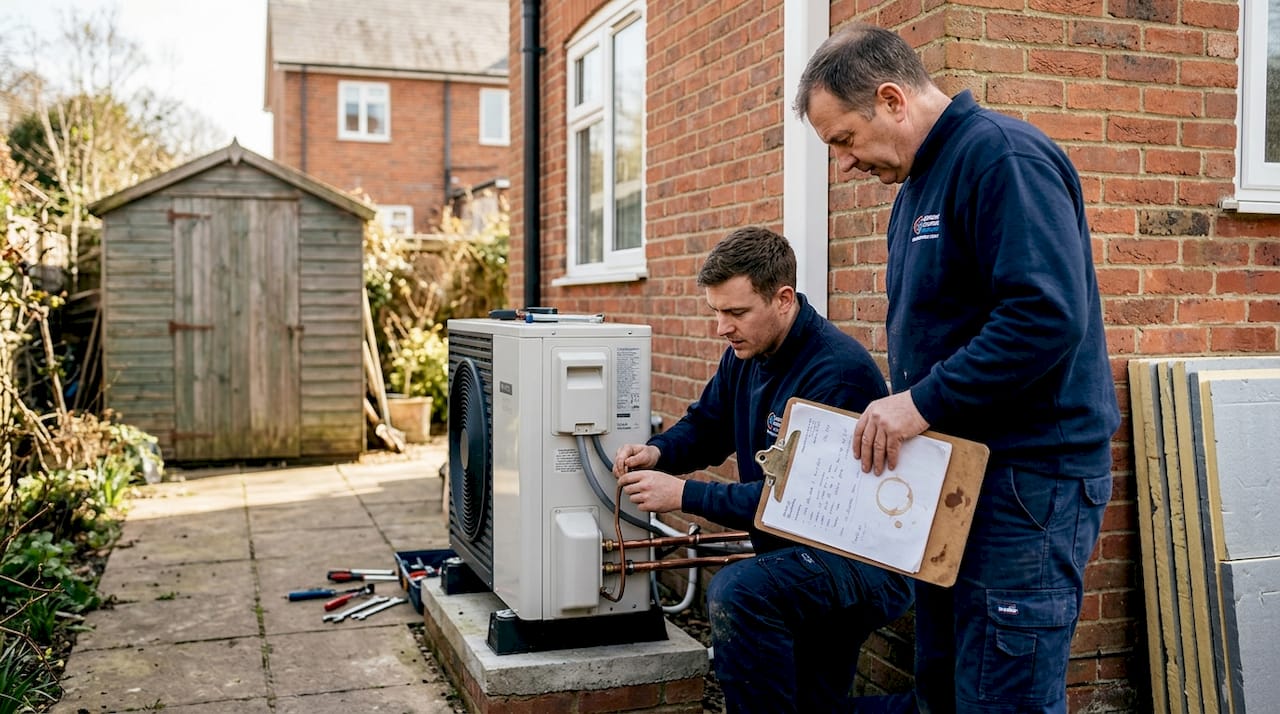
Real-world performance data demonstrates substantial savings. Heat pumps deliver COP up to 4.1 annually, with documented cases showing 53% bill reductions and 44% energy savings compared to gas boilers. These figures reflect actual UK installations with proper sizing and commissioning, not theoretical maximums. Your savings will vary based on your home’s insulation, previous heating system, and usage patterns, but the efficiency advantage remains clear.
Mechanical ventilation with heat recovery complements heat pumps by addressing ventilation heat loss in airtight homes. MVHR recovers 75-95% heat from exhaust air, reducing heating demand by 10-25%. The system continuously extracts stale air from kitchens and bathrooms whilst supplying filtered fresh air to living spaces and bedrooms. A heat exchanger transfers thermal energy between the two airstreams without mixing them, preserving warmth that would otherwise escape through open windows or trickle vents.
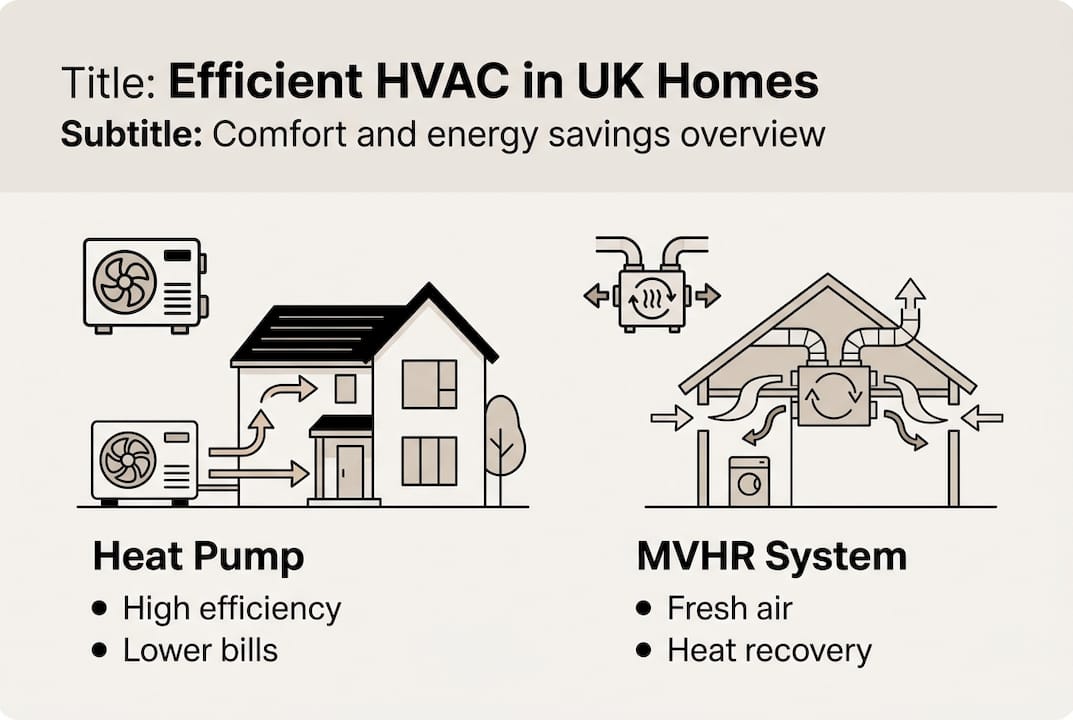
In well-insulated, airtight properties, MVHR becomes essential rather than optional. Modern building standards require controlled ventilation to prevent condensation and maintain air quality. Passive vents waste heat, whilst MVHR recovers it, making your heat pump’s job easier and your bills lower.
| Technology | Typical COP/Efficiency | Annual Running Cost (3-bed) | Upfront Cost | Payback Period |
|---|---|---|---|---|
| Air source heat pump | 3.5-4.1 | £600-£900 | £8,000-£14,000 | 7-12 years |
| Ground source heat pump | 4.0-5.0 | £500-£800 | £18,000-£30,000 | 15-20 years |
| MVHR system | 75-95% heat recovery | £50-£100 (electricity) | £4,000-£8,000 | 8-15 years |
Pro Tip: Prioritise combined heat pump and MVHR installations in airtight homes for maximum efficiency and savings. The technologies work synergistically, with MVHR reducing heat pump capacity requirements whilst maintaining superior air quality.
Upfront costs appear substantial, but government grants, energy savings, and increased property value improve the financial case. The Boiler Upgrade Scheme offers £7,500 towards air source heat pumps in 2026, significantly reducing initial outlay. Over a 15-20 year system lifespan, cumulative savings typically exceed installation costs, particularly as gas prices rise and electricity grids decarbonise.
Choosing energy efficient HVAC technologies positions your home for future regulatory changes. New gas boiler installations will be prohibited in new builds from 2025, with broader phase-outs likely in coming decades. Early adoption avoids rushed decisions and secures better grants whilst available.
Correct sizing, installation, and challenges for UK homeowners
Accurate heat loss calculations form the foundation of efficient HVAC design. Many installers estimate heating requirements using rules of thumb based on floor area, leading to oversized systems that cost more, cycle frequently, and perform poorly. Proper methodology measures actual heat loss through walls, floors, roofs, windows, and ventilation, accounting for insulation levels, air tightness, and orientation.
Data-driven heat loss measurements can halve heat pump size from 12kW to 8kW, avoiding unnecessary costs. This real-world case study from a 1930s home demonstrates how detailed assessment prevents over-specification. A smaller, correctly sized heat pump costs less to purchase, install, and run whilst delivering better comfort through longer, more efficient heating cycles.
| Sizing Method | Estimated Capacity | Installation Cost | Annual Running Cost | Comfort Level |
|---|---|---|---|---|
| Rule of thumb (150W/m²) | 12kW | £13,000 | £950 | Poor (short-cycling) |
| Measured heat loss | 8kW | £10,500 | £720 | Excellent (steady operation) |
Older UK homes present specific installation challenges that require careful planning. Solid wall construction complicates ductwork routing for MVHR systems, often necessitating external insulation or creative internal solutions. Inadequate loft insulation, single-glazed windows, and draughty floors increase heat loss, forcing larger heat pumps and reducing efficiency. Limited space for outdoor heat pump units or hot water cylinders constrains equipment choices.
Common obstacles include:
- Insufficient insulation levels requiring upgrades before HVAC installation
- Solid walls making MVHR duct installation complex and expensive
- Small gardens or restricted outdoor space limiting heat pump placement
- Undersized electrical supplies needing consumer unit upgrades
- Listed building restrictions preventing external alterations
Poor installation causes persistent problems. Short-cycling occurs when oversized equipment rapidly reaches temperature and shuts off, then restarts minutes later. This wastes energy, increases wear, and creates temperature swings. Incorrect refrigerant charge, inadequate airflow, or poorly positioned thermostats similarly undermine performance. You end up with high bills despite modern technology.
Pro Tip: Always use MCS-certified installers and commission systems correctly to avoid costly inefficiencies. The Microgeneration Certification Scheme ensures installers meet quality standards and makes you eligible for grants and enhanced warranties.
Preparing older homes for HVAC upgrades requires a staged approach. Start with insulation improvements to walls, loft, and floors. Address draughts around windows and doors. Consider double or triple glazing if budgets allow. These measures reduce heat loss, allowing smaller, more efficient HVAC equipment whilst improving comfort immediately.
Once the building fabric is optimised, accurate heat loss calculations inform equipment selection. Professional installers will survey your property, measure insulation levels, assess air tightness, and calculate precise heating requirements. This data-driven approach ensures you get appropriately sized systems that deliver promised efficiency and comfort.
Maintaining HVAC systems for lasting efficiency and comfort
Commissioning represents the critical handover phase where installers verify your HVAC system operates as designed. This process involves checking refrigerant levels, measuring airflow rates, testing controls, balancing MVHR supply and extract, and documenting performance. Poor sizing and maintenance lead to short-cycling and higher bills, making professional commissioning essential for realising efficiency gains.
Without proper commissioning, even correctly sized equipment underperforms. Heat pumps may not reach design temperatures. MVHR systems might create pressure imbalances causing draughts or noise. Controls could operate on default settings rather than optimised schedules. The result is wasted energy and compromised comfort despite substantial investment.
Regular maintenance protects your HVAC investment and sustains savings. Heat pumps require annual professional inspections to check refrigerant charge, clean coils, verify electrical connections, and test defrost cycles. MVHR systems need filter changes every three to six months, with duct cleaning every five years. Neglecting these tasks reduces efficiency, increases breakdowns, and shortens equipment lifespan.
Consequences of poor maintenance include:
- Reduced efficiency as dirty filters restrict airflow and force systems to work harder
- Higher energy bills from declining performance
- Expensive emergency repairs when minor issues escalate
- Shortened equipment lifespan requiring premature replacement
- Poor indoor air quality from clogged filters and dirty ducts
- Voided warranties if manufacturer service schedules are not followed
A structured maintenance schedule keeps systems running optimally:
- Replace or clean MVHR filters every three to six months depending on usage and air quality.
- Schedule annual professional heat pump servicing with MCS-certified engineers.
- Check outdoor heat pump units quarterly for debris, vegetation, or obstructions affecting airflow.
- Inspect and clean MVHR grilles and diffusers twice yearly to maintain balanced ventilation.
- Verify thermostat and control settings seasonally to match occupancy and comfort needs.
- Arrange professional duct cleaning for MVHR systems every five years.
- Monitor energy consumption and system performance for unexpected changes indicating problems.
Pro Tip: Schedule annual professional HVAC check-ups with certified installers to ensure optimal performance. Many companies offer maintenance contracts bundling inspections, filter replacements, and priority repairs at reduced rates.
Regular HVAC maintenance delivers measurable benefits beyond avoiding breakdowns. Well-maintained heat pumps maintain peak efficiency, preserving energy savings year after year. Clean MVHR systems sustain excellent indoor air quality, reducing allergens and protecting respiratory health. Documented servicing records support warranty claims and enhance property value when selling.
Simple homeowner tasks complement professional servicing. Visually inspect outdoor units monthly for damage or obstructions. Listen for unusual noises indicating mechanical issues. Note any changes in comfort levels or energy consumption. Early detection of problems allows minor adjustments before major failures occur.
Investing in maintenance costs far less than emergency repairs or premature replacement. A typical annual service costs £100-£200, whilst a compressor failure might exceed £2,000. The choice is clear: proactive care protects your comfort and finances.
Discover expert HVAC installation and services with Akita AC
Now that you understand how modern HVAC systems transform home comfort and reduce energy costs, consider partnering with experienced professionals to implement your ideal solution. Akita AC specialises in domestic air conditioning installation throughout Suffolk, Norfolk, and Essex, delivering energy-efficient climate control tailored to UK homes.

Our team provides transparent air conditioning installation cost information upfront, helping you plan upgrades confidently. We offer flexible finance options making modern HVAC technology accessible without compromising quality. When systems need attention, our reliable air conditioning repair services restore efficiency quickly, minimising disruption and protecting your investment. From initial consultation through ongoing maintenance, Akita AC ensures your home achieves optimal comfort and energy performance.
Frequently asked questions about HVAC in UK homes
What is the main benefit of HVAC systems in homes?
The primary benefit is simultaneous improvement in comfort, air quality, and energy efficiency. Modern HVAC systems maintain consistent temperatures, provide continuous fresh air filtration, control humidity, and significantly reduce energy consumption compared to traditional heating and passive ventilation methods.
How much can I expect to save with a heat pump and MVHR?
Typical savings range from 40-53% on heating bills depending on your previous system and home insulation. Heat pumps delivering 4.0 COP replace gas boilers at roughly equivalent running costs despite higher electricity prices, whilst MVHR reduces heating demand by 10-25% by recovering exhaust heat.
Do older homes require special preparation for HVAC upgrades?
Yes, older properties typically need insulation improvements before HVAC installation to maximise efficiency and reduce equipment size. Solid walls complicate MVHR ductwork, often requiring creative routing or external insulation. Addressing building fabric first ensures HVAC system upgrades deliver full benefits.
Why is proper sizing of HVAC systems important?
Correct sizing based on measured heat loss prevents oversized equipment that costs more, cycles frequently, and wastes energy. Data-driven calculations can halve heat pump capacity requirements, reducing installation costs by thousands whilst improving comfort through steady, efficient operation rather than disruptive short-cycling.
How often should I maintain my HVAC to ensure efficiency?
Schedule annual professional servicing for heat pumps and replace MVHR filters every three to six months. HVAC maintenance preserves peak efficiency, prevents costly breakdowns, and extends equipment lifespan, with typical service costs of £100-£200 annually far outweighed by avoided repairs and sustained energy savings.
Recommended
- Why Energy Efficient HVAC Matters for UK Homes – Akita AC
- Step by step HVAC maintenance for energy savings in 2026 – Akita AC
- Why Upgrade HVAC Systems – Greater Comfort, Lower Costs – Akita AC
- Why Choose Energy Saving Aircon for UK Homes – Akita AC
- Energetska efikasnost i ušteda energije u vašem domu
- Understanding the Benefits of a House with Insulation – WorkWearComfort