

Why Upgrade HVAC Systems – Greater Comfort, Lower Costs
Old heating and cooling systems can leave homes in Suffolk, Norfolk, and Essex feeling draughty and expensive to run. As energy bills rise and comfort becomes a real concern, more homeowners are turning to energy-efficient HVAC upgrades that modernise their living spaces. With national focus on initiatives like the Warm Homes Plan, upgrading your system helps your property stay warm, reduces costs, and prepares you for future government support.
Table of Contents
- Defining HVAC System Upgrades in UK Homes
- Modern System Types and Smart Controls Explained
- Energy Efficiency, Environmental Impact, and Savings
- Financial Outlay, Incentives, and Financing Routes
- Common Pitfalls and Choosing the Right Solution
Key Takeaways
| Point | Details |
|---|---|
| System Upgrades Improve Efficiency | Upgrading HVAC systems enhances comfort and energy efficiency, often aligning with government initiatives for lower carbon emissions. |
| Smart Controls Enhance Management | Integrating smart controls can lead to energy savings of 10-15% by automating heating and cooling based on your lifestyle. |
| Financial Incentives Available | Government grants and flexible financing options make modern HVAC upgrades more accessible, significantly reducing upfront costs. |
| Professional Assessment Recommended | Conducting a professional system assessment helps identify the most cost-effective upgrades and prevents unnecessary expenditures. |
Defining HVAC System Upgrades in UK Homes
An HVAC system upgrade involves replacing or enhancing your home’s heating, ventilation, and air conditioning equipment to improve comfort and energy efficiency. Unlike basic repairs, upgrades modernise entire systems or key components to meet current performance standards.
In the UK context, system upgrades align with government initiatives like the Warm Homes Plan, which focuses on transforming older homes into comfortable, low-carbon properties through modern heating technologies including heat pumps and improved ventilation.
What Counts as an Upgrade?
Not every repair qualifies as an upgrade. Here’s how to distinguish between them:
- Repairs fix broken parts or restore current performance to original levels
- Upgrades replace outdated equipment with newer, more efficient alternatives
- Replacements install entirely new systems when existing ones reach end of life
- Enhancements add new features like smart controls or zoning capabilities
Your old boiler struggling to heat the bedroom? That’s a repair job. Swapping that boiler for a modern heat pump system? That’s an upgrade.
Types of HVAC Upgrades for UK Homes
Several upgrade pathways exist depending on your current setup and goals:
Modernising components improves thermal comfort and energy efficiency whilst reducing your carbon footprint. You might upgrade just your boiler, add mechanical ventilation with heat recovery, or install a complete heat pump system.
Smart controls represent another upgrade category. Adding thermostats, automated scheduling, or app-based management transforms how you interact with your heating and cooling without replacing physical equipment.
Ventilation upgrades address indoor air quality issues. Many homes in Suffolk, Norfolk, and Essex lack proper air circulation. Installing extraction fans, heat recovery ventilation, or ducting systems brings fresh air whilst retaining warmth.
Modern HVAC upgrades deliver measurable benefits: lower energy bills, improved comfort, and reduced environmental impact—all whilst maintaining or improving indoor air quality.
Why Now Is the Right Time
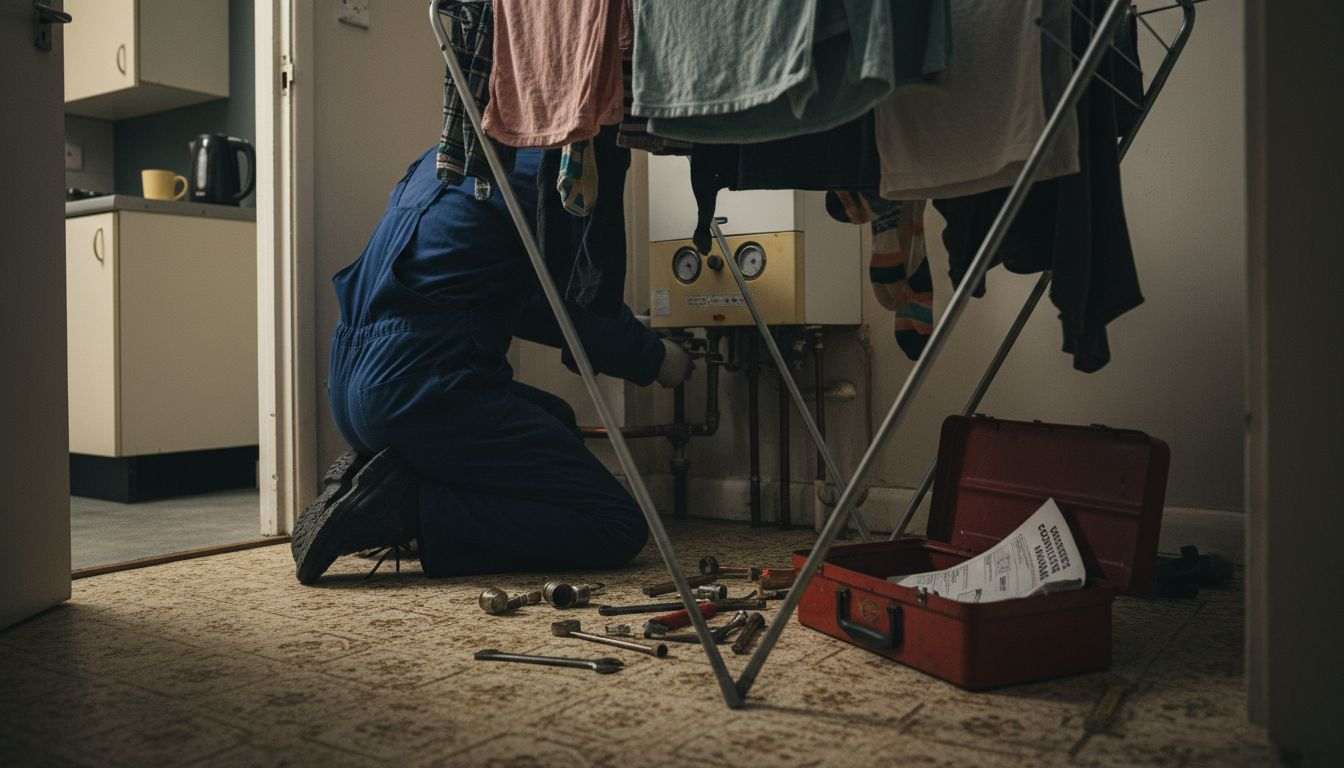
Older systems consume significantly more energy than modern alternatives. A boiler from the 1990s operates at roughly 78% efficiency; modern condensing boilers reach 92% or higher. That difference translates directly to your heating bills.
Moreover, energy-efficient HVAC systems qualify for government grants and flexible financing options in many cases. The upfront cost becomes manageable when spread across time.
Your current system’s age matters too. Equipment lasting 15–20 years eventually fails. Planning an upgrade before breakdown avoids emergency costs and ensures you choose the right solution rather than accepting whatever’s available.
Pro tip: Get a professional system assessment before committing to upgrades—specialists can identify which components need replacing versus which merely need servicing, potentially saving thousands on unnecessary replacements.
Modern System Types and Smart Controls Explained
Modern HVAC systems have evolved far beyond traditional boilers and radiators. Today’s options offer precision climate control, lower running costs, and integration with your home’s digital ecosystem. Understanding your choices helps you pick the right fit for your Suffolk, Norfolk, or Essex property.
The shift toward efficient systems reflects UK government priorities and homeowner demand for better comfort with lower carbon emissions. Let’s explore what’s actually available and how smart controls transform the way you manage your home’s climate.
Heat Pumps: The Modern Alternative
Heat pumps represent the most significant innovation in residential heating. Instead of burning fuel, they extract warmth from the air, ground, or water and move it indoors—even in cold weather. This process uses far less energy than traditional boilers.
Air source heat pumps draw warmth from outside air and work well in most UK homes. Ground source heat pumps tap into soil temperature, offering higher efficiency but requiring more space. Both types integrate seamlessly with underfloor heating or radiators.
Heat pumps deliver approximately 3-4 units of heat for every 1 unit of electricity consumed. Compare that to a boiler’s 90% efficiency, and the advantage becomes clear: you’re not generating heat—you’re relocating it.
Variable Refrigerant Flow (VRF) Systems
VRF systems allow multiple indoor units to operate independently from a single outdoor unit. This means you heat the lounge whilst cooling the bedroom without wasting energy.
Whilst traditionally used in commercial buildings, residential VRF installations are expanding across the UK. They’re particularly suited to larger homes or those with diverse heating and cooling demands across different rooms.
Smart Controls Transform Your System
Direct digital controls use sensors and programmable logic to regulate temperature automatically. Your system learns your routines and adjusts heating or cooling before you even notice a change.
Modern smart thermostats offer:
- Remote access via smartphone or tablet
- Predictive heating based on weather forecasts
- Room-by-room temperature control (zoning)
- Integration with voice assistants
- Detailed energy consumption reports
- Automated scheduling tailored to your lifestyle
These controls achieve energy savings of 10-15% compared to manual systems, simply by eliminating waste when nobody’s home or asleep.
Smart controls don’t just save energy—they deliver comfort exactly when and where you need it, adapting to your daily patterns automatically.
Building Automation Systems (BAS)
For homes with multiple systems—heating, cooling, ventilation, lighting—BAS integrates everything into one platform. Your entire home becomes responsive, coordinating systems to maximise efficiency and comfort simultaneously.
BAS systems provide centralised monitoring, meaning specialists can diagnose issues remotely before they become problems. This reduces maintenance costs and extends equipment lifespan.
Pro tip: Start with a smart thermostat before committing to full system replacement—this reveals your actual heating patterns and helps engineers recommend the most cost-effective upgrade for your home.
Energy Efficiency, Environmental Impact, and Savings
Energy bills represent a significant portion of your household budget. A modern HVAC upgrade tackles this directly by consuming less energy whilst delivering superior comfort. The financial case is compelling, but understanding the environmental picture requires honest conversation.
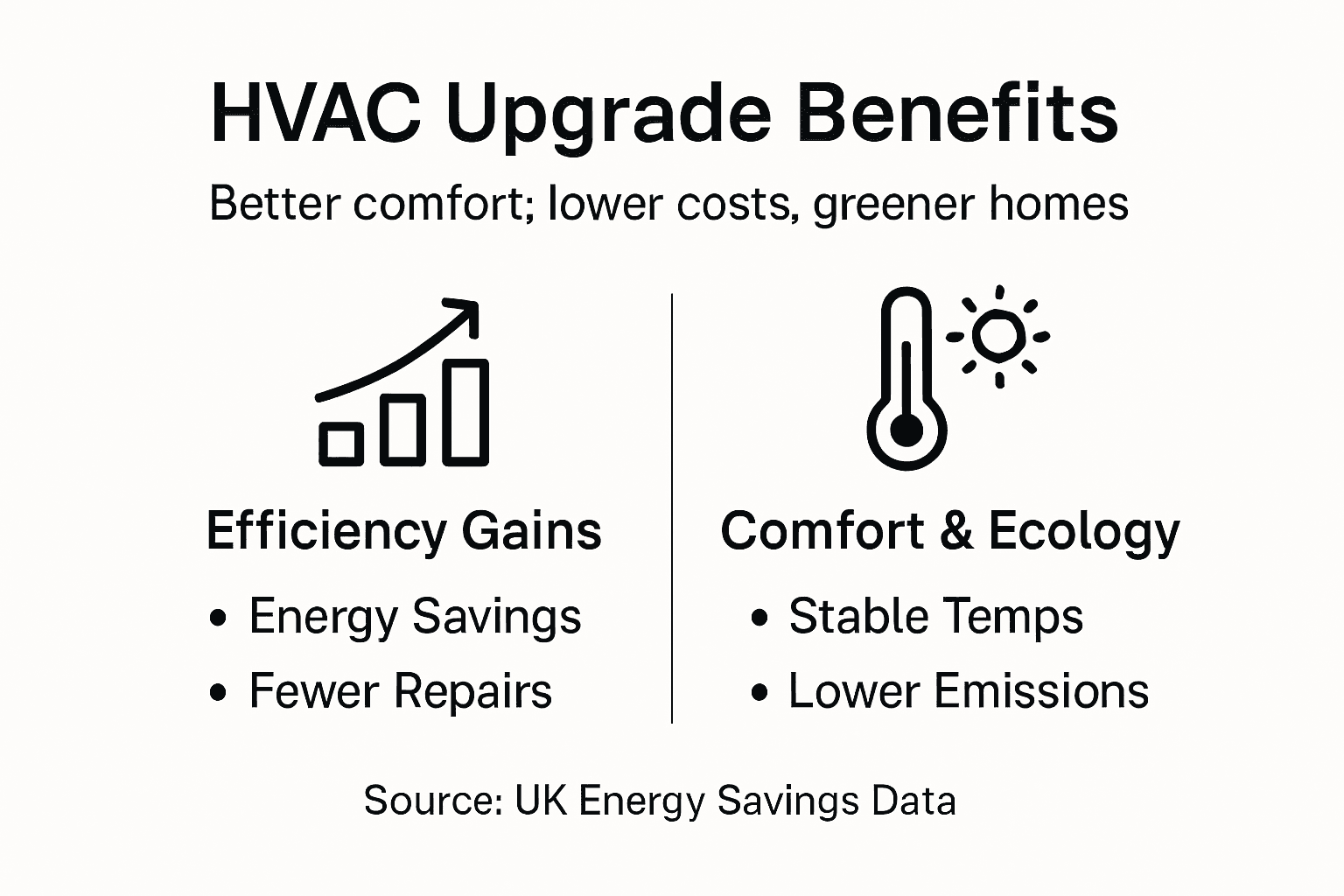
Your heating and cooling systems account for roughly 40-50% of residential energy consumption in the UK. Upgrading from an ageing boiler to a modern heat pump or advanced system dramatically reduces this load, translating to pounds saved every single month.
How Much Can You Actually Save?
Savings depend on several factors specific to your property and upgrade choice:
- Current system age and efficiency: Older boilers waste energy; modern systems capture nearly every unit
- Property size and insulation: Better insulated homes need less heating, maximising upgrade benefits
- Your heating patterns: Families using heating 24/7 save more than part-time users
- Energy source: Switching from oil heating to heat pumps delivers greater savings than gas-to-condensing boiler upgrades
- Smart controls integration: Automated scheduling and zoning add 10-15% savings on top
Typical homeowners in Suffolk, Norfolk, and Essex report annual savings between £300 and £800 following a modern system installation. Some see even higher reductions with ground source heat pumps or complete system replacements.
The Environmental Reality
This is where honesty matters. Modern heat pump deployment depends on grid decarbonisation, meaning your actual carbon reduction reflects how cleanly your electricity is generated. Today’s grid is increasingly renewable-powered, making heat pumps progressively greener each year.
However, even with current grid mix, modern systems produce lower emissions than combustion-based heating. As the UK transitions toward 80% renewable electricity by 2030, the environmental advantage of efficient systems compounds dramatically.
Beyond Monthly Bills
Financial benefits extend beyond energy savings:
- Government grants and schemes offset initial investment costs considerably
- Reduced maintenance expenses: Modern systems need fewer repairs than ageing equipment
- Extended equipment lifespan: New systems last 15-20 years before replacement, spreading costs over decades
- Property value: Homes with modern, efficient climate control attract higher valuations
- Improved comfort: Better temperature control reduces discomfort-related stress and health impacts
Modern HVAC upgrades deliver triple returns: lower monthly costs, environmental progress, and increased home value—all whilst keeping your family more comfortable year-round.
The Investment Perspective
Think of HVAC upgrades as home investments, not expenses. A £6,000-£12,000 upgrade generating £500 annual savings reaches payback within 12-24 years. Beyond payback, you’re banking pure savings whilst enjoying superior comfort.
Flexible finance options and government support programmes make upgrades accessible without large upfront payments. Spreading costs across time transforms affordability.
Pro tip: Request an energy audit before upgrading—specialists calculate your specific savings potential based on your home’s characteristics, helping you choose upgrades delivering the best return on investment for your situation.
Financial Outlay, Incentives, and Financing Routes
Upfront costs represent the biggest barrier to HVAC upgrades. A complete system replacement ranges from £5,000 to £15,000 depending on your property size and technology choice. However, government grants and flexible financing options make this investment far more accessible than you might assume.
The financial landscape has shifted dramatically in recent years. Multiple pathways now exist to reduce or eliminate upfront costs, transforming HVAC upgrades from impossible expenses into manageable investments.
Government Grants and Schemes
The UK government actively supports residential heating upgrades through dedicated schemes. These aren’t loans—they’re grants you won’t repay.
The Boiler Upgrade Scheme provides grants up to £7,500 for replacing fossil fuel heating with heat pumps or biomass boilers. This scheme applies to homeowners across England and Wales, making heat pump installation substantially more affordable.
Warm Homes: Local offers free improvements to eligible low-income households, including air source heat pumps and smart controls installation. If you qualify, you receive upgrades without any financial outlay whatsoever.
Beyond these major schemes, regional and local initiatives may offer additional support. Checking with your local authority reveals opportunities specific to Suffolk, Norfolk, and Essex.
For those seeking government support, here’s a summary of main UK HVAC grants and schemes:
| Scheme | Maximum Grant | Eligibility Criteria | Covers |
|---|---|---|---|
| Boiler Upgrade | £7,500 | Homeowners replacing fossil heating | Heat pumps, biomass |
| Warm Homes | Full cost | Low-income households, local authority | Heat pumps, controls |
| Local Grants | Varies | Regional or council-based qualification | Specific upgrades |
Typical Installation Costs
Breakdown varies by system type:
Here’s a concise comparison of modern HVAC system upgrade options for UK homes:
| System Type | Typical Installation Cost | Key Benefit | Suitability |
|---|---|---|---|
| Air Source Heat Pump | £8,000–£12,000 | Lower carbon footprint, efficient | Most UK homes |
| Ground Source Heat Pump | £15,000–£25,000 | Maximum efficiency, long lifespan | Large properties |
| Condensing Boiler | £3,000–£5,000 | Improved efficiency, familiar tech | Older properties |
| Smart Controls Integration | £500–£2,000 | Precise scheduling, easy management | All properties |
- Air source heat pump: £8,000-£12,000 (minus up to £7,500 grant)
- Ground source heat pump: £15,000-£25,000 (larger grant eligibility)
- Modern condensing boiler: £3,000-£5,000 (grants available)
- Smart thermostat and controls: £500-£2,000 (often included in larger upgrades)
- Installation and commissioning: Typically included in quoted prices
Flexible Financing Options
Most reputable installers offer payment plans spreading costs across months or years. Interest-free options exist, particularly through government-backed schemes and specialist finance providers.
Common financing approaches:
- 0% APR plans: Twelve to sixty-month terms with no interest charges
- Green finance schemes: Specialist lenders offering preferential rates for energy-efficient upgrades
- Equity release: For homeowners with substantial property equity
- Combination funding: Grants plus finance for the remaining balance
Government support plus flexible financing removes the cost barrier entirely—many homeowners now complete upgrades for less than £1,000 out of pocket, with monthly payments lower than current energy bill reductions.
Maximising Your Financial Position
Start by checking grant eligibility immediately. Schemes have limited funding and eligibility criteria change periodically. Delaying costs money—literally.
Request detailed quotes from multiple installers showing grant deductions and financing options. Transparency matters. Compare total costs, not just quoted prices, since grants and finance terms significantly alter affordability.
Consider timing strategically. Some grants apply differently depending on installation season. Planners can advise on optimal timing for your specific upgrade path.
Pro tip: Apply for grants before obtaining quotes—funding confirms what you’re actually paying, allowing accurate financing decisions and preventing disappointment if schemes close before your installation.
Common Pitfalls and Choosing the Right Solution
Many homeowners rush into HVAC upgrades without proper planning, leading to costly mistakes. Understanding common pitfalls helps you avoid them. Choosing the right solution requires honest assessment of your property, needs, and financial situation.
The difference between a brilliant upgrade and a regrettable one often comes down to preparation. Taking time upfront saves thousands in wasted spending and frustration later.
Common Mistakes to Avoid
Insufficient planning and inadequate installer selection represent major pitfalls in heat pump adoption. Many homeowners choose installers based solely on price, ignoring experience and credentials. Others proceed without understanding their property’s specific requirements.
These mistakes happen frequently:
- Choosing wrong system type: Picking a heat pump unsuitable for your property insulation or heating patterns
- Ignoring professional surveys: Skipping property assessments costs more than the survey itself when wrong systems require replacement
- Rushing through grants: Missing deadlines or not understanding eligibility before committing financially
- Underestimating disruption: Starting work without understanding temporary inconvenience to daily life
- Treating upgrades as one-time events: Failing to plan maintenance, which extends system life and maintains efficiency
- Comparing prices without context: Ignoring warranty length, aftercare support, and system guarantees
Matching Solutions to Your Property
Your home is unique. What works brilliantly for a detached property in Norfolk may perform poorly in a semi-detached Essex townhouse. Personalisation matters significantly.
Key assessment factors include:
- Current insulation levels: Poor insulation reduces heat pump efficiency; improving insulation first multiplies savings
- Available space: Ground source heat pumps need substantial garden space; air source systems work in smaller properties
- Heating patterns: All-day heating favours heat pumps; part-time heating suits boiler upgrades
- Budget constraints: Some solutions require larger upfront investment despite lower running costs
- Property age and structure: Listed properties or Victorian homes may restrict certain system types
- Future plans: Moving within five years changes financial calculations versus staying long-term
Selecting Qualified Installers
Not all installers are equal. Reputable specialists provide comprehensive surveys, transparent pricing, warranty protection, and aftercare support. Rushing this selection ruins otherwise sound upgrades.
Verify credentials rigorously:
- MCS certification: Mandatory for Boiler Upgrade Scheme eligibility
- Insurance and guarantees: Minimum ten-year system warranties
- References and reviews: Speak directly with previous customers
- Transparent communication: Clear explanations without jargon or pressure tactics
Right-fit solutions start with thorough property assessment, honest budget conversations, and qualified installers—not with guessing or choosing based purely on quoted prices.
Working with Professional Advisers
Independent advisers guide you toward solutions matching your actual needs rather than maximising installer profit. Many are free or low-cost, funded by industry bodies.
Actual assessments typically reveal opportunities you wouldn’t discover alone. Surveyors identify insulation weaknesses, ventilation issues, or system compatibility problems before installation begins.
Pro tip: Request at least three detailed surveys from different MCS-certified installers before deciding—comparing assessments reveals which installers understand your property best and which are overselling unnecessary upgrades.
Upgrade Your Home Comfort with Akita Air Conditioning Today
The article highlights how upgrading your HVAC system can bring greater comfort and lower energy costs while reducing environmental impact. If your old boiler or heating system struggles to deliver efficient warmth or you are considering smart controls and heat pump installation for your property in Suffolk, Norfolk, or Essex Akita Air Conditioning provides expert solutions tailored to your unique home needs. We understand the challenges of navigating government grants, avoiding costly mistakes, and selecting the right technology for your budget and property type.

Take control of your heating and cooling now by visiting Akita Air Conditioning. Benefit from transparent pricing, flexible financing options, and eco-friendly system upgrades backed by professional installation and ongoing maintenance. Don’t wait until your old system fails or bills keep rising. Explore our range of energy-efficient HVAC services including smart thermostat instalments and full system replacements to improve your home comfort and save money long term. See why many homeowners trust Akita’s award-winning service for reliable, sustainable climate control solutions built around you.
Frequently Asked Questions
What are the benefits of upgrading my HVAC system?
Upgrading your HVAC system can lead to greater comfort, lower energy costs, improved air quality, and a reduced carbon footprint. Modern systems provide better temperature control and efficiency compared to older units.
How do I know if my HVAC system needs an upgrade?
Signs that your HVAC system needs an upgrade include frequent breakdowns, rising energy bills, uneven heating or cooling, and an age of 15 years or more. If your system struggles to maintain comfortable temperatures, it may be time to consider an upgrade.
What types of HVAC upgrades should I consider for better energy efficiency?
Consider upgrading to a heat pump, which is more energy-efficient than traditional boilers. Other options include modern condensing boilers, smart thermostat installations, and enhancing ventilation systems to improve overall efficiency and comfort.
Are there financial incentives for upgrading my HVAC system?
Yes, government grants and schemes are available to offset the costs of upgrading HVAC systems, especially when replacing fossil fuel heating with more efficient options like heat pumps. These initiatives can significantly lower your initial investment costs.