

What is HVAC? A UK guide to efficient climate control 2026
You might assume keeping your home or business comfortable is as simple as turning up the heating or opening a window. Yet modern UK building standards demand far more from your climate control systems than basic temperature adjustment. HVAC systems encompass heating, ventilation, and air conditioning, working together to create healthy, compliant indoor environments. This guide explains what HVAC truly involves, why ventilation matters under UK regulations, and how proper installation and maintenance deliver lasting comfort whilst meeting legal requirements.
Table of Contents
- What Is HVAC? Understanding The Basics
- UK Building Regulations And Why Ventilation Matters
- Types Of Ventilation Systems Explained
- Maintaining And Installing HVAC Systems For Lasting Comfort And Efficiency
- Discover Professional HVAC Solutions With Akita AC
Key takeaways
| Point | Details |
|---|---|
| HVAC definition | Heating, ventilation, and air conditioning systems work together to control indoor climate, air quality, and moisture levels in UK properties. |
| Legal requirements | Building Regulations Part F mandate minimum ventilation rates for kitchens, bathrooms, and whole dwellings to prevent condensation and mould. |
| System variety | Four main ventilation types range from simple trickle vents with extract fans to sophisticated mechanical heat recovery units. |
| Installation importance | Early planning and professional commissioning ensure compliance, energy efficiency, and optimal performance throughout system lifespan. |
| Maintenance value | Regular servicing extends equipment life, reduces energy costs, and maintains healthy indoor air quality year round. |
What is HVAC? Understanding the basics
HVAC stands for three interconnected systems that shape your indoor environment. Heating warms spaces during cold months, typically through boilers, heat pumps, or electric systems. Ventilation brings fresh air in whilst removing stale air, moisture, and pollutants. Air conditioning cools and dehumidifies during warmer periods, though many UK properties focus primarily on heating and ventilation.
These three elements rarely work in isolation. Your heating system might warm air that ventilation then distributes throughout rooms. Air conditioning units often integrate with ventilation to maintain consistent temperatures without compromising air quality. Together, they create comfortable, healthy spaces that meet modern building standards.
Ventilation deserves particular attention in UK properties. Our climate and construction methods create conditions where moisture accumulates easily. Without adequate airflow, condensation forms on cold surfaces, leading to mould growth and structural damage. Proper ventilation removes excess humidity whilst supplying oxygen and diluting indoor pollutants from cooking, cleaning, and daily activities.
Common HVAC components you’ll encounter include:
- Boilers and radiators providing space heating
- Heat pumps offering efficient heating and cooling
- Extract fans removing moisture from wet rooms
- Trickle vents allowing background airflow
- Ducting systems distributing conditioned air
- Thermostats and controls managing system operation
Understanding these basics helps you recognise when systems need attention and why upgrading HVAC systems improves both comfort and running costs. Modern equipment operates far more efficiently than older installations, reducing energy bills whilst meeting stricter environmental standards. Regular HVAC maintenance benefits extend beyond cost savings to include healthier indoor air and reliable year round performance.
UK building regulations and why ventilation matters
Building Regulations Part F establishes minimum airflow requirements that every new build, extension, and material alteration must satisfy. These aren’t optional guidelines but legal standards designed to protect occupant health and building fabric. Understanding these requirements helps you plan HVAC installations that pass inspection whilst delivering genuine comfort.
Part F specifies extract ventilation rates for wet rooms where moisture generation is highest. Kitchens require 30 litres per second during cooking with intermittent extraction, or 13 l/s continuous extraction. Bathrooms need 15 l/s intermittent or 8 l/s continuous extraction. Utility rooms follow similar standards based on moisture production from washing and drying activities.
Whole dwelling ventilation adds another layer of requirements. Your property needs continuous background ventilation calculated from floor area and bedroom count. This ensures adequate fresh air supply even when extract fans aren’t running. The regulations balance energy efficiency with health, recognising that airtight construction saves energy but requires mechanical ventilation to maintain air quality.
| Space type | Intermittent extract rate | Continuous extract rate | Background ventilation |
|---|---|---|---|
| Kitchen | 30 l/s (cooking) or 60 l/s (hob) | 13 l/s | 4000mm² equivalent area |
| Bathroom | 15 l/s | 8 l/s | 2500mm² equivalent area |
| Utility room | 30 l/s | 8 l/s | 4000mm² equivalent area |
| Habitable rooms | N/A | Based on floor area | 5000-8000mm² per bedroom |
Inadequate ventilation creates multiple problems beyond regulatory non compliance. Condensation appears first on cold surfaces like windows and external walls. Left unchecked, this moisture soaks into building materials, encouraging mould growth that damages finishes and poses health risks. Respiratory problems worsen in poorly ventilated spaces where pollutants accumulate. Property value suffers when surveys reveal ventilation deficiencies or moisture damage.
Pro Tip: Plan ventilation during initial design phases rather than retrofitting later. Installing ducting, vents, and equipment costs far less when incorporated into new builds or major renovations than adding them to finished spaces where access is limited.
The regulations also address purge ventilation for rapid air changes, typically through openable windows. This allows occupants to quickly clear cooking odours, excess moisture, or indoor pollutants. Combined with background and extract ventilation, purge provision creates a complete ventilation strategy that adapts to varying needs throughout the day.
Regular HVAC maintenance ensures your ventilation continues meeting Part F standards long after installation. Filters clog, fans wear, and ducts accumulate debris over time. Professional servicing identifies these issues before they compromise air quality or system efficiency.
Types of ventilation systems explained
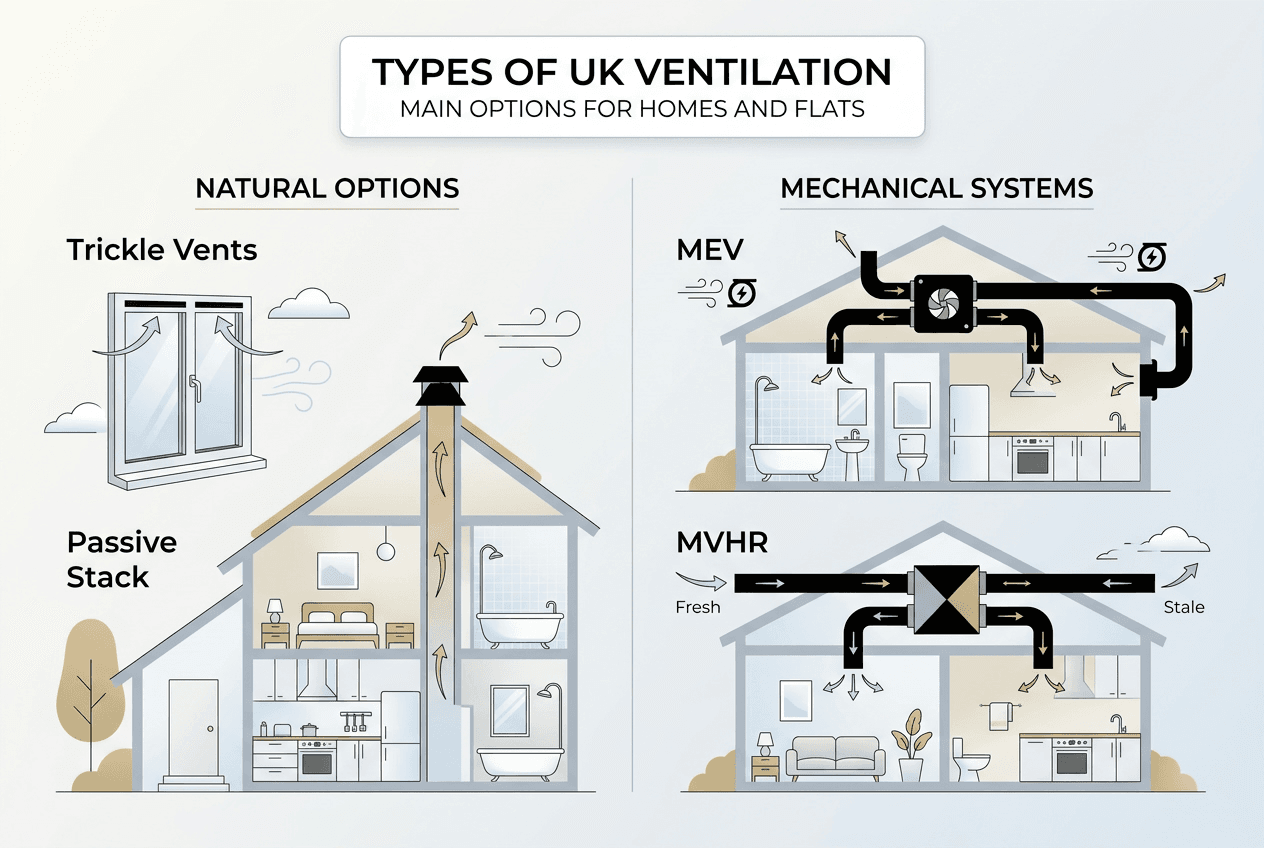
UK guidance categorises dwelling ventilation into four main systems, each suited to different property types and budgets. Understanding these options helps you select appropriate solutions for your specific circumstances.
System 1 combines background ventilation through trickle vents or airbricks with intermittent extract fans in wet rooms. This represents the most basic compliant approach, relying on natural airflow supplemented by mechanical extraction when needed. System 1 suits smaller properties or renovations where extensive ductwork installation is impractical. Running costs remain low since fans operate only when required.
System 2 uses passive stack ventilation (PSV) instead of mechanical extract fans. Vertical ducts from wet rooms terminate above roof level, creating natural airflow through temperature differences and wind effects. PSV operates silently without electricity consumption, making it attractive for energy conscious homeowners. However, performance varies with weather conditions and requires careful duct sizing and positioning.
System 3 employs continuous mechanical extract ventilation (MEV) running constantly at low speed. A central fan unit connects to ducts serving wet rooms, maintaining steady extract rates regardless of occupant behaviour. MEV guarantees consistent ventilation performance and suits properties where passive systems prove insufficient. Running costs exceed System 1 but remain modest with modern efficient fans.

System 4 represents mechanical ventilation with heat recovery (MVHR), the most sophisticated option. MVHR units extract stale air whilst supplying filtered fresh air, transferring heat between airstreams to minimise energy loss. This delivers excellent air quality with minimal heating penalty, ideal for airtight properties built to high energy standards. Initial costs are highest but running efficiency offsets this over time.
| System type | Key features | Best suited for | Advantages | Considerations |
|---|---|---|---|---|
| System 1 | Trickle vents plus intermittent fans | Existing homes, simple layouts | Low cost, easy retrofit | Relies on occupant operation |
| System 2 | Passive stack ventilation | Properties with suitable roof access | Silent, no running costs | Weather dependent performance |
| System 3 | Continuous mechanical extract | Mid size properties needing reliability | Consistent performance | Modest electricity use |
| System 4 | MVHR with heat recovery | New builds, deep retrofits | Excellent efficiency and air quality | Higher installation cost |
Choosing between systems depends on multiple factors beyond initial price. Consider your property’s airtightness, since leaky buildings waste the benefits of sophisticated ventilation. Assess available space for equipment and ductwork, particularly in existing properties where access is limited. Factor in running costs over the system’s lifespan, not just purchase price.
Pro Tip: Match ventilation system complexity to your property’s overall energy performance. Installing MVHR in a poorly insulated, draughty house wastes money, whilst basic System 1 ventilation underperforms in airtight new builds designed for minimal heat loss.
Hybrid approaches sometimes make sense, combining elements from different systems. You might use MVHR for main living areas whilst retaining intermittent extract fans in utility spaces. Choosing energy efficient HVAC involves balancing performance, cost, and practical installation constraints specific to your property.
Maintaining and installing HVAC systems for lasting comfort and efficiency
Proper installation determines whether your HVAC system delivers promised performance or disappoints from day one. Commissioning and handover are mandatory for compliance, not optional extras. This process verifies that installed systems meet design specifications and Part F requirements whilst providing occupants with operating instructions.
Early planning proves crucial for successful HVAC installation. Discuss ventilation requirements with your architect or designer before finalising building plans. Identify equipment locations, duct routes, and external terminations whilst walls remain open. Retrofitting ventilation into completed buildings costs significantly more and often compromises performance due to restricted access and routing options.
Key installation best practices include:
- Size equipment correctly for actual space volumes and usage patterns rather than guessing or oversizing for safety margins
- Install ductwork with smooth bends and proper sealing to minimise air resistance and energy waste
- Position air intakes away from pollution sources like car parks or boiler flues to maintain supply air quality
- Provide accessible service points for all equipment requiring periodic maintenance or filter changes
- Commission systems with flow measurements proving compliance with design specifications and Part F requirements
- Supply clear user documentation explaining controls, maintenance schedules, and troubleshooting procedures
Commissioning involves more than simply switching equipment on. Qualified technicians measure airflow rates at extract terminals and supply diffusers, comparing results against design values. They verify that controls operate correctly and that safety devices function as intended. Documentation proves regulatory compliance whilst providing baseline measurements for future maintenance comparisons.
Regular maintenance keeps HVAC systems operating efficiently long after installation. Filters accumulate dust and debris, restricting airflow and forcing fans to work harder. Extract grilles collect grease and lint, reducing effectiveness. Heat exchanger surfaces in MVHR units require periodic cleaning to maintain heat transfer efficiency.
Maintenance tasks you should schedule include:
- Filter replacement every three to six months depending on local air quality and system type
- Extract terminal cleaning to remove accumulated grease, dust, and lint
- Fan unit inspection checking for unusual noise, vibration, or reduced airflow
- Ductwork examination identifying leaks, damage, or blockages affecting performance
- Control calibration ensuring thermostats and sensors maintain accurate readings
- Heat exchanger cleaning in MVHR systems preserving heat recovery efficiency
Pro Tip: Schedule annual professional servicing before winter when heating demand peaks. This timing identifies potential issues whilst weather remains mild, avoiding emergency repairs during cold snaps when engineers are busiest and parts availability is stretched.
HVAC maintenance checklists help you track completed tasks and upcoming requirements. Many modern systems include service reminders or filter change indicators that alert you when attention is needed. Don’t ignore these warnings, as deferred maintenance compounds problems and increases eventual repair costs.
HVAC servicing best practices emphasise prevention over cure. Replacing a £15 filter costs far less than repairing a burnt out fan motor that failed due to restricted airflow. Annual servicing typically identifies minor issues before they escalate into expensive failures, whilst maintaining warranty coverage that often requires proof of regular professional maintenance.
Energy efficiency degrades gradually without maintenance. A 20% reduction in airflow might go unnoticed in daily use but increases running costs significantly over months and years. Clean, well maintained systems deliver designed performance levels, minimising energy waste whilst maintaining comfortable, healthy indoor environments.
Discover professional HVAC solutions with Akita AC
Understanding HVAC principles helps you make informed decisions, but professional installation and maintenance ensure optimal results. Akita AC specialises in climate control solutions throughout East Anglia, bringing expertise in modern efficient systems that meet UK building standards whilst delivering reliable comfort.

Our expert air conditioning installers handle everything from initial consultation through commissioning and ongoing support. We assess your property’s specific requirements, recommend appropriate systems, and complete installations that pass building control inspections first time. Whether you need air conditioning installation in East Anglia for a new build or air conditioning installation in Ipswich for a renovation project, we deliver solutions tailored to your circumstances.
Why choose Akita AC for your HVAC needs:
- Transparent pricing with detailed quotes before work begins
- Flexible finance options making upgrades accessible
- Comprehensive warranties protecting your investment
- Ongoing maintenance packages preserving system performance
- Energy efficient equipment reducing running costs
Pro Tip: Book consultations during quieter periods rather than waiting for peak summer demand. Early planning ensures equipment availability and preferred installation dates whilst giving you time to explore finance options without pressure.
What is HVAC? Frequently asked questions
What does HVAC stand for and include?
HVAC stands for heating, ventilation, and air conditioning, covering all systems that control indoor climate. This includes boilers, heat pumps, extract fans, supply ventilation, air conditioning units, and associated controls working together to maintain comfortable, healthy indoor environments.
Do I need to follow building regulations for ventilation if I renovate?
Yes, material alterations triggering building control approval must meet current Part F ventilation standards. Even minor changes like replacing windows might require upgraded ventilation if you’re significantly improving airtightness. Consult building control early to clarify requirements for your specific project.
How often should I service my HVAC system?
Annual professional servicing suits most residential HVAC systems, ideally scheduled before winter heating season. Commercial installations or properties with higher usage may benefit from six monthly checks. Between professional visits, replace filters quarterly and keep extract terminals clean.
What are the benefits of mechanical ventilation with heat recovery?
MVHR systems recover up to 90% of heat from extracted air, dramatically reducing ventilation heat losses compared to passive systems. They also filter incoming air, removing pollen and pollution whilst maintaining consistent airflow regardless of weather. These benefits suit airtight, well insulated properties maximising energy efficiency.
Can poor ventilation cause condensation and mould?
Absolutely. Inadequate ventilation allows moisture from cooking, bathing, and breathing to accumulate, condensing on cold surfaces like windows and external walls. This persistent dampness creates ideal conditions for mould growth, damaging property and potentially causing respiratory problems. Proper ventilation removes moisture before condensation occurs.
What is the difference between intermittent and continuous ventilation?
Intermittent ventilation operates only when needed, typically through manually or sensor activated extract fans providing high airflow rates for short periods. Continuous ventilation runs constantly at lower rates, maintaining steady background airflow. Part F allows either approach provided total ventilation meets minimum requirements over time.