

HVAC trends in 2026: Future-proof your UK home or business
TL;DR:
- Upgrading your HVAC system with smart controls and eco-friendly heat pumps can significantly improve efficiency and reduce energy bills by up to 40 percent.
- Proactive maintenance, proper system configuration, and layered upgrades maximize long-term performance and property value.
Upgrading your HVAC system has never carried a bigger financial and environmental argument than it does right now. Smart controls and IoT can deliver efficiency gains of 15 to 40% through predictive optimisation alone, which means the gap between an average system and a well-configured modern one is measured in hundreds of pounds per year. Whether you own a home in Suffolk or run a business premises in Essex, 2026 is the year the decisions you make about climate control will shape your energy bills, your carbon footprint, and the long-term value of your property for years to come.
Table of Contents
- Understanding the UK HVAC market in 2026
- Smart controls and IoT: The heart of modern efficiency
- Heat pumps and natural refrigerants: Leading the eco drive
- Maintenance matters: Small actions, big savings
- Why most miss the real value in HVAC upgrades
- Ready to future-proof your HVAC?
- Frequently asked questions
Key Takeaways
| Point | Details |
|---|---|
| Smart tech delivers big savings | Integrating smart controls and IoT can cut HVAC bills by up to 40% when optimised correctly. |
| Heat pumps lead the way | Government incentives make heat pumps and AI a smart upgrade for eco and cost benefits. |
| Simple maintenance pays off | Cleaning coils and adjusting your thermostat yields dramatic energy savings with little effort. |
| Eco-friendly upgrades suit regulations | Choosing low-GWP refrigerants and natural solutions future-proofs systems against UK environmental laws. |
| Balance technology and care | Maximise returns by blending smart upgrades with diligent routine maintenance. |
Understanding the UK HVAC market in 2026
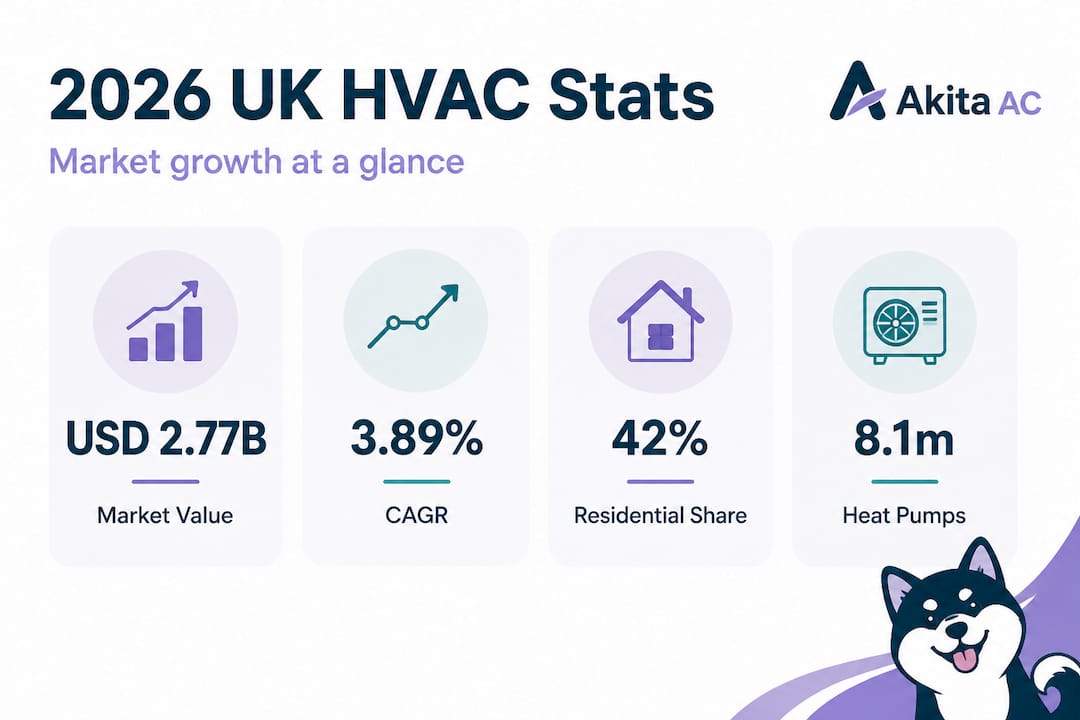
The UK heating, ventilation, and air conditioning sector is not standing still. The UK HVAC market is valued at USD 2.77 billion in 2026 and is projected to grow at a compound annual growth rate of 3.89% through to 2031, with residential installations accounting for a commanding 74.68% share of that total. That residential dominance tells you something important: most of the innovation being pushed to market right now is designed with homeowners squarely in mind.
| Metric | 2026 figure |
|---|---|
| UK HVAC market value | USD 2.77 billion |
| Projected CAGR to 2031 | 3.89% |
| Residential market share | 74.68% |
| Primary growth drivers | Efficiency demands, smart tech, eco regulation |
What is pushing that growth? Three forces stand out. First, energy prices across the UK remain significantly elevated compared to a decade ago, making efficiency a financial priority rather than an aspiration. Second, government policy around net zero and building performance standards is forcing both new builds and existing properties to raise their game. Third, the technology itself has become genuinely user-friendly, meaning that smart systems once reserved for commercial buildings are now practical and affordable for homes.
For buyers and decision-makers, this convergence matters enormously. It means the market is competitive, choice is wide, and the risk of buying yesterday’s technology at tomorrow’s prices is real. Understanding comfort and energy savings from a UK perspective helps you filter marketing claims from genuine performance gains. It also pays to get familiar with system types for 2026 before committing to any installation quote.
Key considerations for UK buyers in 2026:
- Whole-system thinking: Efficiency gains come from the combination of unit, controls, insulation, and installation quality, not from the unit specification alone.
- Regulatory compliance: F-gas regulations and refrigerant phase-downs are active and accelerating. Systems bought today must be forward-compatible.
- Finance accessibility: More providers now offer flexible finance, making higher-spec systems reachable for households and small businesses without large capital reserves.
- Retrofitting potential: Many UK properties were not designed with modern HVAC in mind. Retrofit-ready products have improved dramatically and should be part of every upgrade conversation.
Smart controls and IoT: The heart of modern efficiency
If there is one technology trend that separates a well-run HVAC system from a poorly run one in 2026, it is smart controls integrated with the Internet of Things (IoT). IoT simply means your HVAC equipment is connected, sharing real-time data with other systems, adjusting automatically based on occupancy, weather forecasts, and energy tariff fluctuations. It is less about futuristic gadgetry and more about ensuring your system is never working harder than it needs to.
The results are well-documented. Smart controls and IoT deliver efficiency improvements of 15 to 40% through predictive optimisation. To put that in concrete terms: if your current energy bill for climate control sits at £1,200 per year, a properly configured smart system could reduce that to somewhere between £720 and £1,020 without any change in the comfort level you experience.
How a smart HVAC upgrade typically unfolds:
- Audit your current system. Before purchasing anything, run a basic HVAC diagnostic to understand what your existing equipment is actually doing and where it is losing efficiency.
- Identify your control gap. Most older systems rely on fixed schedules or simple thermostats. The upgrade to a learning thermostat or full building management integration is often the single highest-return action available.
- Select compatible hardware. Smart controls need to be matched to your unit type. Not every control works with every system, so compatibility checking before purchase saves frustration and wasted expenditure.
- Commission properly. This is where most upgrades go wrong. A smart controller installed without correct commissioning, meaning someone setting it up to reflect your actual occupancy patterns, building structure, and tariff schedule, will underperform from day one.
- Review and optimise quarterly. The first three months of data from a new smart system almost always reveal further tuning opportunities. Build this review into your maintenance routine.
Our guide to smart HVAC controls goes deeper on each of these steps and explains the specific products worth considering for UK residential and commercial applications.
Comparing control approaches:
| Control type | Typical energy saving | Best suited for |
|---|---|---|
| Basic programmable thermostat | 5 to 10% | Small homes, straightforward schedules |
| Learning smart thermostat | 15 to 25% | Households with variable routines |
| Full IoT building management | 25 to 40% | Businesses, multi-zone properties |
| Predictive AI-driven controls | Up to 40%+ | Commercial buildings, large homes |
Pro Tip: The biggest mistake people make with smart controls is setting them up once and forgetting them. Spending thirty minutes adjusting your system’s schedule after the clocks change, or after your working patterns shift, consistently delivers more savings than upgrading the hardware itself.
“The most efficient system in the world will waste energy if nobody has configured it to match how the building is actually used.” This is the principle that separates genuinely low-bill properties from those with expensive equipment and average results.
Heat pumps and natural refrigerants: Leading the eco drive
Heat pumps have moved from niche to mainstream in the UK, and 2026 represents an inflection point for the technology. The government’s Heat Pump Ready Programme is targeting 600,000 installations per year by 2028, with AI-driven controls cutting bills by more than 20% and waste heat recovery improving the Seasonal Coefficient of Performance (SCOP, the ratio of heating output to energy input) by 20% in tested installations.
Understanding what drives the push toward heat pumps helps you assess whether they make sense for your property:
- Government targets require the UK to dramatically reduce reliance on gas boilers. Heat pumps are the primary residential replacement technology.
- Running cost advantages become compelling when paired with smart controls and off-peak electricity tariffs, particularly as wholesale electricity costs respond to increased renewable generation.
- Planning changes have made air source heat pump installations simpler for most UK homes, removing a historic barrier for terraced and semi-detached properties.
- Compatibility improvements mean modern heat pumps perform efficiently even in older, less insulated UK housing stock, addressing a concern that deterred many early adopters.
Refrigerant choice sits alongside the heat pump conversation and deserves separate attention. The GB HFC phase-down is pushing the sector decisively toward low-GWP refrigerants, which have a lower Global Warming Potential than the high-GWP gases they replace. Natural options such as CO2 and ammonia, as well as newer synthetic low-GWP blends, are becoming standard. The honest picture is that these refrigerants do raise upfront costs, but a system bought today with legacy high-GWP refrigerant faces both regulatory risk and diminishing servicing support as phase-down milestones are met.
Pro Tip: When comparing heat pump quotes, ask specifically about the refrigerant used and its GWP rating. A lower upfront cost today can mean a costly refrigerant swap in three to five years as legislation bites. The right types of heat pump for your property considers both the unit and the refrigerant inside it.
Total cost of ownership: What most buyers underestimate
The sticker price of any HVAC system is only part of the story. A thorough total cost of ownership assessment covers: installation complexity and any remedial work required; expected annual energy consumption at current tariff rates; predicted maintenance costs over a ten-year period; and the likely resale premium or risk associated with the equipment choice. Exploring your options for upgrading for eco savings with a longer time horizon in mind consistently produces better outcomes than chasing the lowest installation quote.
Maintenance matters: Small actions, big savings
Here is a finding that consistently surprises homeowners and facilities managers alike: dirty coils and blocked filters increase energy consumption by 10 to 30%, and simply reducing your thermostat setting by 1°C saves approximately 8% on your heating bill. Neither of these actions requires new equipment. Both require nothing more than attention and routine.
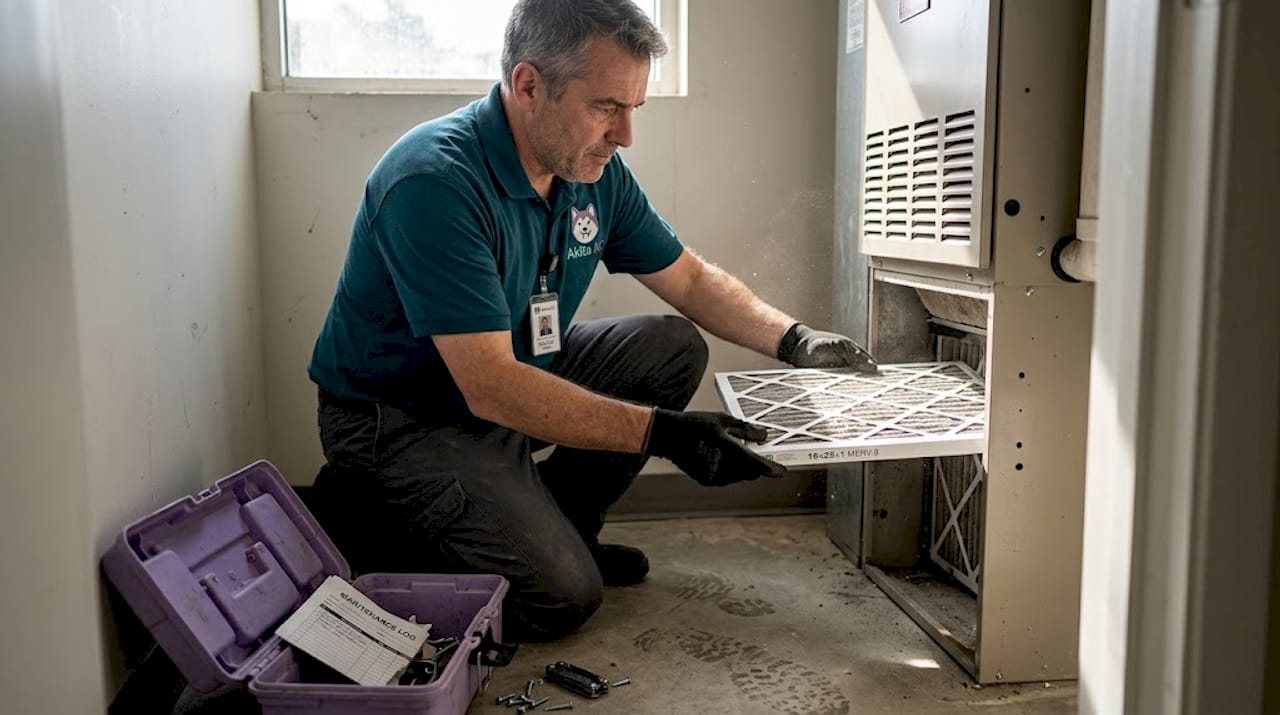
The HVAC industry talks relentlessly about new technology, which is understandable because new technology is interesting and sellable. But the evidence consistently shows that regular maintenance delivers returns that rival, and in some cases exceed, the returns from equipment upgrades alone. A ten-year-old system maintained meticulously will often outperform a two-year-old system that has been neglected.
Eight maintenance actions that deliver the most impact:
- Clean or replace air filters every one to three months depending on usage and environment.
- Inspect and clean evaporator and condenser coils annually to prevent the 10 to 30% efficiency penalty of fouling.
- Check refrigerant levels and look for signs of leakage every service visit.
- Clear condensate drain lines to prevent water damage and microbial growth that degrades air quality.
- Inspect ductwork for leaks, which can waste 20 to 30% of conditioned air before it reaches the living space.
- Lubricate fan and motor bearings to reduce friction-related energy losses.
- Test thermostat calibration and sensor accuracy, as a 2°C sensor error translates directly to overconsumption.
- Verify electrical connections and tighten any that have loosened, since poor connections cause excess heat and component failure.
“Proactive maintenance is not a cost centre. It is an energy-saving strategy with a measurable return on investment that most property owners have not calculated.”
Following a structured HVAC maintenance checklist removes the guesswork and ensures nothing is missed across the maintenance cycle. For businesses especially, documented servicing best practices also provide evidence of due diligence for insurance and compliance purposes. A detailed maintenance plan for 2026 ties together seasonal priorities and helps you plan expenditure across the year rather than reacting to breakdowns.
Why most miss the real value in HVAC upgrades
We see a pattern repeat itself constantly in the field. A homeowner or business owner reads about the latest heat pump or smart control system, invests in the upgrade, and then wonders six months later why the savings are not matching the brochure figures. The reason is almost never the equipment. It is almost always the configuration, the maintenance, or both.
The honest truth about HVAC value in 2026 is this: technology is an accelerant, not a foundation. Smart controls multiplied onto a dirty, leaking, misconfigured system produce mediocre results. The same controls applied to a clean, well-maintained, correctly commissioned system produce transformative ones. The industry has an incentive to sell hardware. Our incentive is to ensure your system performs.
What genuinely works, based on real installation and servicing experience across Suffolk, Norfolk, and Essex, is a layered approach. Start with the basics: clean the system, fix the leaks, calibrate the controls. Then layer in the upgrades, whether that is a heat pump, a smart thermostat, or IoT integration. The compounding effect of doing both, rather than either in isolation, is where the real value lives.
We also see property owners dramatically underestimate the relationship between HVAC performance and asset value. An energy-efficient, well-maintained climate control system is increasingly a material factor in property transactions and commercial lease negotiations. Following the top HVAC upgrade tips is not just about this month’s energy bill. It is about the long-term value of the asset you are protecting.
The uncomfortable reality is that most HVAC spending is reactive. Boiler fails, air conditioning stops working, something breaks. The property owners who consistently achieve the lowest costs and the best system performance are the ones who are proactive. That discipline is more valuable than any single piece of technology currently on the market.
Ready to future-proof your HVAC?
The evidence is clear: the right combination of smart technology, eco-friendly refrigerants, modern heat pumps, and disciplined maintenance can dramatically lower your energy bills and make your property more resilient and valuable over the next decade.

At Akita Air Conditioning, we specialise in turning this knowledge into action for homeowners and businesses across Suffolk, Norfolk, and Essex. Whether you are considering a full domestic air conditioning installation with smart controls and heat pump technology, or you need a tailored commercial air conditioning solution with ongoing maintenance support, our team is ready to guide you through the options with transparent pricing and flexible finance. Reach out today to arrange a no-obligation assessment and find out exactly what a future-proofed system looks like for your property.
Frequently asked questions
What is the most energy-efficient HVAC technology in the UK for 2026?
Heat pumps combined with AI-driven controls and waste heat recovery are the most efficient HVAC solutions available in 2026, with AI controls cutting bills by more than 20% and waste heat recovery improving seasonal efficiency scores by up to 20%.
How much can smart controls reduce HVAC energy bills?
Smart controls and IoT improve system efficiency by 15 to 40% through predictive optimisation, which translates directly into lower bills without any reduction in comfort.
Are eco-friendly refrigerants worth the higher initial cost?
Low-GWP refrigerants cost more upfront but are essential for compliance with the ongoing GB HFC phase-down and protect you from servicing disruption as high-GWP gases become restricted.
What quick steps boost HVAC efficiency at home?
Cleaning coils and filters regularly removes the 10 to 30% energy penalty caused by fouling, and reducing your thermostat by just 1°C saves approximately 8% on your heating costs immediately.
Will investing in HVAC upgrades increase property value?
Energy-efficient HVAC systems with smart controls are increasingly factored into property valuations and commercial lease negotiations, improving market appeal and supporting stronger resale prices in a market where energy performance certificates carry real weight.