

Top tips to upgrade your home HVAC for better comfort
TL;DR:
- Proper home insulation and accurate system sizing are crucial for HVAC efficiency and performance.
- Air source heat pumps offer high efficiency and potential cost savings, especially with grants and smart controls.
- Selecting certified installers, ensuring correct installation, and regular maintenance are essential for long-term system effectiveness.
Choosing the right HVAC upgrade is one of the most consequential decisions you can make as a homeowner. Get it right and you’ll enjoy lower energy bills, consistent warmth, and a system that earns its keep for years. Get it wrong and you’re looking at poor performance, unexpected costs, and a lot of frustration. The good news is that with the right criteria, the right technology, and a qualified installer, upgrading your home’s climate control system is entirely achievable. This guide walks you through every stage, from selecting a system to keeping it running at its best.
Table of Contents
- Key criteria for choosing a residential HVAC upgrade
- Energy-efficient HVAC technologies for UK homes
- Installation and commissioning: Getting it right
- Maintaining and optimising your upgraded HVAC for long-term value
- Why conventional wisdom on HVAC upgrades misses the mark
- Connect with trusted HVAC upgrade experts
- Frequently asked questions
Key Takeaways
| Point | Details |
|---|---|
| Certified installation matters | Choosing an MCS-certified installer ensures your system is properly designed and commissioned for best results. |
| Check grant eligibility | The Boiler Upgrade Scheme can significantly reduce up-front costs for air source heat pumps if your home qualifies. |
| Smart controls boost efficiency | Using smart thermostats and weather compensation controls helps maintain peak performance and comfort. |
| Maintenance delivers long-term value | Regular servicing and maintenance are essential to keeping your HVAC system efficient and reliable. |
Key criteria for choosing a residential HVAC upgrade
Before you even start comparing systems, you need to understand what your home actually needs. Not every upgrade suits every property, and skipping this step is where many homeowners come unstuck.
Start with your home’s insulation. A heat pump, for example, works by running at lower flow temperatures over longer periods. If your walls, loft, and floors are poorly insulated, the system has to work harder to compensate, which reduces efficiency and raises running costs. Improving insulation before upgrading your HVAC often delivers a better return than the system upgrade itself.
Next, consider your electrical supply. Some modern systems, particularly heat pumps, may require an upgraded consumer unit or additional circuit capacity. Your installer should assess this during a site survey, but it’s worth asking about upfront so there are no surprises on installation day.
When it comes to choosing energy-efficient HVAC, the installer you choose matters just as much as the system itself. MCS-certified installers experienced in heat pumps ensure proper system sizing, low flow temperatures ideally between 30 and 45°C, and correct commissioning with weather compensation. These details are not optional extras. They are what separates a system that performs well from one that underperforms from day one.
It’s also worth understanding the limitations. Heat pumps are less suitable for very poorly insulated homes or those needing high flow temperatures without significant upgrades, and some properties may also require an electrical supply upgrade. Knowing this early saves time, money, and disappointment.
Here are the key criteria to assess before committing to an upgrade:
- Insulation levels across walls, loft, floors, and windows
- Existing heating system and whether pipework is compatible
- Electrical supply capacity for the new system
- Installer credentials, specifically MCS certification and relevant experience
- Home suitability based on size, layout, and heat loss calculations
- Budget including installation, any preparatory works, and ongoing maintenance
Understanding HVAC comfort and savings starts with this kind of honest assessment. Rushing past it is the single biggest mistake homeowners make.
Pro Tip: Always ask your installer for their MCS certificate number and check it on the MCS database before signing any contract. A reputable installer will never hesitate to provide this.
Energy-efficient HVAC technologies for UK homes
With your criteria established, you can start comparing the technologies available. The main options for UK homeowners in 2026 are air source heat pumps, smart thermostat upgrades, and high-efficiency gas boilers.
Air source heat pumps (ASHPs) are the headline option for many households. They extract heat from outdoor air and use it to warm your home, achieving 300 to 400% efficiency (a COP of 3 to 4). That means for every unit of electricity used, you get three to four units of heat. They are cheaper to run than oil heating and broadly comparable to efficient gas boilers, though smart time-of-use tariffs can push savings up to £100 per year beyond that.
“Heat pumps achieve 300 to 400% efficiency (COP 3 to 4), and savings of up to £100 per year are achievable with time-of-use electricity tariffs.” Energy Saving Trust
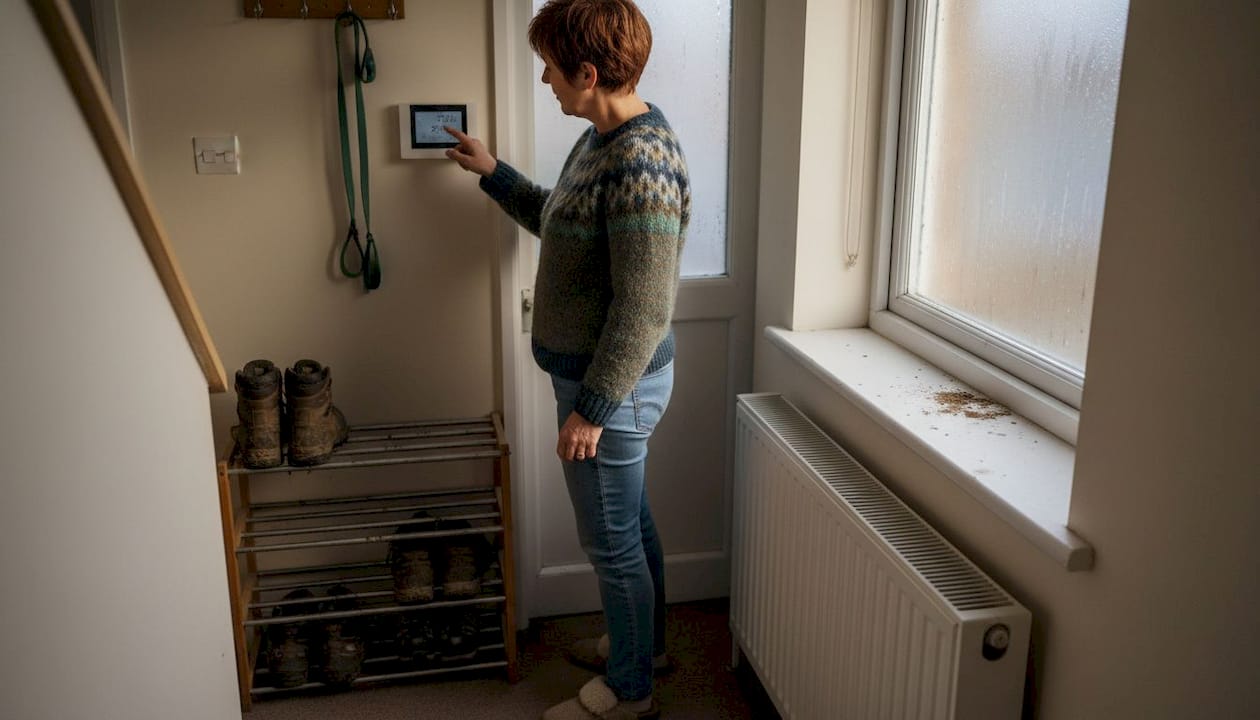
Smart thermostats and weather compensation controls are often overlooked but deliver genuine gains. Weather compensation adjusts your system’s output based on outdoor temperature, so it never works harder than necessary. Paired with a smart thermostat, you gain granular scheduling and remote control, which together can trim energy use significantly without sacrificing comfort.
High-efficiency gas boilers remain a practical option where heat pumps are not suitable. Modern condensing boilers can achieve over 90% efficiency and pair well with smart controls.
The Boiler Upgrade Scheme offers a £7,500 grant for eligible homes in England and Wales installing an air source heat pump, provided the property has a valid EPC. ASHPs cost around £11,000 to install before the grant is applied, bringing the net cost closer to £3,500 for qualifying homeowners. Understanding the installation cost guide for your specific property is essential before budgeting.
| Technology | Typical efficiency | Approx. install cost | Grant available |
|---|---|---|---|
| Air source heat pump | COP 3 to 4 (300 to 400%) | £11,000 (before grant) | £7,500 BUS grant |
| Smart thermostat upgrade | Varies by system | £150 to £400 | None |
| High-efficiency gas boiler | Up to 92% | £2,000 to £4,000 | None currently |
For homeowners focused on comfort and lower costs, heat pumps offer the strongest long-term case, particularly with grant support.
Pro Tip: Check your eligibility for the Boiler Upgrade Scheme before you commit to any installer. Your EPC rating and property type both affect eligibility, and some homes may need minor improvements first.
Installation and commissioning: Getting it right
Selecting the right technology is only half the job. A poorly installed system will underperform regardless of how efficient it looks on paper. Installation quality is where the real difference is made.
Here is a step-by-step approach to ensuring a quality installation:
- Vet your installer thoroughly. Confirm MCS certification, check reviews, and ask for references from similar projects. An MCS-certified installer will ensure correct system sizing, appropriate flow temperatures, and proper commissioning with weather compensation.
- Request a full heat loss calculation. This determines the correct system size for your home. Oversized systems short-cycle and waste energy. Undersized ones struggle in cold snaps.
- Confirm flow temperature settings. Ideally these should sit between 30 and 45°C for heat pumps. Higher settings reduce efficiency significantly.
- Insist on weather compensation. This feature alone can meaningfully improve real-world performance and should be set up during commissioning, not left as an afterthought.
- Review all certificates and warranties. Your installer should provide an MCS installation certificate, which you’ll need for grant claims and for future property sales.
- Plan your maintenance from day one. Servicing best practices should be discussed at handover, not months later when something goes wrong.
According to a step-by-step installation guide, poor installation is one of the leading causes of heat pump underperformance in UK homes. Smart thermostats and weather compensation controls are essential for sustained efficiency, and these must be configured correctly at commissioning, not left to the homeowner to figure out.
A good maintenance checklist begins the moment your system is commissioned. Ask your installer to walk you through basic checks you can perform yourself between annual services.
Pro Tip: Always review your installation certificate before your installer leaves. If something is missing or unclear, raise it immediately. Chasing paperwork weeks later is far more difficult.
Maintaining and optimising your upgraded HVAC for long-term value
A quality installation sets the foundation, but your ongoing habits determine whether your system delivers value year after year. Maintenance is not optional. It is the difference between a system that performs at its rated efficiency and one that quietly degrades.
Here are the core maintenance and optimisation tasks every homeowner should follow:
- Annual professional service: A qualified engineer checks refrigerant levels, electrical connections, filters, and overall system performance.
- Monthly filter checks: Blocked filters reduce airflow and force the system to work harder. A quick visual check takes two minutes.
- Weather compensation review: Seasonal changes may require small adjustments to your compensation curve. Your installer can advise on settings.
- Smart thermostat scheduling: Use your thermostat’s scheduling features to match heating patterns to your actual routine, not a generic default.
- Monitor energy consumption: Most modern systems offer app-based monitoring. A sudden spike in consumption is often the first sign of a developing fault.
Regular maintenance and smart controls are essential for sustained efficiency, and poor installation or neglected servicing can lead to significant underperformance. A well-maintained heat pump should consistently achieve COP 3 to 4 across the heating season.
| Maintenance task | Frequency | Efficiency impact |
|---|---|---|
| Professional service | Annually | High |
| Filter inspection | Monthly | Medium |
| Weather compensation check | Seasonally | High |
| Smart thermostat review | Quarterly | Medium |
| Energy monitoring | Ongoing | Early fault detection |
For a full breakdown of what to check and when, the HVAC maintenance steps guide covers the process in detail. Understanding regular maintenance benefits is particularly useful if you want to extend your system’s lifespan and protect your investment.
Pro Tip: Set a recurring calendar reminder for your annual service. Most homeowners forget until something breaks, which is always the most expensive time to remember.
Why conventional wisdom on HVAC upgrades misses the mark
Most advice on HVAC upgrades focuses on the headline numbers: efficiency ratings, grant amounts, and projected savings. These figures matter, but they only tell part of the story.
What gets glossed over is the sheer variability in real-world outcomes. Two identical heat pumps installed in similar homes can perform very differently depending on installer quality, commissioning standards, and how the homeowner uses the system. The technology is not magic. It requires the right conditions to deliver on its promise.
We’ve also seen that many homeowners approach upgrades with a product-first mindset, choosing a system before assessing whether their home is ready for it. That’s backwards. The home assessment should always come first.
There’s also a broader issue with independent advice. Only around 3% of UK homeowners have adopted heat pumps despite growing interest, partly because concerns over upfront costs and suitability persist without clear, unbiased guidance. Many homeowners rely on installer recommendations alone, which is not always the most objective starting point.
The smartest thing you can do is treat your upgrade like any other significant home improvement: get multiple quotes, ask hard questions, and seek independent advice before committing. Understanding air conditioning energy efficiency in the context of your specific home is far more valuable than any generic comparison article.
Connect with trusted HVAC upgrade experts
Knowing what to look for is one thing. Finding a team that actually delivers it is another.

At Akita Air Conditioning, we work with homeowners across Suffolk, Norfolk, and Essex to design and install energy-efficient climate control systems that genuinely perform. Whether you’re exploring domestic air conditioning for the first time or looking to replace an ageing system, our team provides transparent pricing, MCS-certified installation, and ongoing support. We also offer a fixed price AC install so you know exactly what you’re committing to before work begins. If you’re ready to upgrade, we’re ready to help.
Frequently asked questions
What grant support is available for HVAC upgrades in the UK?
Eligible UK homes in England and Wales can receive a £7,500 BUS grant for air source heat pump installations, provided they hold a valid Energy Performance Certificate. This grant is applied directly by your installer.
How can I ensure my HVAC upgrade delivers maximum efficiency?
Choose an MCS-certified installer who correctly sizes the system and commissions it with weather compensation controls. Pair this with regular servicing and a smart thermostat for ongoing gains.
Are heat pumps suitable for all UK homes?
Heat pumps are less suitable for poorly insulated properties or homes requiring high flow temperatures. A proper heat loss assessment will clarify whether your home is a good candidate before you invest.
How do running costs of heat pumps compare to gas boilers?
Heat pumps achieve COP 3 to 4, making them cheaper to run than oil heating. Running costs are broadly similar to efficient gas boilers unless you use a smart time-of-use electricity tariff, which can tip the balance further in favour of heat pumps.