

Why upgrade air conditioning for better home energy efficiency
Many UK homeowners hesitate to upgrade air conditioning, worried about rising costs and installation complexity. Yet modern inverter-driven systems can slash energy bills by up to 50% whilst delivering year-round comfort. This guide explains how upgrading transforms energy efficiency, enhances climate control, and navigates the legal and financial considerations. You’ll discover what makes today’s heat pumps so effective, why professional installation matters, and how to weigh upfront investment against long-term savings. Whether you’re battling humid summers or seeking efficient winter heating, understanding these factors helps you make an informed decision about upgrading your home’s climate control.
Table of Contents
- Key takeaways
- How modern air conditioning systems improve energy efficiency
- Benefits beyond cooling: year-round climate control and home comfort
- Installation, maintenance, and legal requirements for upgrades
- Weighing costs and challenges: upfront investment versus long-term gains
- Discover expert air conditioning installation and maintenance
- Frequently asked questions
Key Takeaways
| Point | Details |
|---|---|
| Energy savings | Upgrading to inverter driven heat pumps can reduce annual energy costs by around thirty to fifty per cent in typical UK homes. |
| Year round comfort | They provide heating in winter and cooling in summer from a single highly efficient system. |
| Professional installation required | Safe operation and regulatory compliance require installation by a qualified professional. |
| Payback period | Initial investment is substantial but the typical payback period is five to eight years depending on usage and electricity prices. |
| Air quality and value | Upgrades improve indoor air quality and can increase property value. |
How modern air conditioning systems improve energy efficiency
Upgrading to contemporary air conditioning technology delivers substantial energy savings through intelligent design. Variable speed compressors form the heart of this efficiency revolution, adjusting output precisely to match your home’s cooling or heating demand. Unlike older fixed-speed units that run at full power constantly regardless of need, inverter-driven heat pumps ramp up or down smoothly, eliminating wasteful energy spikes.
This adaptive approach means your system works smarter, not harder. When a room reaches your target temperature, the compressor reduces speed rather than switching off completely, then cycling back on at full power. That constant stop-start pattern in traditional units wastes enormous amounts of electricity. Modern systems maintain consistent temperatures with far less energy, delivering comfort without the penalty of soaring bills.
The numbers tell a compelling story. Upgrading to inverter-driven heat pumps reduces energy use by 30-50% compared to fixed-speed units. Today’s best systems achieve a Seasonal Coefficient of Performance up to 5.6, meaning they generate 5.6 units of heating or cooling for every unit of electricity consumed. That efficiency translates directly into lower running costs and reduced environmental impact.
Key efficiency advantages of modern systems:
- Variable speed compressors eliminate wasteful on-off cycling
- Inverter technology maintains precise temperature control with minimal energy
- Advanced refrigerants and heat exchangers maximise heat transfer
- Smart sensors detect occupancy and adjust output automatically
- Multi-zone capability allows heating or cooling only occupied rooms
The difference becomes especially clear during mild weather when you need just a touch of cooling or heating. Older systems can’t modulate their output, so they overshoot your target temperature, then shut down, then restart repeatedly. Modern units dial in exactly the right amount of climate control, running continuously at low power rather than cycling wastefully. This smooth operation also reduces wear on components, extending system lifespan and reducing maintenance needs.
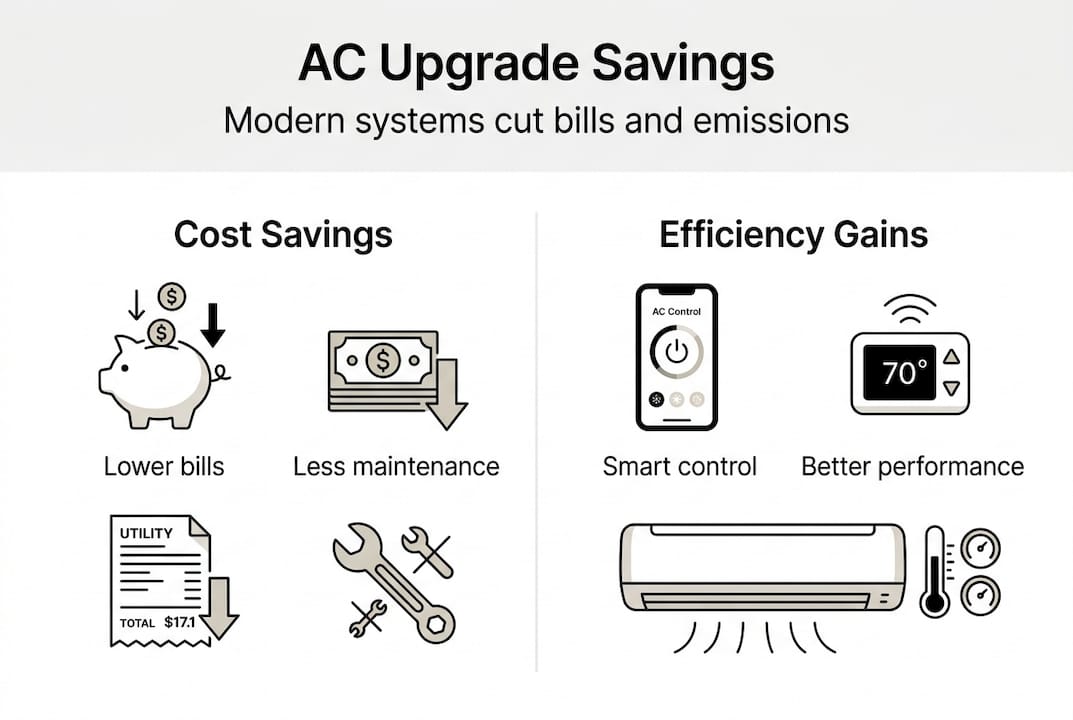
Energy savings at a glance: Modern inverter systems can reduce annual cooling and heating costs by £300-600 compared to fixed-speed units in typical UK homes, with payback periods of 5-8 years depending on usage patterns and electricity prices.
Benefits beyond cooling: year-round climate control and home comfort
Heat pumps transform how you think about home climate control by delivering both heating and cooling from a single system. During Britain’s increasingly warm summers, they provide efficient cooling. When temperatures drop, they reverse operation to heat your home with remarkable efficiency. This dual functionality makes them especially valuable in the UK’s variable climate, where you might need heating in the morning and cooling by afternoon.

The heating performance surprises many homeowners. Heat pumps provide heating at over 300% efficiency compared to gas boilers’ 80-90%. They extract heat from outside air even in cold weather, concentrating and transferring it indoors. For every kilowatt of electricity used, you get three or more kilowatts of heat, making them far more economical than electric radiators or storage heaters. During mild UK winters, this efficiency advantage becomes especially pronounced.
Beyond temperature control, modern systems dramatically improve indoor air quality and humidity management. Built-in filters capture dust, pollen, and allergens, creating cleaner breathing environments. This matters particularly for family members with asthma or allergies. The dehumidification function tackles Britain’s persistent dampness problem, reducing condensation on windows, preventing mould growth, and creating a healthier home environment. You’ll notice the difference immediately in how fresh and comfortable your rooms feel.
Sleep quality improves markedly with proper climate control. Research shows the ideal bedroom temperature for restful sleep sits between 16-18°C. Different types of air conditioning systems can maintain this optimal range precisely throughout the night, unlike opening windows which brings noise, pollen, and security concerns. Many homeowners report sleeping better within days of installation, waking more refreshed and alert.
Comfort and health benefits:
- Consistent temperatures eliminate hot and cold spots
- Reduced humidity prevents condensation and mould
- Air filtration removes allergens and pollutants
- Quiet operation supports better sleep quality
- Zoned control allows personalised comfort in different rooms
Property value considerations matter too. As climate change makes summers warmer and buyers increasingly expect modern amenities, homes with efficient climate control systems become more attractive. Estate agents report that air conditioning can add 5-10% to property values in some markets, though this varies by location and property type. The investment in comfort today may well pay dividends when you eventually sell.
Pro Tip: Set your system to maintain 20-22°C in living areas and 16-18°C in bedrooms for optimal comfort and efficiency. These temperatures balance comfort with running costs whilst supporting healthy sleep patterns.
Installation, maintenance, and legal requirements for upgrades
Professional installation isn’t optional, it’s a legal requirement that protects your investment and ensures safe operation. F-Gas certified installation is required by law for systems using fluorinated gases, which includes virtually all modern air conditioning units. These regulations exist because refrigerants are potent greenhouse gases. Improper handling during installation can cause leaks that harm the environment and compromise system performance. Only certified engineers possess the training and equipment to install systems correctly whilst minimising refrigerant emissions.
The certification process ensures engineers understand refrigerant properties, leak detection, safe handling procedures, and proper disposal methods. They must demonstrate competence in brazing copper pipes without contaminating refrigerant circuits, evacuating air and moisture before charging systems, and testing for leaks using electronic detectors. This expertise matters because even small leaks gradually reduce system efficiency, increase running costs, and may eventually require expensive repairs. Professional installation from the start prevents these problems.
Ongoing compliance obligations continue after installation. Annual leak checks are required for systems with refrigerant charge ≥3kg, which includes many domestic heat pumps and larger split systems. These inspections verify system integrity, detect developing leaks before they become serious, and maintain records for regulatory compliance. Failing to conduct required checks can result in fines and invalidate warranties. Your installer should explain your specific obligations based on your system’s refrigerant charge.
Maintenance preserves the efficiency gains that justified upgrading in the first place. Regular servicing typically costs £80-150 annually but prevents the 15-20% efficiency loss that occurs when filters clog, coils accumulate dirt, or refrigerant levels drop slightly. Following a comprehensive maintenance checklist keeps your system running optimally, extends its lifespan from 10-15 years to 15-20 years, and maintains manufacturer warranties that often require proof of annual servicing.
Essential maintenance tasks:
- Clean or replace air filters every 1-3 months depending on usage
- Annual professional inspection of refrigerant levels and pressures
- Clean indoor and outdoor coils to maintain heat transfer efficiency
- Check and clear condensate drains to prevent water damage
- Inspect electrical connections and test safety controls
- Verify correct thermostat operation and calibration
The financial logic of maintenance becomes clear when you consider alternatives. Neglected systems lose efficiency gradually, increasing running costs by £100-200 annually. Eventually, lack of maintenance causes component failures requiring repairs costing £300-800 or more. Annual servicing benefits include catching small issues before they become expensive problems, maintaining peak efficiency, and ensuring your system delivers the energy savings you upgraded to achieve.
Pro Tip: Schedule servicing in spring before cooling season begins. This timing ensures your system operates at peak efficiency during the hottest months when you rely on it most, and technicians typically have better availability than during the summer rush.
Weighing costs and challenges: upfront investment versus long-term gains
The financial case for upgrading requires honest assessment of both costs and benefits. Installation costs for split AC units range between £1,800 and £4,500 depending on system size, number of indoor units, installation complexity, and property characteristics. Multi-room systems cost more but deliver better value per room than installing multiple single units. Heat pumps capable of heating and cooling typically sit at the higher end of this range but eliminate the need for separate heating systems.
Running costs depend heavily on usage patterns and electricity prices. The same research shows running costs of 26-54p per hour for typical systems. A household using air conditioning four hours daily during a three-month summer might spend £90-190 for cooling. Using a heat pump for heating during mild winter months could cost £150-300 depending on home insulation and temperature settings. These figures assume current electricity prices around 24p per kWh, though prices fluctuate.
Comparing running costs against alternatives provides perspective. Electric heating costs roughly 24p per kWh of heat, whilst heat pumps deliver the same warmth for 6-8p per kWh thanks to their 300%+ efficiency. Gas heating currently costs about 6p per kWh but produces carbon emissions and requires separate cooling solutions for summer. Whether air conditioning proves worthwhile depends on your specific circumstances, usage patterns, and priorities around comfort versus cost.
| Cost factor | Initial expense | Annual ongoing | Long-term impact |
|---|---|---|---|
| Installation | £1,800-4,500 | None | One-time investment |
| Running costs | None | £240-490 | Depends on usage and electricity prices |
| Maintenance | None | £80-150 | Preserves efficiency and prevents repairs |
| Energy savings | None | £300-600 | Offsets running and maintenance costs |
| Property value | None | None | Potential 5-10% increase at sale |
Challenges beyond finances deserve consideration. Poor insulation undermines efficiency gains because heat enters or escapes quickly, forcing your system to work harder. Upgrading insulation before or alongside air conditioning installation maximises benefits. Some UK homes face noise concerns, though modern systems operate at 19-25 decibels indoors, quieter than a whisper. Outdoor units produce more noise but careful placement away from bedroom windows minimises disturbance.
Environmental considerations create nuance in the sustainability argument. Air conditioning environmental impact concerns include refrigerant emissions if systems leak and electricity consumption that may come from fossil fuels depending on grid mix. However, heat pumps’ heating efficiency often produces lower overall emissions than gas boilers, especially as the UK grid becomes greener. Choosing systems with low global warming potential refrigerants and ensuring proper installation and maintenance minimises environmental impact.
Key considerations before upgrading:
- Assess home insulation quality to maximise efficiency benefits
- Calculate realistic usage patterns based on UK climate
- Compare total installation costs from multiple certified installers
- Consider finance options if upfront costs stretch your budget
- Evaluate whether cooling-only or heat pump systems better suit your needs
- Factor in potential property value increase for long-term planning
Realistic expectations matter. Air conditioning won’t transform a poorly insulated home into an energy-efficient paradise, but it will deliver meaningful improvements in comfort and efficiency when properly specified and installed. The payback period typically runs 5-8 years through energy savings, after which you enjoy reduced bills for the system’s remaining 10-15 year lifespan. For many households, the comfort, air quality, and sleep improvements justify the investment even before financial payback completes.
Discover expert air conditioning installation and maintenance
Upgrading your home’s climate control delivers lasting benefits when done properly. Professional installation ensures your system operates at peak efficiency from day one, meeting legal requirements whilst maximising your investment. Expert engineers assess your home’s specific needs, recommend appropriately sized equipment, and install it to manufacturer specifications that preserve warranties and performance.
Regular maintenance preserves the efficiency and comfort you upgraded to achieve. Scheduled servicing catches small issues before they become expensive problems, maintains optimal performance, and extends system lifespan. Domestic air conditioning installation and air conditioning maintenance services from certified specialists ensure your system delivers reliable comfort year after year. Understanding air conditioning installation costs helps you plan your upgrade with confidence. Akita Air Conditioning provides expert installation and maintenance throughout Suffolk, Essex, and Norfolk, helping homeowners achieve efficient, comfortable climate control that pays dividends for years to come.
Frequently asked questions
What are the legal requirements for installing new air conditioning?
Only F-Gas certified engineers may legally install air conditioning systems containing fluorinated refrigerants. This certification ensures proper handling, leak prevention, and environmental protection. Systems with refrigerant charges of 3kg or more require annual leak checks to maintain compliance and system efficiency.
How often should upgraded systems be serviced?
Annual professional servicing maintains efficiency, extends lifespan, and fulfils warranty requirements. Between professional visits, clean or replace filters every 1-3 months depending on usage. Regular maintenance prevents the 15-20% efficiency loss that occurs when systems are neglected, protecting your investment in upgrading.
Are heat pumps suitable for all UK homes?
Heat pumps work effectively in most UK homes, particularly those with adequate insulation. They excel during mild winters common in southern England but may need supplementary heating during prolonged cold snaps in northern regions. Homes with poor insulation should upgrade insulation first to maximise heat pump efficiency and comfort benefits.
What financial support is available for upgrading?
The Boiler Upgrade Scheme offers grants of £7,500 towards air source heat pump installation for eligible homeowners replacing fossil fuel heating. Many installers provide finance options spreading costs over 3-5 years. Some energy suppliers offer interest-free loans or cashback for efficiency improvements, though availability varies by region and changes frequently.
How long before I see savings from a new system?
Typical payback periods run 5-8 years through reduced energy bills, depending on your previous heating and cooling costs, usage patterns, and electricity prices. Heat pumps replacing electric heating or oil boilers often achieve faster payback. Comfort, air quality, and sleep improvements provide immediate benefits that many homeowners value beyond financial savings alone.