

Commercial air conditioning tips for energy efficiency
Selecting compliant, energy-efficient commercial air conditioning systems has become urgent for UK businesses in 2026. New regulations mandate low-GWP refrigerant use from January 2026, with penalties reaching £200,000 for non-compliance. Rising energy costs add financial pressure. This guide delivers expert tips on choosing, installing, and maintaining systems that cut costs whilst meeting strict legal standards.
Table of Contents
- Understanding UK Regulatory Compliance For Commercial Air Conditioning In 2026
- Strategic Air Conditioning System Selection For Energy Efficiency
- Top Energy-Efficient Commercial AC Technologies In 2026
- Essential Commercial AC Maintenance Practices To Maximise Efficiency
- Cost And Efficiency Benefits Of Upgrading To Modern Systems
- Summary: Choosing And Maintaining Efficient Commercial Air Conditioning
- Professional Air Conditioning Solutions Tailored For UK Businesses
- Frequently Asked Questions
Key takeaways
| Point | Details |
|---|---|
| Regulatory compliance | F-Gas rules require low-GWP refrigerants from January 2026; non-compliance risks fines up to £200,000. |
| Energy-efficient technologies | VRF systems and heat pumps reduce energy use by 30-50%; smart controls add 10-20% savings. |
| Maintenance benefits | Regular filter cleaning cuts consumption by 15%; scheduled servicing ensures compliance and prevents costly breakdowns. |
| Upgrade ROI | Modern systems deliver 3-5 year payback through energy savings and reduced maintenance costs. |
Understanding UK regulatory compliance for commercial air conditioning in 2026
Starting January 2026, UK businesses must navigate tighter legal frameworks governing commercial air conditioning. The F-Gas phase-down mandates low-GWP refrigerants for all servicing and new installations. Older refrigerants such as R-404A face complete servicing bans, forcing upgrades or replacements.
The Future Buildings Standard, effective December 2026, enforces 70-80% carbon reduction targets for new commercial buildings. Systems must integrate low-carbon technologies like heat pumps and renewable energy sources. These regulations aim to slash greenhouse gas emissions whilst protecting businesses from volatile fossil fuel costs.
Penalties for non-compliance reach £200,000, making early compliance essential. Businesses operating banned refrigerants risk forced system shutdowns during inspections. Understanding these rules now prevents disruptions and budgetary shocks later.
Key compliance requirements include:
- Exclusive use of low-GWP refrigerants (R-32, R-454B, or natural refrigerants)
- Mandatory F-Gas leak checks and detailed service records
- Carbon performance certificates for new installations
- Immediate replacement or retrofit of systems using banned refrigerants
- Regular compliance audits to verify refrigerant handling procedures
Pro Tip: Schedule a compliance audit now to identify systems at risk before enforcement intensifies. Early action avoids emergency replacements and costly downtime.
Strategic air conditioning system selection for energy efficiency
Choosing the right commercial air conditioning system balances regulatory compliance with long-term cost savings. Refrigerant selection sits at the core of this decision. R-32 and R-454B meet 2026 standards whilst delivering superior cooling performance. Natural refrigerants like R-290 (propane) offer even lower environmental impact but require specialist installation.
Variable refrigerant flow (VRF) systems provide exceptional zoning capabilities. You control temperatures independently across different office areas, avoiding energy waste from overcooling unused spaces. Heat pump technology reverses the cooling cycle for winter heating, replacing separate heating systems and cutting carbon emissions.
System sizing determines efficiency outcomes. Oversized units cycle on and off frequently, wasting energy and wearing components faster. Undersized systems run continuously, struggling to maintain comfort whilst consuming excess electricity. Professional load calculations account for building insulation, occupancy patterns, and equipment heat loads to specify optimal capacity.
Optimised sizing and zoning lower costs by 20% compared to poorly matched systems. Zoning enables targeted climate control, so server rooms stay cool whilst meeting areas adjust to occupancy schedules.
Older systems using banned refrigerants carry dual risks: compliance violations and poor efficiency. R-404A units consume 30-40% more electricity than modern alternatives. Continuing operation past January 2026 becomes illegal once servicing bans take effect.
Selection checklist:
- Verify refrigerant compliance with 2026 F-Gas regulations
- Prioritise VRF or heat pump systems for energy performance
- Commission professional load calculations before purchasing
- Specify multi-zone capability for flexible temperature control
- Review energy ratings (SEER, EER) to compare operating costs
Pro Tip: Request energy modelling from installers to compare annual running costs between system options. Small upfront price differences become significant over a system’s 15-20 year lifespan. Discover more about choosing energy efficient AC systems tailored to your building.
Top energy-efficient commercial AC technologies in 2026
Advanced technologies transform commercial air conditioning from an energy burden into a performance asset. VRF and heat pump systems reduce consumption by 30-50% versus traditional constant-volume units. These systems modulate compressor speed to match precise cooling demand, eliminating wasteful on-off cycling.
Low-GWP refrigerants deliver environmental benefits beyond regulatory compliance. R-32 requires 20% less refrigerant charge than R-410A, reducing leak-related emissions. R-454B offers near-zero ozone depletion whilst maintaining excellent thermodynamic properties.
Smart building management systems integrate IoT sensors to automate climate control. Occupancy detectors adjust temperatures when rooms empty, preventing energy waste during lunch breaks or weekends. Smart controls and IoT add 10-20% savings beyond base system efficiency. Cloud-based dashboards let facility managers monitor performance remotely and spot inefficiencies before they escalate.
| Technology | Energy Savings | Key Benefit |
|---|---|---|
| VRF systems | 30-50% reduction | Precise zoning and load matching |
| Heat pumps | 40-50% reduction | Dual heating/cooling from one system |
| Smart controls | Additional 10-20% | Automated, occupancy-based operation |
| Low-GWP refrigerants | 15-25% improvement | Better thermodynamic efficiency |
Inverter-driven compressors adjust motor speed continuously rather than cycling on and off. This responsive operation maintains stable temperatures whilst consuming less electricity. Heat recovery features capture waste heat from cooling cycles to provide domestic hot water or perimeter heating, boosting overall building energy performance.
Emerging technologies worth monitoring:
- Magnetic bearing compressors eliminating friction losses
- Phase-change thermal storage shifting cooling loads to off-peak hours
- AI-driven predictive controls learning building behaviour patterns
- Desiccant dehumidification reducing latent cooling loads
Explore energy efficient air conditioning technologies and understand the importance of energy efficient cooling for your business.
Essential commercial AC maintenance practices to maximise efficiency
Maintenance directly impacts energy performance and regulatory compliance. Regular filter cleaning reduces consumption by 15% by restoring proper airflow. Clogged filters force fans to work harder, drawing excess electricity whilst reducing cooling capacity. Monthly inspections catch problems early; quarterly replacements suit most office environments.
Coil cleaning maintains heat exchange efficiency. Dust and debris insulate coils, preventing effective heat transfer. Compressors strain to compensate, consuming more power whilst delivering less cooling. Annual professional cleaning prevents this performance degradation.
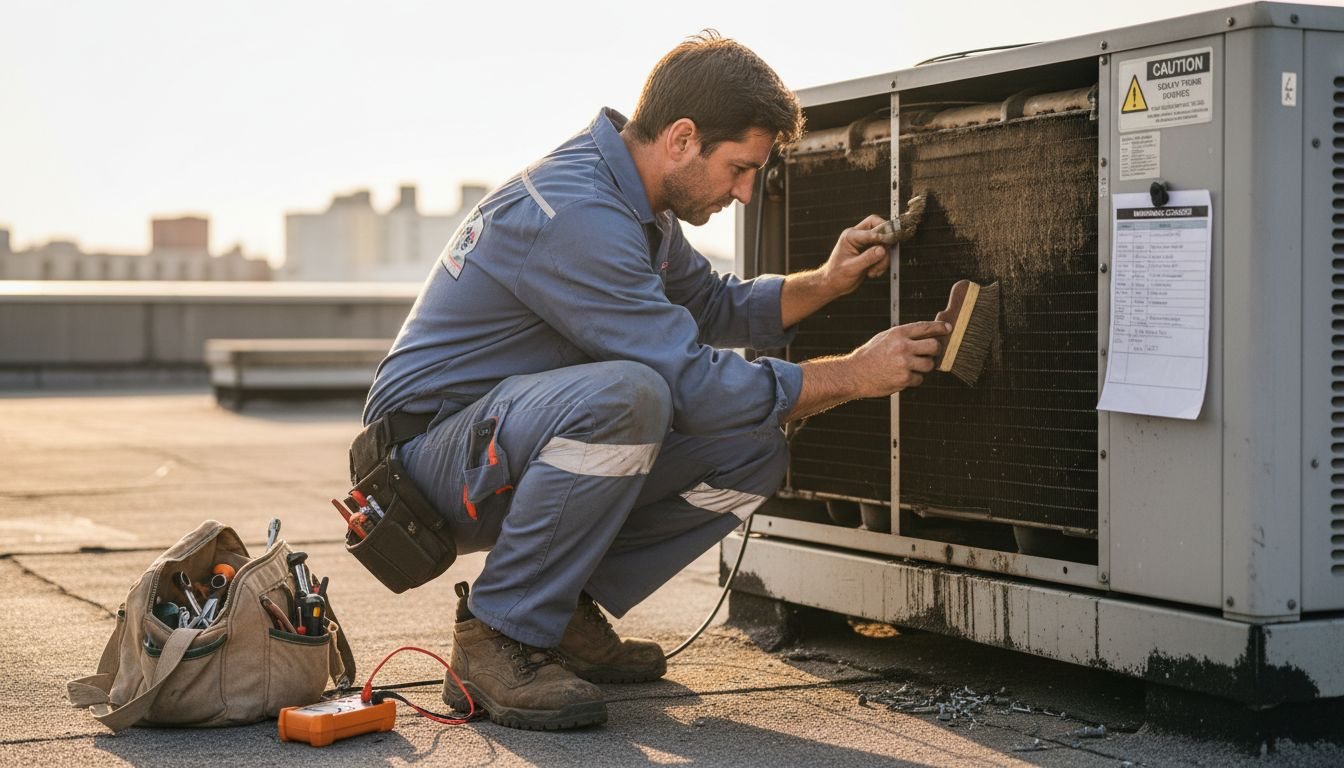
F-Gas regulations mandate regular leak checks for systems containing over 5 tonnes of CO2 equivalent refrigerant. Quarterly checks apply to larger installations; annual inspections suffice for smaller units. Leak detection prevents refrigerant loss, which both wastes expensive gas and triggers compliance violations. Detailed maintenance logs prove regulatory adherence during inspections.
Maintenance frequency ranges from bi-annual to quarterly depending on system use and environment. High-traffic retail spaces or dusty warehouses demand quarterly servicing. Standard office environments operate efficiently with bi-annual professional maintenance supplemented by monthly filter checks.
Maintenance schedule by priority:
- Monthly: Inspect and clean air filters; check thermostat operation
- Quarterly: Test refrigerant pressures; inspect electrical connections; clean condensate drains
- Bi-annually: Professional coil cleaning; calibrate controls; verify refrigerant charge
- Annually: Comprehensive system inspection; update compliance documentation; test safety controls
Keeping meticulous records supports compliance audits and warranty claims. Document service dates, refrigerant quantities added, and any repairs performed. Digital maintenance platforms streamline record-keeping whilst sending automated service reminders.
Pro Tip: Schedule maintenance during spring and autumn when systems experience lighter loads. This timing catches problems before peak summer demand when breakdowns prove most disruptive and emergency repairs cost premium rates.
Learn more through our UK AC maintenance guide and HVAC servicing best practices.
Cost and efficiency benefits of upgrading to modern systems
Upgrading delivers compelling financial returns amidst 2026 UK electricity costs averaging 23p per kWh for commercial users. Modern VRF and heat pump systems achieve 3-5 year ROI through energy savings alone. A 50kW traditional system costing £15,000 annually to operate drops to £7,500-9,000 with a high-efficiency replacement. This £6,000-7,500 yearly saving accumulates rapidly.
Energy-efficient systems require less maintenance than aging units. Fewer breakdowns mean reduced emergency callout fees and replacement parts. Inverter compressors experience less mechanical stress than constant-speed alternatives, extending component lifespan. Smart diagnostics alert operators to minor issues before they escalate into expensive failures.
Older systems incur higher maintenance costs and face non-compliance risks. Units using R-404A or similar banned refrigerants cannot be legally serviced after January 2026. Any refrigerant leak forces immediate system replacement rather than affordable repair. This compliance cliff makes proactive upgrades financially prudent.
| Factor | Aging System | Modern System |
|---|---|---|
| Annual energy cost (50kW) | £15,000 | £7,500-9,000 |
| Maintenance frequency | Quarterly repairs common | Bi-annual preventive service |
| Refrigerant compliance | Illegal post-2026 | Fully compliant |
| Downtime risk | High failure probability | Low with smart diagnostics |
| Carbon footprint | 25-30 tonnes CO2/year | 10-12 tonnes CO2/year |
Upgrades support corporate carbon reduction commitments under the Future Buildings Standard. Businesses with net-zero targets require low-carbon HVAC systems to meet goals. Modern heat pumps powered by renewable electricity eliminate direct emissions entirely.
Financial considerations favouring upgrades:
- Energy savings exceeding £5,000-8,000 annually for typical office buildings
- Reduced insurance premiums from lower fire and environmental risks
- Enhanced property valuations from improved Energy Performance Certificate ratings
- Eligibility for government energy efficiency grants and tax incentives
- Protection against refrigerant price volatility and supply constraints
Repair costs approaching 50% of replacement value signal upgrade timing. Continuing to patch failing systems wastes money better invested in efficient, compliant technology. Review energy efficient air conditioning benefits to understand long-term advantages.
Summary: choosing and maintaining efficient commercial air conditioning
Successful commercial air conditioning in 2026 requires balancing regulatory compliance, energy efficiency, and operational reliability. Start with a compliance checklist verifying refrigerant type, servicing history, and documentation completeness. Systems using banned refrigerants need immediate replacement planning.
Core selection criteria prioritise low-GWP refrigerants, high energy efficiency ratings (SEER above 16, EER above 12), accurate system sizing from professional load calculations, and multi-zone capability. VRF and heat pump technologies deliver superior performance whilst meeting Future Buildings Standard carbon targets.
Maintenance best practices include monthly filter inspections, quarterly refrigerant leak checks, bi-annual professional servicing, and annual comprehensive system audits. Detailed record-keeping proves compliance and supports warranty claims.
Financial analysis guides upgrade decisions. Calculate payback periods using current energy costs, expected savings, and maintenance reduction. Upgrades typically make sense when:
- Systems exceed 10-12 years old and approach end of design life
- Annual repair costs exceed 30% of replacement value
- Refrigerants face regulatory bans or supply constraints
- Energy consumption significantly exceeds modern system benchmarks
- Comfort complaints indicate declining performance
Prioritise both regulatory adherence and operational savings. Compliance protects against penalties whilst efficiency improvements boost bottom-line profitability. The combination creates resilient, cost-effective climate control infrastructure.
Professional air conditioning solutions tailored for UK businesses
Akita Air Conditioning specialises in energy-efficient commercial installations that meet 2026 regulatory standards. Our expert team designs systems optimised for your building’s specific requirements, ensuring compliance whilst maximising energy savings.
We provide tailored maintenance packages maintaining peak efficiency and regulatory compliance year-round. Regular servicing prevents costly breakdowns and keeps energy consumption low. Our service coverage includes Saffron Walden air conditioning installation, Halstead air conditioning installation, and Colchester air conditioning installation alongside broader Essex locations.
Benefit from professional advice on upgrading aging systems or installing new compliant solutions. We handle compliance documentation, refrigerant management, and ongoing support, giving you confidence your climate control meets legal requirements whilst controlling costs.
Frequently asked questions
What are the 2026 UK F-Gas refrigerant requirements?
From January 2026, all commercial air conditioning servicing and new installations must use low-GWP refrigerants such as R-32, R-454B, or natural alternatives. High-GWP refrigerants including R-404A face complete servicing bans, forcing system upgrades or replacements.
What penalties apply for air conditioning non-compliance?
Businesses violating F-Gas regulations face fines up to £200,000 for serious breaches. Penalties cover illegal refrigerant use, inadequate leak checks, poor record-keeping, and unauthorised servicing. Enforcement increased significantly in 2026 with more frequent inspections.
How does the Future Buildings Standard affect commercial AC?
The Future Buildings Standard mandates 70-80% carbon reduction for new commercial buildings from December 2026. Air conditioning systems must integrate with low-carbon heating, renewable energy, and smart controls. Existing buildings face retrofit requirements during major renovations.
What maintenance records must businesses keep?
Companies must document all servicing dates, refrigerant quantities added or recovered, leak detection results, and technician certifications. Records must remain accessible for five years minimum. Digital platforms simplify compliance whilst enabling quick audit responses.
When should businesses upgrade commercial AC systems?
Upgrade when systems exceed 10-12 years old, use banned refrigerants, require frequent costly repairs, or consume significantly more energy than modern alternatives. Early upgrades before regulatory deadlines avoid emergency replacements and benefit from competitive pricing.