

What are HVAC controls: UK homeowners and businesses guide
Many homeowners believe that simply having a modern heating system guarantees efficiency and comfort. The truth is, without proper HVAC controls, even the most advanced systems waste energy and fail to maintain consistent temperatures. HVAC controls are the intelligent devices that regulate your heating, ventilation, and air conditioning to match your actual needs, potentially cutting energy bills by up to 40% whilst improving comfort throughout your property. Whether you’re planning a new installation or upgrading existing systems, understanding how these controls work empowers you to make informed decisions that benefit both your wallet and the environment.
Table of Contents
- Key takeaways
- What are HVAC controls and how do they work?
- Core HVAC control components used in UK homes and businesses
- Advanced and smart HVAC controls: AI, predictive models, and energy savings
- Common issues and expert tips for optimising HVAC controls in the UK
- Explore professional HVAC installation and upgrade services
- Frequently asked questions about HVAC controls
Key Takeaways
| Point | Details |
|---|---|
| Energy savings potential | HVAC controls can reduce energy bills by up to 40 per cent when correctly sized and properly used. |
| Core control types | The main components include timers, room thermostats and thermostatic radiator valves, as well as smart controls and zoning. |
| Sizing and installation | Correct sizing and installation prevent common faults and maximise system efficiency. |
| Zoning benefits | Zoning enables independent scheduling for different areas to heat occupied spaces and reduce energy waste. |
| Smart controls costs | Smart controls offer flexibility but require upfront investment and a reliable internet connection. |
What are HVAC controls and how do they work?
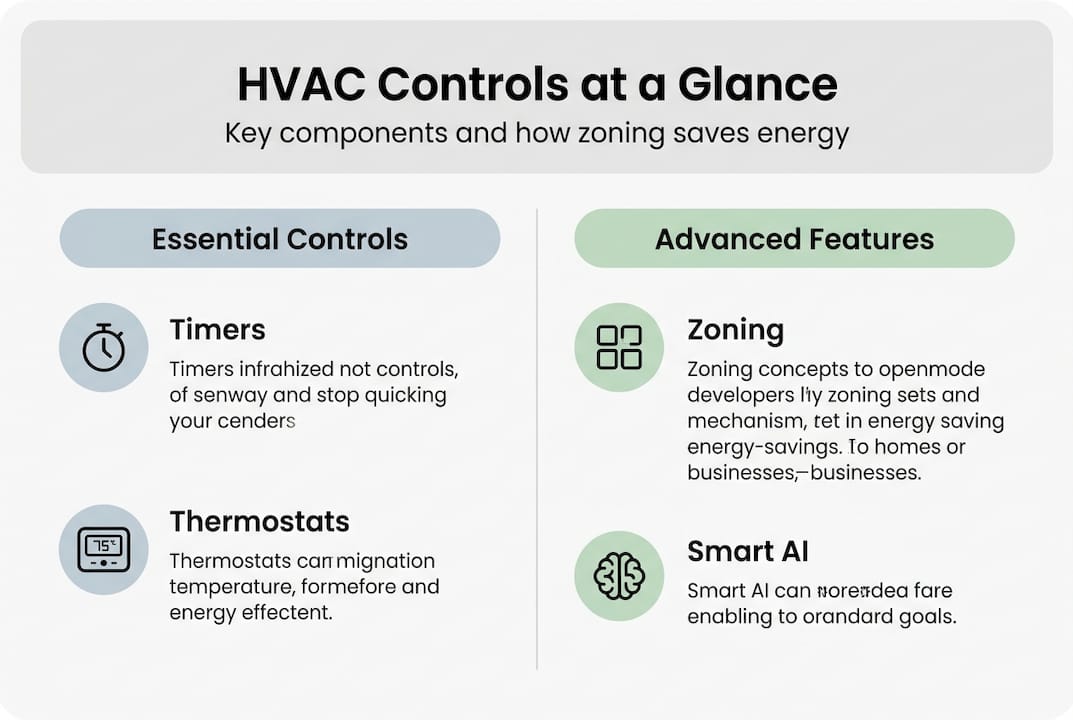
HVAC controls are devices and systems that regulate heating, ventilation, and air conditioning, including timers, thermostats, TRVs, and smart systems. These components work together to maintain comfortable indoor environments whilst minimising energy waste. Understanding how they function helps you maximise the value from your climate control investment.
The most common control types in UK properties include:
- Programmers and timers that schedule when heating or cooling operates
- Room thermostats that maintain temperature within set ranges
- Thermostatic radiator valves (TRVs) that regulate heat output per room
- Smart controls offering app-based management and learning capabilities
- Zoning systems that divide properties into independently controlled areas
Core mechanics involve timers scheduling on/off periods, thermostats maintaining set temperatures (18-21°C), and TRVs controlling per-room flow. Zones enable independent scheduling for different areas. When you set your thermostat to 20°C, it continuously monitors room temperature and signals your boiler or heat pump to activate when readings drop below the target. TRVs add granular control by restricting hot water flow to individual radiators based on local temperature readings.
Zoning becomes particularly valuable in larger homes and commercial buildings. You can keep reception areas warm during business hours whilst reducing heating in storage rooms, or maintain comfortable bedrooms overnight whilst lowering temperatures in unused daytime spaces. This targeted approach prevents the wasteful practice of heating entire properties to accommodate one occupied room.
Pro Tip: Position thermostats on internal walls away from radiators, windows, and external doors to ensure accurate temperature readings that reflect your actual living conditions.
Understanding HVAC system basics provides essential context for making informed control choices. The synergy between your heating equipment and control systems determines overall performance and running costs.
Core HVAC control components used in UK homes and businesses
Programmers and timers form the foundation of scheduled heating. These devices allow you to set specific on and off times throughout the week, ensuring heating operates only when needed. Modern programmers offer multiple daily programmes, enabling different schedules for weekdays and weekends. You might programme heating to activate at 6:00 AM before you wake, switch off when you leave for work at 8:30 AM, resume at 5:00 PM before you return, and shut down at 10:00 PM.
Room thermostats maintain your chosen temperature automatically. When room temperature falls below your set point, the thermostat signals your heating system to activate. Once the target temperature is reached, it switches the system off. The Energy Saving Trust recommends setting thermostats between 18°C and 21°C for optimal comfort and efficiency. Each degree above this range can increase heating costs by approximately 10%.
Thermostatic radiator valves provide room-by-room temperature control. TRVs contain temperature-sensitive elements that expand and contract, adjusting the valve position to regulate hot water flow through individual radiators. You can set bedrooms cooler than living areas, or reduce heating in rarely used rooms. This localised control prevents overheating and reduces energy consumption compared to heating all rooms uniformly.

Zoning controls suit larger properties and commercial spaces. These systems divide buildings into separate zones, each with independent temperature settings and schedules. A family home might have zones for bedrooms, living areas, and bathrooms, whilst a business could zone offices separately from meeting rooms and storage areas.
| Control type | Key features | Typical cost | Potential savings |
|---|---|---|---|
| Basic timer | On/off scheduling | £20-£50 | 5-10% |
| Room thermostat | Temperature maintenance | £30-£100 | 10-15% |
| TRVs (set of 8) | Per-room control | £80-£200 | 15-20% |
| Smart thermostat | App control, learning | £150-£300 | 20-30% |
| Zoning system | Multi-zone management | £500-£2,000 | 25-35% |
To use basic controls effectively:
- Set your programmer to match your actual occupancy patterns
- Adjust room thermostat to the lowest comfortable temperature
- Install TRVs on all radiators except the room containing your main thermostat
- Set TRVs lower in bedrooms and unused rooms
- Review and adjust settings seasonally as daylight hours change
- Avoid turning thermostats to maximum, as this doesn’t heat rooms faster
Pro Tip: Leave at least one radiator without a TRV in the same room as your main thermostat to prevent the boiler from cycling on and off too frequently.
Exploring the benefits of upgrading HVAC controls reveals how modern systems deliver superior comfort alongside reduced running costs.
Advanced and smart HVAC controls: AI, predictive models, and energy savings
Advanced methodologies like Model Predictive Control use predictive modelling and AI for 25-40% energy savings by integrating variables like weather and occupancy. These systems analyse multiple data sources simultaneously to optimise heating and cooling decisions before conditions change, rather than simply reacting to current temperatures.
Model Predictive Control examines weather forecasts, building thermal properties, occupancy patterns, and energy prices to determine the most efficient heating schedule. If tomorrow’s forecast predicts mild afternoon temperatures, MPC might delay morning heating or reduce intensity, knowing natural warmth will supplement the system later. This forward-looking approach prevents energy waste from overshooting temperature targets.
AI-powered HVAC controls learn from your behaviour patterns. They detect when you typically arrive home, adjust for seasonal variations, and recognise exceptions like holidays. Some systems integrate with occupancy sensors, automatically reducing heating in unoccupied rooms. Others connect to weather services and energy tariff data, shifting consumption to cheaper off-peak periods when possible.
Geofencing technology uses your smartphone location to trigger heating adjustments. When you leave a defined area around your home, the system reduces heating. As you approach, it begins warming your property to reach comfortable temperatures upon arrival. This eliminates the need to heat empty homes or return to cold spaces.
“Smart HVAC controls leveraging AI and predictive algorithms can reduce residential energy consumption by 25-40% compared to traditional thermostat-based systems, whilst maintaining superior comfort levels.”
Advantages of smart HVAC systems include:
- Remote control via smartphone apps from anywhere with internet access
- Automatic adjustments based on weather forecasts and occupancy
- Detailed energy consumption reports identifying waste
- Integration with other smart home devices and voice assistants
- Learning algorithms that optimise settings without manual programming
- Multi-zone management from a single interface
Smart and AI controls offer superior efficiency but require upfront investment, reliable Wi-Fi, and raise data privacy concerns. Installation costs typically range from £200 to £500 for quality systems. Reliable broadband connectivity is essential, as these devices depend on cloud services for advanced features. Some users worry about companies collecting data on their heating patterns and home occupancy.
Compatibility represents another consideration. Not all smart controls work with every heating system type. Heat pumps, combination boilers, and underfloor heating may require specific control models. Verify compatibility before purchasing to avoid costly returns or additional equipment needs.
Despite these challenges, the HVAC smart control energy benefits often justify the investment within three to five years through reduced energy bills. For comprehensive guidance on implementing smart automation, review this smart HVAC automation guide covering integration strategies.
Common issues and expert tips for optimising HVAC controls in the UK
Common faults include stuck TRVs, poor thermostat placement, sizing errors causing short-cycling or underperformance, installation faults, and inactivity leading to malfunction. Understanding these pitfalls helps you avoid costly mistakes and system inefficiency.
Stuck valves occur when TRVs or control valves remain unused for extended periods. The mechanism seizes, preventing proper operation. This commonly happens with seasonal systems left dormant for months. Regular operation, even briefly during off-seasons, prevents this issue. If valves do stick, gentle manual operation sometimes frees them, though severely seized units require replacement.
Thermostat placement dramatically affects performance. Positioning thermostats near radiators, in drafty hallways, or beside windows causes false readings. A thermostat near a radiator detects artificially high temperatures, switching heating off whilst other rooms remain cold. Conversely, drafty locations trigger excessive heating to compensate for localised cold spots.
Incorrect system sizing creates persistent problems. Oversized systems cycle on and off too frequently, reducing efficiency and component lifespan. Undersized systems run continuously without achieving target temperatures. Both scenarios waste energy and money. Professional heat loss calculations determine precise heating requirements based on property dimensions, insulation levels, and usage patterns.
Installation faults include incorrect wiring, airlocks in hydronic systems, and poorly configured zone valves. These issues prevent controls from communicating properly with heating equipment. Symptoms include heating that won’t switch off, zones that don’t respond to commands, or systems that operate opposite to programmed schedules.
UK experts recommend TRVs on all radiators, zone controls for large buildings, and professional heat loss calculations before upgrades. This approach ensures appropriately sized systems with granular control capabilities.
Best practices for installation and maintenance:
- Commission a professional heat loss survey before system upgrades
- Install TRVs on every radiator except in rooms with main thermostats
- Position thermostats on internal walls at approximately 1.5 metres height
- Bleed radiators annually to remove air pockets affecting heat distribution
- Test all controls monthly during heating season to prevent seizure
- Replace thermostat batteries before they fully discharge
- Clean dust from thermostat vents that can affect temperature sensing
- Document control settings and schedules for easy restoration after power cuts
Pro Tip: Always commission professional heat loss calculations before upgrading HVAC systems to ensure proper sizing that prevents short-cycling and underperformance issues.
Selecting appropriate equipment from the start avoids many problems. Guidance on choosing efficient HVAC systems helps you match controls and equipment to your specific requirements.
Explore professional HVAC installation and upgrade services
Professional HVAC control installation maximises energy savings and comfort whilst avoiding the common pitfalls that plague DIY attempts. Akita Air Conditioning specialises in tailored climate control solutions for UK homes and businesses throughout Suffolk, Norfolk, and Essex.

Our domestic air conditioning installation services ensure your home benefits from precisely configured controls matched to your lifestyle and property characteristics. For businesses seeking efficient climate management, our commercial air conditioning installation expertise delivers zoned systems that reduce operating costs whilst maintaining optimal working conditions.
Transparent pricing eliminates surprises. Visit our air conditioning installation cost page for detailed breakdowns that help you budget confidently. We offer flexible finance options making energy-efficient upgrades accessible without straining cash flow. Contact our team for personalised advice on control systems and installation packages suited to your specific needs.
Frequently asked questions about HVAC controls
How do thermostatic radiator valves improve heating efficiency?
TRVs regulate heat output room by room, preventing overheating in spaces that warm quickly from sunlight or other sources. This localised control reduces overall energy consumption by 15-20% compared to heating all rooms uniformly, whilst improving comfort through personalised temperature settings.
What factors should I consider when choosing HVAC controls for my home?
Consider your property size, occupancy patterns, existing heating system type, and budget. Larger homes benefit from zoning controls, whilst smaller properties may need only programmable thermostats and TRVs. Verify compatibility between controls and your boiler or heat pump before purchasing.
Can smart thermostats save significantly on energy bills in the UK?
Yes, smart thermostats typically reduce heating costs by 20-30% through learning algorithms, remote control, and weather-responsive adjustments. The average UK household saves £150-£300 annually, meaning most systems pay for themselves within two to four years through reduced energy consumption.
How often should HVAC controls be serviced or checked?
Test controls monthly during heating season to ensure proper operation and prevent valve seizure. Commission annual professional servicing as part of your broader residential HVAC maintenance checklist to identify issues before they cause system failures or efficiency losses.
Are zoning controls suitable for small homes?
Zoning suits homes with distinct usage patterns, regardless of size. A small home with bedrooms on one floor and living areas on another benefits from independent zone control. However, basic programmers and TRVs often provide sufficient control for compact properties without the expense of dedicated zoning systems.
Recommended
- What is HVAC? A UK guide to efficient climate control 2026 – Akita AC
- Step by step HVAC maintenance for energy savings in 2026 – Akita AC
- Types of air conditioning systems: UK homeowner’s guide 2026 – Akita AC
- Why Upgrade HVAC Systems – Greater Comfort, Lower Costs – Akita AC
- Smart HVAC System Guide: Automation, Zoning & Energy Savings