

Why your AC isn't cooling properly: troubleshooting guide
TL;DR:
- Most UK homeowners can resolve common AC issues like dirty filters and vent blockages themselves.
- Regular maintenance and timely professional checks prevent costly breakdowns and improve efficiency.
- Seek expert help if symptoms include ice, strange noises, or electrical smells, indicating serious faults.
Most UK homeowners assume their air conditioning will simply work when they need it. Switch it on, set the temperature, done. But when summer arrives and the unit blows lukewarm air, panic sets in fast. The good news is that the vast majority of cooling failures trace back to a handful of well-understood causes, many of which you can address yourself. This guide walks you through exactly why your system might be underperforming, what you can check right now, and when it makes sense to call in a professional before the problem gets worse.
Table of Contents
- Common reasons your air conditioner is not cooling
- Step-by-step troubleshooting: What you can check yourself
- When to call a professional: Red flags and advanced solutions
- How to keep your air conditioning working efficiently
- The overlooked reality of air conditioning care in the UK
- Get expert help and reliable air conditioning solutions
- Frequently asked questions
Key Takeaways
| Point | Details |
|---|---|
| Check simple causes first | Most AC cooling problems start with minor maintenance issues you can often solve yourself. |
| Regular servicing matters | Annual professional maintenance helps prevent breakdowns and sustains cooling performance. |
| Know when to call experts | Electrical faults, persistent poor cooling, or leaks demand a qualified professional. |
| Prevent future issues | Routine filter changes, system checks, and smart thermostat use keep your AC efficient longer. |
Common reasons your air conditioner is not cooling
Let’s begin by understanding why your system might be failing to cool properly. Most people assume something catastrophic has gone wrong, but the reality is far less dramatic. An estimated 85% of UK residential AC service calls begin with a basic maintenance issue, not a mechanical failure. That statistic alone should give you confidence that a solution is likely within reach.
Common cooling issues typically include incorrect thermostat settings, blocked filters, refrigerant leaks, and lack of annual servicing. Each of these problems presents differently in the home, and knowing what to look for saves you time and money.
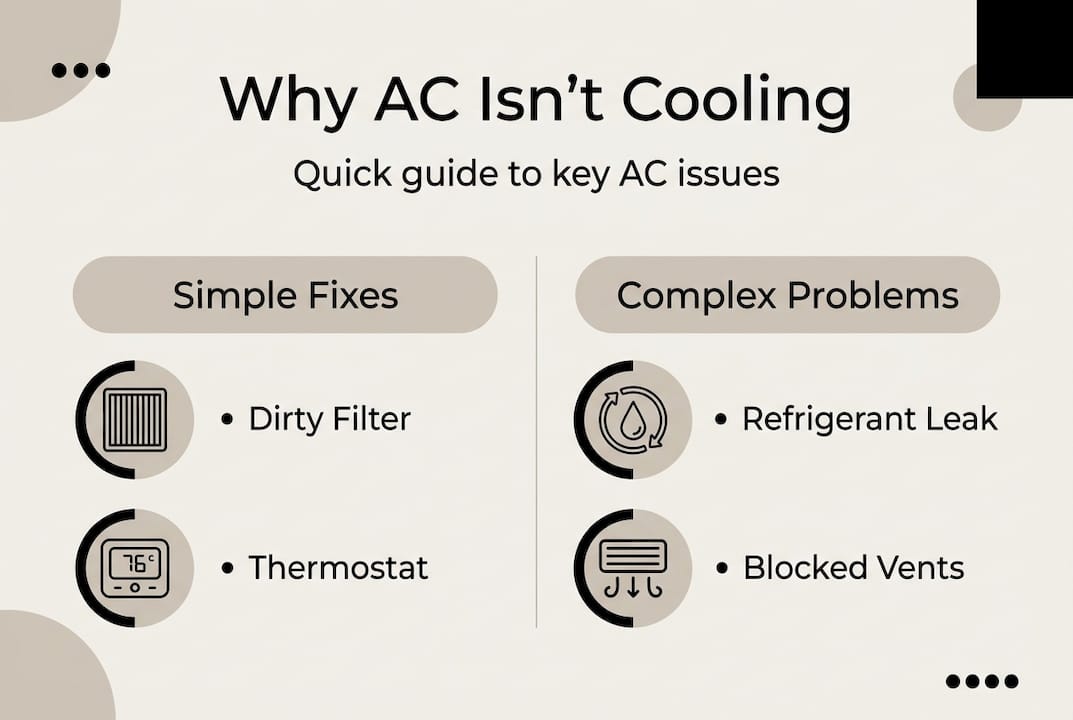
Here is a quick overview of the most frequent culprits:
| Cause | Typical symptom | Severity |
|---|---|---|
| Dirty air filter | Weak airflow, warm air | Low |
| Thermostat miscalibration | Unit runs but room stays warm | Low |
| Low refrigerant | Warm air, hissing sound | High |
| Blocked vents or grilles | Uneven cooling, hot spots | Low to medium |
| Undersized unit | Never reaches set temperature | Medium |
| Lack of annual servicing | General performance decline | Medium to high |
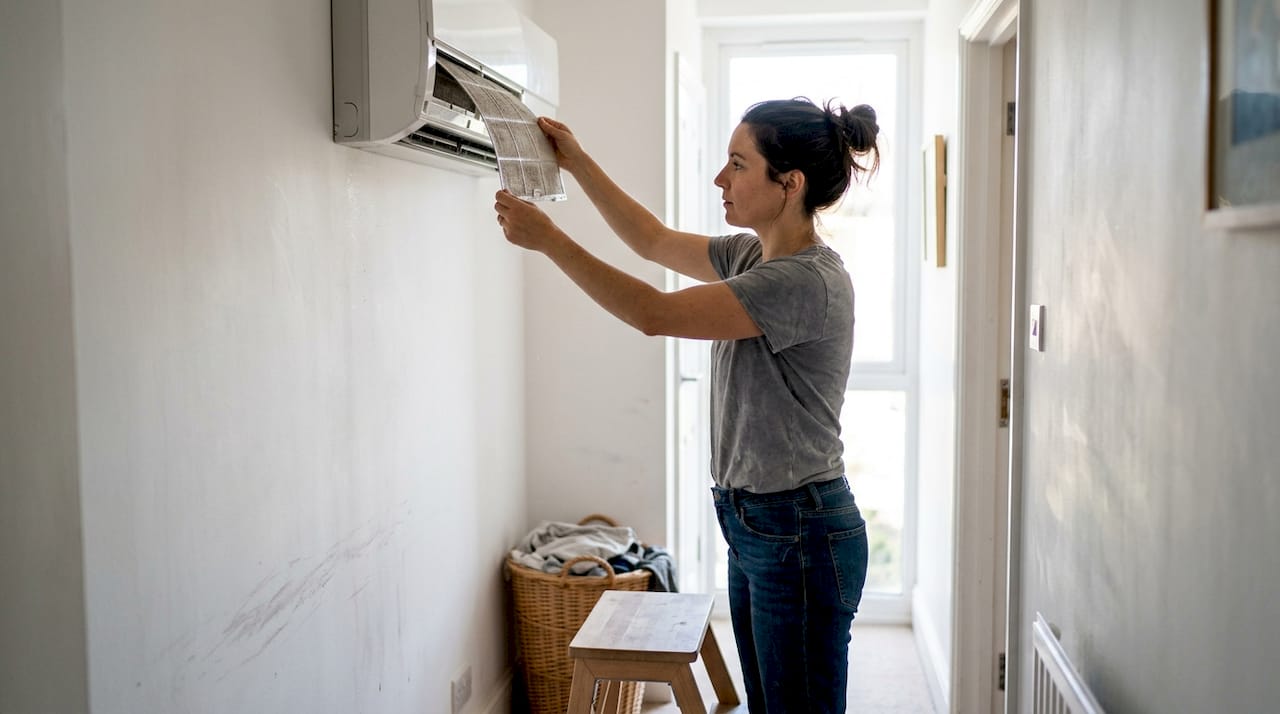
A dirty air filter is the single most common cause of poor cooling. When dust and debris clog the filter, airflow is restricted and the system cannot transfer heat effectively. Your unit works harder, costs more to run, and still fails to cool the room.
Thermostat miscalibration is subtler. If the thermostat reads the room temperature incorrectly, it may stop the compressor too early, leaving you warm and confused. Low refrigerant is a more serious issue. Refrigerant is the fluid that absorbs heat from your room and releases it outside. If there is a leak, the system simply cannot do its job, no matter how long it runs.
Blockages in vents or grilles disrupt airflow patterns and create uncomfortable hot spots. An undersized unit is a design problem rather than a fault, but it produces the same frustrating result: a room that never quite reaches the temperature you want. Annual servicing catches most of these issues before they become noticeable problems.
Step-by-step troubleshooting: What you can check yourself
Understanding the problem is only part of the solution. Here is how to take action yourself before spending money on a call-out.
Following a routine UK AC maintenance checklist can help restore or preserve effective cooling without needing specialist tools or training. Most of these steps take under ten minutes.
- Check and clean the air filter. Locate the filter panel (usually on the indoor unit), remove the filter, and hold it up to the light. If you cannot see through it, clean or replace it. This single action resolves a surprising number of cooling complaints.
- Inspect the thermostat settings. Confirm the unit is set to cooling mode, not fan-only. Check the target temperature is actually lower than the current room temperature. If the thermostat uses batteries, replace them.
- Clear all vents and grilles. Walk around the room and make sure nothing is blocking the supply or return air vents. Furniture, curtains, and rugs are common culprits.
- Close windows and doors. Air conditioning is designed to cool a sealed space. An open window or door dramatically reduces efficiency and can prevent the room from ever reaching the set temperature.
- Check the outdoor unit. Go outside and look at the condenser unit. Clear away any leaves, debris, or overgrown plants within half a metre of the unit. Restricted airflow around the condenser reduces its ability to expel heat.
- Reset the system. Turn the unit off at the wall, wait two minutes, then switch it back on. Some systems enter a fault mode that a simple reset can clear.
“Regular homeowner checks reduce repair costs by up to 50%.”
These HVAC maintenance steps are safe for most homeowners. However, if you notice ice forming on the indoor unit, a burning smell, or unusual noises, stop and do not attempt further investigation yourself.
Pro Tip: Book your annual service in spring, before the summer heat arrives. Engineers are less busy, appointments are easier to get, and you will not be left sweltering while you wait. Applying a few energy-saving tips at the same time can also trim your running costs noticeably.
When to call a professional: Red flags and advanced solutions
If DIY checks have not solved your cooling problem, some issues demand professional intervention. Knowing when to step back is just as important as knowing what to check.
Certain persistent or hazardous symptoms require diagnosis by accredited air conditioning engineers. Attempting to fix these yourself risks personal injury, further damage to the system, and in some cases, legal issues around refrigerant handling.
Watch for these red flags:
- Warm air despite running correctly. If the unit is set to cool, filters are clean, and the room is sealed but still warming up, the compressor or refrigerant circuit is likely at fault.
- Unusual sounds. Banging, grinding, or rattling noises point to mechanical problems inside the unit. These do not resolve themselves.
- Electrical smells or burning odours. Switch the unit off immediately. This is a safety issue, not a performance issue.
- Ice on the indoor unit. Counterintuitively, ice forming on your air conditioner is a sign it is not working correctly, often indicating low refrigerant or severely restricted airflow.
- Water leaking inside. A small amount of condensation is normal. A steady drip or pooling water suggests a blocked drain or a refrigerant problem.
- Tripping circuit breakers. If the unit repeatedly trips the breaker, there is an electrical fault that needs expert attention.
A certified diagnostic visit does more than identify the immediate fault. Engineers use specialist equipment to check refrigerant pressure, electrical draw, and component performance, giving you a full picture of your system’s health. Understanding the full AC repair workflow helps you know what to expect from that visit.
Pro Tip: Before the engineer arrives, note down exactly what the unit is doing, when the problem started, and any unusual sounds or smells. The more specific you can be, the faster the diagnosis and the lower your call-out cost.
How to keep your air conditioning working efficiently
With your system running smoothly again, here is how to keep it that way. Reactive repairs are always more expensive than preventive care, and a few consistent habits make a significant difference over time.
Annual maintenance reduces cooling-related breakdowns by up to 30%. That figure reflects real savings across both repair bills and energy costs, because a well-maintained system runs more efficiently and draws less power to achieve the same result.
| Maintenance action | Frequency | Benefit |
|---|---|---|
| Filter cleaning or replacement | Every 4 to 6 weeks in summer | Restores airflow, improves efficiency |
| Professional servicing | Annually | Prevents breakdowns, checks refrigerant |
| Thermostat calibration check | Annually | Ensures accurate temperature control |
| Outdoor unit clearance | Monthly in summer | Maintains condenser performance |
| Duct and vent inspection | Every 2 years | Prevents airflow restrictions |
Here are the routine actions worth building into your household habits:
- Replace or clean filters regularly. In heavy summer use, check filters every four weeks. A clean filter is the cheapest performance upgrade you can make.
- Review thermostat settings seasonally. What worked in April may not be ideal in July. Small adjustments keep comfort levels consistent without overworking the unit.
- Book annual professional servicing. This is the single most impactful thing you can do. An engineer will check refrigerant levels, clean internal components, and flag any developing faults before they become expensive.
- Keep the outdoor unit clear. Vegetation grows fast in summer. A quick monthly check keeps airflow unrestricted.
Exploring HVAC upgrade tips and committing to routine AC maintenance together creates a system that genuinely lasts. Most modern units have a lifespan of 15 years or more when properly maintained. Neglect shortens that considerably.
The overlooked reality of air conditioning care in the UK
Here is something most troubleshooting guides will not tell you: the UK’s relationship with air conditioning is fundamentally different from warmer countries, and that difference is costing homeowners money.
In Spain or Australia, air conditioning is treated like central heating. It is a core home system, serviced annually without question. In the UK, because hot weather is infrequent, many homeowners treat their unit as an occasional appliance, something switched on a few times a year and largely forgotten. That mindset leads directly to avoidable breakdowns.
A system that sits idle for nine months and is then expected to perform on the hottest day of the year is working against the odds. Seals dry out, filters accumulate dust, and refrigerant levels drift. The unit has not broken down because it is poor quality. It has broken down because it was not treated as the mechanical system it actually is.
Our experience with efficient climate diagnostics consistently shows that the homeowners who avoid expensive repairs are not the ones with the newest systems. They are the ones who service regularly and check filters before problems develop. Treat your air conditioning like your boiler, and it will reward you with years of reliable cooling.
Get expert help and reliable air conditioning solutions
If you have worked through this guide and your system still is not performing as it should, or if you simply want the peace of mind that comes from a professional assessment, Akita Air Conditioning is here to help.
We provide domestic air conditioning installation, servicing, and repairs across Suffolk, Essex, and Norfolk, with transparent fixed pricing and no hidden costs. Whether you need a fast AC repair service or you are considering a brand-new fixed price AC install, our accredited engineers are ready to help you get comfortable quickly. Get in touch today and let us take the guesswork out of your cooling.
Frequently asked questions
Why is my air conditioner blowing warm air even when set to cool?
Warm air often points to a dirty air filter, low refrigerant, or a miscalibrated thermostat. Check these three things first before calling an engineer.
How often should an air conditioner be serviced in the UK?
Most UK engineers recommend annual servicing. Annual maintenance reduces cooling-related breakdowns by up to 30% and keeps running costs in check.
Can I fix a non-cooling air conditioner myself?
You can safely address clogged filters, blocked vents, and thermostat settings, but electrical faults or refrigerant leaks must be handled by an accredited engineer.
Does regular maintenance really save money or energy?
Yes. Routine upkeep prevents small faults from becoming costly repairs and keeps your unit running efficiently, which directly reduces your energy bills. Annual maintenance is the most cost-effective investment you can make in your system.