

Step-by-step aircon maintenance for energy savings
Your energy bills crept up again last month, and your air conditioning unit hasn’t been touched since it was installed. Sound familiar? Neglecting routine aircon maintenance is one of the most common and costly mistakes UK homeowners make. Regular maintenance can cut aircon energy use by 20%, yet most people wait until something breaks before picking up a screwdriver. This guide walks you through every step, from gathering the right tools to setting a long-term maintenance schedule, so you can keep your system running efficiently, reduce your bills, and avoid expensive repair call-outs.
Table of Contents
- What you need before you start: Tools, materials, and safety
- Step-by-step aircon maintenance process
- Troubleshooting common aircon issues
- Ensuring efficiency: Aftercare and routine schedule
- Why DIY aircon maintenance in the UK is often overlooked – and why it matters
- Get expert support for your aircon system
- Frequently asked questions
Key Takeaways
| Point | Details |
|---|---|
| Preparation is essential | Having the right tools and powering off is key to safe, effective aircon maintenance. |
| Follow clear maintenance steps | Step-by-step cleaning and inspection prolongs your aircon’s life and boosts efficiency. |
| Spot issues early | Recognising early warning signs can save on energy bills and repair costs. |
| Build a routine | Setting reminders for regular checks helps ensure lasting performance and comfort. |
What you need before you start: Tools, materials, and safety
Before you touch your air conditioning system, it’s vital to ensure you have everything you need for a smooth and safe process. Rushing in without the right equipment wastes time and increases the risk of damaging your unit or injuring yourself. A little preparation goes a long way, and as the maintenance checklist confirms, preparation reduces time and ensures job safety.
Essential tools and materials:
- Flat-head and cross-head screwdrivers
- Soft cloths and a microfibre duster
- A vacuum cleaner with a brush attachment
- A fin comb (to straighten bent condenser fins)
- Protective gloves and safety glasses
- Replacement air filter (check your unit’s model number first)
- Mild coil cleaning solution or warm soapy water
- A torch for inspecting dark interior spaces
| Item | Purpose | Where to buy |
|---|---|---|
| Fin comb | Straightens bent fins on coils | DIY or HVAC supplier |
| Coil cleaner | Removes grime from evaporator coils | Online or trade supplier |
| Replacement filter | Maintains airflow and air quality | Manufacturer or online |
| Microfibre cloth | Wipes surfaces without scratching | Supermarket or DIY store |
Safety first: Always switch off your air conditioning unit at the wall socket and isolate it at the consumer unit (fuse box) before beginning any maintenance. Mains electricity is dangerous. If you are ever unsure, stop and contact a qualified engineer.
Double-check that the unit is fully powered down before removing any panels. Give it five minutes after switching off to allow capacitors to discharge safely. Only then should you begin removing covers or touching internal components.
Step-by-step aircon maintenance process
Once you’ve gathered your tools and ensured safety, it’s time to get hands-on with each step. Work methodically and don’t rush. A thorough job done calmly is far better than a hasty one that misses something important.
- Switch off and isolate power. Turn the unit off at the controller, then at the wall socket, and finally at the consumer unit. Confirm there is no power before proceeding.
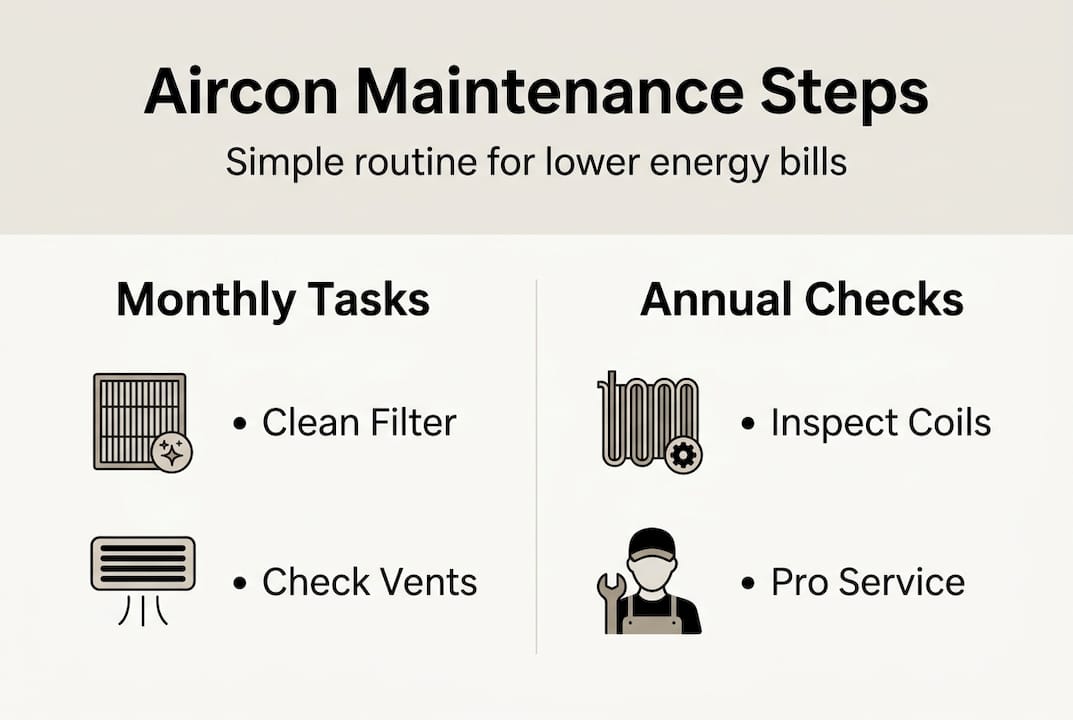
- Remove and clean the air filter. Slide out the filter panel (usually behind the front grille on a split unit). Vacuum loose dust, then rinse the filter under warm water. Allow it to dry completely before reinserting. Regular filter cleaning is the simplest way to cut running costs.
- Inspect the evaporator coils. These sit behind the filter. If they look dusty or grimy, apply a mild coil cleaner, leave it for a few minutes, then wipe gently with a soft cloth.
- Check the condenser coils on the outdoor unit. Clear away leaves, dirt, and debris from around the unit. Use a fin comb if any fins are bent, as restricted airflow forces the compressor to work harder.
- Clear vents and drainage channels. Wipe down all vents and check the condensate drain pipe for blockages. A blocked drain causes water to back up and drip inside.
- Inspect for leaks or drips around the indoor unit. Water staining on walls or ceilings near the unit is a warning sign worth investigating immediately.
- Check thermostat settings. Confirm the thermostat is calibrated correctly and that the unit responds accurately to temperature changes. Annual AC servicing saves money and boosts efficiency over the long term.
Pro Tip: After reinserting a clean filter, run the unit for ten minutes and hold your hand near the vents. Stronger, cooler airflow is an immediate sign the clean has made a difference.

| Task | Monthly | Quarterly | Annually |
|---|---|---|---|
| Clean air filter | ✓ | ||
| Inspect coils | ✓ | ||
| Clear outdoor unit | ✓ | ||
| Check drainage | ✓ | ||
| Full professional service | ✓ |
For a more detailed breakdown, the residential maintenance steps guide covers additional checks suited to UK properties, and the annual servicing tips page explains what a professional engineer covers during a full service visit.
Troubleshooting common aircon issues
Even with diligent care, issues can crop up. Here’s how to recognise and resolve them quickly before they become expensive problems.
Common signs something is wrong:
- Excessive dust around vents despite recent cleaning
- Poor or inconsistent cooling even on full power
- Unusual rattling, grinding, or hissing sounds
- Water dripping from the indoor unit onto walls or floors
- A musty or stale smell when the unit is running
For most of these, there is a logical starting point. Dust around vents usually means the filter needs attention again. Poor cooling often points to dirty coils or a refrigerant issue. Rattling can be caused by loose panels or debris caught in the outdoor fan. Spotting issues early can prevent breakdowns and save costs significantly over time.
When to call a professional: Refrigerant leaks, electrical faults, and compressor problems are not DIY jobs. Handling refrigerant without the correct F-Gas certification is illegal in the UK. If you suspect any of these issues, switch the unit off and contact a certified engineer.
Pro Tip: A hissing sound from the indoor unit often indicates a refrigerant leak rather than a simple blockage. Don’t ignore it. Refrigerant loss reduces efficiency rapidly and can damage the compressor if left unaddressed.
For issues that go beyond basic fixes, the routine maintenance benefits page explains how consistent upkeep reduces the likelihood of these faults developing in the first place. If you need hands-on help, professional aircon servicing from a qualified team is the safest and most cost-effective route.
Ensuring efficiency: Aftercare and routine schedule
After troubleshooting and basic upkeep, the real value lies in regular, planned aftercare. A one-off clean is helpful, but a consistent schedule is what keeps your system performing at its best year after year.
- Test performance immediately after maintenance. Run the unit for 15 minutes and note whether airflow feels stronger and temperatures respond more quickly. This gives you a useful baseline for future comparisons.
- Set calendar reminders. Add a monthly reminder to check and clean the filter, a quarterly reminder to inspect coils and the outdoor unit, and an annual reminder to book a professional service.
- Keep a maintenance log. Record the date of every filter clean, coil inspection, and service visit. This is particularly important for warranty purposes, as many manufacturers require evidence of regular upkeep to honour claims.
- Use smart home devices where possible. If you have a smart thermostat or a home assistant device, set automated reminders or schedule regular system checks through the app.
Statistic to note: Routine upkeep can extend aircon lifespan by several years and maximise energy savings across the system’s lifetime, making it one of the highest-return habits a homeowner can adopt.
Pro Tip: Photograph your unit’s model number and filter size and save it to your phone. When it’s time to order a replacement filter, you’ll have the information ready without having to dismantle anything.
For a deeper look at the long-term returns of consistent care, the maintenance energy savings guide is worth bookmarking, and the step-by-step HVAC energy savings resource offers a practical framework for 2026 and beyond.
Why DIY aircon maintenance in the UK is often overlooked – and why it matters
Here’s something most maintenance guides won’t tell you: British homeowners have historically had a built-in excuse to ignore their aircon units. For decades, the UK’s mild summers made neglect feel like a reasonable gamble. If the unit only ran for three weeks a year, how much harm could skipping a filter clean really do?
The answer, increasingly, is quite a lot. As UK summers grow hotter and units run for longer stretches, the consequences of that neglect compound. A system that was borderline inefficient in a cool summer becomes a genuine liability in a heatwave. Ignoring home AC maintenance is common in mild UK climates, but that false sense of security leads to higher costs and more serious faults as temperatures rise.
What we’ve seen time and again is that the homeowners who benefit most from their systems are not those with the newest units. They’re the ones who spend ten minutes a month on a filter check. That small habit, repeated consistently, makes a bigger difference to comfort and running costs than almost any other single action. The importance for UK homes of building this habit now, before problems develop, cannot be overstated.
Get expert support for your aircon system
If you’d rather leave the technical details to an expert, help is always on hand. Some maintenance tasks are straightforward, but others, particularly annual servicing, coil deep-cleans, and refrigerant checks, genuinely benefit from a professional eye.
At Akita Air Conditioning, we work with homeowners and property managers across Suffolk, Norfolk, and Essex to keep systems running at peak efficiency. Whether you’re looking at domestic air conditioning installation for a new property or need professional servicing and repairs for an existing unit, our engineers are F-Gas certified and fully equipped to handle the job. Get in touch today for a no-obligation quote or a friendly chat about what your system needs.
Frequently asked questions
How often should I clean or replace my aircon filter?
In most UK homes, you should clean the filter monthly and replace it every three to six months for optimal performance. Regular filter cleaning is one of the simplest ways to keep running costs down.
Does home aircon maintenance really save money?
Yes, consistent upkeep can cut energy use by 20% and significantly reduce the likelihood of expensive repair bills over time.
Is it safe to perform aircon maintenance myself, or should I hire a professional?
Basic tasks like filter cleaning are safe to do yourself provided the power is fully isolated first, but electrical faults and refrigerant issues always require a certified technician. Preparation ensures job safety and reduces the risk of accidents.
What should I do if my aircon is dripping water or making odd noises?
Switch the unit off and check for a blocked condensate drain or a dirty filter as a first step, but if the problem persists, book a professional inspection. Spotting issues early prevents minor faults from becoming costly breakdowns.