

Why Routine Air Conditioning Maintenance Matters Most
Peak summer days often reveal just how much we rely on our home’s air conditioning to keep every room comfortable. For families across Suffolk, Norfolk, and Essex, neglecting routine care can mean higher energy bills and the shock of a breakdown when you need cool relief most. Effective maintenance and repair practices are the secret to keeping your system efficient, reliable, and affordable year after year, saving both money and future stress.
Table of Contents
- Routine Air Conditioning Maintenance Explained
- Common Myths About Air Conditioning Care
- Essential Benefits For UK Homes
- How Maintenance Saves Money and Energy
- Legal Responsibilities and Safety Regulations
Key Takeaways
| Point | Details |
|---|---|
| Routine Maintenance is Essential | Regular air conditioning maintenance ensures your system operates efficiently, reducing energy costs and preventing costly repairs. |
| Myth Busting | Common misconceptions, such as “if it works, it doesn’t need servicing”, lead to neglect and expensive problems later. |
| Financial Benefits | Investing in maintenance saves money on energy bills and extends the system’s lifespan, making it a sound financial decision. |
| Legal Responsibilities | Homeowners must comply with regulations regarding air conditioning maintenance to ensure safety and environmental standards are met. |
Routine Air Conditioning Maintenance Explained
Routine air conditioning maintenance is the regular care and inspection your system needs to function reliably. It includes cleaning filters, checking refrigerant levels, inspecting components, and ensuring everything runs efficiently. Think of it like servicing your car—small regular checks prevent major breakdowns.
Most air conditioning systems in Suffolk, Norfolk, and Essex operate year-round or seasonally, but they all need attention. Effective maintenance and repair practices are critical in maintaining performance and efficiency of your system. Without routine care, you’ll notice higher energy bills, reduced cooling power, and unexpected failures when you need cooling most.
What Routine Maintenance Actually Involves
Routine air conditioning maintenance covers several essential tasks:
- Filter replacement every 1-3 months, depending on usage and air quality
- Refrigerant level checks to ensure your system cools effectively
- Coil cleaning to remove dust and debris that reduce efficiency
- Electrical connection inspection to prevent safety hazards
- Thermostat calibration for accurate temperature control
- Drain line clearing to prevent water accumulation and mould
Each task serves a specific purpose. Clogged filters force your system to work harder, consuming more energy and raising your bills. Low refrigerant means weaker cooling and potential compressor damage. Dirty coils reduce heat exchange efficiency.
Routine maintenance preserves equipment function, helps detect malfunctioning components early, reduces energy waste, and prevents costly repairs.
Why Your System Needs Regular Attention
Your air conditioning system runs for months at a time, circulating air through filters and coils that gradually accumulate dust. Components experience wear from constant operation. Professional standards for maintenance emphasise the importance of routine servicing for reliability.
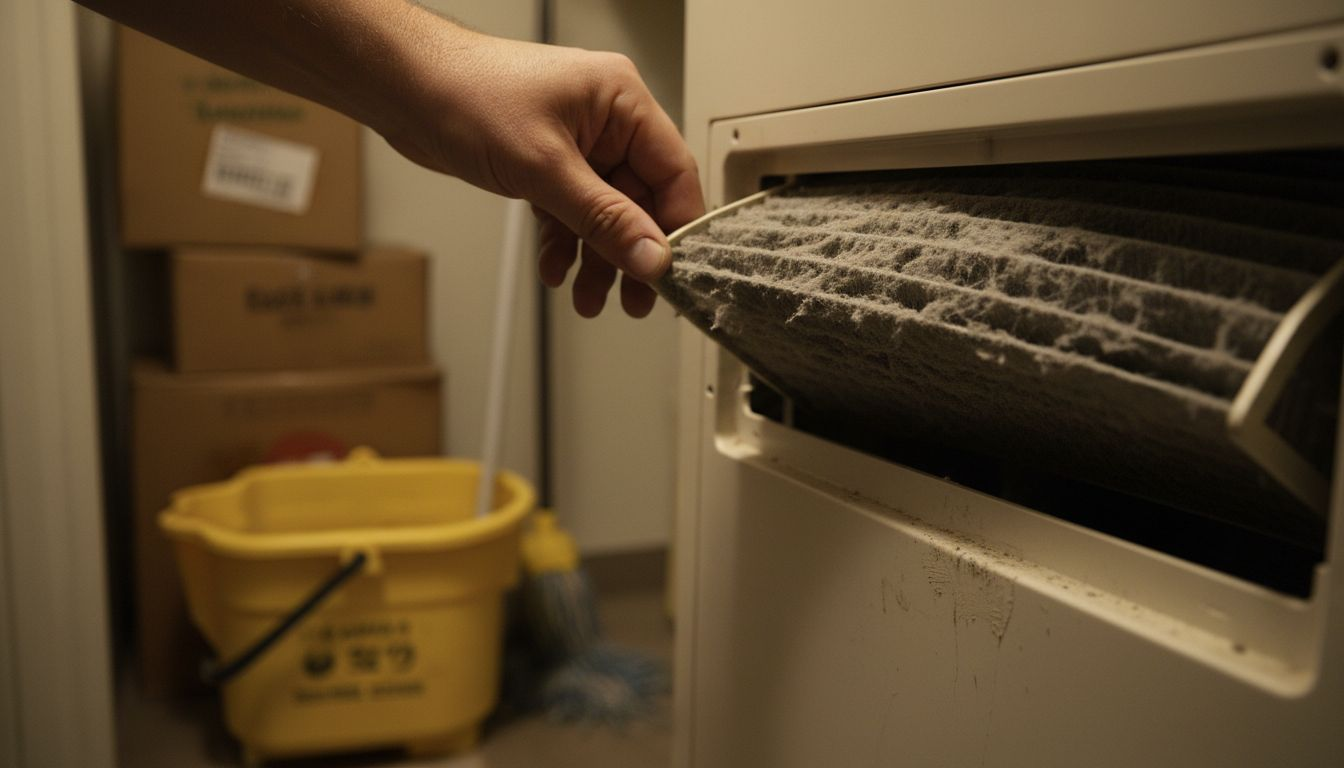
Without maintenance, small problems become expensive ones. A refrigerant leak that costs £150 to fix today becomes a £1,200 compressor replacement in six months. A clogged filter that takes five minutes to replace adds 15% to your monthly energy costs if ignored.
Homeowners in this region often discover problems during summer heat waves, when every air conditioning unit is running flat out. That’s when systems fail most frequently—because they’ve never been serviced properly.
What You’ll Actually Notice
Regular maintenance keeps your system running smoothly. You’ll experience:
- Consistent cooling throughout your home
- Lower monthly energy bills (typically 10-15% savings)
- Fewer unexpected breakdowns
- Longer system lifespan
- Improved air quality from clean filters
Skipping maintenance creates the opposite situation. Your energy bills climb. Cooling becomes uneven. One day the system simply stops working, leaving you scrambling for emergency repairs during peak season.
Pro tip: Schedule your air conditioning service in spring, before warm weather arrives, to catch any issues before peak cooling season begins.
Common Myths About Air Conditioning Care
Air conditioning maintenance is surrounded by misconceptions that lead homeowners astray. You’ve probably heard claims like “you don’t need servicing if it still works” or “air conditioning units are energy hogs.” These myths cost you money and reduce system reliability.
Understanding what’s actually true helps you make better decisions about your cooling system. Let’s bust the most common myths circulating among homeowners in Suffolk, Norfolk, and Essex.
Myth 1: “My System Works Fine, So It Doesn’t Need Servicing”
This is the costliest myth. A system running smoothly today doesn’t mean it’s operating efficiently or safely. Your air conditioning could be struggling silently, working harder than necessary whilst consuming extra energy.
Servicing catches hidden problems before they become catastrophic. A technician identifies worn components, refrigerant leaks, or electrical issues that you’d never notice. By the time your system fails completely, damage has already occurred and repairs cost far more.
Prevention always costs less than emergency repairs. A £200 service call today beats a £1,500 emergency replacement next month.
Myth 2: “Air Conditioning Units Are Always Energy-Intensive”
Many believe air conditioning automatically inflates energy bills. This isn’t accurate. With proper maintenance, units operate efficiently and reduce energy usage, countering the assumption that cooling always drains power.
A well-maintained system uses significantly less energy than a neglected one. Clean filters, proper refrigerant levels, and calibrated thermostats mean your system cools effectively without overworking. Poorly maintained units run constantly, struggling to reach target temperatures.
You’ll actually see lower energy bills with regular servicing, typically 10-15% savings monthly.
Myth 3: “Natural Ventilation Is Enough”
Some homeowners believe opening windows provides sufficient air quality control. Good ventilation is essential for healthy indoor environments, but mechanical systems like air conditioning offer superior control.
Natural ventilation relies on weather conditions and doesn’t filter air. Well-maintained air conditioning systems clean, cool, and circulate air consistently. During hot summers or poor outdoor air quality, natural ventilation alone fails to maintain comfort or health.
Myth 4: “Filters Only Need Changing Occasionally”
Many homeowners go 6-12 months between filter changes. The reality is filters need replacement every 1-3 months, depending on usage and air quality in your home.
Clogged filters force your system to work harder:
- Reduced cooling efficiency
- Higher energy consumption
- Strain on components
- Poor indoor air quality
- System overheating
Changing filters regularly takes five minutes and costs very little.
Myth 5: “Air Conditioning Isn’t Necessary in the UK”
Traditionally true, but climate patterns are shifting. Adoption is increasing due to hotter summers, making cooling systems essential for comfort and health. Summer heatwaves are becoming routine rather than exceptional.
Investing in a well-maintained system prepares your home for current and future conditions.
Pro tip: Test your air conditioning system monthly during the cooling season to catch performance issues early, and document any unusual sounds, weak airflow, or temperature inconsistencies.
Essential Benefits for UK Homes
Routine air conditioning maintenance delivers tangible benefits that transform your home comfort and financial situation. These aren’t abstract advantages—they’re real, measurable improvements you’ll notice monthly. For homeowners in Suffolk, Norfolk, and Essex, the benefits become especially relevant as summers grow hotter.
Let’s examine what regular servicing actually delivers to your household.
Lower Energy Bills
A well-maintained air conditioning system uses 10-15% less energy than a neglected one. Clean filters, proper refrigerant levels, and calibrated components mean your system reaches target temperatures efficiently. Poorly maintained units work constantly, struggling and consuming excess electricity.
Improved energy efficiency leads to lower bills, making servicing a direct investment in your finances. Over a year, you’ll see substantial savings—money that stays in your pocket instead of flowing to energy suppliers.
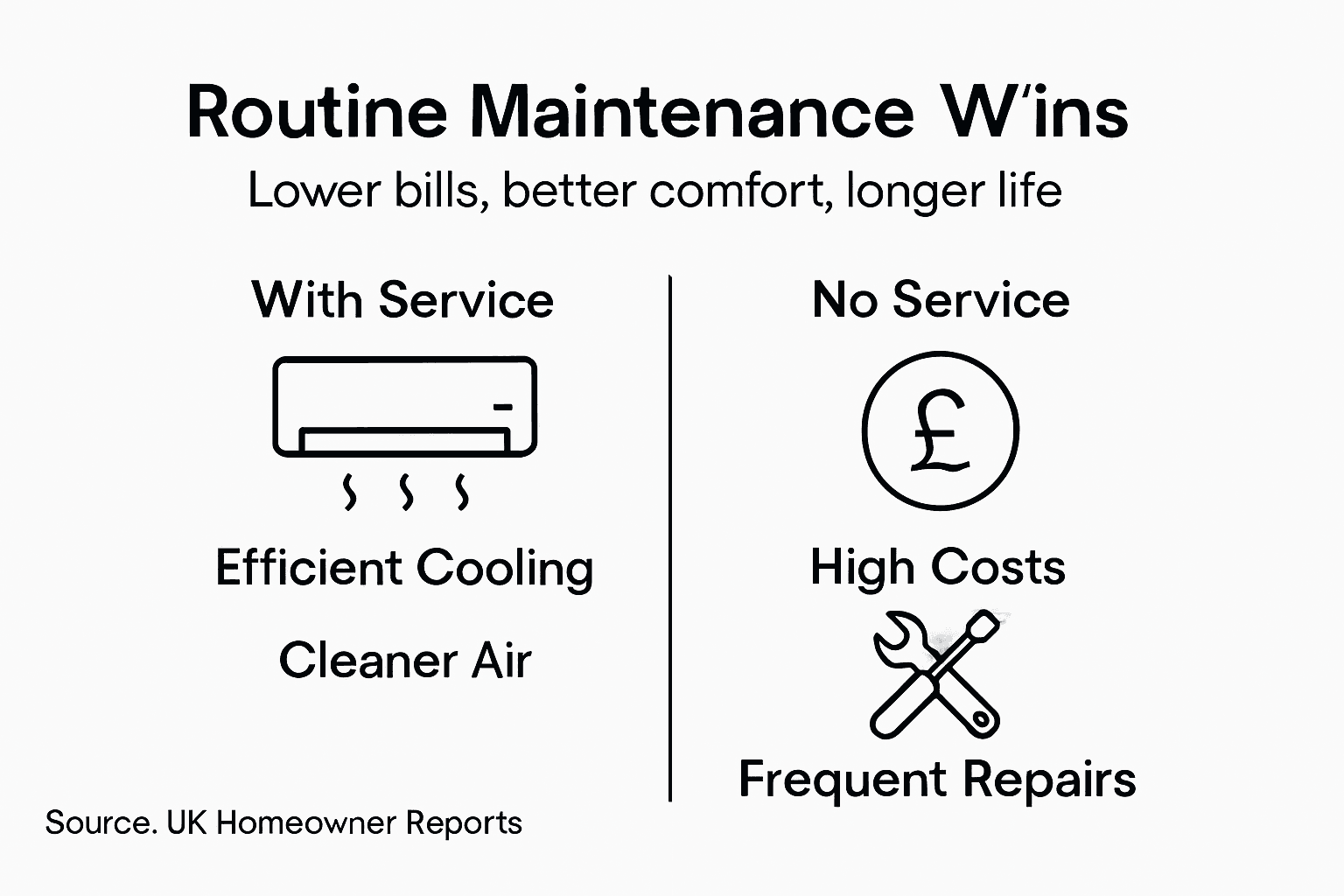
The cost of annual servicing (typically £150-250) pays for itself within months through reduced energy consumption.
Here’s a comparison of the long-term effects of routine maintenance versus neglect for home air conditioning systems:
| Aspect | With Routine Maintenance | Without Maintenance |
|---|---|---|
| System Lifespan | 10–15 years reliable operation | 7–8 years, early system failure |
| Annual Energy Costs | 10–15% lower bills | Rising costs, 15% or more higher |
| Breakdown Frequency | Fewer, predictable issues | Sudden, frequent failures |
| Home Comfort Level | Consistent cooling, good air flow | Uneven cooling, poor air quality |
| Repair Expenses | Low, planned, and manageable | High, urgent, and costly |
Enhanced Indoor Air Quality
Clean filters and well-maintained coils mean cleaner air circulating through your home. Dust, pollen, and contaminants get trapped before reaching your living spaces. This matters significantly for families with allergies, asthma, or young children.
Neglected systems accumulate debris in filters and ducts, spreading poor air quality throughout your home. You breathe cleaner, healthier air with routine maintenance.
Maintaining home systems protects your household investment and ensures optimal performance through controlling energy consumption and maintaining comfort levels.
Extended Equipment Lifespan
Air conditioning systems last 10-15 years with proper care. Without maintenance, they typically fail within 7-8 years. Routine servicing identifies and fixes small problems before they damage expensive components like compressors.
Think of servicing as extending your system’s life. Each year of extended operation saves you thousands on replacement costs.
Prevented Breakdowns and Repairs
Emergency repairs cost significantly more than prevention. A technician identifies worn parts during servicing before catastrophic failure occurs.
Breakdowns typically happen during peak summer heat, when:
- Emergency call-out fees are highest
- Repair queues are longest
- Your home becomes uncomfortable
- Temporary cooling solutions are expensive
Planned maintenance eliminates this scenario entirely.
Reliable Comfort Year-Round
You’ll experience consistent cooling without temperature fluctuations. Your system reaches target temperatures reliably, without struggling or cycling excessively. During heat waves, you can trust your air conditioning to perform.
Reliability matters when summer temperatures spike unexpectedly. A properly maintained system won’t fail you.
Protection of Your Home Investment
Maintaining home systems protects household investment and prevents unexpected breakdowns, ensuring optimal performance. Air conditioning adds value to your property. Buyers expect systems to work reliably. Maintenance documentation proves you’ve cared for the system properly.
Pro tip: Keep detailed records of every service visit, including dates, work performed, and technician name—this documentation increases your home’s value when selling and helps troubleshoot future issues.
How Maintenance Saves Money and Energy
Maintenance isn’t an expense—it’s an investment that pays for itself repeatedly. When you service your air conditioning regularly, you spend less on energy bills and avoid expensive emergency repairs. For homeowners in Suffolk, Norfolk, and Essex watching their budgets, this matters significantly.
Let’s break down exactly how routine servicing saves you money and energy.
Peak Efficiency Reduces Energy Waste
A poorly maintained air conditioning system wastes energy constantly. Clogged filters force the compressor to work harder. Low refrigerant means the system cycles longer trying to reach temperature. Dirty coils reduce heat exchange efficiency.
Regular maintenance ensures systems operate at peak efficiency, cutting energy consumption significantly. Your system reaches target temperatures faster and maintains them with less effort. This translates directly to lower monthly bills.
Clean filters alone reduce energy use by 5-15%. Add refrigerant checks, coil cleaning, and electrical inspections, and your savings climb to 10-20% annually.
Early Detection Prevents Costly Repairs
A refrigerant leak detected during servicing costs £150-300 to fix. The same leak ignored becomes a compressor failure costing £1,200-2,000. A worn capacitor identified early costs £100; a failed compressor costs thousands.
Technicians spot problems during routine inspections that you’d never notice:
- Refrigerant leaks (before major damage occurs)
- Worn electrical connections (before they fail)
- Loose components (before they cause secondary failures)
- Coil corrosion (before efficiency drops dramatically)
- Motor bearing wear (before complete breakdown)
Each early fix prevents exponentially larger repairs.
Extended System Lifespan Saves Replacement Costs
Air conditioning systems typically last 10-15 years with maintenance, or 7-8 years without. That extra 3-7 years of operation saves £4,000-8,000 on replacement and installation.
Routine servicing reduces breakdowns and extends system lifespan, helping households save money over time. Every year of extended operation delays your largest expense.
Early detection of leaks, repairs, and servicing reduces breakdowns and excessive energy consumption, making maintenance actions cost-effective.
Avoided Emergency Repair Premiums
Emergency repairs cost 30-50% more than scheduled servicing. Call-out fees apply. Weekend and evening rates multiply costs. You pay premium prices because your system failed at the worst possible moment.
Planned maintenance eliminates this scenario. You control when servicing happens, paying standard rates rather than emergency premiums.
Real Numbers for Suffolk, Norfolk, and Essex Homes
Consider a typical household with a modern air conditioning system:
- Annual energy savings from maintenance: £200-350
- Avoided emergency repairs over 5 years: £1,500-3,000
- Extended lifespan value: £4,000-8,000
- Total 5-year savings: £5,700-11,350
- Annual servicing cost: £150-250
The maths are straightforward. You invest £750-1,250 in five years of maintenance and gain £5,700-11,350 in savings.
Pro tip: Request an itemised quote before servicing so you understand exactly what’s being checked and can budget accordingly; compare quotes from multiple providers to ensure competitive pricing.
Legal Responsibilities and Safety Regulations
Air conditioning maintenance in the UK isn’t just about comfort and efficiency—it’s a legal obligation. Specific regulations govern how systems are installed, maintained, and operated. Understanding these requirements protects you, your home, and ensures your system complies with current laws.
Homeowners in Suffolk, Norfolk, and Essex must follow these standards when maintaining their cooling systems.
F-Gas Certification and Refrigerant Management
Refrigerants used in air conditioning systems are potent greenhouse gases. The UK enforces strict regulations on their handling. Only certified professionals can work with refrigerants legally.
F-Gas certification requirements manage refrigerants safely and ensure environmental protection. Technicians must hold proper qualifications to handle, recover, or service refrigerant systems. When you hire someone to service your air conditioning, always verify they hold valid F-Gas certification.
Unqualified work with refrigerants creates environmental damage and violates UK law.
Building Regulations and Installation Standards
Air conditioning installations must comply with Building Regulations across the UK. These regulations set mandatory standards for safety, energy efficiency, and indoor air quality.
Building Regulations provide legally binding requirements for ventilation and air conditioning installations. Approved Document F specifies ventilation standards. Systems must meet these standards during installation and remain compliant during maintenance.
Non-compliant systems create legal and safety risks.
Your Maintenance Obligations as a Homeowner
You’re legally responsible for maintaining your air conditioning system to:
- Ensure safe operation and prevent hazards
- Maintain energy efficiency standards
- Prevent refrigerant leaks and environmental harm
- Keep documentation of all servicing performed
- Use only qualified, certified technicians
Neglecting maintenance can violate Building Regulations and environmental laws. You could face enforcement action or fines if your system becomes non-compliant.
Professional Standards and Industry Best Practice
Professional maintenance standards set by industry bodies ensure safe operation. ACRIB (Air Conditioning and Refrigeration Industry Board) and other recognised bodies establish these standards for the UK market.
Any technician you hire should follow these professional standards. This protects you legally and ensures work quality.
Proper maintenance is key to meeting legal obligations and ensuring safe operation of your air conditioning system throughout its lifespan.
Documentation and Compliance Records
Keep all service records for your air conditioning system. These documents prove you’ve maintained compliance with regulations. If enforcement authorities question your system, these records protect you.
Records should include:
- Service dates and work performed
- Technician name and F-Gas certification number
- Parts replaced
- Refrigerant levels recorded
- Safety inspections completed
Digital or paper records both work, but keep them accessible.
For quick reference, here are the main UK legal requirements for air conditioning maintenance:
| Legal Requirement | Who Is Responsible | Consequence of Non-Compliance |
|---|---|---|
| F-Gas Certification | Professional technician only | Fines and environmental damage |
| Building Regulations (Ventilation & Safety) | Homeowner and installer | Failed inspections, legal action |
| Maintenance Documentation | Homeowner | Loss of property value, risk of fines |
| Regular Professional Servicing | Homeowner | System failure, health risks |
When to Hire Professional Help
Don’t attempt refrigerant handling, electrical work, or major component repairs yourself. Only qualified technicians can legally perform these tasks. Attempting DIY work on refrigerant systems violates F-Gas regulations and creates safety hazards.
Hire Akita Air Conditioning or similar certified providers for all maintenance work.
Pro tip: Request and verify F-Gas certification numbers from any technician before work begins, and ask for itemised receipts listing all work performed—this documentation proves legal compliance if ever needed.
Keep Your Air Conditioning Efficient and Reliable with Akita Air Conditioning
Routine air conditioning maintenance is essential to prevent costly breakdowns, reduce soaring energy bills, and ensure consistent cooling performance throughout those hot British summers. If you’ve experienced uneven cooling, rising electricity costs, or unexpected system failures, you know these issues stem from neglecting key tasks like filter changes, refrigerant checks, and coil cleaning. Akita Air Conditioning specialises in professional maintenance solutions designed to preserve your system’s efficiency and extend its lifespan while aligning with strict UK safety regulations.
Discover how our expert technicians, qualified with up-to-date F-Gas certification, provide transparent servicing tailored to your home or business in Suffolk, Norfolk, and Essex. Don’t wait for an emergency repair that could cost you thousands. Visit Akita Air Conditioning now to schedule your comprehensive maintenance service, explore our flexible finance options, and protect your investment with our membership plans and warranty guarantees. Make the smart choice for reliable, energy-efficient climate control today.
Frequently Asked Questions
What is routine air conditioning maintenance?
Routine air conditioning maintenance involves regular checks and servicing of your cooling system, including tasks like filter replacement, refrigerant level checks, and coil cleaning to ensure optimal performance and efficiency.
How often should I schedule air conditioning maintenance?
It is recommended to schedule air conditioning maintenance at least once a year, ideally in spring, before the peak cooling season, to catch any potential issues early.
What are the benefits of regular air conditioning maintenance?
Regular maintenance leads to lower energy bills, fewer unexpected breakdowns, improved indoor air quality, and an extended lifespan of your system, ensuring better comfort in your home.
What are common signs that my air conditioning system needs maintenance?
Common signs include inconsistent cooling, higher energy bills, unusual noises, and poor airflow. If you notice any of these issues, it’s time to schedule maintenance.