

AC repair workflow for reliable, efficient performance
It happens every time: the temperature outside climbs, the office fills with stuffy air, and then your air conditioning unit gives up entirely. Suddenly, you are scrambling for a technician, losing productivity, and facing a repair bill that could have been far smaller with the right approach. A well-structured air conditioning repair workflow is not just for engineers. It is the difference between a minor fix and a costly replacement, between a comfortable home and a miserable week waiting for parts. This guide walks you through everything you need, from understanding modern systems to verifying repairs and setting up smarter monitoring going forward.
Table of Contents
- Understanding the modern air conditioning system and repair needs
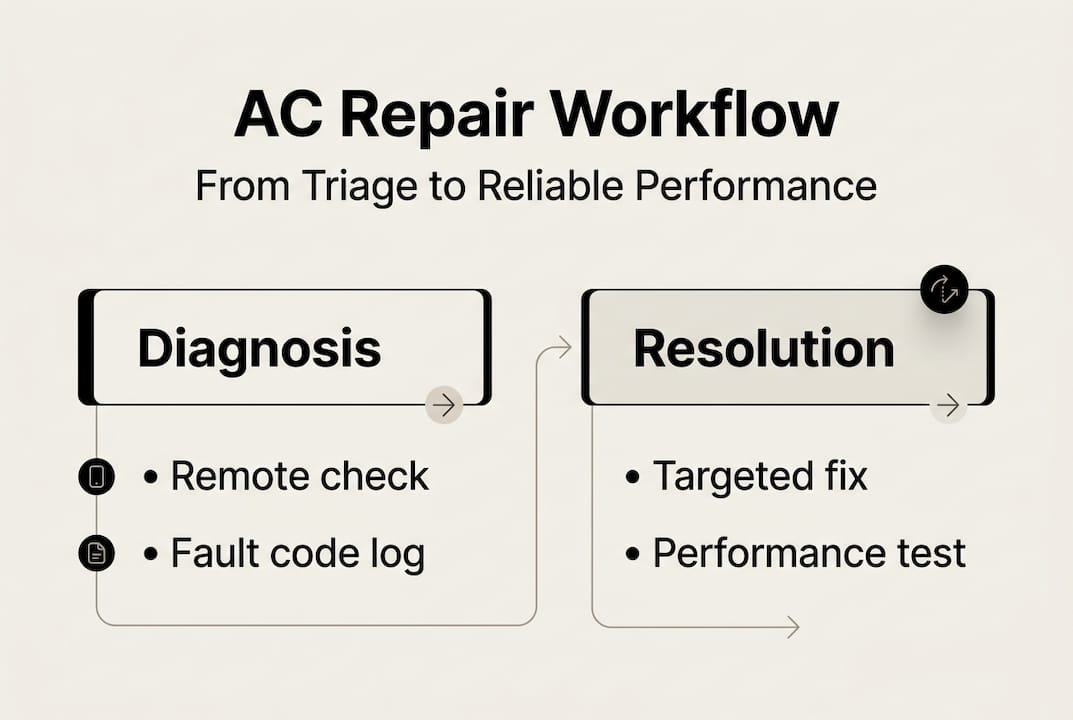
- Step-by-step air conditioning repair workflow: From triage to resolution
- Essential tools, technologies and skills for efficient repairs
- Common pitfalls and troubleshooting tips in the repair workflow
- Verifying repairs and optimising ongoing system performance
- Our perspective: Why modern AC repair workflows demand a predictive mindset
- Professional support for every air conditioning repair need
- Frequently asked questions
Key Takeaways
| Point | Details |
|---|---|
| Modern systems need new workflows | Energy-efficient AC units require predictive and data-driven repair approaches for optimum performance. |
| Step-by-step repairs prevent errors | Following a clear repair workflow minimises downtime and ensures lasting performance. |
| Tools and skills are evolving | Smart diagnostics and technician upskilling are essential for effective modern AC repairs. |
| Ongoing monitoring ensures savings | Post-repair documentation and predictive oversight keep systems efficient and cost-effective. |
Understanding the modern air conditioning system and repair needs
Today’s air conditioning units are a world apart from the clunky boxes installed a decade ago. Modern systems use inverter-driven compressors, variable refrigerant flow, and integrated sensors that constantly adjust output to match demand. This makes them far more efficient, but also more complex to repair when something goes wrong.
Older units tended to fail in predictable, mechanical ways. A capacitor blew, a belt snapped, a thermostat drifted. New systems, by contrast, can develop faults that only show up in data logs or error codes on a digital display. A technician without the right diagnostic tools may miss the root cause entirely, patch the symptom, and leave you with a repeat failure within weeks.
Here is a quick comparison of how repair needs have shifted:
| Feature | Older systems | Modern energy-efficient systems |
|---|---|---|
| Fault detection | Manual inspection | Digital sensors and error codes |
| Efficiency rating | Low to moderate | High (A+++ rated units available) |
| Repair complexity | Mechanical | Software and mechanical combined |
| Maintenance approach | Reactive | Predictive and preventive |
| Data logging | None | Cloud-connected monitoring |
The shift from reactive to predictive maintenance is significant. Predictive and data-driven maintenance can reduce unexpected breakdowns and energy usage, meaning you spend less and worry less over the long term. This is especially relevant if you manage a commercial property where downtime has a direct financial impact.
For homeowners, the benefits of better home energy efficiency are equally compelling. A well-maintained, modern system can cut running costs noticeably compared to an older unit limping along on reactive repairs.
Key reasons why modern systems need a smarter repair approach:
- Refrigerant regulations have changed, meaning older gases are being phased out and replacements require specialist handling.
- Software updates may be needed alongside physical repairs to restore full functionality.
- Warranty conditions often require documented, professional servicing to remain valid.
- Energy performance degrades faster when faults are left unaddressed, even minor ones.
- Sensor calibration is now part of a thorough repair, not an optional extra.
Ignoring these realities and treating a modern AC unit like an old one is where most repair costs spiral out of control.
Step-by-step air conditioning repair workflow: From triage to resolution
With modern systems in mind, let us break down the ideal repair process step by step. A structured workflow prevents missed steps, reduces repeat call-outs, and ensures the system is genuinely fixed rather than temporarily quietened.
- Safety first. Isolate the unit from the power supply before any physical inspection. Confirm refrigerant levels are safe and check for any signs of electrical burning or water ingress.
- Initial triage. Review any error codes on the system display or connected app. Note when the fault first appeared and what conditions preceded it.
- Diagnostic assessment. Use digital analysers to check refrigerant pressure, airflow rates, and electrical continuity. Cross-reference findings with the manufacturer’s fault guide.
- Root cause identification. Distinguish between a primary fault and secondary symptoms. Replacing a failed component without addressing the cause leads to repeat failures.
- Repair or replace decision. Weigh the cost of repair against the age and efficiency rating of the unit. Older systems with recurring faults often cost more to maintain than to replace.
- Carry out the repair. Work methodically, documenting each step. Photograph components before and after. Record any parts replaced, including batch numbers.
- System restart and testing. Power the unit back on and run it through a full cycle. Check temperatures, airflow, noise levels, and energy draw against expected values.
- Client sign-off. Walk the homeowner or facilities manager through what was done, what was found, and what to watch for going forward.
Our HVAC maintenance checklist covers many of these steps in detail, and pairing it with a solid HVAC diagnostics guide gives you a complete picture of what good practice looks like.
“Predictive maintenance strategies reduce downtime and prolong equipment life, making them essential for modern climate control systems.”
Pro Tip: Keep a simple repair log for every unit you manage. Even a spreadsheet with dates, fault codes, and actions taken will help you spot patterns and schedule preventive work before failures occur.
Essential tools, technologies and skills for efficient repairs
Knowing the process, you will need proper tools and knowledge to do the job right, especially as repairs grow smarter. The days of a spanner and a multimeter being sufficient are largely behind us.
| Tool or technology | Purpose |
|---|---|
| Digital refrigerant analyser | Measures pressure and identifies refrigerant type |
| Thermal imaging camera | Spots hot spots and electrical faults invisibly |
| Smart manifold gauge set | Provides real-time pressure data via Bluetooth |
| Airflow anemometer | Measures duct and outlet airflow accurately |
| Cloud diagnostic software | Connects to IoT-enabled units for remote fault reading |
| Electrical continuity tester | Checks wiring and component integrity |
IoT-enabled systems and smart diagnostics are transforming predictive maintenance effectiveness, and technicians who cannot use these tools are already working at a disadvantage. For business managers, this means asking your service provider directly: do they use digital diagnostics, or are they still working from instinct and experience alone?
Beyond tools, skills matter enormously. A technician servicing modern AC units needs:
- F-Gas certification to handle refrigerants legally in the UK.
- Electrical competency for systems that integrate with smart home or building management platforms.
- Software literacy to interpret data logs and update firmware where needed.
- Communication skills to explain findings clearly to non-technical clients.
Remote diagnostics and cloud monitoring are now available on many premium systems. These allow a technician to identify a developing fault before it becomes a breakdown, often without visiting the site at all. Understanding predictive HVAC maintenance gives homeowners and managers a clearer picture of how this technology works in practice.

Pro Tip: Never attempt to top up refrigerant yourself. Without the correct certification and equipment, you risk voiding your warranty, damaging the compressor, and breaking UK environmental regulations.
Common pitfalls and troubleshooting tips in the repair workflow
Armed with the right tools, avoiding common mistakes becomes much easier, if you know what to watch for. Even experienced technicians can fall into familiar traps when working under pressure or on unfamiliar systems.
The most frequent sources of workflow failure include:
- Skipping the diagnostic phase and jumping straight to part replacement based on a hunch.
- Ignoring secondary faults that appear after the primary repair, which can indicate a deeper systemic issue.
- Poor documentation that leaves no record of what was done, making future repairs harder and slower.
- Incorrect refrigerant handling that leads to undercharging or overcharging the system.
- Rushing the test phase and signing off before the unit has completed a full operating cycle.
For homeowners, the most common mistake is waiting too long. A strange noise, a slight drop in cooling performance, or an unexplained spike in energy bills are all early warning signs. Acting on them promptly is almost always cheaper than waiting for a full breakdown.
“Regular planned preventive maintenance reduces the risk of repair mistakes and system breakdowns, keeping costs predictable and systems reliable.”
Establishing a repeatable troubleshooting checklist is one of the most practical things any facilities manager can do. It removes guesswork, speeds up diagnosis, and ensures nothing is overlooked during a busy period.
The value of regular HVAC maintenance goes beyond just avoiding breakdowns. It keeps efficiency high, which directly affects your energy bills. The benefits of HVAC maintenance for UK homeowners are well documented, from lower running costs to extended system lifespan.
Pro Tip: Create a simple troubleshooting checklist and keep it near each unit. Include steps like checking the filter, verifying thermostat settings, and confirming the condensate drain is clear. This alone resolves a surprising number of call-outs.
Verifying repairs and optimising ongoing system performance
Once you have completed the repair, it is time to make sure the system is working better than ever and that it stays that way. Verification is not just about confirming the fault has gone. It is about confirming the system is performing at its intended efficiency level.
Follow these steps after every repair:
- Run a full operating cycle and monitor temperature differentials between supply and return air.
- Check energy consumption against the system’s rated output. A noticeable gap suggests something is still not right.
- Inspect all accessible components for signs of wear, leaks, or unusual noise during operation.
- Update the service record with the fault found, action taken, parts replaced, and test results.
- Configure monitoring alerts if the system supports cloud connectivity, so future anomalies are flagged automatically.
- Brief the client on what was done and when the next service is due.
Ongoing monitoring and documentation after repairs underpin long-term energy savings and reliability, particularly for commercial systems running continuously.
| Verification step | Why it matters |
|---|---|
| Temperature differential check | Confirms refrigerant charge and airflow are correct |
| Energy consumption review | Validates efficiency is restored |
| Service record update | Supports warranty and compliance requirements |
| Monitoring alert setup | Enables early detection of future faults |
| Client briefing | Ensures correct operation and sets expectations |
For those looking to go further, our guide on maintenance for energy savings outlines how to structure ongoing care, and understanding the value of a structured HVAC maintenance plan can help you decide what level of ongoing support makes sense for your property.
Our perspective: Why modern AC repair workflows demand a predictive mindset
Most people still think of air conditioning repair as something that happens after a problem appears. We think that is the wrong way around entirely. The real cost of a reactive approach is not just the repair bill. It is the lost productivity, the uncomfortable days waiting for parts, and the accelerated wear on every other component that worked harder to compensate for the failing one.
What we have seen consistently is that clients who adopt a predictive mindset spend less over time, not more. They catch small faults before they cascade. They schedule work at convenient times rather than in emergencies. And their systems simply last longer.
The technology to support this approach is already here. Smart sensors, cloud monitoring, and digital diagnostics are not futuristic concepts. They are available now, and they change what good AC repair looks like. Understanding the full system lifecycle helps you make smarter decisions at every stage, from installation to eventual replacement. A predictive mindset is not about spending more. It is about spending wisely.
Professional support for every air conditioning repair need
If this guide has shown you anything, it is that modern AC repair is genuinely complex and that getting it right requires the right tools, skills, and workflow. Working with a team that uses data-driven, predictive approaches means fewer surprises and better long-term outcomes.
At Akita, we bring exactly that approach to every job across Suffolk, Norfolk, and Essex. Whether you need a one-off AC repair service, ongoing support for your domestic air conditioning system, or a full maintenance programme for your commercial air conditioning setup, our team is equipped to handle it properly. Transparent pricing, qualified engineers, and smart diagnostics mean you get a repair that actually lasts. Get in touch today to book a consultation or arrange a repair visit.
Frequently asked questions
How does predictive maintenance improve air conditioning repairs?
Predictive maintenance uses data and sensors to spot potential failures early, reducing breakdowns and unplanned repair costs before they escalate.
What routine steps should I follow before calling a repair professional?
Check your thermostat settings, inspect the air filter for blockages, and confirm the circuit breaker has not tripped. If none of these resolve the issue, contact a licensed technician.
Is it worth repairing old air conditioning units or upgrading to newer models?
Upgrading typically improves efficiency and reliability, particularly for units over ten years old that lack smart diagnostics. Modern energy-efficient systems deliver lower running costs and benefit directly from predictive maintenance tools.
How important is documentation during the repair workflow?
Proper documentation supports warranty validity, simplifies future repairs, and enables ongoing system monitoring for compliance and energy performance tracking.