

Understanding the HVAC system lifecycle for smarter ownership
Many homeowners and business owners assume their heating and cooling systems will run smoothly for decades without much thought, only to face unexpected breakdowns and costly emergency replacements. The reality is that HVAC systems follow a predictable lifecycle, and understanding these stages empowers you to plan maintenance, budget for replacements, and avoid energy waste. This guide walks you through the complete HVAC system lifecycle, from installation through end of life, covering the financial decisions, common pitfalls, and maintenance strategies that maximise your investment. Whether you manage a commercial building or own a home in the UK, knowing when to repair, when to replace, and how to extend system longevity will save you money and stress.
Table of Contents
- Key takeaways
- The stages of an HVAC system lifecycle
- Life cycle costing and financial decision making for HVAC systems
- Common issues affecting lifecycle and how to optimise longevity
- When to repair and when to replace: making the right choice
- Discover expert HVAC installation and maintenance services
- What is HVAC system lifecycle?
Key Takeaways
| Point | Details |
|---|---|
| Installation peak efficiency | A correctly installed system operates at its highest efficiency in the early years, and poor installation can cause immediate efficiency losses. |
| Proactive maintenance | Regular servicing, filter changes and inspections extend lifespan and help keep energy costs down. |
| Degradation phase | From around ten to fifteen years, the system shows noticeable decline as components wear and repair frequency rises. |
| End of life replacement | After about fifteen years, replacements are typically more cost effective than continuing repairs. |
| Energy cost dominance | Energy usually accounts for the majority of lifecycle expenses, often 60 to 80 per cent over twenty years. |
The stages of an HVAC system lifecycle
Every HVAC system moves through distinct phases, each with its own characteristics, maintenance needs, and performance expectations. Recognising these stages helps you anticipate costs and plan interventions before small issues become expensive emergencies.
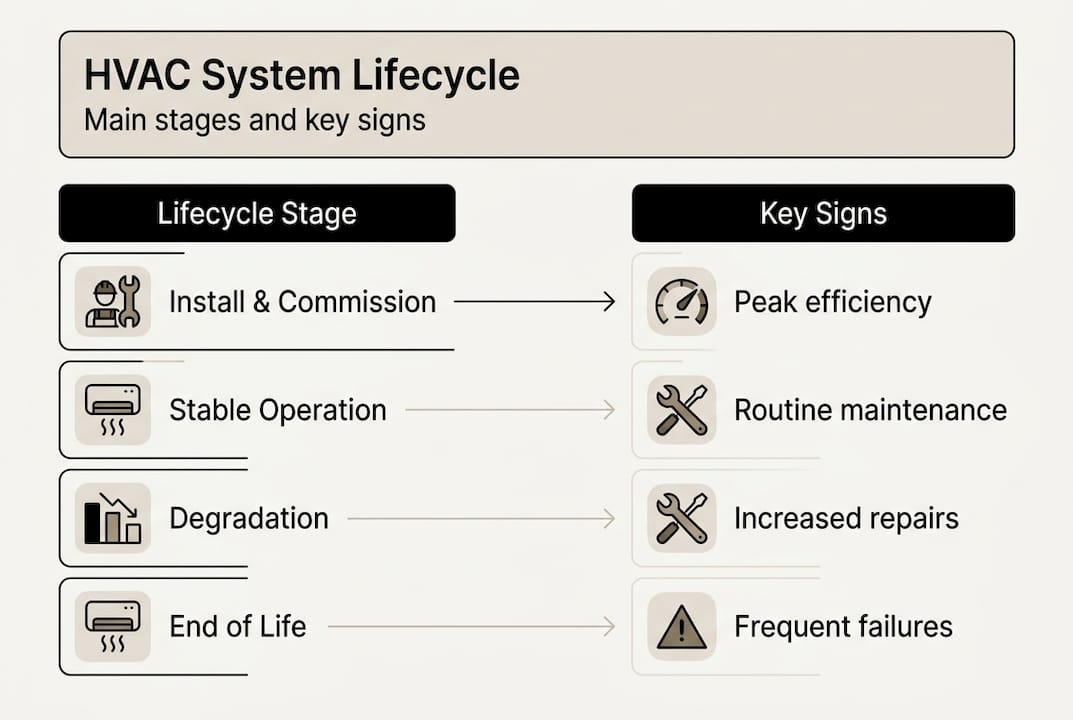
The first stage, Installation and Commissioning (years 0 to 3), represents peak efficiency. A properly installed system operates at its highest performance, delivering the energy savings and comfort promised by manufacturers. This phase is critical because poor installation can cause efficiency losses of 30% from day one, undermining the entire lifecycle. During these early years, you should experience minimal breakdowns and low running costs. Focus on ensuring correct setup, balancing airflow, and verifying refrigerant charge.
Next comes Stable Operation (years 3 to 10 or 12), where routine preventative maintenance keeps the system running reliably. You will need regular filter changes, coil cleaning, and annual inspections to maintain efficiency. Energy consumption remains steady, and repair costs stay low if you follow recommended servicing schedules. This is the sweet spot of HVAC ownership, where the system delivers consistent value with predictable upkeep.
The Degradation stage (years 10 to 15) marks the beginning of noticeable decline. Components wear out, efficiency drops, and repair frequency increases. You might notice higher energy bills, uneven temperatures, or strange noises. Refrigerant leaks, compressor strain, and control system failures become more common. This phase requires careful monitoring because repair costs can escalate quickly, and you need to weigh each fix against the remaining lifespan.
Finally, End of Life (15+ years) arrives when failures become frequent and costly, and energy consumption spikes. At this point, replacement typically offers better value than continued repairs. The HVAC lifecycle typically spans 10 to 25 years depending on component type and maintenance quality, with different systems aging at different rates.
Pro Tip: Track your system’s age and repair history in a simple spreadsheet. When repair costs exceed 50% of replacement value or failures occur more than twice yearly, start planning replacement.
| Component | Typical lifespan | Degradation signs |
|---|---|---|
| Gas boilers | 15-20 years | Frequent ignition failures, rising fuel consumption |
| Air source heat pumps | 15-20 years | Reduced heating capacity, refrigerant leaks |
| Chillers | 15-25 years | Compressor noise, declining cooling output |
| Air conditioning units | 10-15 years | Short cycling, poor humidity control |
| Ductwork | 20-25 years | Air leaks, poor airflow balance |
Life cycle costing and financial decision making for HVAC systems
Understanding the true cost of HVAC ownership goes far beyond the purchase price. Life cycle costing assesses acquisition, energy, maintenance, repairs, and replacement costs over 15 to 25 years using net present value and discount rates to compare options fairly.
Acquisition costs include equipment, installation labour, and commissioning. Energy costs typically dominate the lifecycle total, often representing 60% to 80% of ownership expenses over two decades. A system running 12 hours daily consumes substantial electricity or gas, and even small efficiency improvements compound into significant savings. Maintenance costs cover routine servicing, filter replacements, and inspections. Repair costs grow as systems age, starting low but accelerating in the degradation phase. Replacement costs include removal of old equipment and installation of new systems.
When evaluating repair versus replacement decisions, use the 50% rule as a starting point. If a repair costs more than half the price of a new system, replacement usually makes more sense, especially for units past 80% of expected lifespan. Consider age, energy efficiency trends, and failure frequency together rather than any single factor.
Discount rates and inflation affect long term cost assessments significantly. A 3% to 5% discount rate reflects the time value of money, making future costs less impactful in today’s terms. However, energy price inflation can outpace general inflation, so factor rising fuel costs into your projections. Reviewing your HVAC lifecycle costs with realistic energy price assumptions prevents nasty surprises.
Key financial signals for replacement include reaching 80% of expected lifespan, energy consumption rising 25% above baseline, and experiencing three or more failures within 24 months. Modern systems deliver 20% to 40% better efficiency than 15 year old units, translating to substantial annual savings.
Pro Tip: Build future energy cost increases into your lifecycle calculations. UK energy prices fluctuate, and regulations like carbon pricing may raise costs further. Budgeting for 4% to 6% annual energy inflation provides a realistic picture of long term ownership costs.
| Scenario | Repair cost | System age | Energy trend | Recommendation |
|---|---|---|---|---|
| Minor fault | £300 | 8 years | Stable | Repair |
| Compressor failure | £1,800 | 14 years | Rising 20% | Replace |
| Refrigerant leak | £600 | 11 years | Rising 10% | Repair, monitor closely |
| Control board fault | £500 | 16 years | Rising 30% | Replace |
Common issues affecting lifecycle and how to optimise longevity
Several recurring problems shorten HVAC lifespans, but most are preventable with proper installation, sizing, and maintenance. Recognising these issues early lets you intervene before permanent damage occurs.
Poor installation tops the list of lifespan killers. Incorrect refrigerant charge, inadequate airflow balancing, and improper electrical connections cause efficiency losses of 30% from day one and accelerate component wear. Always hire qualified engineers and insist on thorough commissioning.
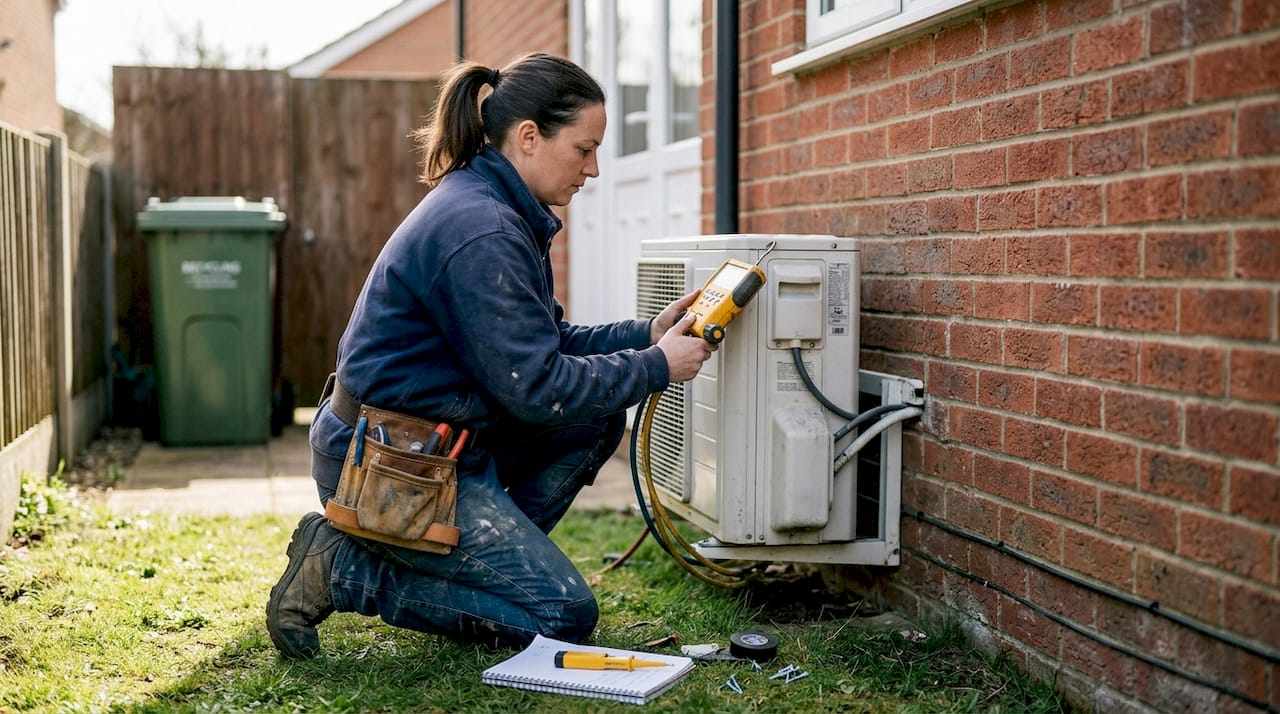
Oversizing systems is surprisingly common and destructive. An oversized unit short cycles, turning on and off frequently without running long enough to dehumidify properly or reach steady state efficiency. This constant starting and stopping wears out compressors, contactors, and capacitors much faster than normal operation. Right sizing based on accurate heat load calculations is essential.
Compressor failures account for 38% of breakdowns in chiller systems and often signal the end of economic repair. Compressors fail due to refrigerant contamination, electrical issues, or mechanical wear from short cycling. Protecting compressors through proper maintenance and avoiding short cycling extends system life dramatically.
Refrigerant leaks reduce cooling capacity, force compressors to work harder, and indicate deteriorating seals or coil corrosion. UK F Gas regulations phase down high GWP refrigerants, making leaks more expensive to repair and accelerating replacement decisions for older systems using banned refrigerants.
Neglect is perhaps the most avoidable problem. Skipping regular maintenance can reduce lifespan by 30% to 50%. Dirty filters restrict airflow, forcing fans and compressors to strain. Clogged coils reduce heat transfer efficiency. Worn belts and loose electrical connections cause unexpected failures.
Pro Tip: Schedule annual professional servicing and change filters every one to three months. This simple routine prevents the majority of premature failures and keeps energy consumption in check.
Compressor failures represent 38% of all HVAC breakdowns, making compressor protection through proper maintenance and sizing the single most important factor in extending system life.
Implementing predictive maintenance strategies like monitoring vibration, temperature trends, and energy consumption helps catch problems before catastrophic failure. Following a residential maintenance checklist ensures nothing gets overlooked during servicing.
When to repair and when to replace: making the right choice
Deciding between repair and replacement requires balancing multiple factors rather than relying on a single rule. Use these criteria to guide your decision:
- System age: Compare current age to expected lifespan. At 80% or more, replacement usually offers better long term value even if repair costs seem reasonable.
- Repair cost: Apply the 50% rule. If repair exceeds half the cost of a new system, replacement makes financial sense, especially for older units.
- Energy consumption trends: Track annual energy use. If consumption rises 25% above baseline despite maintenance, efficiency has degraded significantly and replacement will pay back through energy savings.
- Reliability: Count breakdowns over the past 24 months. Three or more failures indicate systemic deterioration, and continued repairs become a losing battle.
Comparing older and modern systems reveals the efficiency advantage of replacement. A 15 year old air conditioner might have a SEER rating of 10, while current models achieve SEER 16 or higher, delivering 20% to 40% energy savings. Heat pumps have improved even more dramatically with inverter technology and advanced refrigerants. These efficiency gains translate directly into lower bills and reduced carbon emissions.
Planning replacement two to three years in advance for systems approaching 15 years old avoids emergency decisions during breakdowns. You can research options, compare quotes, and schedule installation during off peak seasons when engineers have more availability and pricing may be better. Proactive planning also lets you budget properly and explore financing options without pressure.
Pro Tip: Monitor your energy bills and maintenance incident log as early warning systems. A sudden 15% jump in energy use or two breakdowns within six months should trigger replacement planning, even if the system limps along.
| System age | Efficiency vs new | Repair frequency | Recommended action |
|---|---|---|---|
| 8 years | 10% lower | Once yearly | Continue maintenance |
| 12 years | 20% lower | Twice yearly | Plan replacement in 2-3 years |
| 15 years | 30% lower | Three times yearly | Replace immediately |
| 18+ years | 40%+ lower | Frequent | Replace urgently |
Upgrading to modern systems brings benefits beyond energy savings. Smart controls, better humidity management, quieter operation, and improved air filtration enhance comfort and indoor air quality. Exploring why upgrading improves energy efficiency and reasons to upgrade HVAC systems helps you understand the full value proposition.
Discover expert HVAC installation and maintenance services
Navigating the HVAC lifecycle becomes much easier with professional support from experienced engineers who understand UK climate conditions, building regulations, and energy efficiency standards. Akita Air Conditioning specialises in domestic air conditioning and commercial air conditioning installation, maintenance, and replacement throughout East Anglia.
Whether you need a new energy efficient system installed, annual servicing to extend your current equipment’s lifespan, or expert advice on repair versus replacement decisions, Akita offers fixed price solutions tailored to your property and budget. Our engineers handle everything from initial heat load calculations through commissioning and ongoing maintenance, ensuring your system delivers peak performance throughout its lifecycle. Serving homeowners and businesses across East Anglia, we combine technical expertise with transparent pricing and flexible financing to make climate control upgrades accessible and stress free. Contact Akita today for a consultation on optimising your HVAC investment.
What is HVAC system lifecycle?
What factors most influence HVAC lifespan?
Installation quality, system sizing, maintenance frequency, and operating environment determine lifespan most. Proper installation and annual servicing can extend life by 30% to 50% compared to neglected systems.
How often should HVAC systems be serviced?
Annual professional servicing is the minimum for most systems, with additional filter changes every one to three months depending on usage. Commercial systems with heavy use may benefit from bi annual inspections.
When is the best time to replace an ageing HVAC system?
Replace when the system reaches 80% of expected lifespan, experiences three or more failures within 24 months, or shows energy consumption rising 25% above baseline. Planning replacement two to three years in advance avoids emergency decisions.
Can new HVAC technology extend lifecycle?
Modern inverter driven systems with smart controls experience less wear from reduced cycling and better load matching. Advanced diagnostics also catch problems earlier, potentially extending lifespan by 10% to 20% compared to older technology.
What impact do UK regulations have on HVAC replacement?
F Gas regulations phase down high GWP refrigerants, making older systems using banned refrigerants increasingly expensive to maintain and accelerating replacement timelines. Energy efficiency standards also push upgrades to more efficient technologies.