

Upgrade your HVAC system efficiently: a guide for Suffolk, Norfolk, Essex
TL;DR:
- Piecemeal HVAC upgrades often lead to high costs and persistent comfort issues if building fabric is neglected. Conducting a heat-loss survey and assessing occupancy patterns ensure system sizing and control strategies match actual needs. Proper commissioning and balancing are crucial for optimal performance and long-term savings, whether for residential or commercial properties in Suffolk, Norfolk, and Essex.
Replacing a boiler here, adding a wall unit there: it feels like progress until your energy bills stay stubbornly high and half your building still swelters in summer and shivers in winter. Piecemeal HVAC upgrades are one of the most common and expensive mistakes homeowners and business owners in Suffolk, Norfolk, and Essex make when trying to improve comfort and cut costs. This guide gives you a clear, strategic path from initial assessment through to commissioning, so that every pound you spend moves you closer to genuine, lasting performance.
Table of Contents
- Prepare for your HVAC upgrade: assessing your property and requirements
- Sizing and selecting HVAC systems: matching your needs for optimal performance
- Commissioning and balancing: ensuring your HVAC upgrade delivers results
- Commercial HVAC upgrades: managing costs, constraints, and programme-of-works
- A smarter approach: what most HVAC upgrades get wrong and how to outperform
- Next steps: expert help for seamless HVAC upgrades in Suffolk, Norfolk, Essex
- Frequently asked questions
Key Takeaways
| Point | Details |
|---|---|
| Holistic approach is crucial | Whole-building strategies outperform piecemeal upgrades for cost savings and comfort. |
| Accurate sizing saves money | Proper heat load calculations and system selection ensure long-term efficiency. |
| Commissioning delivers results | A thorough handover with controls setup and balancing prevents costly underperformance. |
| Commercial upgrades require planning | Business retrofit projects have extra cost, scheduling, and compliance considerations. |
Prepare for your HVAC upgrade: assessing your property and requirements
Before you order a single unit or call in a contractor, you need an honest picture of the building you are working with. Many properties across Suffolk and Norfolk were built before modern insulation standards existed, and simply bolting on a new heat pump or split system without addressing the fabric first is a recipe for disappointment.
CIBSE advises a whole-building approach for retrofit decisions, warning that piecemeal HVAC-only changes can deliver negligible savings and may even cause abortive work or fabric damage. In plain terms, if your walls, roof, or windows are leaking heat, an efficient new system will spend most of its energy compensating for those losses rather than keeping you comfortable.
A heat-loss survey is the single most valuable step you can take at the outset. An assessor measures how quickly your building loses heat under standardised outside temperature conditions. That figure directly determines what size system you actually need, and it also highlights where fabric-first retrofit strategies such as draught-proofing, loft insulation, or cavity wall fill will deliver the biggest return before any HVAC equipment is installed.
Alongside heat loss, you also need to understand your occupancy patterns and usage hours. A home-office property in Ipswich running 10 hours a day has very different demands to a warehouse unit near Norwich trading 24 hours across shifts. Capturing those requirements upfront means you choose controls and zoning that actually match your lifestyle or business operations, rather than fighting against them.
| Pre-upgrade checklist item | Why it matters | Action |
|---|---|---|
| Fabric condition (walls, roof, glazing) | Reduces heat loss, lowers required system capacity | Commission a heat-loss survey |
| Current ventilation strategy | Poor ventilation can trap moisture after upgrade | Review or fit mechanical ventilation |
| Existing controls and zoning | Old thermostats waste energy and cause discomfort | Map current controls, plan replacements |
| Planning and building regulations compliance | Non-compliant installs risk enforcement action | Check Permitted Development rights |
| Occupancy and hours of use | Determines system type and programme settings | Document peak and off-peak periods |
Pro Tip: Ask your surveyor for the building’s design heat loss in watts, not just a general recommendation. That specific number is what a good engineer will use to size equipment accurately in the next stage.
Investing time here also protects you from costly surprises mid-project. Reviewing HVAC servicing best practices before you begin will show you how neglected maintenance on existing systems inflates apparent heat demand and skews survey results. A quick service on your existing kit, combined with the fabric checks above, gives you a clean baseline and positions you to upgrade your home HVAC with maximum impact.
Sizing and selecting HVAC systems: matching your needs for optimal performance
With a solid property assessment in hand, you can move on to the most technically critical stage: choosing the right equipment at the right capacity. Oversized systems cycle on and off constantly, wearing out components prematurely and creating uncomfortable temperature swings. Undersized systems run flat out, struggle to maintain comfort on cold days, and drive up electricity costs.
Accurate heat pump sizing means selecting a unit that meets 100% of your building’s heat demand at the Design Outside Temperature (DOT), which is the coldest typical day your region experiences. For properties in East Anglia, this is typically around minus 3°C to minus 4°C. A system sized to a warmer average will fall short precisely when you need it most.
Here are the key steps for sizing and selecting your system:
- Confirm design heat loss. Use the figure from your heat-loss survey. This is your baseline for everything that follows.
- Identify the Design Outside Temperature for your location. Postcode-level data is available from industry tables and ensures regional accuracy for Suffolk, Norfolk, and Essex.
- Select emitters to suit lower flow temperatures. Heat pumps work most efficiently with underfloor heating or oversized radiators running at 40 to 45°C, not the 70°C circuits traditional boilers use.
- Match distribution to zone requirements. Open-plan commercial spaces, warehouses, and multi-room homes each need different duct layouts or refrigerant pipe routes to achieve even temperatures.
- Choose controls with the hardware. A smart thermostat or building management system should be specified at the same time as the main plant, not added as an afterthought.
- Check refrigerant type and seasonal efficiency ratings. Systems rated with a higher Seasonal Coefficient of Performance (SCOP) consume less electricity per unit of heat delivered.
| System type | Typical SCOP range | Best suited to | Key consideration |
|---|---|---|---|
| Air source heat pump (ASHP) | 2.5 to 4.0 | Most UK homes and light commercial | Requires low-temp emitters for best efficiency |
| Ground source heat pump (GSHP) | 3.5 to 5.0 | Larger properties with land | Higher install cost, very stable output |
| Variable refrigerant flow (VRF/VRV) | 3.0 to 4.5 | Commercial buildings, multi-zone | Complex design, excellent zoning capability |
| Gas boiler with upgrade controls | 0.9 to 0.95 (efficiency not SCOP) | Interim or listed buildings | No heat pump benefit; useful transitional step |
| Split system air conditioning | 3.0 to 4.5 (cooling) | Offices, server rooms, retail | Cooling-led; heating capability varies by model |
Understanding the types of HVAC systems available in the UK makes this comparison far easier, especially if your building has mixed use areas with different temperature demands. It is also worth noting that correct HVAC sizing is one of the most frequently underestimated factors in system longevity. A unit running within its design parameters will outlast an oversized alternative by several years.
One often-overlooked point: the same heat pump that delivers a SCOP of 3.8 in a well-insulated Essex new-build may only reach 2.6 in a solid-walled Victorian terrace in Bury St Edmunds with minimal fabric improvements. The equipment is identical; the building determines the outcome. That is why the assessment stage and the sizing stage are inseparable. Understanding HVAC comfort and savings for UK homes gives useful context on how building type influences real-world performance across different property ages and sizes.
Commissioning and balancing: ensuring your HVAC upgrade delivers results
Installation day is not the finish line. It is the start of the most overlooked phase of any HVAC project: commissioning. This is where a correctly sized and well-installed system is either optimised for peak performance or left to underperform for years without anyone realising why.
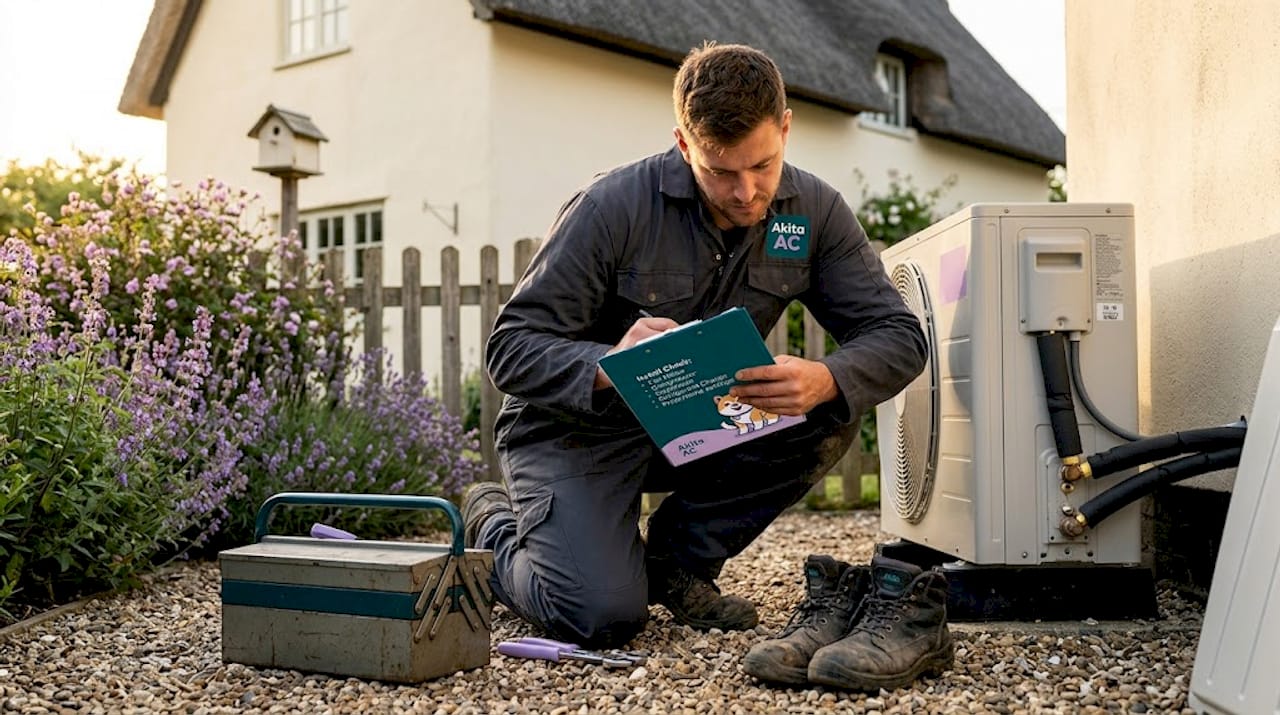
Commissioning is critical to heat pump performance, and the commissioning report and controls setup should be checked carefully at handover. At a minimum, your engineer should verify refrigerant charge, flow temperatures, defrost settings, and time and temperature programmes before signing off.
Hydraulic balancing during commissioning is equally non-negotiable. Without it, a heat pump can short-cycle, meaning it switches on and off rapidly as flow distribution across emitters is uneven. Short-cycling wastes electricity, increases wear on the compressor, and creates exactly the uneven temperatures you spent good money trying to fix.
Key commissioning checks to insist upon:
- Written commissioning report covering all measured flow and return temperatures at each emitter circuit.
- Controls configuration including setback temperatures, anti-frost protection, and hot water cylinder settings if applicable.
- Hydraulic balancing sign-off confirming each radiator or underfloor zone receives its design flow rate.
- Building Regulations compliance certificate or MCS certificate (for heat pumps claiming the Boiler Upgrade Scheme grant).
- Handover documentation including manufacturer manuals, service schedule, and installer contact details.
“A system that is installed correctly but commissioned poorly will rarely achieve its rated efficiency, and owners will rarely know why until a full diagnostic is carried out years later.”
Pro Tip: Request a copy of the commissioning report as a condition of final payment. A professional installer will have no hesitation providing this. Anything less should raise questions.
Understanding how to boost air conditioning efficiency after installation shows just how much operational improvement is possible when controls and balancing are handled correctly from day one.
Commercial HVAC upgrades: managing costs, constraints, and programme-of-works
For business owners across Norfolk, Suffolk, and Essex, an HVAC upgrade carries additional layers of complexity that residential projects simply do not face. Occupied premises, tenant obligations, planning requirements, and the risk of lost rental income all need careful management alongside the technical work.
Commercial retrofit projects require managing cost constraints and the practical impacts of decant, tendering, planning approval, and commissioning when replacing legacy plant such as gas boilers or ageing chillers. The cost model for a typical commercial air source heat pump retrofit shows that plant replacement is often only 40 to 50% of total project cost, with the remainder consumed by pipework modifications, electrical upgrades, and programme management.
Key factors unique to commercial HVAC upgrades:
- Occupied premises risk. Noise, dust, and temporary loss of climate control must be managed around staff, customers, or tenants.
- Planning permission. Larger external plant units on commercial buildings may require consent, particularly in conservation areas common across Norfolk and Suffolk market towns.
- Electrical infrastructure. Heat pumps and VRF systems often demand three-phase power supplies that older commercial premises may not have.
- Phased replacement strategy. Swapping out plant in stages reduces disruption but requires careful coordination so old and new systems work compatibly during transition.
- Compliance and documentation. F-Gas regulations, Pressure Systems Safety Regulations, and building-specific obligations all apply.
| Commercial constraint | Typical impact | Mitigation strategy |
|---|---|---|
| Tenant occupation | Delays access windows for install | Programme works outside trading hours |
| Planning approval timescales | 8 to 13 weeks for full consent | Submit early, engage planning officer proactively |
| Electrical supply upgrade | Additional 4 to 8 weeks and cost | Combine DNO works with project tender |
| Listed or heritage building restrictions | Limits external plant options | Use concealed or low-profile equipment |
| Budget phasing | Incomplete installs reduce efficiency gains | Prioritise fabric, then primary plant, then controls |
A realistic programme for a medium-sized commercial retrofit, such as a 500 square metre office or retail unit, typically runs 14 to 22 weeks from initial survey to practical completion. Rushing any stage, particularly commissioning and controls setup, is where most projects run into trouble further down the line. Explore practical guidance for upgrading for comfort to understand how these principles translate across property types.
A smarter approach: what most HVAC upgrades get wrong and how to outperform
In our experience working across Suffolk, Norfolk, and Essex, the single most consistent source of post-upgrade disappointment is not the equipment. It is the approach taken before a single component is ordered.
Most failed upgrades follow the same pattern. A property owner notices their heating is slow or their bills are high, gets a quote for a replacement unit, and accepts it without a full building assessment. The new kit goes in, the old problems mostly persist, and within 18 months there is a call to investigate why savings have not materialised. The hard truth is that swapping hardware in an unassessed building is not an upgrade. It is an expensive replacement.
What genuinely differentiates a high-performing upgrade is the willingness to spend time on preparation. Controls and commissioning matter as much as the hardware itself. A mediocre heat pump, properly commissioned with accurate hydraulic balancing and well-configured smart controls, will routinely outperform a premium unit that has been installed without those steps. We see this repeatedly in field diagnostics across the region.
The shortcut mentality is understandable. Works cost money, disruption is real, and a faster timeline feels like a better deal. But shortcuts in fabric assessment and commissioning are almost always the most expensive decisions in the long run because they compound. An undersized radiator here, an unbalanced circuit there, a setback programme left at factory defaults: individually minor, collectively devastating to seasonal efficiency.
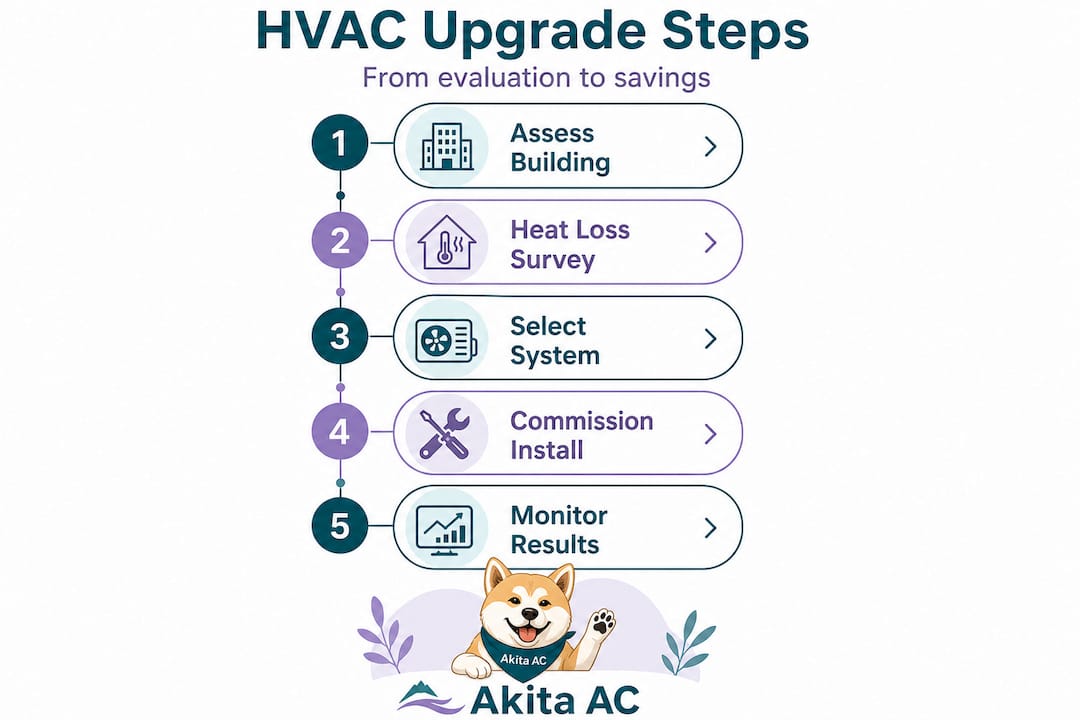
If you want to upgrade your HVAC for lasting comfort and savings, treat the process as a sequence, not a checklist. Fabric first, accurate sizing second, professional installation third, thorough commissioning fourth. Miss any step and you undermine all the others.
Next steps: expert help for seamless HVAC upgrades in Suffolk, Norfolk, Essex
If this guide has shown you anything, it is that a strategic, evidence-based approach makes the difference between an upgrade that delivers and one that disappoints. The good news is that you do not need to navigate every stage alone.

At Akita Air Conditioning, we cover the full upgrade journey for both homeowners and businesses across Suffolk, Norfolk, and Essex. From initial heat-loss assessment through to commissioning sign-off and ongoing maintenance, our team applies the same holistic approach described throughout this guide. Whether you need a domestic air conditioning installation tailored to your home’s fabric and layout, or a commercial air conditioning installation managed around your business operations and compliance obligations, we offer transparent fixed pricing, flexible finance options, and full documentation at every stage. Get in touch today to arrange a no-obligation survey.
Frequently asked questions
What is the most efficient way to upgrade my HVAC system?
A holistic, fabric-first approach that combines building fabric improvements, accurate system sizing, and professional commissioning consistently delivers the best efficiency and comfort outcomes compared to piecemeal replacements.
Why is accurate sizing important for HVAC upgrades?
Correct sizing ensures your system meets 100% of your heat demand at the coldest expected temperature, avoiding wasted energy from oversizing and inadequate performance from undersizing, both of which shorten system life.
What should I check during HVAC commissioning?
Ensure your installer provides a written commissioning report, and verify that hydraulic balancing is completed alongside controls configuration and compliance documentation at handover, including manufacturer manuals and service schedules.
Are commercial HVAC upgrades more complex than residential?
Yes. Commercial retrofits involve planning constraints, electrical infrastructure requirements, tenant occupation challenges, and longer programme-of-works timelines that require careful pre-project management well beyond typical residential scopes.