

Why professional AC installation pays for itself long-term
TL;DR:
- Professional AC installation ensures optimal system performance, efficiency, and lifespan through thorough site assessments.
- Correct sizing and placement are crucial to avoid short-cycling, discomfort, and high energy costs.
- DIY fixed system installation poses safety, legal, and warranty risks, making professional expertise essential.
Many homeowners assume that grabbing a portable unit or watching a few online tutorials before attempting a DIY split system install is the savvy, budget-conscious move. In reality, the opposite is often true. How your air conditioning system is installed shapes every aspect of its performance: how efficiently it runs, how long it lasts, and how much it actually costs you over time. Getting it wrong from day one creates a cascade of problems that show up on your energy bills and in costly repair calls for years to come.
Table of Contents
- What makes professional AC installation different?
- Are sizing and placement really that important?
- Portable units vs. fixed systems: when does DIY make sense?
- Cost, comfort, and efficiency: why the upfront investment matters
- Why the cheapest option often costs more: our view
- Work with AC experts for guaranteed results
- Frequently asked questions
Key Takeaways
| Point | Details |
|---|---|
| Expert sizing matters | Only professionals ensure AC is matched to your property’s needs for comfort and efficiency. |
| DIY can cost more | Incorrect installation risks higher bills, repairs, and early system failure. |
| System type makes a difference | Portable units are suitable for DIY, but fixed systems require specialist expertise. |
| Upfront investment pays off | Professional installation yields savings, warranty protection, and superior performance over time. |
What makes professional AC installation different?
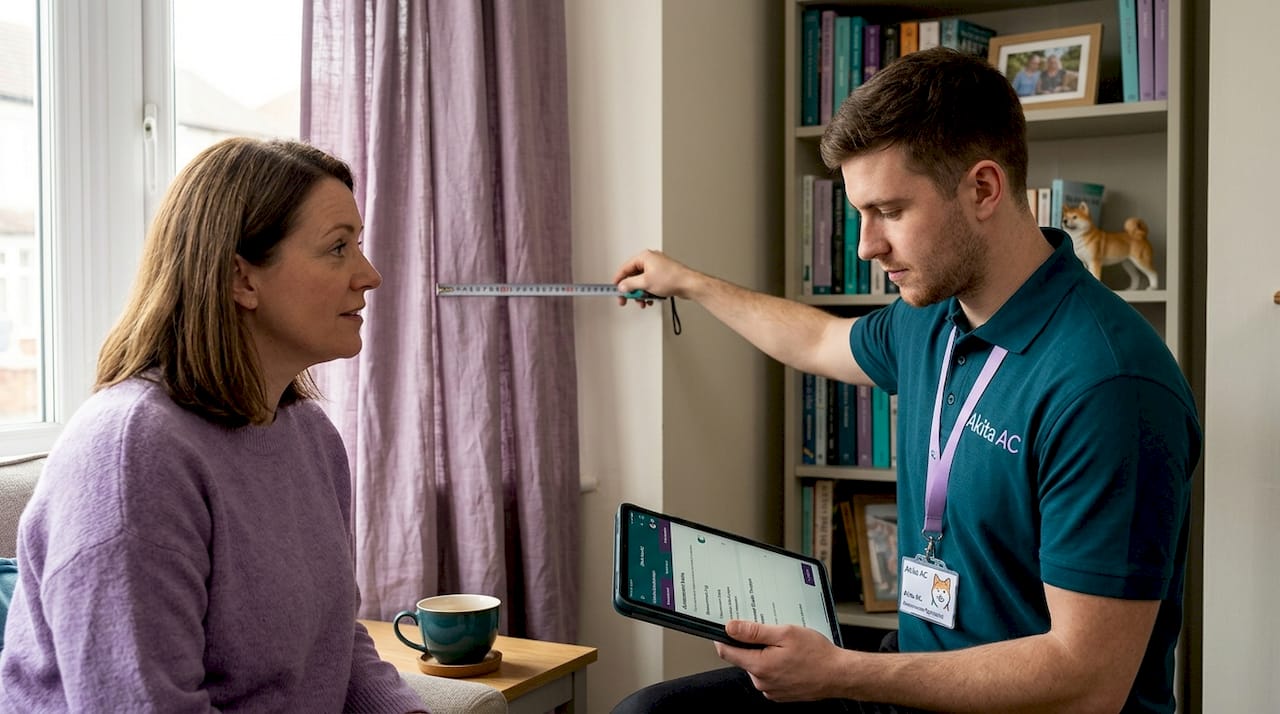
There is a significant gap between plugging in a portable unit and having a split or multi-zone system properly installed by a qualified engineer. Professional installation begins well before any tools come out. A competent installer will conduct a full site survey of your property, considering factors like room dimensions, ceiling height, insulation quality, window orientation, and how much direct sunlight the space receives. Professionals survey the property and take factors like room size, insulation, and sun exposure into account before recommending any system at all.
This matters because no two homes or commercial buildings are identical. A Victorian terrace in Suffolk behaves very differently from a modern office in Norwich when it comes to heat retention, draught patterns, and airflow. A professional uses this information to recommend the right system type, the right capacity, and the right positioning for both the indoor and outdoor units.
Here is what a professional installation typically covers:
- Full site survey and heat load calculation before any system is chosen
- Correct refrigerant pipework routing and insulation
- Proper electrical supply assessment and connection
- Secure mounting of indoor and outdoor units on appropriate surfaces
- System commissioning, testing, and pressure checks
- Explanation of controls, maintenance schedules, and warranty terms
These steps are not formalities. Each one directly affects how efficiently the system operates and how reliably it performs over its lifespan.
Pro Tip: When vetting an installer, ask whether they carry F-Gas certification. This is a legal requirement for anyone handling refrigerants in the UK. If they cannot show it, walk away. You can also look at installation cost savings to understand the broader financial picture before you commit.
Are sizing and placement really that important?
Absolutely, and this is where even well-intentioned DIY projects almost always go wrong. Oversizing a unit is one of the most common mistakes. Many people assume that a bigger system means better cooling, but an oversized unit short-cycles, meaning it switches on and off too frequently without running long enough to properly remove humidity from the air. The result is a room that feels clammy and uncomfortable even when the temperature reads correctly.
Undersizing is equally damaging. A system that is too small for the space runs continuously, never quite reaching the target temperature, consuming enormous amounts of electricity in the process, and wearing out its components far sooner than it should. Poor sizing and placement can hurt efficiency, comfort, and longevity across every type of property.
“An incorrectly sized or poorly positioned air conditioning system will never perform as intended, regardless of how advanced the technology inside it is. The installation is the foundation everything else depends on.”
Getting the correct HVAC sizing right from the start is not just about comfort. It determines your running costs and how many years of useful life you get from a system that represents a significant investment.
| Factor | Professional installation | DIY or improper install |
|---|---|---|
| System sizing | Based on heat load calculation | Based on guesswork or room area alone |
| Comfort level | Consistent temperature and humidity | Short-cycling, hot spots, clamminess |
| Energy consumption | Optimised for the property | Often 20 to 30% higher than necessary |
| System lifespan | 15 to 20 years with proper maintenance | May fail within 5 to 8 years |
| Refrigerant handling | F-Gas certified, leak-tested | Risk of illegal handling or leaks |
| Warranty validity | Full manufacturer warranty intact | Warranty often voided |
Placement of the indoor unit affects airflow distribution throughout the room. Mount it too low and cold air pools near the floor. Position it above a doorway without accounting for furniture layout and you create dead zones where the air barely circulates. These are not minor inconveniences. They translate directly into wasted energy and reduced air conditioning efficiency over the long term.
Portable units vs. fixed systems: when does DIY make sense?
To be fair, not every air conditioning decision requires a professional. Portable units are specifically designed for end-user setup. They sit in the room, vent through a window or a purpose-made aperture, and require nothing more than a standard power socket. Portable AC units are simpler for DIY because they do not involve fixed refrigerant lines or dedicated electrical circuits. For a single room in a rented flat where a tenant cannot modify the property, a portable unit is often the only realistic option.
But the moment you move into fixed split systems, wall-mounted units, cassette systems, or ducted air conditioning, the calculus changes entirely. These systems involve refrigerant handling (which requires F-Gas certification by law), dedicated electrical work, structural drilling through walls, and careful pipework runs. Getting any of these wrong does not just reduce efficiency. It can create safety hazards, invalidate your insurance, and void the manufacturer warranty before the system has run for a single day.
Here is a practical breakdown of system types and what they realistically demand:
| System type | DIY feasible? | Why professional matters |
|---|---|---|
| Portable unit | Yes, straightforward | Minimal risk, no fixed installation |
| Window unit | Possibly, with care | Structural sealing matters for efficiency |
| Wall-mounted split | No | Refrigerant, electrical, and structural work |
| Multi-split system | No | Complex design and commissioning needed |
| Cassette system | No | Ceiling void access and balancing required |
| Ducted system | No | Full duct design and airflow calculation |
There are additional complications for certain property types. Listed buildings in the UK have strict rules about what modifications can be made, including where external units can be placed or whether pipework can be run on certain elevations. Commercial settings introduce compliance requirements around noise levels, fire safety, and ventilation standards that only a specialist will navigate correctly. For anything beyond a standalone portable unit, explore top AC solutions and understand what your property actually needs before buying.
If you are curious about how split system installation works and what it involves, it is worth reading up before any purchasing decisions are made.
Cost, comfort, and efficiency: why the upfront investment matters
The most common pushback against professional installation is the upfront cost. It is a fair point. Portable units can be purchased for a few hundred pounds and set up within the hour. A professionally installed split system, by contrast, involves the cost of the unit, the installation labour, and potentially some electrical preparation work. However, comparing these two options purely on purchase price ignores the total cost of ownership entirely.
The main counterargument to professional installation is the upfront cost and disruption, and for some properties, non-AC alternatives like improved insulation, external shading, or ceiling fans genuinely are the more sensible starting point. There is no reason to push anyone into a system they do not need. But for homes and businesses where comfort and efficiency matter consistently across warm months, a properly installed fixed system wins on every financial metric over a five to ten year view.
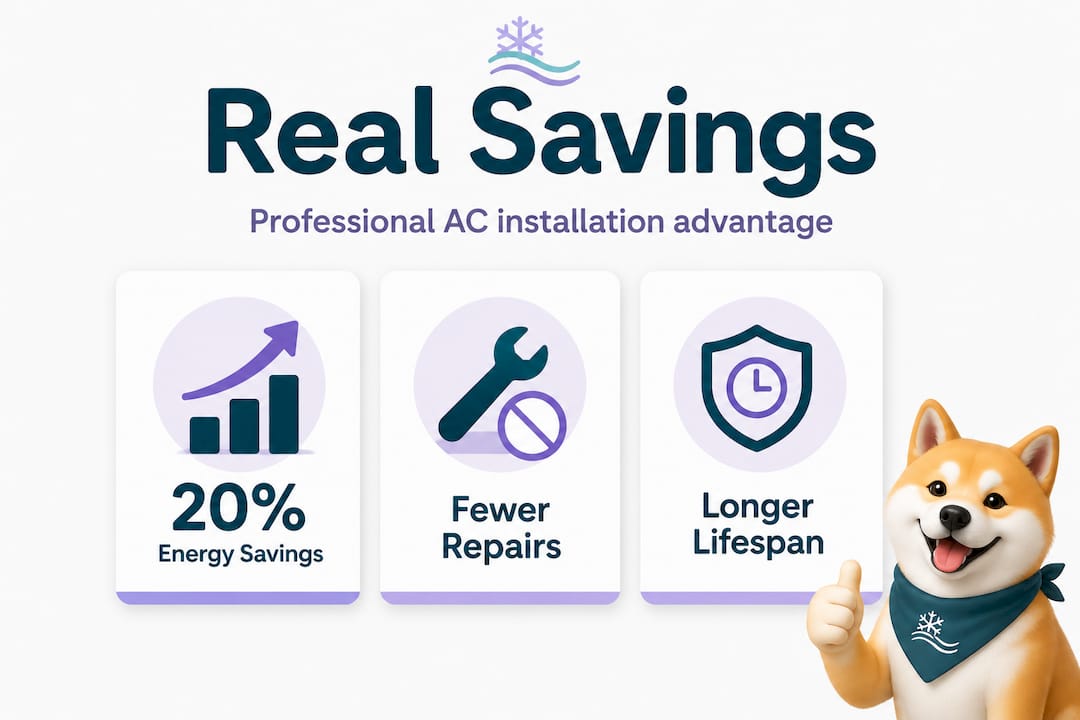
Here are the three real advantages that justify the professional route:
- Lower running costs. A correctly sized and positioned system runs fewer hours to achieve the same result, directly reducing electricity consumption. Over a summer season, this can represent a meaningful saving on your energy bill.
- Fewer repairs and breakdowns. Professionals reduce installation errors that affect efficiency or longevity. Systems that are installed correctly simply break down less often, which means fewer call-out charges and no emergency replacements.
- Warranty and insurance protection. Manufacturer warranties typically require professional installation. An improperly installed system may leave you entirely unprotected when something goes wrong.
A professionally installed system typically uses 20 to 30% less energy than an equivalent system that has been poorly sized or improperly commissioned. Across a ten-year lifespan, that difference compounds into thousands of pounds.
Pro Tip: Before agreeing to any installation quote, ask your installer to provide a breakdown showing estimated annual running costs alongside the installation price. This gives you a realistic picture of the true return on your investment rather than just the day-one outlay. Exploring energy efficiency upgrades and reviewing an updated air conditioning buying guide will help you ask the right questions.
Why the cheapest option often costs more: our view
We have seen the same pattern play out dozens of times. A homeowner or business owner decides to save money on installation, either by choosing an unqualified fitter, attempting the work themselves, or opting for a portable unit when the property genuinely needs a fixed system. Six months later, the system is underperforming, the energy bills are higher than expected, or something has failed entirely. The cost of fixing it, whether that means a full reinstall or an early replacement, almost always exceeds what a professional installation would have cost from the beginning.
The UK climate adds its own layer of complexity. British homes tend to be older, with varying insulation standards, solid walls, and layouts that do not lend themselves to textbook installations. Businesses face additional pressures: noise from outdoor units that must not disturb neighbours or staff, planning considerations, and the need for systems that run reliably through peak trading periods. These are not problems that a generic installation approach solves. They require experience and site-specific knowledge.
What we consistently find is that the clients who prioritise quality from the outset spend less over time and experience far fewer headaches. The comfort and cost savings insights bear this out clearly. Cutting corners on installation is rarely a saving. It is a deferred expense with interest.
Work with AC experts for guaranteed results
Choosing the right system is only half the decision. Who installs it determines whether it ever delivers on its promise.

At Akita Air Conditioning, we cover both domestic AC solutions for homeowners across Suffolk, Norfolk, and Essex, and commercial AC expertise for businesses that need reliable, compliant climate control. Every installation begins with a thorough site survey so the system we recommend is the right one for your specific property. We offer transparent, fixed price installation options with no hidden surprises, backed by warranty guarantees and ongoing maintenance support. If you are ready to stop guessing and start benefiting from a properly designed system, get in touch for a no-obligation survey.
Frequently asked questions
How do professionals determine which AC system is right for my property?
They assess room size, insulation, sun exposure, layout, and use a site survey to match the right AC system to your unique needs, ensuring the chosen system is neither oversized nor underpowered for your space.
Is it ever worth installing a fixed AC system myself?
DIY is risky for fixed units due to refrigerant handling laws and electrical requirements, so professional installation is strongly recommended for any split or ducted system.
Will professional AC installation really save me money in the long run?
Yes. Professionals reduce installation errors that affect efficiency and longevity, which means lower running costs, fewer repairs, and a longer-lasting system overall.
What are alternatives to professional AC installation if my budget is tight?
Portable units and non-AC cooling options like improved insulation, fans, or external shading can be cost-effective short-term solutions for some properties before committing to a fixed system.
Recommended
- Why professional AC installation saves money: key facts – Akita AC
- Annual AC servicing saves money and boosts efficiency – Akita AC
- Office AC Installation Guide: Save Up to 40% on Costs – Akita AC
- Why upgrade air conditioning for better home energy efficiency – Akita AC
- Air conditioning troubleshooting tips for Devon and Cornwall
- Solar For Your Home Case Study | A&R Solar