

Office AC Installation Guide: Save Up to 40% on Costs
Installing a commercial air conditioning system sounds straightforward until unexpected delays, compliance issues, and budget overruns hit. Many UK office managers face expensive setbacks because they skip critical preparation steps or hire uncertified installers. This guide walks you through every stage of installing energy efficient office air conditioning in Suffolk, Norfolk, and Essex, from heat load calculations to post-installation maintenance, helping you avoid costly mistakes while meeting legal requirements and maximizing long-term savings.
Table of Contents
- Pre-installation And Requirements
- Regulatory Compliance And Safety Requirements
- Energy Efficiency And System Selection
- Step-by-Step Installation Process
- Cost And Timeline Expectations
- Common Mistakes And Troubleshooting
- Post-installation And Maintenance Considerations
- Explore Our Energy-Efficient Office Air Conditioning Solutions
- Office Air Conditioning Installation FAQs
Key Takeaways
| Point | Details |
|---|---|
| Preparation | Thorough heat load calculations and site surveys prevent costly sizing errors and installation delays. |
| Certification | Only F-Gas certified installers can legally handle commercial AC refrigerants under UK law. |
| Energy Savings | High-efficiency systems with proper zoning reduce operational costs by 20-40% annually. |
| Timeline & Budget | Typical installations take 1-4 weeks with costs varying based on system complexity and site conditions. |
| Maintenance | Regular servicing maintains performance, ensures compliance, and can reduce breakdowns by 30%. |
Pre-installation and Requirements
Successful installation starts weeks before any equipment arrives. Most expensive mistakes happen because office managers rush this phase or underestimate its importance.
Begin with a professional heat load calculation. This determines exactly how much cooling capacity your space needs based on square footage, occupancy, equipment heat loads, and solar gain through windows. Professional heat load calculations optimize system sizing and prevent inefficiency. An undersized system struggles to maintain comfort during peak summer days. An oversized system cycles on and off constantly, wasting energy and wearing components faster.
Next comes the comprehensive site survey. Your installer should examine electrical supply capacity, structural mounting points for indoor and outdoor units, refrigerant pipe routes, condensate drainage paths, and any building regulations constraints. Document everything.
Critical preparation checklist:
- Verify your installer holds current F-Gas certification for handling refrigerants
- Obtain necessary planning permissions if external units affect building appearance
- Confirm electrical supply can handle additional AC load or arrange upgrades
- Schedule installation during low-occupancy periods to minimize disruption
- Prepare clear access routes for equipment delivery and installation crew
Pro tip: Request a detailed installation plan showing unit locations, pipe routes, and electrical connections before work starts. This helps you spot potential conflicts with existing infrastructure and prevents costly mid-project changes.
Understanding energy-efficient cooling benefits early shapes smarter system selection during this planning phase. The preparation work sets the foundation for everything that follows.
Regulatory Compliance and Safety Requirements
UK law strictly controls who can install commercial air conditioning and which refrigerants you can use. Ignorance costs thousands in fines and project delays.
Only F-Gas certified engineers or companies can legally install or maintain systems containing refrigerants. This isn’t optional. F-Gas certified engineers must handle refrigerants; virgin refrigerants with GWP over 2,500 are banned from 2026. The 2026 phase-down means high global warming potential refrigerants become illegal for new installations. Choose systems using low-GWP alternatives like R32 or R454B now to future-proof your investment.
Building Regulations add another layer. Approved Document F mandates adequate ventilation and maintenance access for commercial HVAC. Your system must allow easy filter changes and service access without disruptive construction work later.
Legal requirements checklist:
- Installer must provide F-Gas company certificate before work begins
- System must use refrigerants compliant with 2026 phase-down regulations
- Installation must meet Building Regulations Part F ventilation standards
- Refrigerant leak detection systems required for charges exceeding 500 tCO2e
- All refrigerant handling must be logged in official records
“Non-compliance with F-Gas regulations can result in fines up to £200,000 for companies. The 2026 refrigerant restrictions make choosing the right system now critical for avoiding costly replacements within three years.”
Many office managers discover compliance issues only when problems arise. Planning for HVAC upgrade benefits includes understanding these regulations from day one. The penalties for cutting corners far exceed the cost of doing it properly.
Energy Efficiency and System Selection
Choosing the right system type determines your energy bills for the next 15 years. Office size, layout, and usage patterns all influence which technology delivers best value.

Single split systems suit small offices with one or two rooms needing independent control. Installation costs less and complexity stays minimal, but you sacrifice zoning flexibility. Each indoor unit needs its own outdoor unit, cluttering building exteriors.
Multi-split systems connect multiple indoor units to one outdoor unit. This works well for medium offices needing three to five zones with different temperature preferences. You gain better aesthetics and zoning control while keeping outdoor space requirements manageable.
VRF (Variable Refrigerant Flow) systems represent the premium choice for larger offices. They provide precise zone control, recover heat between zones, and higher SEER rated units can save 20-40% in operating costs. VRF systems offer up to 30% additional savings through intelligent zoning.
Ducted systems hide all components above ceilings for clean aesthetics. They excel in open-plan offices but require significant ceiling void space and detailed ductwork design. Installation costs run higher due to complexity.
| System Type | Best For | Efficiency | Installation Complexity | Typical Cost Range |
|---|---|---|---|---|
| Single Split | 1-2 rooms | Moderate | Low | £550-£1,200 per unit |
| Multi-Split | 3-5 zones | Good | Medium | £2,500-£6,000 |
| VRF | Large offices | Excellent | High | £8,000-£25,000+ |
| Ducted | Open plan | Good | High | £5,000-£15,000 |
System selection factors:
- Calculate cooling load per zone, not just total building requirement
- Consider future expansion plans when sizing capacity
- Prioritize systems with SEER ratings above 6.0 for commercial applications
- Evaluate noise levels for units near meeting rooms or quiet work areas
- Factor in maintenance accessibility for ceiling-mounted equipment
Pro tip: Don’t choose systems based solely on purchase price. Calculate total cost of ownership including installation, projected energy consumption, and maintenance over 10 years. A more expensive high-efficiency system often pays for itself within five years through lower running costs.
Understanding choosing energy-efficient AC principles helps you evaluate installer recommendations critically. The energy efficiency importance extends beyond bills to occupant comfort and productivity.
Step-by-Step Installation Process
Proper installation sequencing prevents expensive rework and ensures regulatory compliance. Even quality equipment fails when installed incorrectly.
1. Site preparation (Days 1-2): Clear installation areas and verify power supply. Electricians install dedicated circuits and isolators meeting manufacturer specifications. Mark exact mounting positions for all units using laser levels.
2. Mounting equipment (Days 2-4): Install outdoor units on secure stands or wall brackets, ensuring adequate clearance for airflow and service access. Mount indoor units according to manufacturer guidelines, maintaining proper drainage slopes. Poor mounting causes vibration noise and premature component failure.
3. Refrigerant pipework (Days 3-5): Run copper pipes between indoor and outdoor units, maintaining proper support spacing and insulation. Keep pipe runs short and minimize bends. Every unnecessary meter of piping reduces system efficiency. Pressure test all connections before charging with refrigerant.
4. Electrical connections (Days 4-6): Wire power supplies and control cables per electrical regulations. Install thermostats and zone controllers in appropriate locations away from heat sources and direct sunlight. Poor thermostat placement causes constant temperature swings.
5. System commissioning (Days 5-7): Evacuate air from refrigerant lines using vacuum pumps. Charge system with exact refrigerant quantities specified by manufacturer. Run full performance tests checking temperatures, pressures, and airflow at all indoor units. Document all settings and test results.
6. Final inspection (Days 6-8): Verify all safety devices function correctly. Check condensate drainage flows properly. Test emergency shut-offs and controls. Provide operation training to facilities staff.
Typical commercial air conditioning installation timelines range from 1 to 4 weeks depending on system complexity. Simple single-split installations finish in days. Complex VRF systems with extensive ductwork take weeks.
Pro tip: Schedule commissioning during moderate weather, not peak summer heat. This allows installers to properly test and adjust system performance without pressure to rush through checks because your staff are sweltering.
Consider whether the worth of office air conditioning justifies careful installation. Rushed work creates problems lasting years. Check detailed installation timeline insights before scheduling.
Cost and Timeline Expectations
Budget surprises kill projects. Understanding realistic costs and timelines prevents nasty shocks halfway through installation.
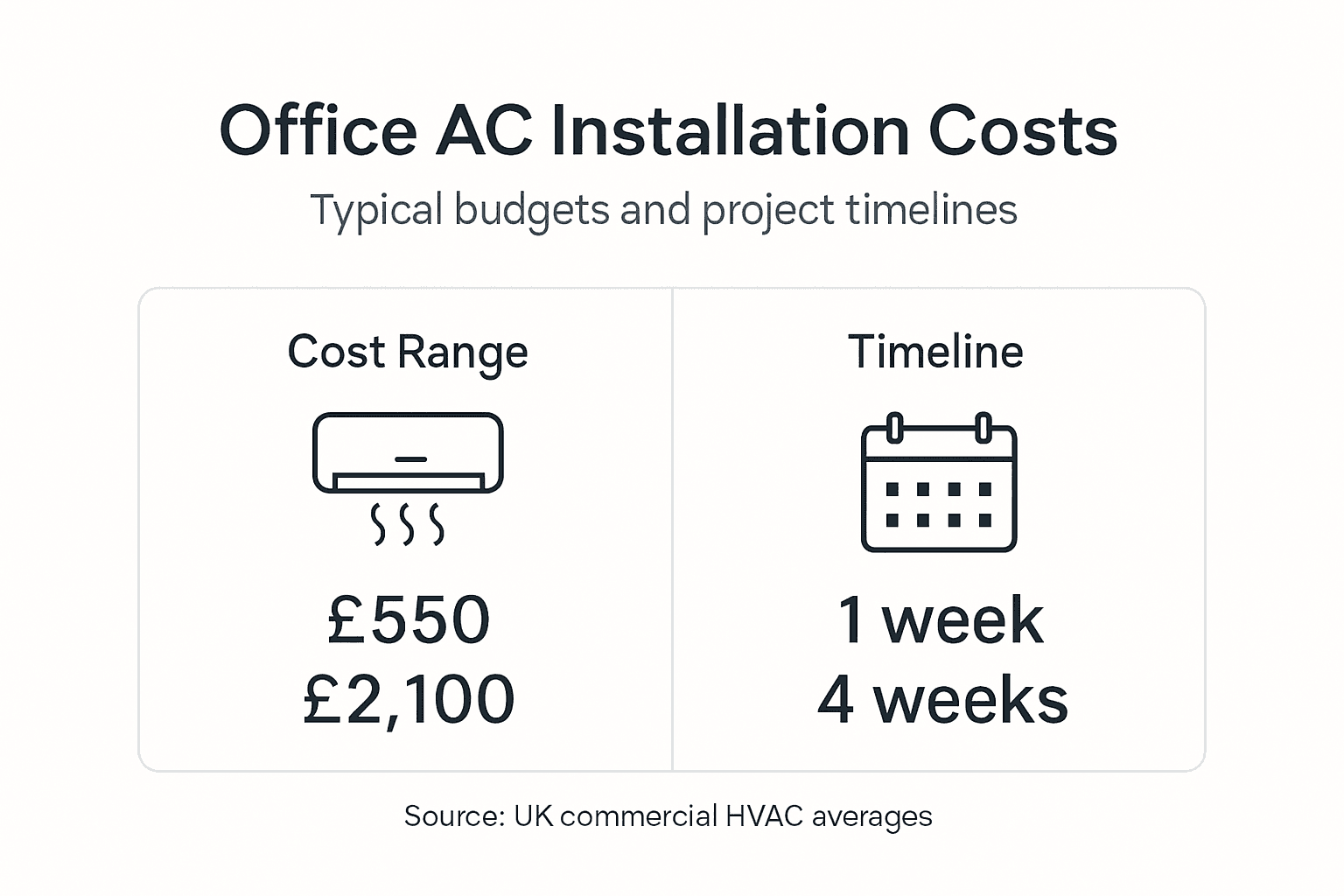
Typical installation costs range between £550 and £2,100 for floor-mounted units, with timelines from 1 to 4 weeks. System type drives the biggest cost variations. Wall-mounted splits cost least to install. VRF systems require specialized expertise and extensive labour.
| Cost Factor | Impact on Budget | Typical Range |
|---|---|---|
| Equipment | 40-50% of total | £500-£15,000 per system |
| Labour | 30-40% of total | £400-£8,000 |
| Electrical work | 10-15% of total | £200-£2,500 |
| Materials (pipes, insulation) | 5-10% of total | £150-£1,500 |
| Commissioning & testing | 5-10% of total | £200-£1,000 |
Timeline factors:
- Equipment lead times vary from 1 week for standard splits to 6 weeks for custom VRF configurations
- Building access restrictions extend installation duration in occupied offices
- Planning permission adds 8-12 weeks before work starts if required
- Structural modifications for mounting or ductwork add days or weeks
- Weather delays affect outdoor unit installation in winter months
Unexpected site conditions cause most budget overruns. Discovering inadequate electrical capacity, structural issues preventing planned mounting locations, or asbestos requiring removal before ductwork installation all add costs. Thorough site surveys minimize these surprises but never eliminate them completely.
Balancing cost and comfort balance requires realistic budgeting that includes contingency funds. Smart office managers allocate 10-15% extra for unforeseen issues.
Pro tip: Get detailed written quotes breaking down equipment, labour, materials, and commissioning separately. This transparency helps you compare quotes fairly and identify where installers cut corners to offer lower prices.
Common Mistakes and Troubleshooting
Most installation failures stem from predictable errors. Learning from others’ mistakes saves thousands.
Undersizing systems creates the most complaints. An AC system sized for average conditions struggles during heat waves when you need it most. Occupants suffer poor comfort while the system runs constantly, consuming maximum energy yet never achieving target temperatures. Always size for peak load conditions, not average.
Using non-certified installers seems cheaper initially. Then refrigerant leaks appear, the system never performs properly, and you discover your installer can’t legally service the system. Non-compliance with regulations can lead to fines up to £20,000. You pay twice: once for the botched job, again for proper reinstallation.
Skipping planning permissions for visible external units leads to enforcement notices requiring expensive removal and relocation. Check with your local planning authority before installing any equipment visible from public areas or on listed buildings.
Critical mistakes to avoid:
- Choosing systems based on floor area alone without proper heat load calculations
- Positioning outdoor units where noise disturbs neighbours or violates planning conditions
- Running refrigerant pipes longer than manufacturer specifications allow
- Installing indoor units directly above workstations creating uncomfortable cold drafts
- Ignoring future maintenance access when planning concealed installations
“Undersizing air conditioning systems by even 10% reduces efficiency by up to 25% and shortens equipment lifespan significantly. The modest savings on initial equipment costs result in thousands extra spent on energy and premature replacements.”
Refrigerant leak management deserves special attention. Even small leaks waste expensive refrigerant, reduce system performance, and violate environmental regulations. Modern systems include leak detection, but older technology requires regular manual checks.
Learn from avoiding costly installation mistakes by choosing experienced installers who understand commercial requirements. Their expertise prevents problems before they start.
Post-installation and Maintenance Considerations
Installation completion marks the beginning, not the end, of your AC system journey. Proper ongoing care determines whether your investment delivers 15 years of reliable service or becomes an expensive headache.
Schedule professional servicing every six months minimum for commercial systems. Regular maintenance reduces breakdowns by up to 30% and supports ongoing regulatory compliance. Certified technicians check refrigerant levels, clean filters and coils, inspect electrical connections, verify safety controls, and test system performance.
Maintain detailed service records. UK regulations require documentation of all refrigerant handling, leak checks, and system modifications. These records prove compliance during inspections and help diagnose problems when they occur.
Essential maintenance tasks:
- Clean or replace air filters monthly during heavy use periods
- Inspect condensate drains quarterly to prevent water damage from blockages
- Check outdoor unit clearances remain unobstructed by vegetation or debris
- Verify thermostat settings and schedules match current office usage patterns
- Monitor energy consumption for unexpected increases indicating developing problems
Warranty coverage varies dramatically between manufacturers and installers. Standard equipment warranties typically cover parts for 2-5 years but exclude labour costs. Extended warranties or maintenance contracts including labour provide better value for commercial installations where downtime costs money.
The importance of routine maintenance extends beyond avoiding breakdowns. Well-maintained systems maintain peak efficiency, delivering the energy savings you expected when specifying high-efficiency equipment. Neglected systems lose 5-10% efficiency annually through dirty coils, low refrigerant, and worn components.
Consider HVAC maintenance plans offering predictable annual costs and priority service. These plans typically cost less than paying for emergency repairs while ensuring your system receives proper care.
Explore Our Energy-Efficient Office Air Conditioning Solutions
Your office deserves climate control that works reliably while minimizing energy waste and compliance headaches.

Our team specializes in commercial air conditioning installation across Suffolk, Norfolk, and Essex. We handle everything from initial heat load calculations through installation and ongoing maintenance, ensuring your system meets all UK regulations while delivering maximum efficiency. Every installation includes full F-Gas certification, comprehensive commissioning, and staff training.
Explore our Suffolk office AC services for local expertise. We also provide Essex air conditioning solutions tailored to your business needs. Learn more about energy efficient AC options that reduce operating costs while improving workplace comfort. Contact us for a detailed site survey and transparent quotation.
Office Air Conditioning Installation FAQs
What certifications must installers have for commercial office AC in the UK?
Installers must hold current F-Gas certification to legally handle refrigerants in commercial systems. This certification ensures they understand proper refrigerant management, leak detection, and environmental compliance. Always verify certification before signing contracts.
How can I ensure my office AC system remains compliant with future refrigerant regulations?
Choose systems using low-GWP refrigerants like R32 or R454B rather than older R410A systems. The 2026 phase-down bans virgin high-GWP refrigerants in new installations, so selecting compliant refrigerants now protects your investment.
What are the signs of an undersized air conditioning system after installation?
Undersized systems run constantly without reaching target temperatures, especially during hot weather. You’ll notice some zones never cool adequately, humidity remains high, and energy bills exceed projections despite continuous operation.
Can installation timelines be shortened without compromising quality?
Timelines compress only through better preparation, not rushing critical steps. Complete site surveys, obtain permissions, and order equipment before installation starts. Quality commissioning and testing cannot be rushed without risking long-term problems.
How often should commercial office AC systems be serviced to maintain warranty coverage?
Most manufacturers require professional servicing every six months for warranty validity on commercial systems. This frequency catches developing problems early and maintains the documentation required for regulatory compliance. Skipping services voids warranties and invites expensive breakdowns.