

Why professional AC installation saves money: key facts
The idea that fitting your own air conditioning system saves money is one of the most persistent myths in home improvement. In reality, 50 to 75% of HVAC systems are improperly installed, leading to higher bills, shorter equipment life, and costly repairs. For homeowners and businesses across Suffolk, Norfolk, and Essex, the stakes are even higher given the UK’s strict compliance requirements. This guide cuts through the confusion and shows you exactly why professional installation delivers better comfort, genuine reliability, and real long-term savings.
Table of Contents
- Why DIY air conditioning installation backfires
- What professional AC installers do that DIY misses
- Key benefits of professional installation
- Why Suffolk, Norfolk, and Essex require certified installations
- The hidden cost and comfort advantages: expert insights
- Take the next step: reliable local installation
- Frequently asked questions
Key Takeaways
| Point | Details |
|---|---|
| DIY risks and costs | Attempting AC installation yourself can void warranties, risk safety, and create higher bills. |
| Professional guarantees | Certified installers protect your investment, maximise efficiency, and secure compliance. |
| Long-term value | Professional installs offer longer system life, better comfort, and save you more over time. |
| Local compliance | Only professional installation meets Suffolk, Norfolk, and Essex legal requirements for AC. |
Why DIY air conditioning installation backfires
The appeal of DIY is understandable. You see a unit, you see some pipes, and you think: how hard can it be? Quite hard, as it turns out. Air conditioning systems involve high-voltage electrics, pressurised refrigerant lines, and precise mechanical calibration. Getting any one of these wrong creates a chain of problems that costs far more to fix than a professional installation would have cost in the first place.
One of the first casualties of a DIY install is your warranty. Most manufacturers void warranties if the unit is not fitted by a licensed professional. That means if anything goes wrong, even through no fault of your own, you are facing the full replacement cost out of pocket.
The financial damage does not stop there. Improperly installed systems can increase your energy bills by 20 to 30% and dramatically shorten the lifespan of the unit. What looked like a saving on day one becomes a recurring expense for years. You can read more about how to save on AC costs with the right approach from the start.
Here are the most common consequences of a failed DIY installation:
- Refrigerant leaks that damage the environment and reduce cooling performance
- Electrical faults that create fire hazards or trip your consumer unit repeatedly
- Poorly sealed ductwork that wastes conditioned air and inflates running costs
- Incorrect unit sizing that causes the system to cycle on and off constantly
- Repeat call-out fees as problems resurface every season
“The risks of DIY AC installation go beyond inconvenience. Electric shocks, fire hazards, and refrigerant exposure are genuine dangers that certified engineers are trained to avoid.”
Understanding air conditioning energy efficiency starts with a correctly installed system. Without that foundation, even the most advanced unit will underperform.
What professional AC installers do that DIY misses
Certified installers follow a structured process that most DIYers simply cannot replicate without specialist training and equipment. Each step exists for a reason, and skipping even one can compromise the entire system.
Here is what a professional installation typically involves:
- Manual J load calculation to determine the exact cooling capacity your space requires, preventing oversizing or undersizing
- Vacuum evacuation of the refrigerant lines to below 500 microns, removing moisture that would otherwise corrode the system from the inside
- Refrigerant charging by weight rather than guesswork, ensuring the system operates at its rated efficiency
- Nitrogen pressure testing of all refrigerant lines to confirm there are no leaks before the system is commissioned
- Duct sealing and airflow balancing to make sure conditioned air reaches every part of the space evenly
- Full electrical safety checks in line with current wiring regulations
Professionals carry out detailed load calculations, refrigerant charging, vacuum evacuation, and duct sealing as standard. These are not optional extras. They are the difference between a system that works well for fifteen years and one that fails within three.
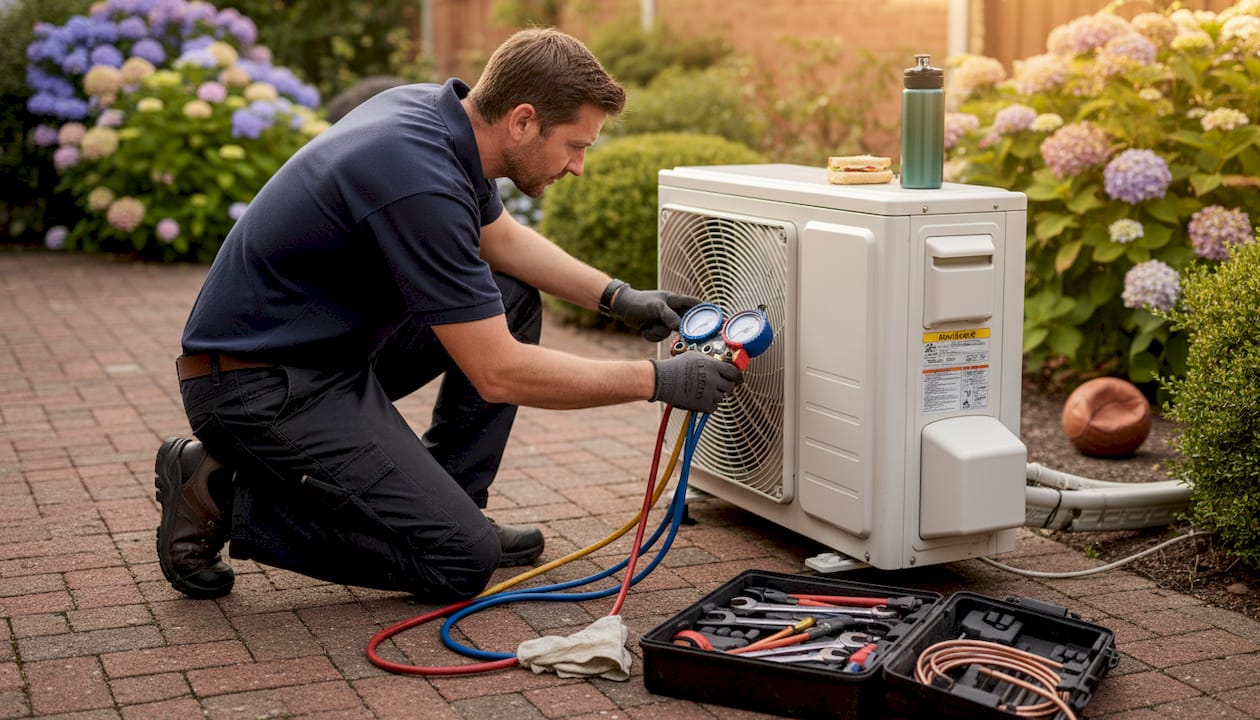
Refrigerant lines must be nitrogen pressure-tested and correctly charged by weight. Without this, the system runs under stress from day one.
Pro Tip: Always ask your installer to show you the vacuum and pressure test readings before they leave. A reputable engineer will have no hesitation in doing so, and it gives you documented proof that the installation was completed correctly.
This level of precision is what delivers the comfort and efficiency that makes a well-installed system feel effortless to live with.
Key benefits of professional installation
Once you understand the process, the benefits become obvious. Professional installation is not just about avoiding problems. It actively creates value that you feel every day.
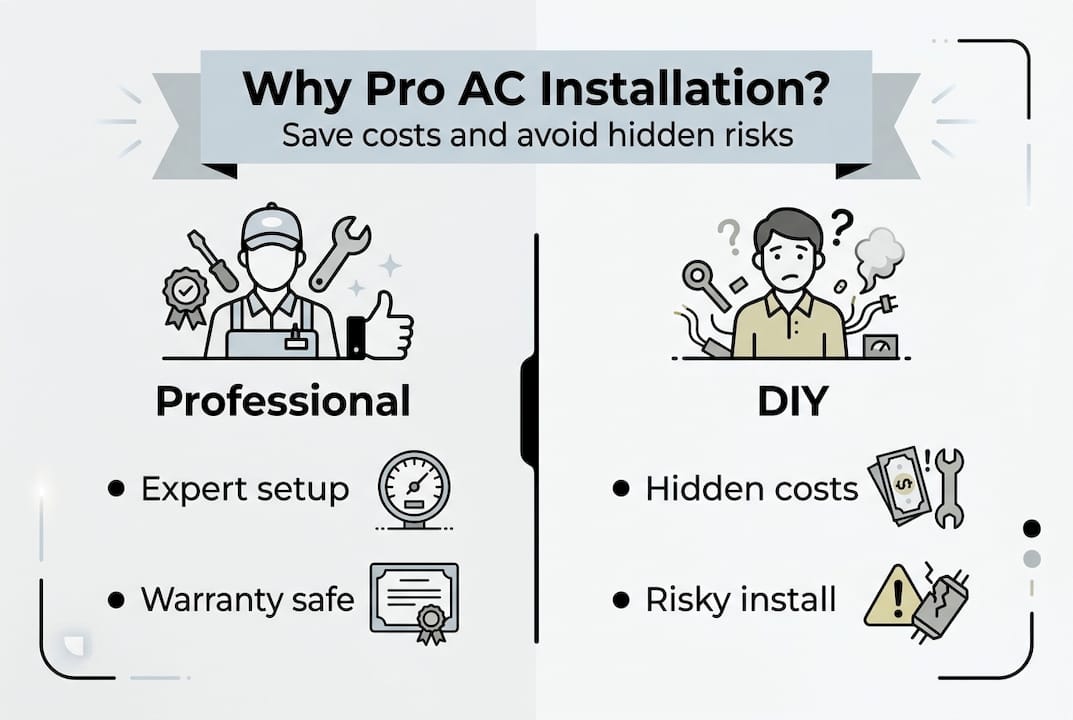
A properly installed system achieves its rated SEER efficiency and extends its lifespan to 10 to 15 years or more. A poorly installed unit may struggle on for five to eight years, but it will cost you more in energy and repairs throughout that shorter life.
DIY can appear to save 30 to 50% on upfront labour costs, but the hidden costs in lost warranty cover, energy inefficiency, and repeat repairs quickly outweigh that initial saving.
| Feature | Professional installation | DIY installation |
|---|---|---|
| System lifespan | 10 to 15+ years | 5 to 8 years |
| Energy efficiency | Rated SEER achieved | 20 to 30% below rated |
| Warranty cover | Full manufacturer warranty | Typically voided |
| Compliance | Fully compliant | Often non-compliant |
| Comfort consistency | Even, reliable cooling | Uneven, unreliable |
| Long-term cost | Lower overall | Higher overall |
The benefits extend beyond the unit itself:
- Lower monthly energy bills from day one
- Fewer breakdowns and emergency call-outs
- Full warranty protection if anything does go wrong
- Peace of mind that the system is safe and legal
Pro Tip: Ask your installer about annual AC servicing plans at the point of installation. Locking in a maintenance agreement early often comes at a better rate and keeps your system running at peak efficiency year after year. Pairing a professional install with regular servicing is also the best way to benefit from eco-friendly AC options long term.
Why Suffolk, Norfolk, and Essex require certified installations
In the UK, air conditioning installation is not a free-for-all. Several pieces of legislation govern how systems must be fitted, and non-compliance carries real consequences.
Professionals follow codes such as BS 7671 for electrical safety and EN 378 for refrigeration system safety. These are not bureaucratic formalities. They exist because incorrectly handled refrigerants and electrical systems cause serious harm.
F-Gas regulations are particularly important. Only engineers holding a valid F-Gas certificate are legally permitted to handle refrigerants. Attempting this work without certification is a criminal offence, not just a technical oversight. Local firms provide F-Gas certified installations, ensuring full compliance and valid warranties for properties across Essex and Suffolk.
Here is what non-compliance can cost you:
- Fines from the Environment Agency for illegal refrigerant handling
- Insurance policies voided if a claim arises from a non-compliant installation
- Inability to sell or let a property with unsafe or uncertified systems
- Personal liability if a fault causes injury or property damage
| Compliance factor | Professional installer | DIY |
|---|---|---|
| F-Gas certification | Yes | No |
| BS 7671 compliance | Yes | Unlikely |
| EN 378 compliance | Yes | Unlikely |
| Insurance validity | Maintained | At risk |
| Legal refrigerant handling | Yes | No |
For businesses in particular, the stakes are higher still. Reviewing commercial air conditioning tips before commissioning any installation is a sensible first step.
The hidden cost and comfort advantages: expert insights
Beyond compliance and efficiency, professional installation delivers advantages that are easy to overlook until you experience them.
Indoor air quality is one of the most significant. A correctly installed system filters, circulates, and conditions air properly. In a home, that means fewer allergens and more consistent temperatures. In a workplace, it translates directly into staff productivity and wellbeing.
“Proper installation improves indoor air quality and productivity, meets net-zero regulations, and can qualify businesses for incentives such as Annual Investment Allowance tax relief.”
This matters particularly for businesses in Suffolk, Norfolk, and Essex that are working towards sustainability targets. Professionally installed systems improve indoor air quality, support productivity, meet net-zero regulations, and can qualify for government incentives.
The advantages for homeowners and businesses include:
- Consistent indoor temperatures that improve sleep, focus, and comfort
- Reduced humidity levels that protect furniture, flooring, and equipment
- Lower carbon footprint through optimised energy use
- Eligibility for government incentives tied to energy-efficient installations
- Future-proofed systems that are ready for smart controls and upgrades
When you are ready to choose a unit, understanding how to choose an energy-efficient AC will help you get the most from your professional installation from day one.
Take the next step: reliable local installation
If this guide has made one thing clear, it is that professional installation is not a luxury. It is the only way to get the comfort, efficiency, and legal compliance your property deserves.

At Akita Air Conditioning, we provide fully certified installations for homeowners and businesses across Suffolk, Norfolk, and Essex. Our engineers hold F-Gas certification, follow all relevant UK safety codes, and take the time to size and commission your system correctly. Whether you need domestic AC installation for your home or a full commercial air conditioning solution for your premises, we offer transparent pricing, flexible finance options, and ongoing maintenance plans to protect your investment. Get in touch today for a no-obligation assessment and find out how much you could save with a properly installed system.
Frequently asked questions
Can DIY AC installation void my warranty?
Yes. Most manufacturers void warranties if the unit is not installed by a licensed professional, leaving you liable for the full cost of any repairs or replacement.
What are the main safety risks of installing AC myself?
DIY installation risks include electric shock, fire hazards from incorrect wiring, harmful refrigerant leaks, and physical injury from working with pressurised systems.
How does professional installation save on energy bills?
Improper installation increases bills by 20 to 30%, whereas a professional install ensures the system runs at its rated efficiency from the outset, delivering consistent savings every month.
Are there UK legal requirements for AC installation?
Yes. UK law requires F-Gas certification for anyone handling refrigerants, and installations must comply with BS 7671 and EN 378 safety codes. Local certified firms ensure full compliance.
Does a bigger AC unit mean better cooling?
No. Oversized or undersized units reduce efficiency by 20 to 40%. Professionals use load calculations to select the correct capacity for your specific space.