

Why maintain commercial AC systems: 2026 guide
TL;DR:
- Regular maintenance of commercial air conditioning systems enhances energy efficiency, prevents costly failures, and prolongs equipment lifespan. Implementing biannual service visits, conducting thorough coil and filter inspections, and documenting maintenance records help optimize system performance and safeguard warranties. Combining preventive and predictive approaches ensures reliability, minimizes downtime, and reduces operational costs across all building types.
Maintaining commercial air conditioning systems is the single most effective way to protect your energy budget, extend equipment life, and prevent the kind of failures that shut down operations at the worst possible moment. The industry term for this practice is commercial HVAC preventive maintenance, and it covers everything from filter replacement and coil cleaning to refrigerant checks and fin straightening. Regular AC maintenance keeps airflow and heat transfer working as designed, which is the foundation of every efficiency and reliability benefit that follows. Neglect those fundamentals and you are not just risking a breakdown. You are paying more every month to run a system that is quietly degrading.
Why maintain commercial AC systems: the core case
The US Department of Energy confirms that dirty filters reduce airflow and system efficiency, while neglected coils reduce heat-absorbing capacity and can cause premature failure. That is not a minor inconvenience. In a commercial building, a compressor that fails in July because coils were never cleaned represents a capital expense that a biannual service visit would have prevented entirely. AC tune-ups improve energy efficiency by up to 15% and prolong system lifespan. That figure means a system running at full efficiency costs significantly less to operate year on year than one that has been left to degrade.
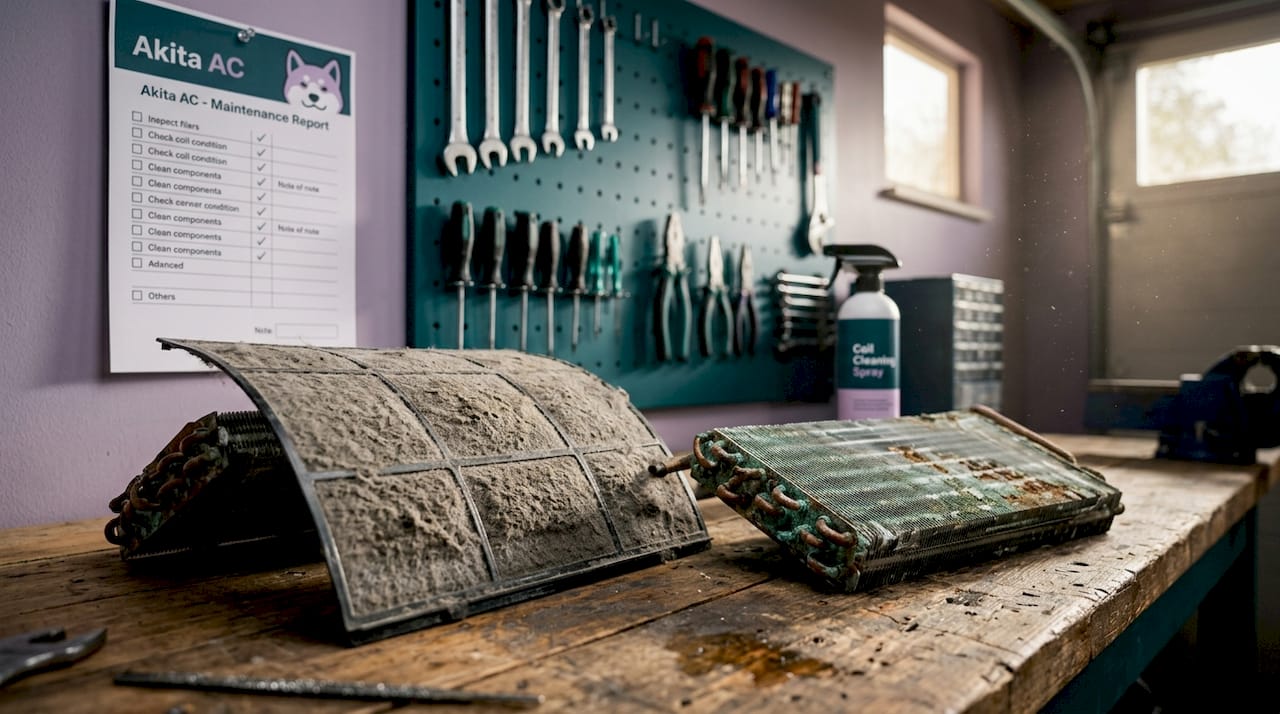
The importance of AC system upkeep goes beyond energy bills. Indoor air quality, staff comfort, and regulatory compliance all depend on a system that is functioning correctly. Facility managers who treat HVAC maintenance as a cost centre rather than a risk management tool tend to discover the real cost of that position when an emergency repair lands on the balance sheet.
How does regular maintenance improve commercial AC efficiency?
The efficiency gains from maintenance are mechanical, not theoretical. When filters become clogged, the system works harder to pull air through, consuming more electricity for the same output. Clean filters and coils preserve the airflow and heat transfer that underpin every efficiency metric your system is rated for.
The key tasks that restore and sustain efficiency include:
- Filter inspection and replacement: Blocked filters are the most common cause of reduced airflow in commercial units. In high-occupancy buildings, filters may need checking monthly rather than quarterly.
- Evaporator and condenser coil cleaning: Coils accumulate dirt over time even when filters are in place. Dirty coils reduce heat-transfer capacity and force the compressor to work harder, shortening its lifespan.
- Fin straightening: Bent aluminium fins on evaporator and condenser coils restrict airflow. A fin comb restores proper spacing and takes minutes during a service visit.
- Refrigerant level checks: Low refrigerant forces the system to run longer cycles to reach the target temperature, wasting energy and stressing components.
- Drain line clearing: Blocked condensate drains cause water damage and humidity problems, both of which affect air quality and building fabric.
Pro Tip: Early signs of airflow problems often appear as comfort complaints from staff before any fault code registers on the system. If one area of your building is consistently warmer than others, treat it as a maintenance signal rather than a thermostat issue.
What risks and costs does neglecting AC maintenance pose?
The financial case for the importance of AC system upkeep becomes clearest when you look at what reactive maintenance actually costs compared to scheduled servicing. Unscheduled HVAC downtime in commercial buildings can result in revenue losses exceeding £1,000 per incident, and approximately 22% of HVAC downtime significantly affects education, healthcare, and hotel sectors. Those are not abstract statistics. A hotel that loses cooling on a hot weekend in August, or a care home that loses climate control in a heatwave, faces consequences that go well beyond the repair bill.
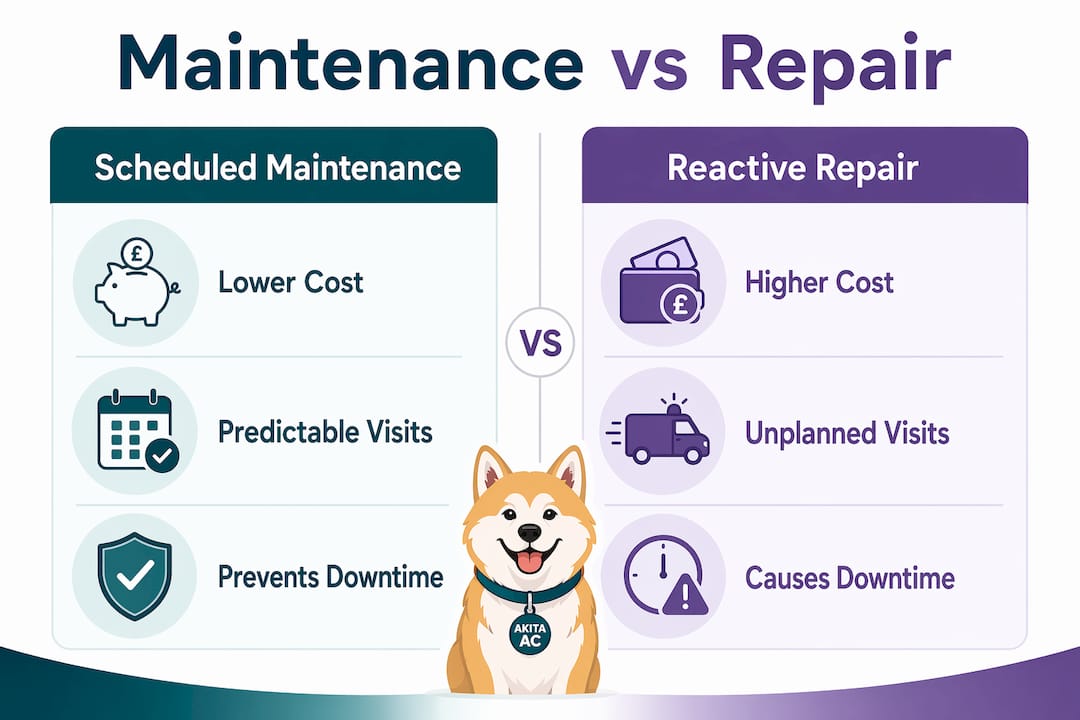
The comparison below shows why scheduled maintenance consistently outperforms reactive repair as a commercial strategy.
| Factor | Scheduled maintenance | Reactive repair |
|---|---|---|
| Average cost per visit | Lower, predictable spend | High, unpredictable emergency rates |
| System downtime | Minimal, planned around operations | Unplanned, often at peak demand |
| Equipment lifespan | Extended through early fault detection | Shortened by unresolved stress |
| Warranty compliance | Maintained with service records | At risk if neglect is documented |
| Energy consumption | Optimised through clean components | Elevated as system degrades |
Proactive spring maintenance identifies vulnerable components before high-demand seasons, preventing weeks of downtime and major failures. The pattern is consistent: businesses that schedule maintenance before summer avoid the emergency call-out fees, the premium parts pricing, and the reputational damage that comes with a failed system during peak trading.
What maintenance strategies work best for commercial properties?
Three distinct approaches exist for managing commercial AC systems, and understanding the difference between them helps you allocate budget and resource more effectively.
Preventive maintenance is the scheduled, routine approach. It runs on a fixed calendar, typically biannual, with spring visits focused on cooling readiness and autumn visits preparing the system for heating demand. This is the baseline standard for any commercial property and the approach most service contracts are built around.
Predictive maintenance goes further by using sensor data and analytics to anticipate failures before they occur. Advanced predictive maintenance integrates real-time sensor data with rule-based diagnostics, allowing fault detection before failures happen. Digital twin technology, where a virtual model of your physical system runs alongside it and flags anomalies, is now being adopted in larger commercial buildings. This approach reduces unnecessary service visits while catching genuine problems earlier. You can read more about predictive maintenance approaches and how they apply to commercial settings.
Reactive maintenance is the default for businesses without a plan. It means waiting until something breaks, then paying emergency rates to fix it. Preventive maintenance outperforms reactive repair on every measurable metric: equipment life, reliability, and cost. Reactive maintenance is not a strategy. It is the absence of one.
For most commercial operators, the practical answer is a preventive maintenance contract as the foundation, with predictive tools layered in where the system scale and budget justify the investment. The commercial HVAC maintenance workflow that delivers the best long-term results combines both approaches.
How to implement an effective commercial AC maintenance plan
A structured maintenance plan does not need to be complicated. The following steps cover the core of what facility managers should put in place.
- Schedule biannual service visits. Biannual HVAC tune-ups with spring focused on cooling systems deliver the best results. Book outside peak demand periods to secure better contractor availability and lower call-out rates.
- Define the scope of each visit. Every service should cover filter replacement or cleaning, evaporator and condenser coil inspection, refrigerant level verification, fin straightening, drain line clearing, and a full electrical check. Vague service agreements leave gaps.
- Appoint a qualified HVAC contractor. Commercial systems require engineers with the correct F-Gas certification and experience with your specific equipment. Verify credentials before signing any contract.
- Maintain a service log. Documented maintenance records protect your warranty. Most warranty plans exclude coverage for failures caused by lack of maintenance, so a clear paper trail is a financial safeguard, not just good housekeeping.
- Review performance data between visits. Energy consumption figures, temperature logs, and any comfort complaints from occupants all provide early warning signals. Assign someone to monitor these monthly.
- Consider a maintenance agreement. Service contracts from qualified providers lock in pricing, guarantee response times, and remove the administrative burden of scheduling individual visits. For multi-site operators, this is particularly valuable.
Pro Tip: Book your spring cooling system check in February or March, before contractors are fully committed to the summer rush. You will get better scheduling flexibility and, in many cases, lower rates than businesses calling in May when demand peaks.
The energy savings from regular servicing compound over time. A system that runs at 15% better efficiency for five years represents a material reduction in operating costs, not a marginal one.
Key takeaways
Regular commercial AC maintenance reduces operating costs, prevents failures, and extends equipment life across every building type and system size.
| Point | Details |
|---|---|
| Efficiency gains are measurable | Tune-ups improve energy efficiency by up to 15%, directly reducing utility bills. |
| Neglect carries real financial risk | Unscheduled downtime can cost over £1,000 per incident, with peak-season failures the most damaging. |
| Preventive beats reactive every time | Scheduled maintenance extends equipment life and outperforms emergency repair on cost and reliability. |
| Spring timing is the priority | Booking cooling system checks before summer demand prevents the failures that matter most. |
| Service records protect warranties | Documented maintenance is required by most warranty providers to validate claims. |
Akita’s view on commercial AC maintenance
The most common mistake we see from facility managers is treating maintenance as something to schedule when the budget allows, rather than as a fixed operational cost. The logic seems reasonable until the first emergency call-out arrives at three times the standard rate in the middle of August.
What surprises most clients is how much of the efficiency loss in their systems comes from small, cumulative issues rather than dramatic failures. A partially blocked filter here, a slightly bent fin array there, a refrigerant charge that is two percent low. None of these trigger an alarm. All of them add up to a system that is working harder than it should, every hour it runs. The HVAC energy saving practices that make the biggest difference are almost always the unglamorous ones: clean components, correct charge, unobstructed airflow.
We also see businesses underestimate the reputational dimension. A retail environment or hospitality venue that loses cooling during a heatwave does not just face a repair bill. It faces customer complaints, staff discomfort, and in some sectors, regulatory scrutiny. Maintenance is the mechanism that keeps those scenarios off the agenda entirely. Partnering with a contractor who knows your system, keeps records, and flags issues before they escalate is not a luxury. It is the most cost-effective decision a facility manager can make.
— Akita
Keep your commercial AC running at its best with Akita
Akita specialises in the installation, maintenance, and servicing of commercial air conditioning systems across Suffolk, Essex, and Norfolk. Whether you manage a single commercial premises or a multi-site operation, Akita’s engineers hold the qualifications and experience to keep your systems running efficiently through every season.
From tailored commercial AC maintenance plans to full system installation, Akita provides transparent pricing and a service built around your operational requirements. Contact Akita to discuss a maintenance agreement that protects your equipment, your energy budget, and your business continuity.
FAQ
How often should commercial AC systems be serviced?
Biannual servicing is the standard recommendation, with a spring visit focused on cooling readiness and an autumn visit preparing the system for heating demand. High-occupancy buildings or systems running continuously may benefit from quarterly checks.
What happens if you don’t maintain a commercial AC system?
Neglected systems consume more energy, fail more frequently, and have shorter operational lifespans. Unscheduled downtime can result in revenue losses exceeding £1,000 per incident, with the highest risk occurring during peak summer demand.
Does maintenance affect the warranty on commercial AC equipment?
Yes. Most warranty plans exclude coverage for failures caused by lack of maintenance. Keeping documented service records is the most reliable way to protect your warranty entitlement.
What does a commercial AC service visit include?
A thorough service covers filter replacement, evaporator and condenser coil cleaning, refrigerant level checks, fin straightening, condensate drain clearing, and an electrical inspection. Coil maintenance is particularly critical, as dirty coils reduce heat-transfer capacity and stress the compressor.
Is predictive maintenance worth it for commercial buildings?
For larger or more complex commercial systems, predictive maintenance using sensor data and diagnostics can reduce unnecessary visits while catching faults earlier. Predictive maintenance improves comfort and operational savings by anticipating failures before they occur, making it a sound investment for high-value or critical facilities.