

Commercial air conditioning explained: systems and efficiency
Commercial air conditioning isn’t just for sprawling office blocks or industrial warehouses. More UK homeowners and small business owners are discovering that these systems deliver exceptional comfort, energy savings, and healthier indoor air for properties of all sizes. Whether you’re managing a boutique shop, a multi-room home, or a busy restaurant, understanding how commercial air conditioning works empowers you to make smarter decisions about installation, efficiency, and long-term value. This guide walks you through the core systems, how they operate, what drives efficiency, and the practical steps for installation and maintenance.
Table of Contents
- What commercial air conditioning means
- Types of commercial air conditioning systems
- How commercial air conditioning works
- Why energy efficiency matters in commercial air conditioning
- Installation, maintenance, and repairs explained
- The long-term value of commercial air conditioning
- Expert installation and support for your air conditioning needs
- Frequently asked questions
Key Takeaways
| Point | Details |
|---|---|
| Flexible comfort | Commercial air conditioning suits homes and businesses by offering tailored comfort and control. |
| System variety | Split, multi-split, VRF, and ducted systems meet a range of space and usage needs. |
| Energy efficiency | Upgrading to energy-efficient commercial AC can cut energy bills and environmental impact. |
| Maintenance matters | Routine maintenance keeps systems running efficiently and extends their lifespan. |
| Property value boost | Quality commercial AC increases property value and occupant satisfaction. |
What commercial air conditioning means
Commercial air conditioning refers to cooling and heating systems designed for spaces with higher demands than a single-room domestic unit can handle. These systems serve offices, retail shops, restaurants, gyms, and even larger homes where multiple rooms need independent climate control. The key difference lies in capacity, flexibility, and advanced features like zoning and smart controls.
Many people assume commercial AC is only for massive buildings, but that’s a myth. A small café with an open kitchen, a home office that doubles as a studio, or a three-bedroom house with poor airflow can all benefit from commercial-grade solutions. These systems handle greater cooling loads, maintain consistent temperatures across multiple zones, and often integrate air purification for healthier indoor environments.
Common applications include:
- Retail shops and showrooms
- Offices and co-working spaces
- Restaurants and cafés
- Gyms and leisure facilities
- Large residential properties
- Medical and dental practices
“Commercial air conditioning isn’t about size alone. It’s about performance, efficiency, and the ability to adapt to complex layouts and high usage patterns.”
Understanding air conditioning system types helps you match the right solution to your property’s needs, whether you’re cooling a single large room or managing climate across an entire building.
Types of commercial air conditioning systems
Choosing the right system depends on your property layout, budget, and cooling requirements. Here’s a breakdown of the main types and when each works best.
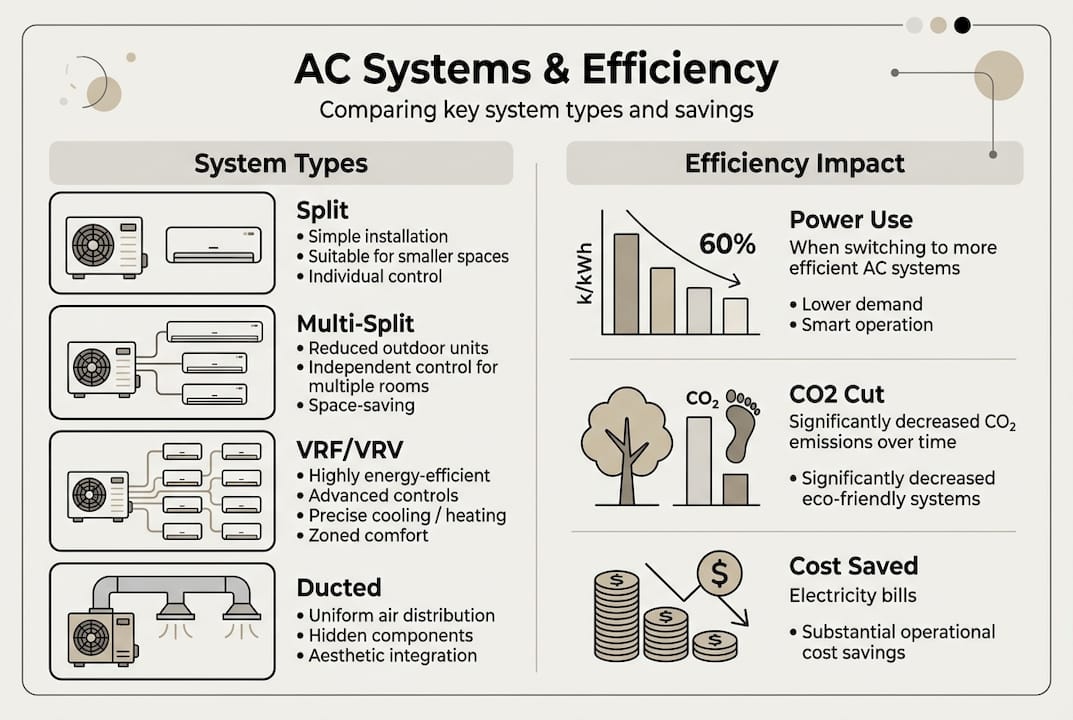
Split systems are the simplest commercial option. One outdoor unit connects to a single indoor unit, ideal for cooling individual rooms or small offices. They’re cost-effective, easy to install, and perfect for properties with modest cooling needs.
Multi-split systems expand on this by linking one outdoor unit to multiple indoor units. You can cool several rooms independently without needing separate outdoor condensers for each space. This setup suits homes, small offices, and shops where different areas need individual temperature control.
VRF (Variable Refrigerant Flow) or VRV (Variable Refrigerant Volume) systems represent the premium tier. These systems adjust refrigerant flow dynamically, delivering precise cooling or heating to each zone based on real-time demand. They’re highly efficient for larger properties, complex layouts, or buildings with varying occupancy patterns. Commercial air conditioning tips for energy efficiency often highlight VRF systems for their ability to reduce energy waste.
Ducted systems distribute conditioned air through hidden ductwork, providing whole-building climate control from a central unit. They’re discreet, powerful, and ideal for properties where aesthetics matter or where multiple rooms need consistent temperatures.
Portable units serve temporary or supplementary cooling needs. While not a permanent solution, they’re useful for events, seasonal demands, or spaces where installation isn’t feasible.
| System Type | Best For | Capacity | Efficiency | Installation Cost |
|---|---|---|---|---|
| Split | Single rooms | Low | Moderate | Low |
| Multi-split | Multiple rooms | Medium | Good | Moderate |
| VRF/VRV | Large properties | High | Excellent | High |
| Ducted | Whole buildings | High | Good | High |
| Portable | Temporary needs | Low | Low | Very Low |
Pro Tip: If you’re unsure which system fits your property, a professional site survey identifies the most efficient and cost-effective solution based on room sizes, insulation, and usage patterns. Investing in the right system upfront saves money and frustration later.
Understanding commercial HVAC efficiency helps you weigh initial costs against long-term savings, ensuring your investment delivers comfort and value for years.
How commercial air conditioning works
At its core, commercial air conditioning relies on the refrigerant cycle to transfer heat from inside your property to the outdoors. The system doesn’t create cold air; it removes heat, leaving cooler, dehumidified air behind.
Here’s the process:
- Evaporation: Refrigerant absorbs heat from indoor air as it evaporates in the indoor unit’s coil.
- Compression: The compressor in the outdoor unit pressurises the refrigerant, raising its temperature.
- Condensation: Hot refrigerant releases heat to the outside air as it condenses back into liquid.
- Expansion: The refrigerant expands, cools, and returns to the indoor unit to repeat the cycle.
Modern systems enhance this basic cycle with advanced features. Smart thermostats learn your schedule and adjust temperatures automatically, reducing energy waste. Zoning allows different areas to maintain independent temperatures, so you’re not cooling empty rooms. Air purifiers and advanced filters capture dust, pollen, and pathogens, improving indoor air quality alongside comfort.
Key components include:
- Outdoor condensing unit: Houses the compressor and condenser coil
- Indoor evaporator unit: Distributes cooled air and removes humidity
- Refrigerant lines: Connect indoor and outdoor units
- Controls and thermostats: Manage temperature, scheduling, and zoning
According to energy-efficient air conditioning research, systems with inverter technology adjust compressor speed dynamically, maintaining consistent temperatures without the energy spikes of older on/off systems. This results in quieter operation, lower bills, and extended equipment lifespan.
Did you know? Efficient commercial air conditioning can reduce energy consumption by up to 40% compared to outdated systems, translating to significant savings over the system’s 15 to 20 year lifespan.
Why energy efficiency matters in commercial air conditioning
Energy costs represent a substantial portion of running expenses for businesses and larger homes. With UK electricity prices remaining high, inefficient air conditioning can drain budgets quickly. Choosing an energy-efficient system isn’t just about saving money; it’s about meeting regulatory standards, reducing environmental impact, and ensuring long-term reliability.
Legal requirements like F-Gas regulations and Energy Performance Certificate (EPC) standards push property owners towards greener solutions. Modern commercial AC systems with high SEER (Seasonal Energy Efficiency Ratio) ratings comply with these standards while delivering superior performance.
Strategies for maximising efficiency:
- Correct sizing: Oversized systems waste energy cycling on and off; undersized systems run constantly without achieving comfort.
- Regular maintenance: Clean filters, serviced components, and leak-free refrigerant lines maintain peak efficiency.
- Inverter technology: Variable-speed compressors adjust output to match demand, avoiding energy waste.
- Smart controls: Programmable thermostats and occupancy sensors prevent unnecessary cooling.
- Insulation and sealing: Proper building insulation reduces cooling loads and system strain.
Research shows switching to energy-efficient AC can cut energy bills by up to 40%, with payback periods often under five years. For businesses, this translates to healthier profit margins. For homeowners, it means lower utility bills and increased property value.
| System Type | Annual Energy Use (kWh) | Annual Cost (£) | CO2 Emissions (kg) |
|---|---|---|---|
| Standard AC | 3,500 | £1,050 | 1,225 |
| High-Efficiency AC | 2,100 | £630 | 735 |
| Savings | 1,400 | £420 | 490 |
Based on average UK electricity rates and typical commercial usage patterns.
Exploring energy-saving AC tips and upgrading for efficiency reveals practical steps to reduce consumption without sacrificing comfort. When choosing efficient AC, prioritise systems with proven performance data and professional installation to ensure optimal results.
Installation, maintenance, and repairs explained
Professional installation sets the foundation for years of reliable performance. Cutting corners during installation leads to inefficiency, frequent breakdowns, and voided warranties. Here’s what proper installation involves:
- Site survey: Assess room sizes, insulation, sun exposure, and usage patterns to determine system requirements.
- System selection: Match capacity and features to your property’s needs.
- Placement planning: Position indoor and outdoor units for optimal airflow and minimal noise.
- Installation: Mount units, run refrigerant lines, connect electrical systems, and test performance.
- Commissioning: Fine-tune settings, demonstrate controls, and provide maintenance guidance.
Professional AC installation ensures correct system sizing and placement, maximising efficiency and reliability from day one. F-Gas certification is legally required for anyone handling refrigerants, so always verify your installer’s credentials.
Routine maintenance keeps systems running smoothly:
- Clean or replace filters monthly during heavy use
- Check refrigerant levels annually
- Inspect electrical connections and controls
- Clear debris from outdoor units
- Schedule professional servicing at least once yearly
Common repair issues include refrigerant leaks, compressor failures, blocked filters, and faulty thermostats. Addressing problems early prevents minor issues from escalating into expensive replacements. If your system loses cooling power, makes unusual noises, or cycles on and off rapidly, contact a qualified technician.
Pro Tip: Keep a maintenance log noting service dates, filter changes, and any repairs. This record helps technicians diagnose issues faster and can extend your warranty coverage.
For ongoing support, explore AC repairs information, follow a maintenance checklist, and implement a maintenance workflow to protect your investment.
The long-term value of commercial air conditioning
Investing in commercial air conditioning delivers benefits that extend far beyond immediate comfort. For businesses, a well-maintained climate control system boosts employee productivity, reduces absenteeism, and creates a welcoming environment for customers. For homeowners, it enhances property value, improves air quality, and provides year-round comfort.
Key long-term advantages:
- Property value: Modern, efficient HVAC systems increase marketability and sale prices
- Health benefits: Filtered air reduces allergens, dust, and airborne pathogens
- Productivity: Comfortable temperatures improve focus and reduce fatigue
- Energy savings: Efficient systems lower utility bills year after year
- Reliability: Quality systems with proper maintenance last 15 to 20 years
“Modern commercial AC isn’t an expense; it’s a strategic investment that pays dividends through lower costs, healthier environments, and enhanced property appeal.”
Studies confirm modern commercial AC boosts property value, indoor air quality, and staff productivity while reducing absenteeism. For businesses operating in competitive markets, these advantages translate directly to bottom-line performance. For homeowners, they mean a more comfortable, valuable property that’s easier to sell when the time comes.
Understanding the full scope of benefits through an HVAC efficiency guide helps you appreciate why commercial air conditioning represents one of the smartest upgrades you can make.
Expert installation and support for your air conditioning needs
Choosing the right system is only half the equation. Professional installation, ongoing maintenance, and responsive support ensure your investment delivers maximum value. Whether you’re upgrading a home, fitting out a new office, or replacing an ageing system, expert guidance makes the process straightforward and stress-free.
Akita Air Conditioning specialises in tailored solutions for both residential and commercial properties across the UK. From initial consultation and site surveys to installation, servicing, and repairs, we provide comprehensive support at every stage. Our team holds full F-Gas certification, ensuring compliance with all regulations while delivering efficient, reliable systems that match your exact requirements.
Whether you need commercial AC installation for a business premises, domestic AC solutions for a larger home, or expert air conditioning repairs to restore performance, professional support ensures optimal results. Contact us for a site survey, transparent quote, or expert consultation to explore how modern air conditioning can transform your property’s comfort and efficiency.
Frequently asked questions
How is commercial air conditioning different from domestic systems?
Commercial AC systems are designed for high-usage and multi-room performance, offering greater capacity, advanced controls, and the ability to cool or heat multiple areas independently.
Can commercial air conditioning improve indoor air quality?
Yes, modern commercial ACs filter and purify air, reducing dust, allergens, and pathogens while maintaining comfortable temperatures and humidity levels.
Is installing commercial AC in a home worthwhile?
For large or multi-room properties, commercial systems suit complex layouts and deliver comfort and energy savings beyond basic residential units.
How often should a commercial air conditioning system be serviced?
Schedule professional servicing annually, with regular owner maintenance like filter cleaning between visits to maintain efficiency and prevent breakdowns.