

Why regular HVAC inspections matter for UK homes
TL;DR:
- Regular HVAC inspections catch small issues early, saving homeowners significant repair costs.
- Proper maintenance improves energy efficiency, comfort, air quality, and prolongs system lifespan.
- Annual professional checks are essential for preventing costly breakdowns and ensuring reliable climate control.
Most homeowners only think about their heating and cooling systems when something goes wrong. That’s a costly habit. HVAC systems account for 40 to 60% of a building’s total energy use, which means even minor inefficiencies quietly inflate your bills month after month. Regular inspections aren’t just a maintenance checkbox — they’re one of the most effective ways to protect your home, control energy costs, and avoid unexpected repair bills. In this article, we’ll cover exactly why routine HVAC checks matter, what they involve, how they save money, and what comfort and health benefits you’re missing without them.
Table of Contents
- Understanding the role of HVAC in home energy use
- What happens during a regular HVAC inspection?
- How inspections prevent costly failures and repairs
- Beyond savings: Comfort, air quality and peace of mind
- Our view: Why annual inspections beat reactive repairs every time
- Book your professional HVAC inspection today
- Frequently asked questions
Key Takeaways
| Point | Details |
|---|---|
| Major energy impact | HVAC uses up to 60% of your home’s energy, making efficiency crucial. |
| Prevents expensive repairs | Routine inspections catch small faults before they become costly breakdowns. |
| Boosts comfort and air quality | Regular checks mean better year-round temperature, fresher air, and peace of mind. |
| Protects long-term value | Inspections extend system life and preserve property value for homeowners and landlords. |
Understanding the role of HVAC in home energy use
When we talk about home energy costs, most people immediately think of leaving lights on or keeping appliances running overnight. Yet your HVAC system quietly consumes more energy than almost anything else under your roof. HVAC accounts for 40 to 60% of building energy, and when you factor in how UK winters demand consistent heating and summers increasingly require cooling, that percentage only grows. For landlords managing multiple properties in Suffolk, Norfolk, or Essex, even a 10% efficiency drop across a system can mean hundreds of pounds lost annually.
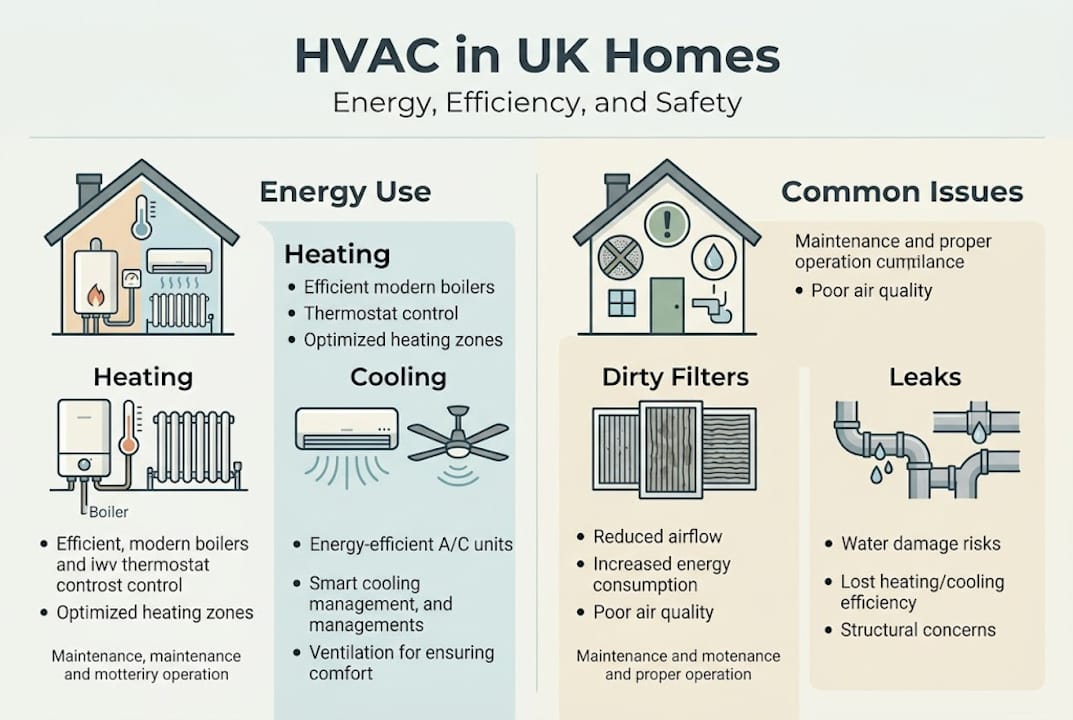
The problem is that HVAC inefficiency doesn’t always announce itself with a loud bang or a freezing cold room. It creeps in gradually. Refrigerant levels drop slowly. Filters accumulate dust over weeks. Compressor components wear through friction. By the time you notice your energy bills climbing or your rooms not reaching the right temperature, the inefficiency has often been building for months. Understanding this helps you see why waiting for a breakdown is never a sound strategy.
| Common HVAC inefficiency cause | Typical energy impact | If left unchecked |
|---|---|---|
| Dirty or clogged air filters | Up to 15% efficiency loss | Overheating, motor failure |
| Low refrigerant levels | 20 to 30% longer run cycles | Compressor burnout |
| Worn fan belts or motors | Reduced airflow, higher load | System shutdown |
| Blocked condenser coils | Increased energy draw | Overheating components |
| Leaking ductwork | 20 to 30% energy waste | Uneven temperatures |
Beyond the energy figures, there are safety implications. Faulty systems can overheat, trip electrical circuits, or in the case of gas-assisted heating components, create combustion risks. Regular HVAC energy diagnostics can catch these scenarios before they become dangerous or expensive.
Pro Tip: If your energy bills have risen noticeably over the past two billing cycles without a change in your usage habits, your HVAC system is a strong candidate for an inspection. Don’t wait for the system to fail before acting.
Following preventative maintenance tips consistently is one of the simplest ways to extend system life and reduce the unpredictability of repair costs. For UK homeowners operating modern heat pump or split-system units, it also protects any manufacturer warranty, which often requires documented evidence of regular servicing.
What happens during a regular HVAC inspection?
Understanding how energy use is shaped by HVAC performance, it’s important to know what a full inspection includes. Many homeowners are surprised to find out just how thorough a professional inspection actually is. This isn’t a quick filter swap and a thumbs up. A proper HVAC inspection examines every core element of the system, from electrical connections to refrigerant pressure, and identifies both current faults and developing risks.
Here’s a step-by-step look at what a certified engineer typically does during a residential inspection:
- Visual inspection of all components — The engineer checks the condition of the indoor and outdoor units, looking for signs of corrosion, physical damage, or deterioration.
- Air filter check and replacement — Filters are inspected for blockage and replaced if needed. Blocked filters are one of the most common causes of poor performance.
- Refrigerant pressure measurement — Using specialist gauges, the engineer checks refrigerant levels. Low levels signal a leak that requires investigation.
- Electrical connections and controls — Loose or corroded connections cause system failures. The engineer tightens and cleans these to prevent trips or short circuits.
- Thermostat calibration — A miscalibrated thermostat can cause a system to run far longer than needed, wasting energy without improving comfort.
- Condensate drain inspection — Blocked drains cause water damage and mould growth. The engineer flushes and clears the drainage system.
- Fan and motor check — Belt tension, motor condition, and lubrication levels are all assessed to prevent mechanical failure.
- Heat exchanger or coil condition — Dirty coils significantly reduce heat transfer efficiency. The engineer cleans them and notes any signs of wear.
“Regular inspections prevent failures like refrigerant leaks and compressor wear, which are among the most expensive HVAC problems a homeowner can face.”
The difference between a professional inspection and a DIY check is significant. A homeowner can reasonably check and replace filters, clean around the outdoor unit, and ensure vents aren’t blocked. These are all worthwhile habits. However, measuring refrigerant pressure requires certified equipment and F-Gas qualifications in the UK, electrical testing requires compliance with BS 7671 standards, and diagnosing compressor wear requires specialist knowledge that comes from years in the field.
| Inspection task | DIY possible? | Professional required? |
|---|---|---|
| Filter check and replacement | Yes | No |
| Refrigerant pressure check | No | Yes (F-Gas certified) |
| Electrical connection testing | No | Yes |
| Thermostat calibration | Partial | Recommended |
| Condensate drain clearing | Yes | Recommended |
| Coil cleaning and inspection | No | Yes |
Using the HVAC inspection checklist from our resource library gives you a practical structure to prepare for a professional visit and understand what to expect at each stage.
How inspections prevent costly failures and repairs
Armed with knowledge of inspection steps, it’s clear how routine checks form the first line of defence against expensive breakdowns. The financial case for regular HVAC inspections is straightforward when you look at the numbers and the real-world consequences of waiting too long.
The three most expensive HVAC failures are compressor failure, refrigerant system leaks, and heat exchanger damage. A compressor replacement alone can cost anywhere from £800 to £2,000 depending on system size and model. A full system replacement, when multiple components fail simultaneously, can reach £3,000 to £6,000 or more for residential units. Compare that to the cost of an annual inspection, which typically runs between £80 and £150, and the maths becomes very clear.
The key insight is that these major failures rarely happen without warning. Inspections prevent failures like refrigerant leaks and compressor wear by catching them at the earliest stage, when the fix is minor and affordable. A small refrigerant top-up identified during an inspection costs a fraction of what you’d spend after a compressor burns out due to running dry for months.
Here’s how regular inspections protect your investment:
- Early detection of refrigerant loss — A small leak caught at inspection means a seal repair and top-up. Ignored, it leads to compressor seizure.
- Filter management — A clogged filter causes a system to work twice as hard, accelerating motor and fan wear. Replaced at inspection, it costs almost nothing.
- Electrical fault prevention — Loose connections that spark or corrode can cause full board failures. Tightened during routine inspection, they’re a five-minute fix.
- Condensate drain maintenance — A blocked drain causes water ingress, mould in your walls, and potential ceiling damage. Cleared during inspection, it’s free.
- Bearing and belt wear — Worn bearings or belts identified early are cheap to replace. Left until the motor seizes, you’re looking at a full unit swap.
Pro Tip: Ask your engineer to document every inspection result in writing. This record is invaluable if you ever need to make a warranty claim, sell the property, or demonstrate compliance as a landlord.
Understanding why maintenance extends HVAC lifespan shows that a well-maintained system doesn’t just run longer, it performs better throughout its entire life. Modern HVAC systems are designed to last 15 to 20 years with proper care. Without it, that lifespan can drop to 8 to 12 years. For property managers overseeing multiple units, that difference in longevity directly affects your capital expenditure planning. Learning more about predictive maintenance takes this further by explaining how to anticipate failures before they occur.
Beyond savings: Comfort, air quality and peace of mind
Money savings are just part of the picture. Let’s look at how regular checks improve your quality of life and home environment, because the benefits extend well beyond your energy bills.
One of the most consistent complaints from homeowners with poorly maintained HVAC systems is uneven temperatures. One room is stuffy, another is cold, and the thermostat no longer seems connected to reality. This happens because blocked filters and worn components reduce airflow distribution, causing hot and cold spots throughout the property. A well-inspected system delivers consistent, even temperatures in every room throughout the year.
Indoor air quality is another area where regular HVAC maintenance pays real dividends. Your system circulates air constantly throughout the property. When filters are dirty, that circulation spreads dust, allergens, pet dander, and even mould spores through every room. For households with children, asthma sufferers, or anyone with respiratory sensitivities, this isn’t a minor inconvenience. HVAC-related air quality issues are directly linked to how well the system is maintained and how regularly filters and coils are serviced.
The health and comfort benefits of a properly maintained system include:
- Reduced allergens and airborne particles — Clean filters trap more of what they’re designed to catch, including pollen, dust mites, and mould spores.
- Better humidity control — A well-functioning system maintains balanced indoor humidity, preventing dry air in winter and dampness in summer.
- Consistent seasonal comfort — You won’t be scrambling to fix a cooling system the week a heatwave arrives or lose heating mid-January.
- Reduced noise levels — Worn bearings, loose panels, and failing fans create rattling and vibration. Maintained systems run quietly.
- Property value protection — For landlords, documented HVAC maintenance history adds real value during property assessments and tenant negotiations.
- Reduced emergency call-outs — Emergency HVAC repairs often command premium rates, particularly outside standard working hours. Regular inspections dramatically reduce the likelihood of crisis situations.
Peace of mind is genuinely undervalued here. Knowing your system has been inspected and signed off by a certified engineer means you’re not lying awake during a cold snap wondering whether the system will hold through the night.
Our view: Why annual inspections beat reactive repairs every time
We see the full picture from both sides. We’re the team called in when things go wrong, and we’re also the team that visits properties on a routine basis to keep systems running cleanly. What we’ve seen repeatedly is that the properties with the highest repair bills almost always share one thing in common: they never booked a routine inspection until something failed.
The conventional wisdom is that inspections are a cost. We’d challenge that view entirely. An annual inspection is an investment that routinely returns three to five times its cost in avoided repairs and reduced energy bills within the first year. What surprises most clients isn’t the inspection itself but the discovery of how many small faults had been quietly building up.
Small faults compound. A slightly blocked filter causes a motor to work harder. A harder-working motor runs hotter. A hotter motor wears faster. By the time the motor fails, you’ve also stressed the compressor and potentially damaged electrical contacts. One inspection at the right time breaks that chain entirely.
We believe that proper maintenance for UK homes shouldn’t be an afterthought. It should be scheduled at the same time every year, documented, and treated as seriously as a boiler service. The homeowners and landlords who take that approach consistently spend less, worry less, and get more life from their systems.
Book your professional HVAC inspection today
If you’ve read this far, you already know that waiting for your system to fail isn’t a strategy. It’s a gamble that rarely pays off.

At Akita Air Conditioning, we provide certified HVAC inspections for homeowners and landlords across Suffolk, Norfolk, and Essex. Whether you need a one-off check or want to set up an annual maintenance programme, our team of qualified engineers is ready to help. For homeowners, our domestic air conditioning installation and servicing packages make it simple to get started. If you manage commercial premises, our commercial air conditioning installation solutions are designed to keep your systems running efficiently at scale. Get in touch today for a no-obligation quote and take the first step towards reliable, cost-effective climate control.
Frequently asked questions
How often should I have my HVAC system inspected?
Most experts recommend at least one professional inspection per year, given that HVAC systems account for 40 to 60% of a property’s total energy use and annual checks catch problems before they escalate.
What issues are most often found during an inspection?
The most common faults are refrigerant leaks and compressor wear, alongside dirty filters and blocked condensate drains, all of which drive up energy costs or cause breakdowns if ignored.
Does a regular inspection really save money?
Yes — catching small faults early avoids the much higher cost of major component failures, and a well-maintained system consistently uses less energy than one running with built-up inefficiencies, as evidenced by the energy consumption data across UK properties.
Can I do my own HVAC inspection or should I call a professional?
You can safely handle basic tasks like filter replacement and clearing around the outdoor unit, but a certified professional must handle refrigerant checks, electrical testing, and anything involving internal components.