

Why invest in eco-friendly AC systems
TL;DR:
- Eco-friendly air conditioning systems reduce energy use, carbon footprint, and improve indoor comfort through advanced inverter and refrigerant technologies. Although initial costs are higher, long-term savings, incentives, and environmental benefits make them a practical choice. Proper sizing, maintenance, and expert installation are essential for optimal performance and durability.
Most people assume eco-friendly air conditioning is either too expensive to install or too niche to matter for an average home or business. The reality is the opposite. Understanding why invest in eco-friendly AC systems comes down to three things: meaningful savings on energy bills, a measurably smaller carbon footprint, and better comfort day to day. This article covers how these systems actually work, what you stand to save financially, their environmental impact, and how to choose and maintain one effectively. By the end, you will have everything you need to make a confident decision.
Table of Contents
- Key takeaways
- Why invest in eco-friendly AC systems: the technology explained
- The financial case for green air conditioning
- Environmental benefits of eco-friendly AC
- Health and comfort benefits
- Choosing and maintaining your system
- What experience actually teaches you about eco AC
- Ready to make the switch?
- FAQ
Key takeaways
| Point | Details |
|---|---|
| Inverter technology saves energy | Eco-friendly AC units using inverter technology can cut energy use by 20 to 35% compared to traditional systems. |
| Lower bills over the long term | Higher upfront costs are offset by reduced running costs, longer system lifespan, and available government incentives. |
| Refrigerants matter for the environment | Modern refrigerants like R-32 carry significantly lower Global Warming Potential than older HFC types. |
| Air quality improves noticeably | Ductless eco-friendly systems reduce allergen build-up and provide more consistent, healthier indoor environments. |
| Maintenance protects your investment | Clean coils and filters maintain efficiency; neglect can reduce performance by 15 to 20% regardless of system quality. |
Why invest in eco-friendly AC systems: the technology explained
The phrase “eco-friendly air conditioning” covers a specific set of technologies that fall under the broader HVAC (Heating, Ventilation and Air Conditioning) category. Knowing what sits inside these systems helps you understand why they perform so differently from older units.
Inverter technology
The single biggest factor separating a green air conditioning system from a conventional one is the inverter compressor. Traditional AC units work on a simple on/off cycle, running at full power until the target temperature is reached, then shutting off entirely. Inverter technology modulates compressor speed continuously, maintaining the desired temperature without those energy-heavy start-up surges. The result is quieter, more reliable operation with less wear on components, which directly extends the system’s working life.
Eco modes and smart controls
Most modern energy-efficient air conditioners include an eco mode, which adjusts fan speed and compressor output based on real-time room conditions rather than running flat out. When combined with smart thermostats or app-based controls, you gain the ability to schedule operation around your actual occupancy patterns. A business that closes at 6pm does not need full cooling at 5:45pm. That kind of precision is where the savings compound.
Refrigerants
The refrigerant inside an AC unit is what carries heat out of a room. Older systems used HFCs (hydrofluorocarbons), which carry a very high Global Warming Potential if released. Modern refrigerants like R-32 have significantly lower environmental impact, and newer HFO-based options are gaining ground as the likely next standard. When choosing a system, checking the refrigerant type is not a minor detail. It affects both your environmental footprint and long-term regulatory compliance as the UK continues tightening F-gas rules.
System types and sizing
Ductless mini-split systems are the most common eco-friendly air conditioning option for UK homes and businesses. Ductless systems reduce energy loss compared to ducted setups, where leaking ductwork can waste a significant portion of conditioned air before it reaches the room. They also avoid the allergen build-up that can occur inside old duct networks.
Sizing matters more than most buyers realise. Oversized AC systems cause short-cycling, where the unit reaches the set temperature too quickly, shuts off, and restarts repeatedly, wasting energy and wearing out components faster. Getting the right kilowatt output for your space is non-negotiable.
Pro Tip: When comparing models, look for high SEER (Seasonal Energy Efficiency Ratio) scores and energy star ratings. High SEER scores signal genuine long-term efficiency, not just headline performance.
The financial case for green air conditioning
The upfront cost of an eco-friendly HVAC system is genuinely higher than a basic unit. That is true. What is also true is that the arithmetic over three to five years almost always favours the greener option. Here is why.
-
Energy bill reductions. Inverter technology and eco modes save 20 to 35% on energy consumption compared to traditional units. For a business running AC across a commercial space during summer months, that is a substantial annual saving that accumulates every year the system operates.
-
Longer system lifespan. Because inverter compressors avoid the mechanical stress of constant on/off cycling, eco-friendly systems typically outlast conventional ones. Fewer replacement cycles mean less capital expenditure over the life of the property.
-
Government incentives. Depending on the configuration, solar-powered cooling systems can qualify for significant tax relief. The Solar Tax Credit offers 30% deduction on installation costs for qualifying systems. It is worth checking current UK government schemes and energy efficiency grants, as these change regularly and can meaningfully offset installation costs.
-
Lower maintenance costs over time. A well-maintained eco-friendly system runs more efficiently and requires fewer emergency call-outs than an ageing, inefficient unit. Routine servicing protects the investment and keeps running costs predictable.
-
Property value. Energy performance is increasingly factored into property valuations and EPC ratings. A property with a high-efficiency cooling and heating system is more attractive to buyers and commercial tenants alike.
The cost savings from eco-friendly AC are not theoretical. They show up on energy bills, maintenance schedules, and eventually on the value of the building itself. For more on upgrading to sustainable cooling, the case is well-documented.
Environmental benefits of eco-friendly AC
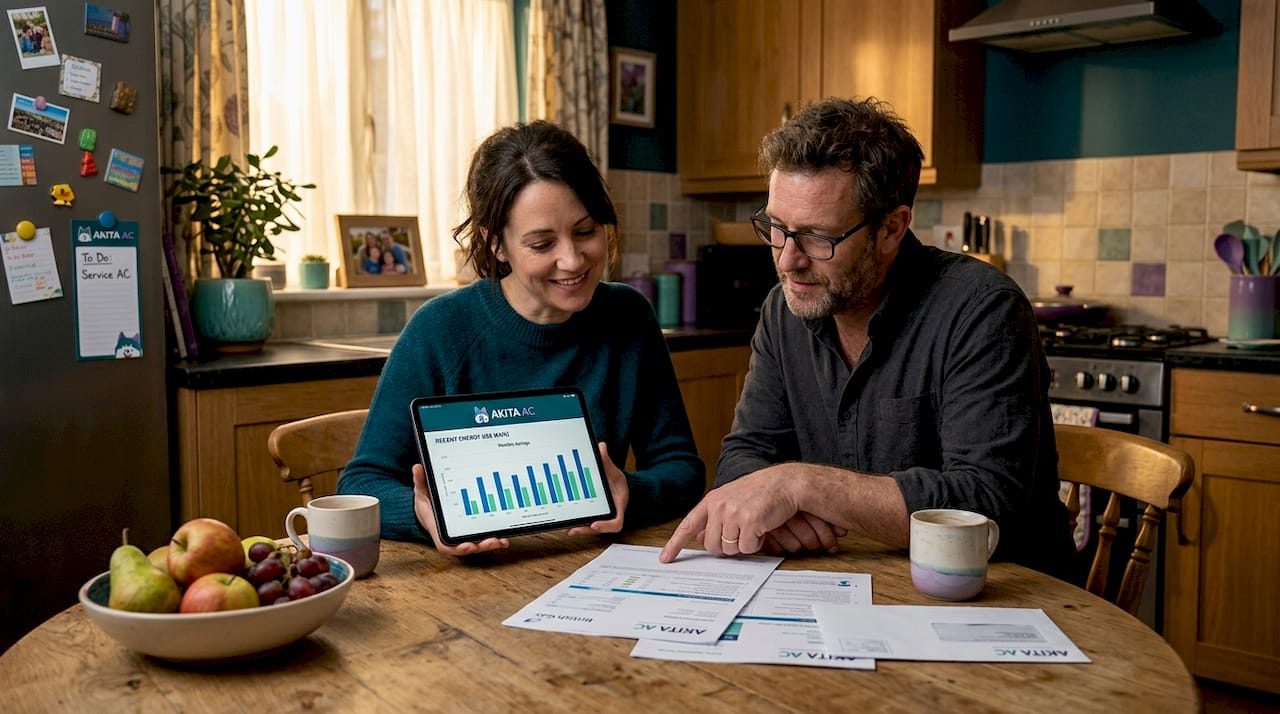
Cooling accounts for a significant share of electricity consumption, and most of that electricity still comes from fossil fuels in the UK grid. Reducing the amount of electricity your AC draws is one of the most direct ways a property owner can cut carbon emissions.
The comparison below shows why refrigerant choice has become such a focus in sustainable HVAC.
| Refrigerant | Global Warming Potential (GWP) | Status |
|---|---|---|
| R-22 (older HFC) | 1,810 | Phased out in UK |
| R-410A (common HFC) | 2,088 | Being phased down |
| R-32 | 675 | Current standard, lower GWP |
| HFO blends | Under 10 | Emerging, likely future standard |
Advanced HFO refrigerants are gaining traction and expected to become the default in coming years, offering improved environmental performance without any reduction in cooling capacity. Installing a system with R-32 or an HFO-compatible unit now positions you well ahead of tightening UK F-gas regulations.
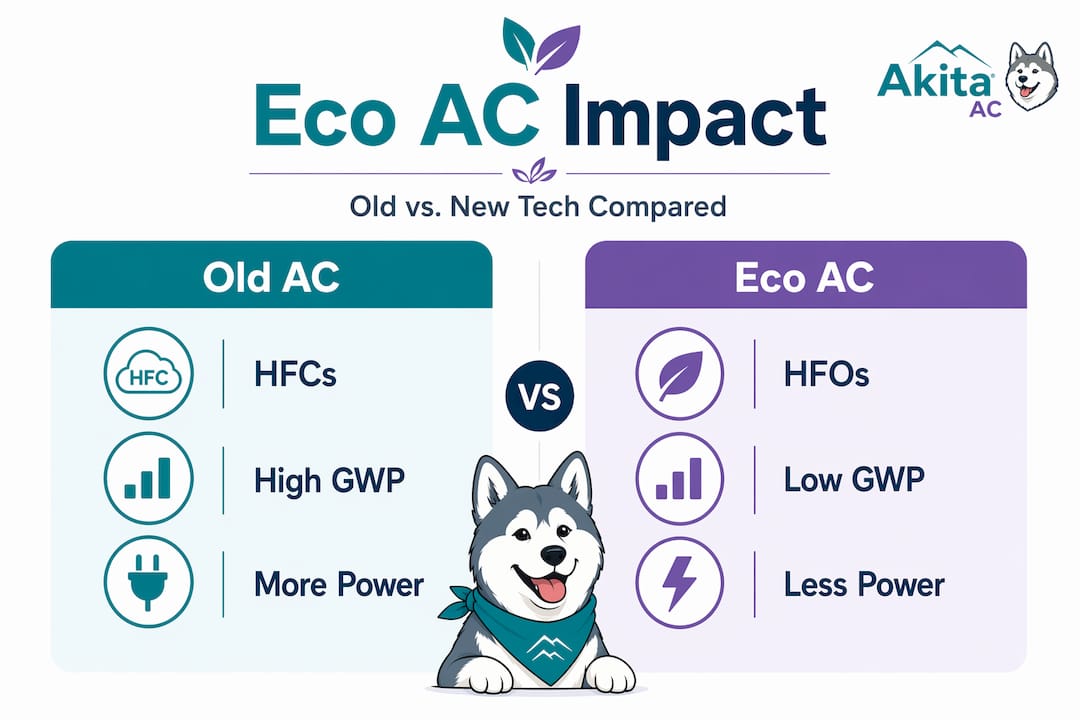
Beyond refrigerants, the efficiency of the system itself matters enormously. An inverter-driven unit that avoids overcooling, runs only when needed, and draws less electricity per hour of operation reduces fossil fuel demand at the grid level. Each unit you install with this profile is a tangible contribution to a lower-carbon building stock.
Pro Tip: If you are exploring environmentally friendly cooling options for a commercial space, request documentation of the refrigerant type and GWP rating before committing to any system. Reputable installers will provide this without hesitation.
Health and comfort benefits
The advantages of green air conditioning extend well beyond bills and carbon numbers. The indoor environment of a home or workplace directly affects health, focus, and wellbeing, and eco-friendly systems are designed with that in mind.
- Better air filtration. Ductless systems improve indoor air quality by eliminating the allergen and dust reservoirs that accumulate inside ductwork. Many modern units include HEPA-grade or activated carbon filters that capture pollen, fine particles, and odours.
- Quieter operation. Inverter compressors operate more quietly than on/off units, which matters significantly in bedrooms, meeting rooms, and open-plan offices where background noise affects concentration and sleep quality.
- Consistent temperature. Rather than cycling between too cold and too warm, inverter systems hold temperature within a much tighter range. This is not a small comfort detail. Stable temperatures reduce fatigue and improve concentration.
- Moisture control. Well-sized, properly maintained systems manage humidity effectively, which is one of the main factors in preventing mould growth. Mould is both a structural problem and a genuine respiratory health risk.
- Smart scheduling. App-based controls let you pre-cool a space before you arrive, avoiding the uncomfortable period of waiting for a hot room to reach working temperature.
Choosing and maintaining your system
Making a sound purchase decision starts with resisting the temptation to buy on price alone. Spending slightly more on a well-specified system pays back reliably over its working life.
- Choose the correct output for your space. An underpowered unit will run constantly without achieving comfort; an oversized one will short-cycle and waste energy. A professional survey of your property is the only reliable way to get this right.
- Prioritise SEER rating and refrigerant type when comparing models. These two factors will determine both your running costs and your environmental impact for the next ten to fifteen years.
- Use eco mode and scheduling features from day one. Many owners install efficient systems and then run them manually at full power, effectively negating the efficiency gains.
- Clean coils improve efficiency by 15 to 20%. Book an annual service to clean coils, check refrigerant levels, and inspect filters. It takes less than an hour and prevents the slow degradation that erodes performance invisibly over time.
- Use a qualified, experienced installer. Improper installation is one of the most common causes of poor AC performance in UK homes and businesses. It also voids many manufacturer warranties.
Pro Tip: Even the best eco mode features cannot compensate for dirty filters or clogged coils. Schedule your annual service before the summer season, not during it, when engineers are in high demand.
For a practical breakdown of choosing energy-efficient AC for a UK home, the principles are straightforward once you know what to look for.
What experience actually teaches you about eco AC
I have seen this pattern repeat itself more times than I can count: a homeowner or business owner looks at the installation quote for an eco-friendly system, sees it is higher than a basic unit, and decides to go with the cheaper option. Two years later, they are paying more in energy bills, dealing with a system that runs noisily and inconsistently, and asking whether it is worth upgrading.
My honest take is that the upfront cost objection is real but almost always wrong as a long-term calculation. The people I have seen benefit most from eco-friendly HVAC are not those who were passionate about sustainability to begin with. They are the pragmatic ones who ran the numbers and realised that a 25% reduction in running costs, compounded over a decade, dwarfs the difference in purchase price.
What I have also learned is that technology in this space is moving quickly. The shift from R-410A to R-32 happened faster than most predicted, and HFO systems will follow the same trajectory. Installing the current best-in-class system now means you are ahead of regulations, not scrambling to catch up with them.
The other thing worth saying plainly: comfort matters. A system that holds temperature quietly and consistently, filters the air properly, and responds to a schedule improves daily life in ways that are hard to quantify but very easy to notice.
— Akita
Ready to make the switch?
At Akita, we install and maintain eco-friendly air conditioning systems for homes and businesses across Suffolk, Norfolk, and Essex. Whether you are upgrading an existing setup or starting fresh, we will survey your property, recommend the right system for your specific needs, and install it to manufacturer standards so your warranty is fully protected. Our domestic AC installation and commercial air conditioning services cover a full range of energy-efficient options, from single-room ductless units to multi-zone commercial solutions. Transparent pricing, flexible finance, and ongoing maintenance membership mean you get the full benefit of your investment from day one.
FAQ
How much energy can an eco-friendly AC save?
Inverter technology and eco modes deliver energy savings of 20 to 35% compared to traditional on/off AC systems, with actual savings depending on usage patterns and system sizing.
What refrigerant should I look for in a new AC unit?
R-32 is currently the most widely available low-GWP refrigerant in UK systems, offering significantly lower environmental impact than R-410A. HFO blends are emerging as the next generation and carry a GWP of under 10.
Do eco-friendly AC systems cost more to buy?
Yes, upfront costs are typically higher, but longer system lifespans, lower running costs, and potential government incentives mean the total cost of ownership over five to ten years is generally lower than a conventional unit.
How often should I service an eco-friendly AC system?
Annual servicing is the standard recommendation. Clean coils and filters maintain efficiency; neglecting maintenance can reduce system performance by 15 to 20%, regardless of how advanced the unit is.
Are eco-friendly AC systems suitable for commercial properties?
Absolutely. Commercial properties often benefit most from the advantages of green air conditioning because they run systems for longer hours, making the energy savings more significant and the return on investment faster.