

What is a heat pump? Your 2026 guide for UK homes
TL;DR:
- Heat pumps transfer heat from the environment instead of generating it, making them more efficient than gas boilers. They provide year-round climate control by heating in winter and cooling in summer, with efficiency influenced by properly sized systems and home insulation. Proper installation and home preparation are crucial for optimal performance and long-term savings.
A heat pump is defined as an electrical device that moves heat from one place to another rather than generating it from scratch. That single distinction makes it fundamentally different from a gas boiler, and it is the reason heat pumps are central to the UK’s push towards lower carbon heating. A well-specified system delivers around 3 units of heat for every 1 unit of electricity consumed. That 3:1 ratio means you get significantly more warmth per pound spent on energy than any conventional electric heater or gas boiler can offer.
What is a heat pump and how does it differ from a boiler?
The heat pump definition is straightforward: it is a device that extracts thermal energy from air, ground, or water and transfers it indoors to heat your home. In summer, the process reverses and the system acts as an air conditioner. A gas boiler burns fuel to create heat. A heat pump simply relocates heat that already exists in the environment, which is why it uses so much less energy.
Heat pumps are not a new concept. The technology shares its roots with the refrigeration cycle used in every domestic fridge and air conditioning unit. What makes modern systems notable is their efficiency at scale and their compatibility with the UK’s electricity grid, which is becoming progressively cleaner as renewable generation grows. The environmental impact of a heat pump depends directly on the electricity source powering it. Pair a heat pump with a solar panel array and the carbon footprint drops close to zero.
How does a heat pump work to heat and cool a home?
Heat pumps work by circulating a refrigerant fluid through a closed loop of components: an evaporator, a compressor, a condenser, and an expansion valve. The refrigerant absorbs heat from outside air, ground, or water at the evaporator. The compressor then raises the refrigerant’s temperature and pressure. The condenser releases that heat into your home’s heating circuit.
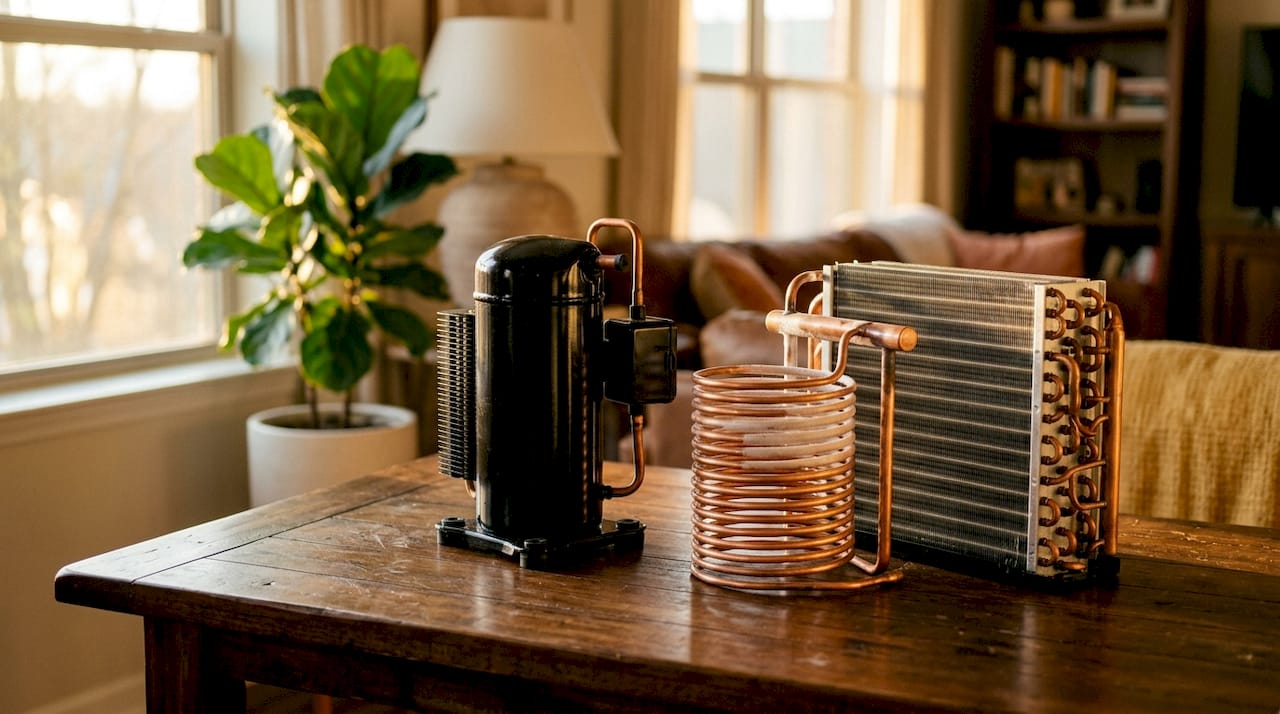
The process is based on the refrigeration cycle, the same physics that keeps your fridge cold. The key difference is that a heat pump runs the cycle in a direction that produces warmth indoors rather than cold. A reversing valve switches the direction of refrigerant flow, which is how the same unit provides cooling in summer and heating in winter. Year-round climate control from a single system is one of the most practical advantages heat pumps hold over separate heating and cooling setups.
A common concern is whether heat pumps stop working when temperatures drop. They do not. Modern systems extract heat reliably at sub-zero outdoor temperatures, provided they are correctly specified for the climate. Performance does reduce in extreme cold, which is why proper sizing matters.
Key steps in the heating cycle:
- Refrigerant absorbs heat from outside air, ground, or water at low pressure.
- The compressor raises the refrigerant’s pressure and temperature significantly.
- The hot refrigerant passes through the condenser and releases heat into your home.
- The refrigerant expands, cools, and the cycle repeats continuously.
Pro Tip: Ask your installer for the system’s Coefficient of Performance (COP) rating at different outdoor temperatures, not just at the standard test condition. A COP of 3.0 at 7°C is common, but you want to know performance at 0°C and below for UK winters.
What types of heat pumps are available?
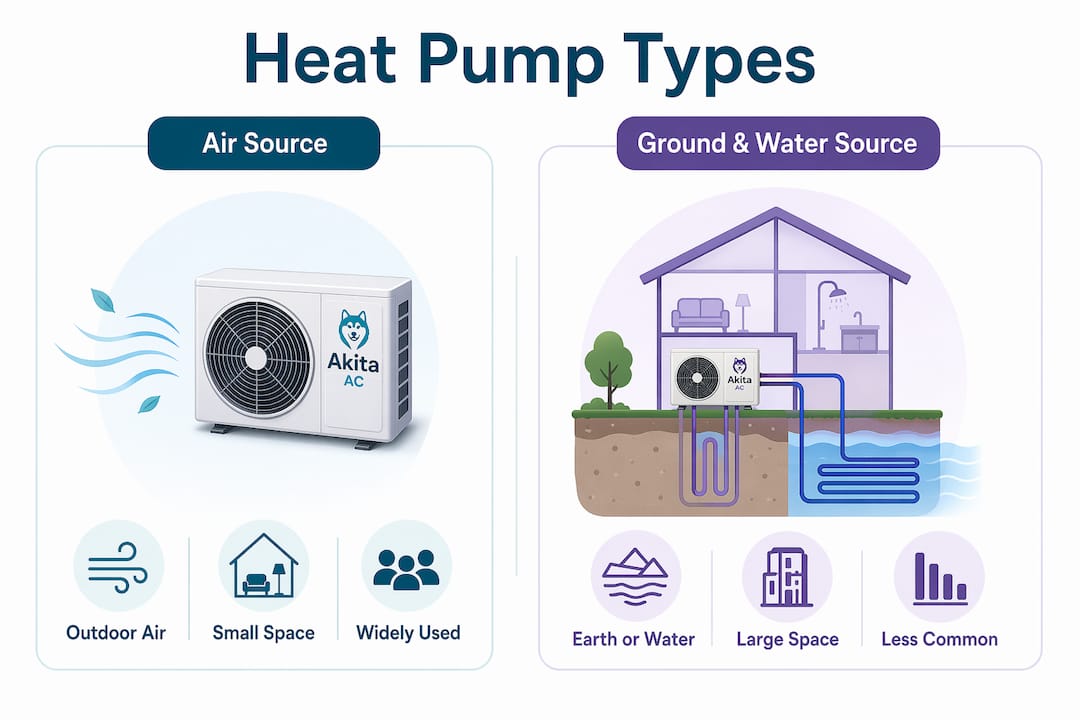
Three main types of heat pump suit UK residential use, and each draws heat from a different source. The right choice depends on your property, outdoor space, and budget.
Air source heat pumps
Air source heat pumps are the most widely installed type in the UK. They extract heat from outdoor air and require only a wall-mounted external unit, similar in appearance to an air conditioning condenser. Installation is relatively straightforward and suits most homes, including those without large gardens. They are the practical starting point for most homeowners.
Ground source heat pumps
Ground source systems bury a network of pipes in your garden or drill a borehole to extract heat from the earth. The ground maintains a more stable temperature than air throughout the year, so ground source systems run at higher efficiency. The trade-off is cost and space. You need sufficient outdoor land for horizontal pipe loops, or the budget for a vertical borehole. These systems suit rural properties with space to spare.
Water source heat pumps
Water source heat pumps draw thermal energy from a nearby lake, river, or pond. They are the least common type in the UK due to site requirements. Where a suitable water body exists, they offer excellent efficiency. Regulatory permissions from the Environment Agency are typically required before installation.
| Type | Heat source | Space needed | Relative efficiency | Best suited to |
|---|---|---|---|---|
| Air source | Outdoor air | Minimal (external unit) | Good | Most UK homes |
| Ground source | Earth via buried pipes or borehole | Large garden or borehole | Very good | Rural properties |
| Water source | Lake, river, or pond | Water body on or near site | Very good | Waterside properties |
Pro Tip: For most homeowners in Suffolk, Norfolk, and Essex, an air source heat pump is the practical choice. Ground source systems offer better efficiency but the additional installation cost and land requirement rarely make financial sense for a standard suburban plot.
What are the costs and installation basics?
Heat pump installation is a significant financial commitment. Upfront costs frequently exceed £10,000 and vary based on the type of system, the size of your home, and the complexity of the installation. Ground source systems cost more than air source due to groundworks. The UK Government’s Boiler Upgrade Scheme currently offers grants to reduce this burden, so checking current eligibility before committing is worthwhile.
The efficiency advantage offsets the upfront cost over time. Because a heat pump moves heat rather than generating it, running costs are lower than a gas boiler for an equivalent amount of warmth, particularly as electricity from renewables becomes cheaper. The payback period depends on your current heating costs and how well your home retains heat.
Home insulation is the factor most homeowners underestimate. Heat pumps operate at lower flow temperatures than gas boilers, typically around 35–45°C rather than 70–80°C. That means a poorly insulated home will feel cooler unless you upgrade the insulation or fit larger radiators. Older properties often need both. For a practical overview of how energy-efficient HVAC setup works in UK homes, the process follows a clear sequence.
A standard heat pump installation follows these steps:
- Home survey and heat loss calculation to size the system correctly.
- Selection of heat pump type and output capacity based on survey findings.
- Preparation of the installation site, including any groundworks for ground source systems.
- Fitting the external unit and connecting refrigerant pipework.
- Integration with the existing heating circuit, hot water cylinder, and controls.
- System commissioning, pressure testing, and performance verification.
- Handover with full operating instructions and warranty documentation.
Skipping the heat loss calculation at step one is the most common mistake. An undersized system will struggle in cold weather. An oversized system will short-cycle and wear out faster. Both outcomes are avoidable with a proper survey. Understanding emergency heat operation is also worth reading before installation, as backup electric heat strips can dramatically increase running costs if used routinely.
What are the benefits and limitations for UK homeowners?
Heat pumps offer a genuine combination of efficiency, flexibility, and lower emissions. Energy savings and reduced carbon emissions are the primary reasons installations are growing globally, and UK homeowners benefit from both. The benefits of energy-efficient HVAC for your home extend beyond the energy bill.
Key benefits:
- Efficiency: Produces roughly 3 units of heat per 1 unit of electricity, outperforming gas boilers on energy use.
- Year-round use: The reversible cycle provides heating in winter and cooling in summer from one system.
- Lower emissions: Significantly reduces carbon output compared to gas, especially as the grid decarbonises.
- Reduced maintenance: Fewer combustion components mean fewer parts to service annually.
- Longevity: Well-maintained systems typically last 15–20 years.
Limitations to consider honestly:
- Upfront cost: Installation costs are high and not every homeowner qualifies for grant support.
- Insulation dependency: Poorly insulated homes need upgrades before a heat pump performs well.
- Not zero carbon by default: The carbon footprint depends on the electricity source, not the heat pump itself.
- Noise: External units produce a low hum. This is rarely a problem but worth considering for properties with close neighbours.
- Renter restrictions: Renters need landlord permission for installation, which limits uptake in the private rental sector.
Key takeaways
Heat pumps are the most energy-efficient heating and cooling technology available for UK homes, delivering around 3 units of heat per 1 unit of electricity consumed.
| Point | Details |
|---|---|
| Core definition | A heat pump moves heat rather than generating it, making it far more efficient than a boiler. |
| Efficiency ratio | Systems deliver roughly 3 units of heat per 1 unit of electricity, cutting energy bills significantly. |
| Type selection | Air source suits most UK homes; ground source offers higher efficiency but needs more space and budget. |
| Insulation matters | Heat pumps work at lower flow temperatures, so good home insulation is essential for comfort. |
| Carbon footprint | Emissions depend on the electricity source. Renewable-powered heat pumps approach near-zero carbon output. |
Akita’s view: what nobody tells you before you buy a heat pump
The conversation around heat pumps in the UK has become oddly polarised. On one side, you have enthusiasts who treat them as a silver bullet. On the other, sceptics who dismiss them as impractical for British winters. Both positions miss the point.
What we see repeatedly at Akita is that the technology works well. The problems arise from poor installation decisions, not from the heat pump itself. A system installed without a proper heat loss survey, in a home with single-glazed windows and no loft insulation, will underperform. That outcome gets blamed on the heat pump. The real cause is a skipped survey and a rushed installation.
The cold weather myth is the one that frustrates us most. Modern air source systems extract usable heat at temperatures well below freezing. The UK rarely sees sustained temperatures that challenge a correctly specified system. If someone tells you a heat pump will not cope with a British winter, ask them which system they are referring to and whether it was properly sized.
Our honest advice: get a full home survey before you commit to anything. Upgrade your insulation first if your home needs it. Then choose a system sized to your actual heat loss, not a round number from a brochure. Done in that order, a heat pump is one of the best long-term investments you can make in a UK home.
— Akita
Heat pump installation from Akita
Akita installs and services heat pump compatible air conditioning systems across Suffolk, Essex, and Norfolk, with fixed pricing and no hidden costs.

If you are ready to move beyond gas heating, Akita’s team carries out a full home assessment before recommending any system. Every installation comes with a warranty, transparent pricing, and access to flexible finance options. Homeowners across East Anglia have used Akita’s domestic air conditioning installation service to fit energy-efficient climate control that heats in winter and cools in summer. For those who want a fixed-price starting point, Akita’s fixed-price AC installation page sets out exactly what you get and what it costs.
FAQ
What is a heat pump in simple terms?
A heat pump is an electrical device that moves heat from outside your home to inside it, rather than burning fuel to create warmth. It works in reverse during summer to cool your home.
How efficient is a heat pump compared to a gas boiler?
Heat pumps deliver around 3 units of heat for every 1 unit of electricity used, making them significantly more efficient than gas boilers, which convert fuel to heat at a lower ratio.
Do heat pumps work in cold UK winters?
Yes. Modern heat pumps extract heat from outdoor air even at sub-zero temperatures. Performance reduces in extreme cold, so correct sizing for your location is critical.
What type of heat pump suits a typical UK home?
Air source heat pumps suit most UK homes because they require only a small external unit and no significant groundworks. Ground source systems offer higher efficiency but need more outdoor space.
Does home insulation affect heat pump performance?
Yes. Heat pumps run at lower flow temperatures than boilers, so poorly insulated homes lose warmth faster than the system can replace it. Upgrading insulation before installation is strongly recommended.