

Ways to reduce HVAC costs: 10 proven strategies
TL;DR:
- Reducing HVAC costs involves smarter thermostat use, regular maintenance, and sealing leaks to maximize efficiency. Implementing these measures can cut energy bills by up to 30%, with savings from behaviors and upgrades adding up over time. Starting with simple, low-cost actions ensures the most significant long-term savings and system performance improvements.
Reducing HVAC running costs is primarily a matter of three things: smarter temperature control, consistent maintenance, and stopping conditioned air from escaping your building. Combining thermostat setbacks, filter maintenance, and duct sealing can cut heating bills by 15–30%. That figure applies whether you manage a single home in Suffolk or a commercial property across multiple zones. The strategies below cover every practical angle, from free behavioural changes to targeted equipment upgrades, so you can pick what fits your situation and start saving immediately.
1. ways to reduce HVAC costs start with your thermostat
Smart temperature management delivers the highest return of any HVAC cost-cutting measure. Setting your thermostat back by 7–10°F for 8 hours daily saves up to 10% on annual heating and cooling bills. That is a meaningful reduction achievable without touching a single piece of equipment.
The difference between a programmable thermostat and a smart thermostat matters here. A programmable model follows a fixed schedule you set manually. A smart thermostat, such as those carrying ENERGY STAR certification, learns your occupancy patterns and adjusts automatically. ENERGY STAR certified smart thermostats save an average of £40 or more per year, with payback periods under five years.
- Set heating to around 20°C when occupied, and drop it to 15°C overnight or when the building is empty.
- Set cooling to around 26°C rather than overcooling to 20°C, which wastes significant energy.
- Avoid large temperature swings. Cranking the thermostat to 25°C when you return home does not heat the space faster. It just overshoots the target and wastes energy.
Pro Tip: Schedule your thermostat setback to begin 30 minutes before you leave, not when you walk out the door. The system winds down gradually, and you will not notice the difference in comfort.
2. replace and clean air filters regularly
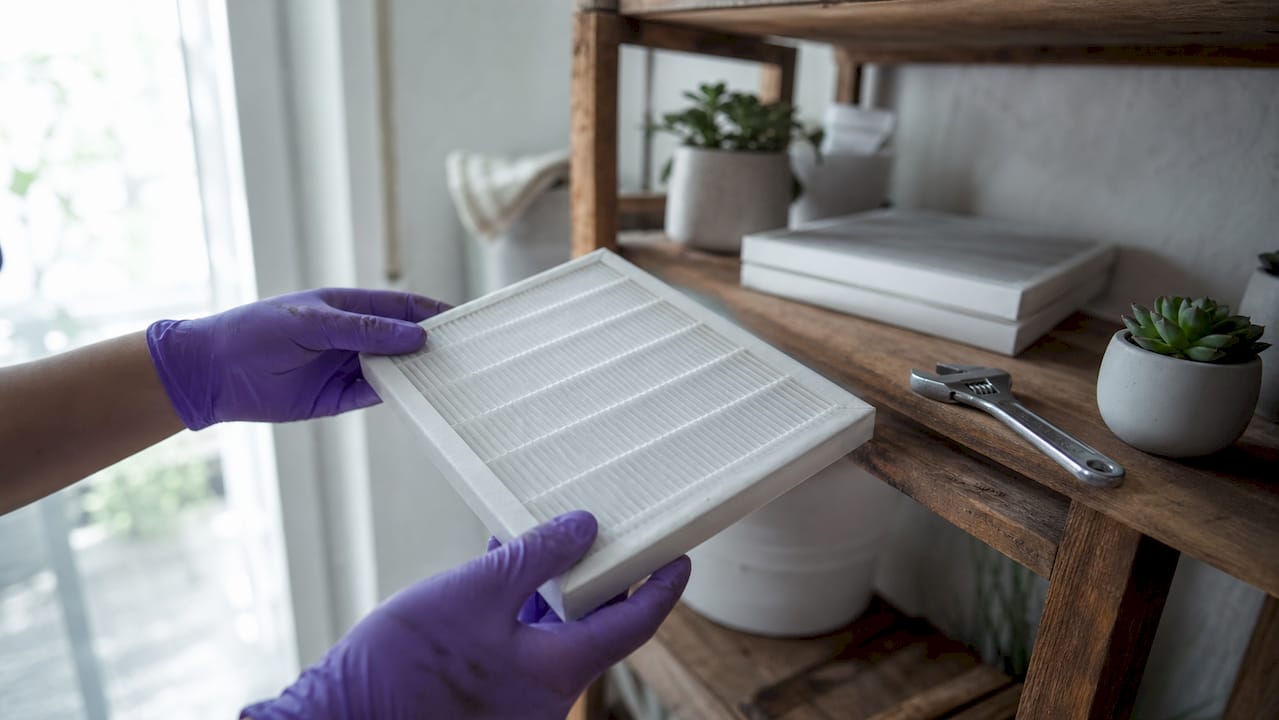
A dirty air filter is one of the most common and most overlooked causes of high HVAC bills. Changing filters every 1–3 months reduces HVAC energy use by 5–15% by restoring proper airflow. When airflow is restricted, the system works harder and longer to reach the set temperature, wearing out components faster.
Homes with pets or occupants with allergies should change filters monthly. Commercial properties with high footfall may need even more frequent checks. The filter itself costs very little. The energy waste from ignoring it does not.
Pro Tip: Hold your filter up to a light source. If you cannot see light through it, replace it immediately regardless of how long it has been in use.
For a full breakdown of how routine servicing protects your system and your budget, Akita’s guide on HVAC maintenance and energy savings covers the detail worth knowing.
3. book annual professional tune-ups
Hidden efficiency drains like dirty coils or miscalibrated thermostats cause wasteful energy use that most homeowners never detect. A professional tune-up addresses exactly these issues. An engineer will clean evaporator and condenser coils, check refrigerant levels, lubricate moving parts, and confirm the thermostat reads accurately.
The return on a service visit is straightforward. A system running at peak efficiency uses less energy to deliver the same output. Deferred maintenance compounds into larger repair bills and shortened equipment life. Scheduling a tune-up before the heating or cooling season begins means your system is ready when demand is highest.
- Clean evaporator and condenser coils to restore heat transfer efficiency.
- Check and top up refrigerant if levels are low.
- Inspect electrical connections and tighten any that are loose.
- Lubricate fan motors and bearings to reduce friction losses.
- Confirm thermostat calibration is accurate to within one degree.
4. seal leaky ductwork
Duct leaks are a direct money drain. Leaky ductwork loses 20–30% of conditioned air before it ever reaches the rooms you are trying to heat or cool. That means your system runs longer and harder to compensate, inflating your energy bill every single month.
The fix requires the right materials. Standard duct tape fails on HVAC ducts because it cannot withstand the temperature cycles inside a duct system. Mastic sealant or HVAC-rated metal foil tape are the correct choices. Both create flexible, durable seals that last for years.
| Sealing Method | Best Use | Durability |
|---|---|---|
| Mastic sealant | Joints, seams, and irregular gaps | Excellent, lasts 10+ years |
| HVAC-rated foil tape | Straight seams and accessible joints | Very good, lasts 5–10 years |
| Standard duct tape | Not suitable for HVAC ducts | Poor, fails within months |
Common leak points to inspect include duct joints in the loft, connections behind walls, and any section where ducts pass through unheated spaces. Professional duct sealing typically pays back within 2–4 years through energy savings alone. Minor leaks are well within DIY reach using the materials above.
Pro Tip: Run your system and hold your hand near duct joints in accessible areas. Any airflow you feel indicates a leak worth sealing.
5. insulate and draught-proof your building envelope
Sealing the building itself is as important as sealing the ducts inside it. Improving insulation and sealing draughts saves around 15% on heating and cooling costs. Every gap around a window frame, door surround, or loft hatch is a point where conditioned air escapes and outside air enters.
Focus first on the highest-impact areas: loft insulation, cavity wall insulation, and draught strips on external doors and windows. These upgrades reduce the thermal load on your HVAC system, meaning it runs for shorter periods to maintain the target temperature. For residential properties, sustainable insulation options can deliver passive energy savings that complement any HVAC upgrade.
6. use thermal curtains and window coverings
Windows are the weakest thermal point in most buildings. Thermal curtains reduce heat loss through windows by up to 25%. That reduction directly lowers the demand placed on your heating system during winter months.
The strategy works in reverse during summer. Heavy curtains or blinds on south-facing windows block solar gain, reducing the load on your cooling system. The cost of a set of thermal curtains is recovered quickly through lower energy bills, making this one of the most accessible HVAC cost-cutting measures available.
- In winter, keep curtains open on south-facing windows during daylight hours to capture solar heat, then close them at dusk to retain it.
- In summer, close south and west-facing curtains during the hottest part of the day to block direct sun.
- Use lined curtains rather than thin decorative ones. The lining provides the thermal resistance that matters.
7. set ceiling fans to the correct seasonal direction
Ceiling fans cost very little to run and meaningfully reduce HVAC demand when used correctly. Ceiling fans set to spin clockwise in winter push warm air that has risen to the ceiling back down into the occupied zone, reducing heating energy requirements by up to 10%.
In summer, the fan should spin anticlockwise to create a downdraught that produces a wind-chill effect. This allows you to raise the thermostat set point by 2–3 degrees without any reduction in perceived comfort. Most ceiling fans have a small switch on the motor housing to reverse direction. It takes ten seconds and costs nothing.
8. zone your space and close off unused areas
Heating or cooling rooms that nobody uses is straightforward waste. Closing vents and doors in unused rooms concentrates conditioned air where it is actually needed, reducing the volume your system must treat. For commercial properties, this principle scales significantly. A meeting room used twice a week does not need to be maintained at the same temperature as a busy open-plan office.
Zoning systems take this further by dividing a building into independently controlled areas. Variable-speed motors and zone dampers allow each area to receive only the conditioning it needs, when it needs it. The upfront cost of a zoning upgrade is recovered through sustained energy savings, particularly in larger properties.
9. adjust habits around heating and cooling
Small daily habits compound into meaningful savings over a year. Raising your cooling set point by just 1–2 degrees in summer, or lowering your heating set point by the same margin in winter, reduces energy use noticeably without affecting comfort for most occupants.
- Use portable fans to improve air circulation before reaching for the thermostat.
- Avoid using heat-generating appliances like ovens and tumble dryers during the hottest part of a summer day.
- Layer clothing in winter rather than raising the thermostat as a first response.
- Remind building occupants not to leave windows open while heating or cooling is running.
Combining these behavioural changes with the technical measures above creates compound savings. No single action transforms your bill, but five or six working together certainly does.
10. consider upgrading to a high-efficiency system
When a system is more than 10–15 years old, efficiency gains from maintenance and behaviour changes have a ceiling. Modern air conditioning systems, particularly inverter-driven heat pumps, use significantly less energy than older fixed-speed units to deliver the same heating and cooling output.
The decision to upgrade should be based on a straightforward comparison: the annual running cost of your current system versus a modern equivalent, weighed against the installation cost. Akita’s guide on how HVAC choices affect energy bills provides a practical framework for making that calculation. For properties in Suffolk, Norfolk, and Essex, Akita installs energy-efficient systems at fixed prices, making the cost comparison straightforward from the outset.
Key takeaways
The most effective way to lower HVAC running costs is to combine smart thermostat control, regular maintenance, and air sealing, since each measure reinforces the others and delivers savings that no single action achieves alone.
| Point | Details |
|---|---|
| Thermostat setbacks | Dropping temperature by 7–10°F for 8 hours daily saves up to 10% annually. |
| Filter maintenance | Replacing filters every 1–3 months cuts energy use by 5–15% and reduces system wear. |
| Duct sealing | Sealing leaks with mastic or HVAC foil tape prevents losing 20–30% of conditioned air. |
| Passive measures | Thermal curtains and correct ceiling fan direction reduce HVAC demand without equipment costs. |
| System upgrades | Replacing systems older than 15 years with inverter-driven units delivers sustained efficiency gains. |
What we have learned from years of HVAC installations
The clients who see the biggest reductions in their energy bills are rarely the ones who spend the most. They are the ones who start with the basics and stick to them. A thermostat schedule, a monthly filter check, and a sealed duct system will outperform an expensive new unit that is poorly maintained within two or three years.
The insight that surprises most people is how much duct leakage costs them. We regularly inspect properties where 25% of the conditioned air is escaping into the loft or wall cavities. The system is working hard. The occupants are paying for it. But the rooms never quite reach the right temperature. Sealing those ducts transforms the situation, and the materials cost very little.
The other overlooked area is coil cleanliness. A layer of dust on an evaporator coil acts as insulation in exactly the wrong place. Heat transfer drops, the system runs longer, and the compressor works under greater strain. Most homeowners never see their coils. A professional inspection catches this before it becomes a repair bill.
Our honest recommendation: start with the free and cheap measures first. Thermostat schedules, filter changes, curtains, and fan direction cost almost nothing. Then move to draught sealing and duct inspection. Only after those are addressed does it make sense to evaluate whether a system upgrade is warranted. The HVAC inspections guide for UK homes explains what a professional check covers and why it catches problems that routine DIY maintenance misses.
— Akita
Ready to cut your HVAC bills with expert support?
Akita installs and maintains energy-efficient air conditioning systems across Suffolk, Norfolk, and Essex, for both homes and commercial properties. Every installation is quoted at a fixed price, so there are no surprises. Whether you are replacing an ageing system or installing climate control for the first time, Akita’s team will specify the right unit for your space and usage pattern.
For homeowners, explore Akita’s domestic air conditioning installations to see system options and pricing. Business managers can review commercial HVAC solutions built around energy efficiency and reliability. Contact Akita today to book a consultation and find out how much a modern system could save you each year.
FAQ
How much can a smart thermostat save on HVAC bills?
ENERGY STAR certified smart thermostats save an average of £40 or more per year, with most paying back their cost within five years. Savings increase when combined with consistent setback schedules.
How often should i replace my HVAC air filter?
Replace filters every 1–3 months under normal conditions. Homes with pets, high dust levels, or allergy sufferers should replace them monthly to maintain airflow and efficiency.
What is the best material for sealing HVAC ducts?
Mastic sealant and HVAC-rated metal foil tape are the correct materials. Standard duct tape fails under the temperature cycles inside duct systems and should never be used.
Does closing vents in unused rooms actually save energy?
Closing vents and doors in unused rooms concentrates conditioned air where it is needed, reducing the volume your system must treat and lowering running costs with no additional investment.
When should i replace my HVAC system rather than repair it?
Systems older than 10–15 years that require frequent repairs are usually more expensive to maintain than to replace. A modern inverter-driven unit will deliver lower running costs and better reliability from day one.