

Understanding HVAC zoning: a homeowner's guide
TL;DR:
- HVAC zoning divides a property into separate temperature-controlled zones managed by individual thermostats and dampers to improve energy efficiency and comfort. Proper design and duct pressure management are critical to avoid noise, equipment damage, and performance issues, especially during retrofits. Commercial zoning requires early planning and collaboration, while residential systems benefit from targeted, personalized climate control.
HVAC zoning is defined as the practice of dividing a property into distinct temperature-controlled areas, each managed by its own thermostat and motorised duct dampers, allowing targeted heating and cooling rather than conditioning every room at once. The industry term for this approach is “zoned HVAC” or a “zoning system,” and understanding HVAC zoning properly means grasping both its components and its design requirements. Trane, one of the most recognised names in climate control, describes zone sensors communicating with a central control panel that opens only the ducts serving active zones and closes others once target temperatures are reached. The result is a system that can reduce energy costs by up to 30% while eliminating the hot and cold spots that frustrate occupants in homes and commercial properties alike. Both homeowners in Suffolk and property managers overseeing large offices in Norfolk stand to benefit, provided the system is designed and installed correctly.
How does HVAC zoning work?
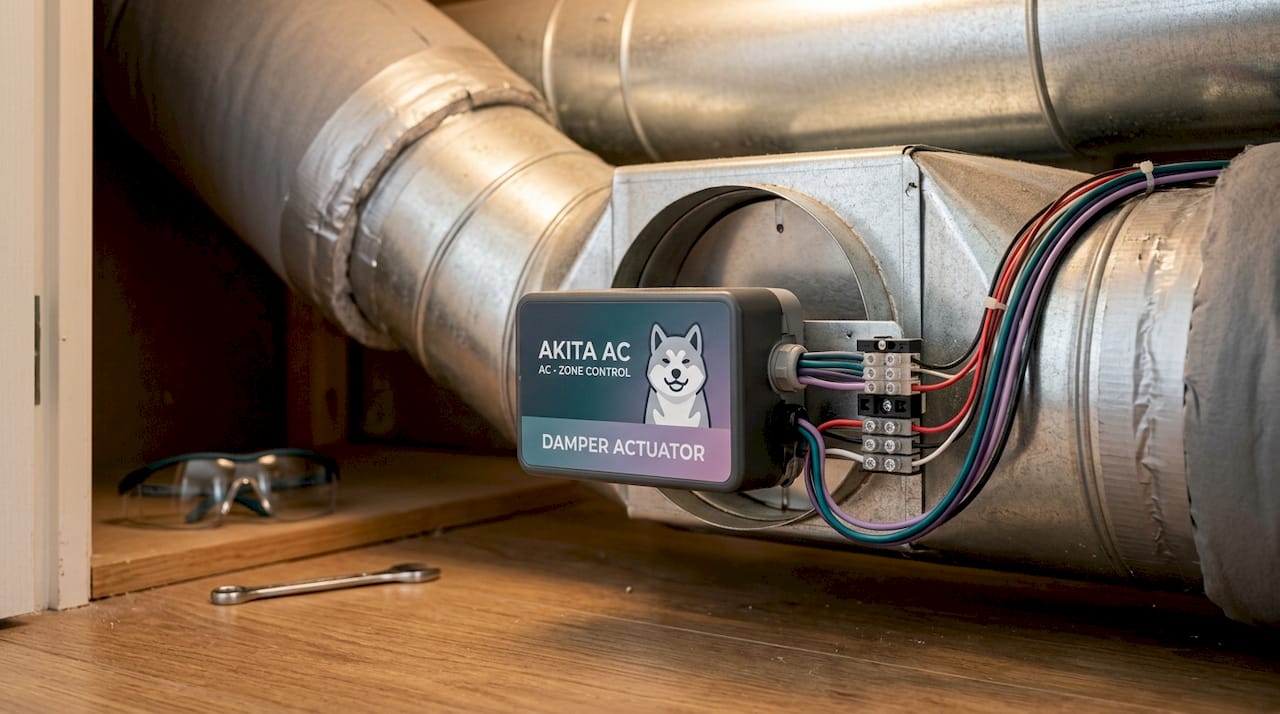
A zoned HVAC system operates through three core components working in sequence: zone thermostats or sensors, a central zone controller, and motorised duct dampers. Each thermostat monitors the temperature in its assigned area and sends a signal to the zone controller when heating or cooling is needed. The controller then instructs the relevant dampers to open, directing conditioned air to that zone only. Once the target temperature is reached, the dampers close and the system either moves to serve another zone or shuts down entirely.
The signal flow is straightforward in principle but demands careful coordination in practice. Smart thermostats and zone controllers can set different ideal temperatures and humidity levels per zone, which is particularly useful in homes where a south-facing bedroom overheats in summer while a north-facing living room stays cool. Modern interfaces from manufacturers such as Honeywell Home and Ecobee allow app-based control, so you can adjust zones remotely before arriving home.
Here is the typical sequence of operation for a residential zoned system:
- A thermostat in Zone 1 detects the room temperature has risen above the set point.
- It sends a low-voltage signal to the zone controller.
- The controller opens the motorised damper serving Zone 1 and activates the cooling unit.
- Dampers for Zones 2, 3, and 4 remain closed, restricting airflow to those areas.
- Once Zone 1 reaches its set temperature, the damper closes and the controller reassesses demand across all zones.
Pro Tip: Always confirm that at least one zone remains open during any call for heating or cooling. Minimum airflow strategies, where a secondary zone stays partially open, prevent dangerous pressure build-up in the ductwork and protect the heat exchanger or evaporator coil.
What are the benefits and challenges of HVAC zoning?
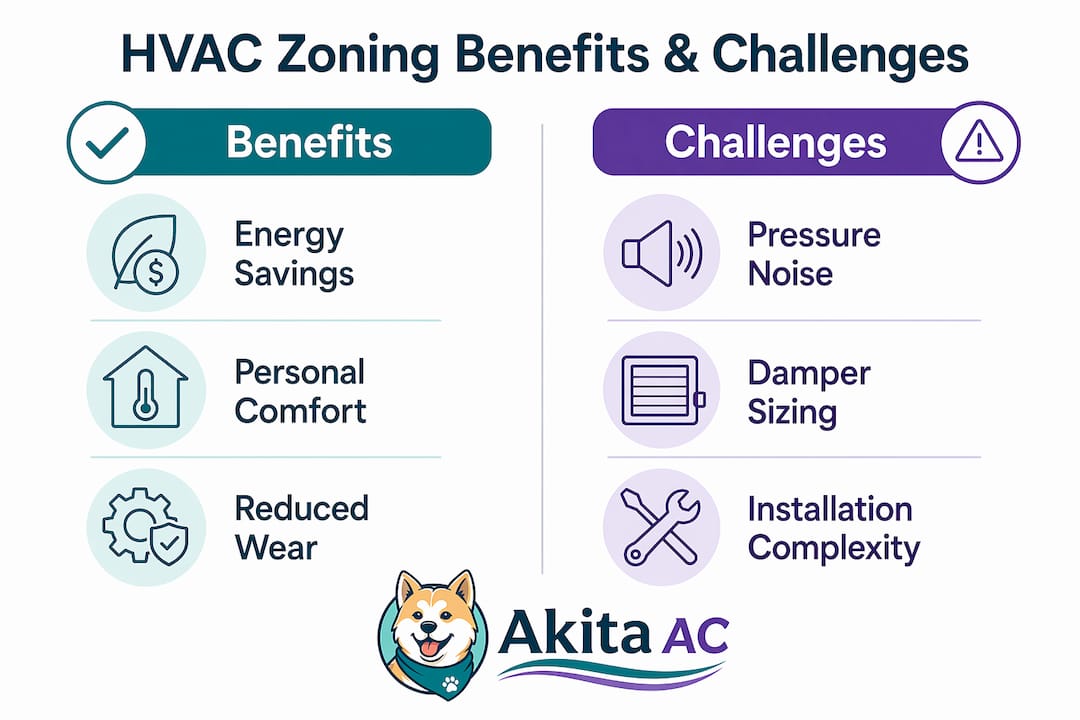
The HVAC zoning benefits are well documented and extend beyond simple comfort. Properly designed zoned systems reduce energy costs by up to 30% by targeting conditioning only to occupied rooms. That figure is significant: for a household spending £1,500 per year on heating and cooling, the saving could reach £450 annually. Reduced runtime also means less wear on the compressor, fan motor, and heat exchanger, which translates to lower maintenance costs over the system’s lifespan. You can read more about how this connects to energy-efficient HVAC benefits for homeowners in the UK.
The advantages of HVAC zoning also include:
- Personalised comfort. Different occupants can set their preferred temperatures without affecting the rest of the property.
- Elimination of hot and cold spots. Rooms with large windows, high ceilings, or poor insulation can receive more conditioning than others.
- Quieter operation. Because the system runs in shorter, targeted bursts rather than conditioning the whole building, overall runtime and noise exposure decrease.
- Better humidity management. Zone controllers can regulate humidity independently per area, which matters in spaces like server rooms or conservatories.
The challenges are equally real and are often underestimated. Zoning can introduce duct pressure and noise problems if zones are undersized or minimum airflow is not maintained. Risks include raised static pressure in the ductwork, coil overcooling in cooling mode, and overheating or safety shutoffs in heating mode. These are not minor inconveniences. An improperly zoned system can damage equipment faster than a standard single-zone setup.
“A common misconception is that zoning is a ‘set-and-forget’ upgrade. Actual performance depends critically on damper sizing and duct pressure management throughout the system’s life.”
Pressure management issues causing noise and unstable behaviour often stem from improper damper sizing or duct restrictions. This is why professional assessment before installation is not optional. It is the difference between a system that saves money and one that creates expensive faults.
How do residential and commercial zoning systems differ?
The core principle is the same, but the scale, complexity, and planning requirements diverge considerably between homes and commercial properties.
| Factor | Residential | Commercial |
|---|---|---|
| Typical number of zones | 2 to 4 | 6 to 20 or more |
| Primary driver | Comfort and uneven temperature correction | Occupancy variation, equipment loads, compliance |
| Design stage involvement | Often retrofitted after construction | Requires integration at architectural design stage |
| Control complexity | App-based smart thermostats | Building management systems (BMS) |
| Examples of zones | Bedrooms, living areas, home office | Conference rooms, server rooms, open-plan offices |
Residential zoning typically addresses straightforward problems: a top floor that overheats in summer, a ground-floor extension that never warms up in winter, or a home office that needs cooling during the day while the rest of the house sits empty. Two to four zones usually cover these scenarios, and the ductwork modifications are manageable within an existing system.
Commercial zoning is a different discipline. Commercial HVAC zoning requires early design-stage integration among architects, engineers, and contractors to coordinate building layout, ductwork, and air distribution. A conference room that holds 40 people for two hours generates a very different heat load from an adjacent server room that runs continuously at high temperature. Getting this wrong at the design stage means expensive remedial work later. Commercial zoning control integrates tightly with hydraulic design and demands early collaboration between mechanical engineers and architects, which is why retrofitting commercial zoning is significantly more disruptive than planning it from the outset.
When should you consider installing a zoned HVAC system?
Certain situations make zoning a clear choice rather than a speculative upgrade. Uneven temperatures across floors, rooms that are consistently too warm or too cold regardless of thermostat settings, large properties where whole-house conditioning is wasteful, and spaces with significant glazing or sun exposure are all strong indicators. If your HVAC maintenance history shows repeated issues with one area of the property, zoning may address the root cause rather than the symptom.
The evaluation process before installation follows a logical sequence:
- Duct inspection. Professional HVAC evaluations begin with duct inspection and airflow measurements to diagnose uneven temperature issues before recommending zoning. Leaking or undersized ducts must be addressed first.
- Airflow measurement. Each room’s actual airflow is compared against its calculated requirement. Imbalances here often explain temperature complaints.
- Load evaluation. A Manual J or equivalent heat load calculation confirms whether the existing equipment can serve multiple zones without being oversized or undersized for any one area.
- Damper selection and placement. Dampers must be matched properly to duct size and installed in straight airflow sections to avoid noise, pressure spikes, and control failures. Quick neck-downs near dampers cause turbulence that undermines the entire system.
- Transformer and wiring check. Zoning requires attention to transformer sizing because multiple dampers and thermostats create low-voltage loads that an undersized transformer cannot handle reliably. Symptoms of an undersized transformer include buzzing, weak damper movement, and intermittent resets.
Retrofitting zoning into an existing system is entirely feasible, but it requires more diagnostic work than a new build. For guidance on what a retrofit involves in practice, Akita’s overview of HVAC retrofitting for homes covers the key considerations for UK properties.
Pro Tip: If your existing ductwork is more than 15 years old, have it pressure-tested before committing to a zoning installation. Leaky ducts make zone control unreliable and negate most of the energy savings.
Key takeaways
A properly designed and installed HVAC zoning system delivers measurable energy savings, personalised comfort, and reduced equipment wear, but only when duct pressure management, damper sizing, and transformer capacity are handled correctly from the outset.
| Point | Details |
|---|---|
| Zoning reduces energy costs | Well-designed systems cut heating and cooling bills by up to 30% by targeting occupied areas only. |
| Three components drive the system | Zone thermostats, a central controller, and motorised dampers must all be correctly specified and installed. |
| Pressure management is non-negotiable | Closed dampers raise static pressure; minimum airflow strategies protect the equipment and prevent noise. |
| Commercial zoning needs early planning | Architects, engineers, and contractors must collaborate at design stage to avoid costly retrofits later. |
| Professional evaluation comes first | Duct inspection, airflow measurement, and load calculation must precede any zoning installation decision. |
Akita’s view on zoning: design first, install second
After working with homeowners and commercial clients across Suffolk, Norfolk, and Essex, the pattern we see most often is this: a client has heard that zoning saves money, they want it installed quickly, and the ductwork has never been properly assessed. The result is a system that works inconsistently, makes noise, and occasionally trips safety shutoffs. The technology itself is not at fault. The process was skipped.
The single most overlooked element in zoning projects is duct pressure management. Most people focus on the thermostats, which are visible and easy to understand. The dampers and the static pressure they create are invisible until something goes wrong. We have seen systems where closing just two zones pushed static pressure high enough to freeze the evaporator coil within 20 minutes of operation. That is not a zoning failure. That is a design failure.
Smart controls have genuinely improved the user experience. Platforms like Ecobee and Honeywell Home make zone management intuitive, and the data they provide on runtime and energy use is genuinely useful for identifying further savings. But smart controls on a poorly designed duct system are like a high-quality tap on a leaking pipe. The interface is pleasant; the outcome is still a problem.
Our recommendation is consistent: get the ductwork assessed before discussing zones. If the assessment reveals restrictions, leaks, or undersized returns, address those first. Zoning on a sound duct system delivers exactly what it promises. Zoning on a compromised one creates a more expensive version of the problem you already had.
— Akita
Get expert HVAC zoning advice from Akita

Akita installs and upgrades HVAC zoning systems for homes and commercial properties across Suffolk, Norfolk, and Essex. Whether you are dealing with uneven temperatures in a multi-storey home or need a zoned climate control strategy for a commercial building, Akita’s engineers carry out a full duct and airflow assessment before recommending any solution. Fixed-price installation packages are available for domestic air conditioning and commercial air conditioning projects, with flexible finance options to spread the cost. Contact Akita for a no-obligation assessment and find out whether zoning is the right solution for your property.
FAQ
What is HVAC zoning?
HVAC zoning is a system that divides a property into separate temperature-controlled areas, each with its own thermostat and motorised dampers. Zone sensors communicate with a central controller to direct heating or cooling only to areas that need it.
How much can HVAC zoning save on energy bills?
Properly designed zoned HVAC systems can reduce energy costs by up to 30% by conditioning only occupied rooms rather than the entire property. Actual savings depend on property size, occupancy patterns, and the quality of the duct system.
Can zoning be added to an existing HVAC system?
Yes, zoning can be retrofitted into most existing systems, but a duct inspection and airflow assessment must come first. Leaky or undersized ductwork will undermine zone performance and should be repaired before dampers and controllers are installed.
What causes noise in a zoned HVAC system?
Noise in zoned systems is most commonly caused by raised static pressure when too many dampers close simultaneously, or by dampers installed in turbulent airflow sections near bends or neck-downs. Correct damper sizing and placement, along with minimum airflow strategies, resolve the majority of noise complaints.
Do commercial properties need a different approach to zoning?
Commercial zoning requires early collaboration between architects, mechanical engineers, and contractors at the design stage, because different zones such as server rooms, conference rooms, and open offices have very different and often conflicting load requirements. Retrofitting commercial zoning after construction is significantly more complex and costly than planning it from the outset.