

HVAC energy ratings explained: your 2026 guide
TL;DR:
- HVAC energy ratings such as SEER2, AFUE, HSPF2, and EER2 measure different aspects of system efficiency to help control long-term costs and environmental impact. The 2023 standards introduced more realistic testing methods, with conversion factors to compare new ratings with older ones accurately. Selecting an appropriately rated system, considering installation quality, and leveraging rebates are crucial for optimal performance and savings.
HVAC energy ratings are standardised measurements that show how efficiently a heating or cooling system converts energy into useful output, directly determining how much you pay to run it. The four ratings you will encounter most often are SEER2, AFUE, HSPF2, and EER2, each covering a different aspect of system performance. Understanding these figures before you buy or replace a system is the single most effective way to control long-term running costs and reduce your carbon footprint. This guide covers what each rating means, how the standards changed in 2023, and how to use the numbers to make a confident purchasing decision.
What are the main HVAC energy efficiency ratings?
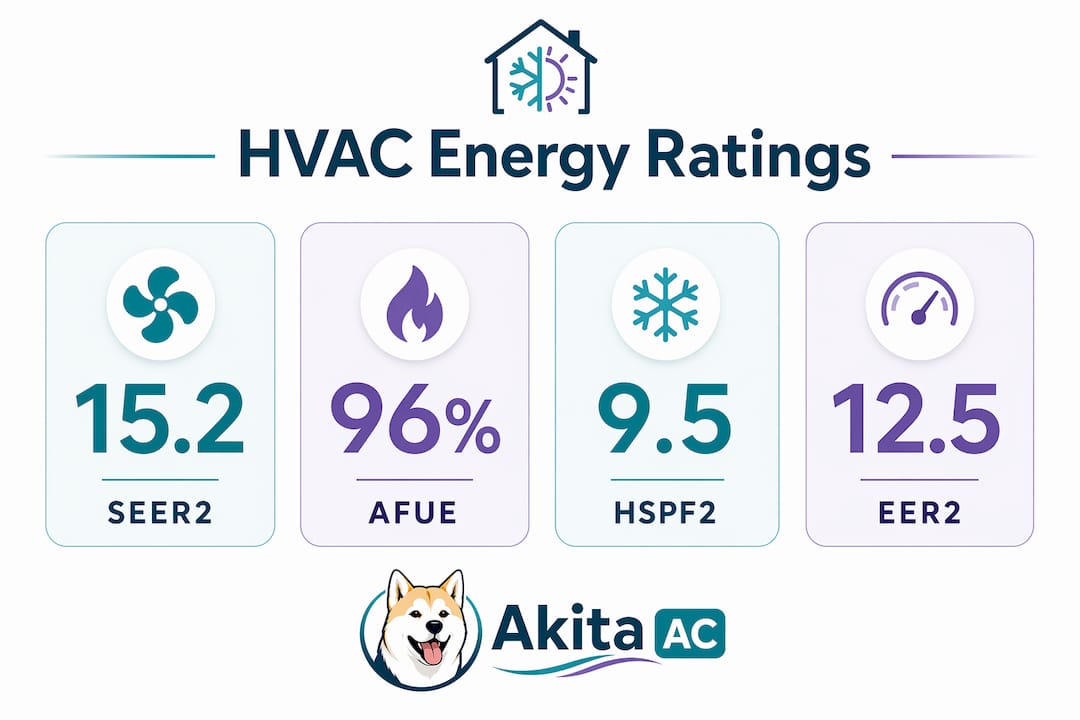
HVAC energy ratings explained simply: each metric measures a different type of efficiency across different operating conditions. Knowing which rating applies to which system type prevents costly misunderstandings when comparing quotes.

SEER2 (Seasonal Energy Efficiency Ratio 2) measures the cooling output of an air conditioning or heat pump system over an entire season, divided by the total electrical energy it consumes. A higher SEER2 number means the unit produces more cooling per unit of electricity. The 2026 federal minimum is 14.0 SEER2 in southern regions and 13.4 SEER2 in northern regions, with high-efficiency units exceeding 20 SEER2 and cutting energy costs by up to 30%. That gap in running costs compounds significantly over a system’s 15 to 20 year lifespan.
AFUE (Annual Fuel Utilisation Efficiency) applies to gas and oil furnaces and expresses what percentage of fuel actually becomes usable heat. The federal minimum sits at 80% AFUE, meaning 20 pence in every pound spent on fuel is wasted. A 96% AFUE furnace wastes only 4 pence per pound, compared to 20 pence for an 80% AFUE unit. That difference adds up to hundreds of pounds annually in homes with high heating demands.
HSPF2 (Heating Seasonal Performance Factor 2) measures how efficiently a heat pump delivers heat across an entire heating season. The federal minimum is 7.5 HSPF2 as of 2026, with premium models rated between 9 and 10 or above, making them well suited to colder climates. Higher HSPF2 ratings come with greater upfront cost, with installed prices ranging from £4,800 to £16,000 depending on system size and specification.
EER2 (Energy Efficiency Ratio 2) measures cooling efficiency at a fixed outdoor temperature of 95°F (35°C), making it the most relevant metric for performance during the hottest days of the year. The DOE minimum for EER2 is 11.7 for larger systems, with high-efficiency residential units typically ranging from 12 to 16. If you live or operate a business in a region with prolonged hot summers, EER2 tells you more about peak-day performance than SEER2 alone.
Pro Tip: When comparing air conditioning units, always check both SEER2 and EER2. SEER2 reflects average seasonal performance, but EER2 reveals how the unit holds up on the hottest days when your system works hardest and your bills spike.
How did the 2023 DOE standards change HVAC ratings?
The shift from SEER to SEER2, and from HSPF to HSPF2, came into effect in January 2023 under the US Department of Energy’s updated M1 testing procedure. The change matters because the old tests underestimated the resistance that real ductwork creates, producing ratings that were optimistic compared to actual installed performance.
The new M1 standard applies higher static pressure during testing to simulate the friction and resistance found in typical residential and commercial duct systems. As a result, SEER2 ratings reflect more realistic real-world efficiency than the original SEER figures ever did. A unit that scored 16 SEER under the old test will typically score around 15.2 SEER2 under the new one, not because it became less efficient, but because the test became more honest.
The approximate conversion factors are straightforward. SEER multiplied by 0.95 gives you the equivalent SEER2 value, and HSPF multiplied by 0.85 gives you the equivalent HSPF2 value. Use these when comparing a quote for a new system against an older unit you are replacing.
| Old rating | Approximate new equivalent | What changed |
|---|---|---|
| 16 SEER | 15.2 SEER2 | Higher duct resistance in testing |
| 10 HSPF | 8.5 HSPF2 | More realistic heating season simulation |
| 12 EER | 12 EER2 | Fixed-condition test largely unchanged |
Pro Tip: If a contractor quotes you a SEER figure rather than SEER2, ask them to confirm which standard applies. Equipment manufactured after January 2023 must carry SEER2 ratings, so an old-format quote may indicate outdated stock or a lack of familiarity with current standards.
How to interpret HVAC ratings when making a purchasing decision
Understanding the numbers is only half the task. Applying them to your specific situation, your climate, your budget, and your building, is where the real value lies. Follow these steps to move from raw ratings to a sound purchasing decision.
-
Check the regional minimum standard first. The federal minimum of 14.0 SEER2 for southern regions and 13.4 SEER2 for northern regions sets the floor, not the target. Buying at the minimum saves money upfront but locks you into higher running costs for the next two decades. Use the minimum as a baseline, not a recommendation.
-
Calculate the payback period before committing. Upgrading from 13.4 SEER2 to 23.5 SEER2 can reduce annual energy costs from £1,008 to £575 over 18 years. Divide the price premium of the higher-efficiency unit by the annual savings to find your payback period. If the unit lasts longer than the payback period, the upgrade pays for itself.
-
Factor in rebates and tax credits. Higher-efficiency units often qualify for utility rebates and government tax credits, which can substantially reduce the effective purchase price. In the UK, schemes such as the Boiler Upgrade Scheme and various energy efficiency grants can offset the cost of heat pumps and high-efficiency systems. Always check current eligibility before finalising your budget.
-
Assess your climate zone honestly. A 20 SEER2 unit delivers its greatest savings in a hot climate where the system runs for hundreds of hours each summer. In a milder UK climate, the incremental savings between a 16 SEER2 and a 20 SEER2 unit may extend the payback period considerably. Match the rating to the actual hours of use your climate demands.
-
Prioritise installation quality alongside the rating. Even a high SEER2-rated unit will underperform if the ductwork is too small, leaky, or poorly designed. The rating on the label assumes correct installation. A poorly fitted high-efficiency unit will often perform worse than a correctly installed mid-range one. Choosing a qualified installer is as important as choosing the right rating. You can read more about energy-efficient HVAC benefits to understand the full financial picture.
Comparing HVAC systems using energy ratings: what to look for
When you are standing in front of two or three competing quotes, the ratings table below gives you a practical reference for what counts as standard, good, and excellent performance across the main system types.
| System type | Minimum rating | Good rating | Excellent rating |
|---|---|---|---|
| Central air conditioner | 13.4 SEER2 | 16 SEER2 | 20+ SEER2 |
| Gas furnace | 80% AFUE | 90% AFUE | 96–99% AFUE |
| Heat pump (heating) | 7.5 HSPF2 | 8.5 HSPF2 | 10+ HSPF2 |
| Heat pump (cooling) | 14.0 SEER2 | 17 SEER2 | 20+ SEER2 |
Beyond the numbers, look for the ENERGY STAR certification label. ENERGY STAR-certified central air conditioners must meet efficiency levels significantly above the federal minimum, and the EnergyGuide label on each unit provides an estimated annual operating cost based on average usage and energy prices. That figure gives you a direct comparison point between competing models without needing to do the maths yourself.
When comparing systems, watch out for these common pitfalls:
- Comparing SEER to SEER2 directly. A 2019 unit rated at 16 SEER is not more efficient than a 2024 unit rated at 15.2 SEER2. They are essentially equivalent once you apply the 0.95 conversion factor.
- Ignoring EER2 in hot climates. SEER2 averages performance across a season, but EER2 at a fixed 95°F tells you how the unit performs when temperatures peak. In a hot summer, EER2 is the more relevant figure.
- Overlooking the role of ductwork quality in real-world performance. The rating on the box assumes a well-designed system. Leaky or undersized ducts can reduce effective efficiency by 20% or more regardless of the unit’s label rating.
The introduction of SEER2 and HSPF2 has genuinely improved the alignment between what the label says and what you experience in practice. That is a meaningful shift for anyone making a long-term investment in a heating or cooling system. A balanced consideration of climate, investment, and rebates consistently produces the best financial outcomes.
Key takeaways
Choosing the right HVAC system requires matching the correct efficiency rating to your climate, usage pattern, and budget rather than simply buying the highest number on the label.
| Point | Details |
|---|---|
| Four core ratings | SEER2, AFUE, HSPF2, and EER2 each measure a distinct aspect of HVAC efficiency. |
| 2023 testing update | SEER2 and HSPF2 replaced older ratings with more realistic duct-pressure testing from January 2023. |
| Conversion factors | Multiply old SEER by 0.95 and old HSPF by 0.85 to compare with new-standard ratings accurately. |
| Installation matters | A high-rated unit fitted with poor ductwork will underperform a mid-rated unit installed correctly. |
| Rebates reduce cost | High-efficiency units often qualify for government and utility incentives that shorten the payback period. |
What we have learned from fitting high-efficiency systems across East Anglia
At Akita, we have fitted hundreds of systems across Suffolk, Norfolk, and Essex, and the pattern we see repeatedly is this: customers who focus exclusively on the SEER2 number without considering their actual usage hours often end up disappointed with the payback period. A 22 SEER2 unit in a building that runs air conditioning for six weeks a year will take far longer to recoup its premium than the same unit in a building that runs cooling for five months.
The other thing we see constantly is the gap between rated and actual performance caused by existing ductwork. A customer in Ipswich recently upgraded to a 19 SEER2 system and saw almost no reduction in their bills. When we inspected the installation, the original ductwork had multiple unsealed joints losing conditioned air into the roof void. The unit was performing exactly as rated. The building was not. Ratings are only as good as the system they are part of.
Our honest advice: ask every contractor for both the SEER2 and EER2 figures, request a written payback calculation based on your local energy tariff, and check current eligibility for the Boiler Upgrade Scheme or any applicable utility rebates before signing anything. The rating label is the starting point, not the finish line. You can also explore practical energy-saving practices to get the most from whatever system you choose.
— Akita
Find the right energy-efficient system for your property

Akita installs and maintains high-efficiency air conditioning and climate control systems for homeowners and businesses across Suffolk, Norfolk, and Essex. Every installation begins with a proper assessment of your building, ductwork, and usage patterns so the system you receive actually delivers the efficiency its rating promises. Whether you are replacing an ageing unit or fitting climate control for the first time, Akita’s team can match you to a system with the right SEER2, HSPF2, or AFUE rating for your needs and budget. Explore domestic air conditioning installation options or find out more about commercial HVAC solutions for your business premises.
FAQ
What does SEER2 mean on an HVAC unit?
SEER2 stands for Seasonal Energy Efficiency Ratio 2 and measures how much cooling a system produces per unit of electricity consumed across an entire season. Higher numbers indicate greater efficiency and lower running costs.
How do I convert an old SEER rating to SEER2?
Multiply the old SEER figure by 0.95 to get the approximate SEER2 equivalent. This conversion accounts for the updated M1 testing methodology introduced by the US Department of Energy in January 2023.
What is a good AFUE rating for a gas furnace?
A good AFUE rating is 90% or above, with high-efficiency models reaching 96 to 99%. The federal minimum is 80% AFUE, meaning a 96% unit wastes four times less fuel than the minimum-standard alternative.
Does a higher SEER2 rating always mean lower bills?
Not automatically. A higher SEER2 rating reduces energy consumption per hour of use, but actual savings depend on how many hours the system runs, local energy prices, and whether the installation and ductwork are correctly specified.
What is the difference between SEER2 and EER2?
SEER2 measures average efficiency across an entire cooling season under varying conditions, while EER2 measures efficiency at a fixed peak temperature of 95°F. EER2 is the more relevant figure for assessing performance during the hottest days of the year.