

How to reduce HVAC operating costs in 2026
TL;DR:
- Regular HVAC maintenance, proper controls, and correct equipment sizing are essential to lowering operating costs. Preventive measures improve efficiency, extend system life, and prevent costly breakdowns, saving energy and money. Implementing digital tools and proper scheduling further enhances cost savings and system performance.
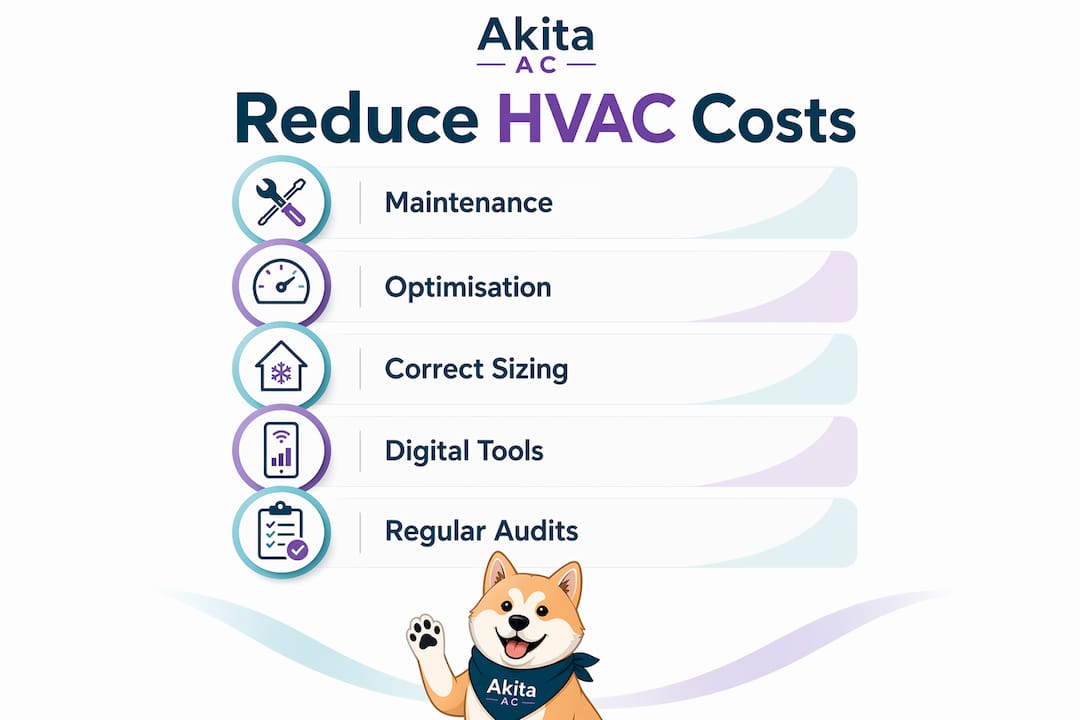
Reducing HVAC operating costs is achieved through three proven methods: routine preventive maintenance, optimised system controls, and correct equipment sizing. Poorly maintained systems waste energy, fail earlier, and cost far more to run than well-serviced ones. Preventive maintenance improves efficiency by 15–25% and extends equipment lifespan by 30–40%. Following ASHRAE Standard 180 best practices can cut commercial HVAC energy costs by 5–20% before a single piece of equipment is replaced. Whether you own a home in Suffolk or manage a commercial property in Norfolk, the savings are real and achievable without a full system overhaul.
Which maintenance practices most effectively reduce HVAC costs?
Preventive maintenance is the single most cost-effective action you can take to lower your HVAC running costs. Well-maintained systems last 15–25 years and reduce emergency repairs by 65%. Reactive maintenance, by contrast, costs significantly more per incident and shortens equipment life.
The most impactful maintenance tasks, in order of priority, are:
- Replace air filters every 30–90 days. Dirty filters reduce efficiency by 15% and accelerate component wear. Monthly checks cost nothing and take two minutes.
- Book professional bi-annual tune-ups. A qualified engineer inspects coils, checks refrigerant levels, tests electrical connections, and monitors for carbon monoxide. Tune-ups typically cost £65–£200 per visit and prevent far more expensive failures.
- Clean evaporator and condenser coils annually. Dirty coils force the compressor to work harder, raising energy consumption and shortening its lifespan.
- Document every maintenance activity. Undocumented tasks are non-compliant under ASHRAE Standard 180. Proper records also protect your warranty and support insurance claims.
- Inspect ductwork for leaks. Leaking ducts can waste a significant portion of conditioned air before it reaches the intended space, driving up bills without any benefit.
Pro Tip: Align your maintenance schedule to actual usage patterns and environmental conditions, not just the calendar. A system running in a dusty commercial kitchen needs filter checks every two to three weeks, not every 90 days. Tailor the schedule to the environment.
Maintenance contracts with priority scheduling often include discounted parts and waived call-out fees, which adds up to meaningful savings during peak summer and winter periods. A structured residential HVAC maintenance checklist helps you track every task and stay compliant. The discipline of regular servicing is not glamorous, but it is the foundation of every other cost-saving strategy in this article.
How can optimising HVAC controls lower operating costs immediately?
Upgrading controls is the fastest route to lower bills without replacing functional equipment. Controls such as demand-controlled ventilation and occupancy-based setbacks deliver a faster return on investment than full equipment replacement. Many buildings condition empty spaces around the clock, which is pure waste.
The most effective control strategies include:
- Setpoint calibration. A thermostat set just 1°C higher in summer or lower in winter can reduce cooling and heating costs noticeably. Calibrate sensors annually to confirm readings are accurate.
- Occupancy-based scheduling. Programme your system to reduce output during unoccupied hours. A business that conditions its premises from 6:00 AM to 10:00 PM when staff arrive at 8:00 AM wastes two hours of energy every single day.
- Demand-controlled ventilation (DCV). DCV uses CO₂ sensors to match fresh air supply to actual occupancy. Spaces that are rarely full benefit most from this approach.
- Smart thermostats. These devices learn usage patterns and adjust automatically. They also provide energy reports that reveal exactly where waste is occurring.
- Zoning. Dividing a building into independently controlled zones means you only condition the spaces in use. A four-bedroom home with two occupied rooms does not need to cool all four equally.
Following ASHRAE Standard 180 schedule optimisation delivers energy savings of 5–20% with no capital expenditure on new equipment. That figure represents a meaningful reduction in annual bills for both homeowners and business owners.
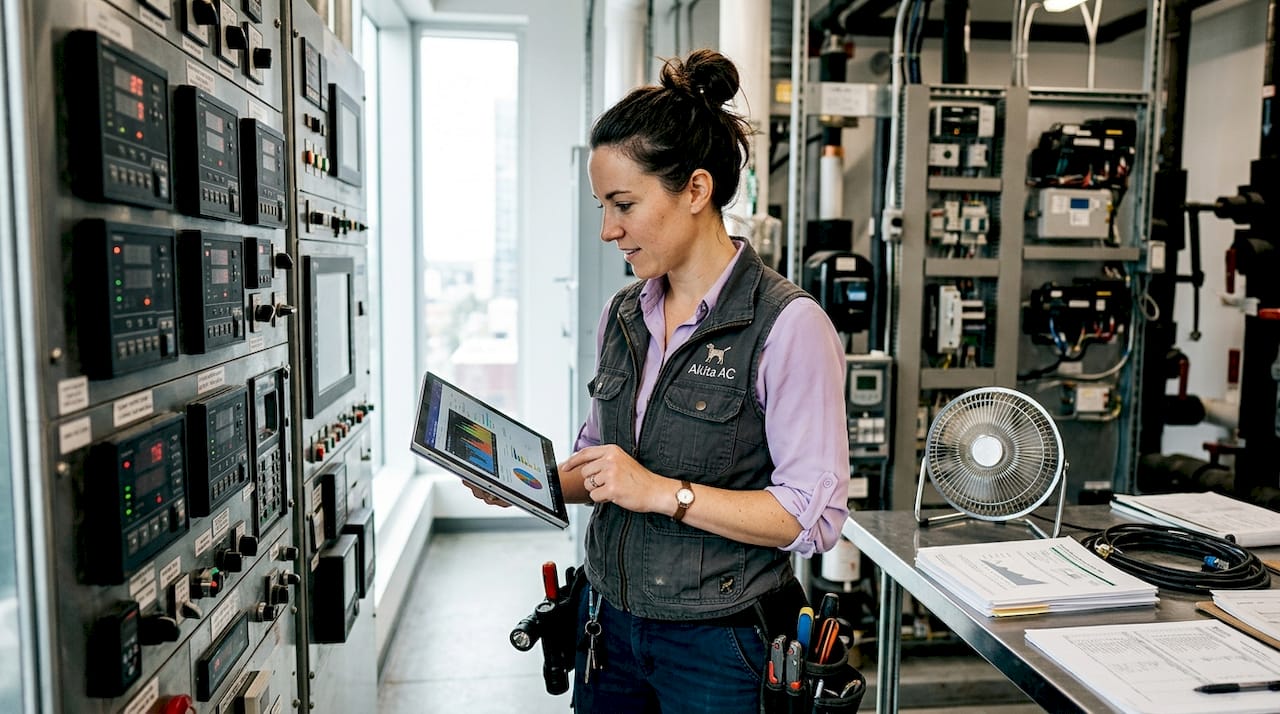
Pro Tip: Before investing in new controls hardware, audit your existing setpoints and schedules. Many systems run on factory defaults that were never adjusted for the building’s actual occupancy. A one-hour audit with a qualified engineer often reveals quick wins worth hundreds of pounds per year.
Many energy suppliers and local authorities offer rebates for controls upgrades, particularly for smart thermostats and DCV systems. Check the Energy Saving Trust and your local council for current incentive schemes. For a detailed breakdown of control adjustments, the guide to HVAC energy saving practices covers setpoint and scheduling strategies in depth.
Why is proper HVAC system sizing crucial for cost reduction?
Oversizing is one of the most common and costly mistakes in HVAC installation. An oversized unit cools or heats a space too quickly, then switches off before completing a full cycle. This is called short cycling, and it wastes energy, increases wear on the compressor, and causes humidity problems in summer.
Correct sizing using Manual J calculations can reduce energy consumption by up to 30% compared to an oversized system. Manual J is the industry-standard load calculation method that accounts for floor area, insulation levels, window orientation, occupancy, and internal heat sources. A properly sized system runs longer, steadier cycles, which is more efficient and far gentler on components.
| Factor | Oversized system | Correctly sized system |
|---|---|---|
| Cycle behaviour | Short cycling, frequent starts | Long, steady cycles |
| Energy use | Higher due to repeated start-up loads | Lower, consistent draw |
| Humidity control | Poor, incomplete dehumidification | Good, full cycle completion |
| Component wear | Accelerated, higher repair frequency | Normal, extended lifespan |
| Lifecycle cost | Higher total cost of ownership | Lower total cost of ownership |
The lifecycle cost approach consistently outperforms the lowest-upfront-price approach. A unit that costs less to buy but is oversized for the space will cost more to run every year of its life. Lifecycle-focused HVAC management accounts for installation, energy, maintenance, and replacement costs together, giving a true picture of value.
Correct sizing also requires adjusting for how a space is actually used. A restaurant kitchen generates far more internal heat than an office of the same floor area. A professional load assessment by a qualified engineer captures these variables and produces a specification the equipment can meet efficiently.
What tools and technologies support ongoing HVAC cost management?
Digital tools turn reactive maintenance into a planned, predictable process. Digitised maintenance workflows reduce repair calls by up to 65%, increase repair speed by 30%, and allow preventive maintenance to be completed 36% faster. Those are not marginal gains. They represent a fundamental shift from fixing problems to preventing them.
The key technologies worth adopting are:
| Tool | Primary benefit | Best suited for |
|---|---|---|
| CMMS (computerised maintenance management system) | Schedules tasks, stores records, tracks compliance | Commercial and multi-unit properties |
| Fault detection analytics | Identifies performance drops before failure occurs | Any system with smart controls |
| Energy management dashboards | Tracks consumption in real time, flags anomalies | Businesses with multiple zones or units |
| Variable frequency drives (VFDs) | Reduces motor speed to match actual demand, cutting energy use | Larger commercial fan and pump systems |
| Smart thermostats with reporting | Automates scheduling, provides usage data | Homes and small businesses |
For homeowners, a smart thermostat with an energy report is often sufficient. For commercial operators, a CMMS combined with fault detection analytics provides the visibility needed to manage costs across multiple units and sites. Air filter replacement is one of the simplest tasks these systems can automate as a scheduled reminder, yet it is also one of the most frequently missed.
Variable frequency drives deserve particular attention in commercial settings. A fan motor running at 80% of full speed uses roughly half the energy of one running at full speed. Fitting VFDs to existing fan and pump motors is often one of the highest-return investments available without replacing the entire unit.
Key takeaways
Reducing HVAC running costs requires consistent maintenance, calibrated controls, and correctly sized equipment working together rather than any single fix in isolation.
| Point | Details |
|---|---|
| Prioritise preventive maintenance | Regular filter changes and bi-annual tune-ups cut energy use and prevent costly breakdowns. |
| Optimise controls before replacing equipment | Setpoint calibration and occupancy scheduling deliver 5–20% savings with no capital outlay. |
| Size systems correctly using Manual J | Correct sizing reduces energy consumption by up to 30% and extends component life. |
| Use digital tools to stay ahead of faults | CMMS and fault detection analytics reduce repair calls by up to 65% and speed up fixes. |
| Document everything | Maintenance records protect warranties, support compliance, and prove system history. |
What I have learned from years of HVAC efficiency work
The most common mistake I see is owners focusing on the purchase price of a new unit rather than what it will cost to run over ten years. A cheaper, oversized system installed without a proper load calculation will cost more in energy bills within three years than the price difference saved upfront. The maths is not complicated, but it requires thinking beyond the invoice.
The second mistake is treating maintenance as optional. I have seen well-specified systems deteriorate rapidly because nobody replaced the filters or booked a service. An HVAC maintenance plan is not an upsell. It is the mechanism that keeps every other investment performing as intended.
Controls upgrades are consistently undervalued. Owners spend tens of thousands on new equipment when their existing system, properly calibrated and scheduled, would deliver most of the same savings. The controls conversation should always come before the replacement conversation.
Finally, find a service provider you trust and build a relationship with them. An engineer who knows your system’s history will spot a developing fault that a stranger visiting for the first time would miss entirely. That relationship is worth more than any single discount.
— Akita
How Akita supports energy-efficient HVAC from day one
Akita works with homeowners and businesses across Suffolk, Norfolk, and Essex to install and maintain HVAC systems that are sized correctly, controlled precisely, and serviced on a schedule that keeps running costs low.
Every installation begins with a professional load assessment to eliminate the oversizing problem at source. Akita’s domestic air conditioning installation service covers homes of all sizes, and the commercial air conditioning installation service handles everything from small offices to large multi-zone commercial properties. Ongoing maintenance plans are available to keep your system compliant, efficient, and covered. Contact Akita for a no-obligation assessment and find out exactly how much you could save.
FAQ
How much can regular maintenance save on HVAC bills?
Preventive maintenance improves HVAC efficiency by 15–25% and can save homeowners between £120 and £360 annually in reduced energy costs. Emergency repair costs also fall significantly when maintenance is consistent.
What is the fastest way to reduce HVAC energy costs?
Optimising setpoints, scheduling, and occupancy-based controls delivers savings of 5–20% with no equipment replacement required. This is the quickest return available for both homes and commercial buildings.
How do I know if my HVAC system is oversized?
Short cycling is the clearest sign. If your system reaches the set temperature very quickly and switches off frequently, it is likely oversized for the space. A Manual J load calculation by a qualified engineer will confirm the correct capacity.
How often should HVAC filters be replaced?
Filters should be replaced every 30–90 days under normal conditions. In dusty or high-use environments such as commercial kitchens or workshops, monthly checks and more frequent replacements are necessary to maintain efficiency.
Does documenting maintenance really matter?
Undocumented maintenance tasks are considered non-compliant under ASHRAE Standard 180 and can void manufacturer warranties. Keeping clear records protects your investment and supports any future insurance or warranty claims.