

How to create an effective HVAC maintenance plan UK 2026
Your heating and cooling system works silently until it doesn’t. Most UK homeowners face sudden breakdowns, soaring energy bills, and uncomfortable indoor temperatures because they lack a structured HVAC maintenance plan. Without regular upkeep, systems lose efficiency, refrigerant leaks go unnoticed, and minor issues escalate into expensive repairs. This guide shows you exactly how to build and execute a comprehensive maintenance plan that prevents problems, cuts energy costs by up to 30%, and keeps your property comfortable year-round. You’ll learn what tools you need, which tasks to handle yourself, when to call professionals, and how to stay compliant with UK regulations.
Table of Contents
- What You Need To Create An HVAC Maintenance Plan
- Step-By-Step Guide To Executing Your HVAC Maintenance Plan
- Troubleshooting Common HVAC Maintenance Challenges
- Measuring Success And Maintaining Your HVAC Plan Long-Term
- Explore Akita AC’s Expert Air Conditioning Services
- Frequently Asked Questions
Key takeaways
| Point | Details |
|---|---|
| Combine DIY and professional tasks | Monthly filter changes and debris clearing by homeowners, plus annual professional servicing for refrigerant and electrical systems. |
| Comply with F-Gas and TM44 rules | Commercial and landlord properties need leak checks and energy inspections based on system size and refrigerant charge. |
| Save 15-30% on energy costs | Regular maintenance keeps systems running efficiently and extends lifespan up to 15 years. |
| Tailor frequency to your property | Homes with pets, allergies, or heavy usage require more frequent filter changes and inspections than standard residential properties. |
| Document everything thoroughly | Keeping records supports compliance audits, warranty claims, and eligibility for government grants like the Boiler Upgrade Scheme. |
What you need to create an HVAC maintenance plan
Before you start scheduling tasks, gather the right tools and understand your legal obligations. UK regulations vary depending on whether you’re a homeowner or property manager, and knowing the difference prevents costly mistakes.
For residential properties, no mandatory servicing exists for homeowners, but commercial landlords must arrange F-Gas leak checks if systems contain significant refrigerant quantities. Properties with air conditioning systems above 12kW cooling capacity need TM44 energy inspections every five years. These rules apply primarily to commercial buildings, but landlords renting residential properties with substantial systems should verify their compliance status.
Your maintenance toolkit should include replacement filters matching your system’s specifications, a vacuum with brush attachments for cleaning vents and coils, mild detergent for washing reusable filters, and a torch for inspecting dark areas like ductwork. Keep a maintenance logbook, either physical or digital, to record every task completed. Many property managers now use computerised maintenance management systems to automate reminders and generate compliance reports.
Essential DIY tasks versus professional services
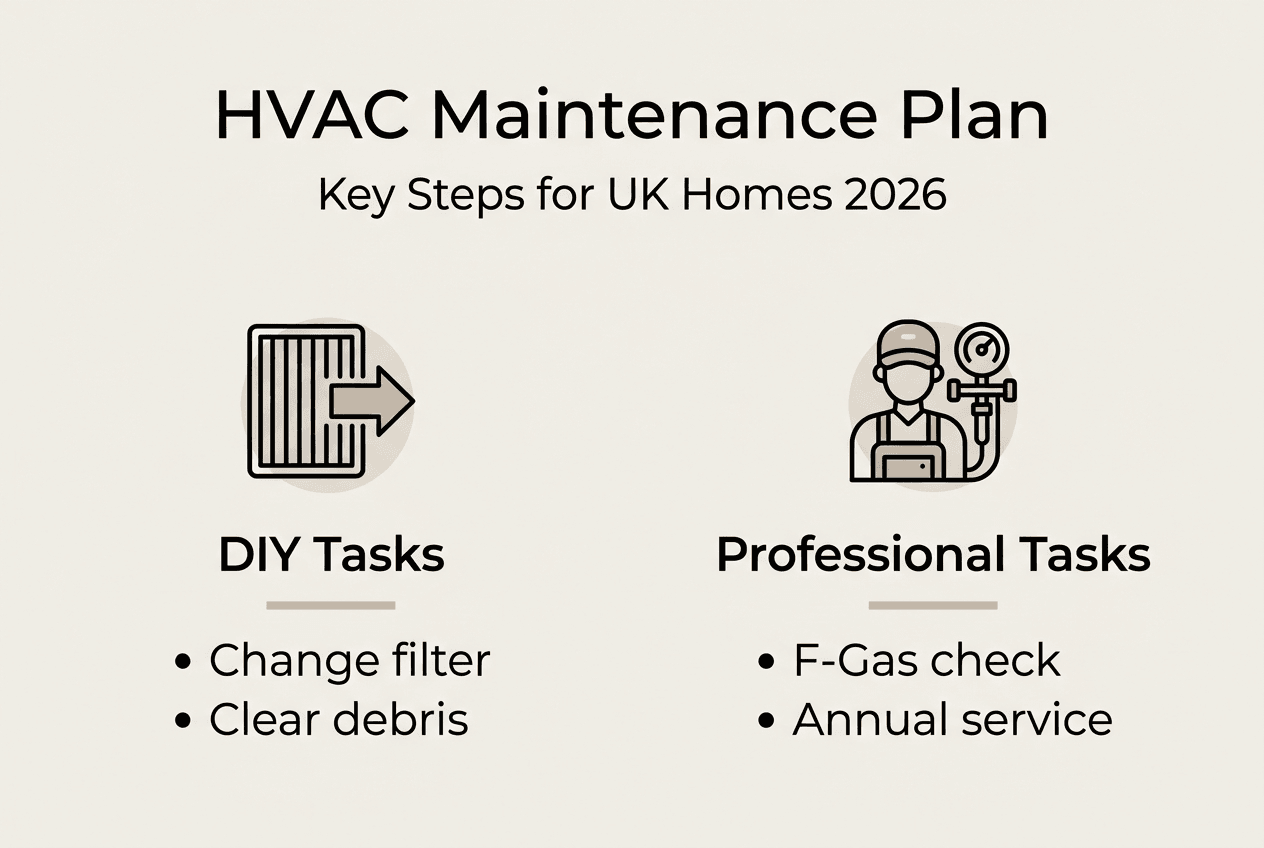
- Monthly: Clean or replace filters, clear outdoor unit debris, check condensate drains
- Quarterly: Inspect visible ductwork for leaks, verify thermostat accuracy, listen for unusual noises
- Annual: Professional refrigerant checks, electrical connection testing, coil cleaning, damper adjustments
Homeowners can safely handle filter maintenance and basic cleaning, but refrigerant work requires F-Gas certified engineers. Attempting DIY refrigerant tasks isn’t just illegal, it’s dangerous and voids warranties. Similarly, electrical inspections need qualified technicians to prevent fire hazards and ensure system safety.
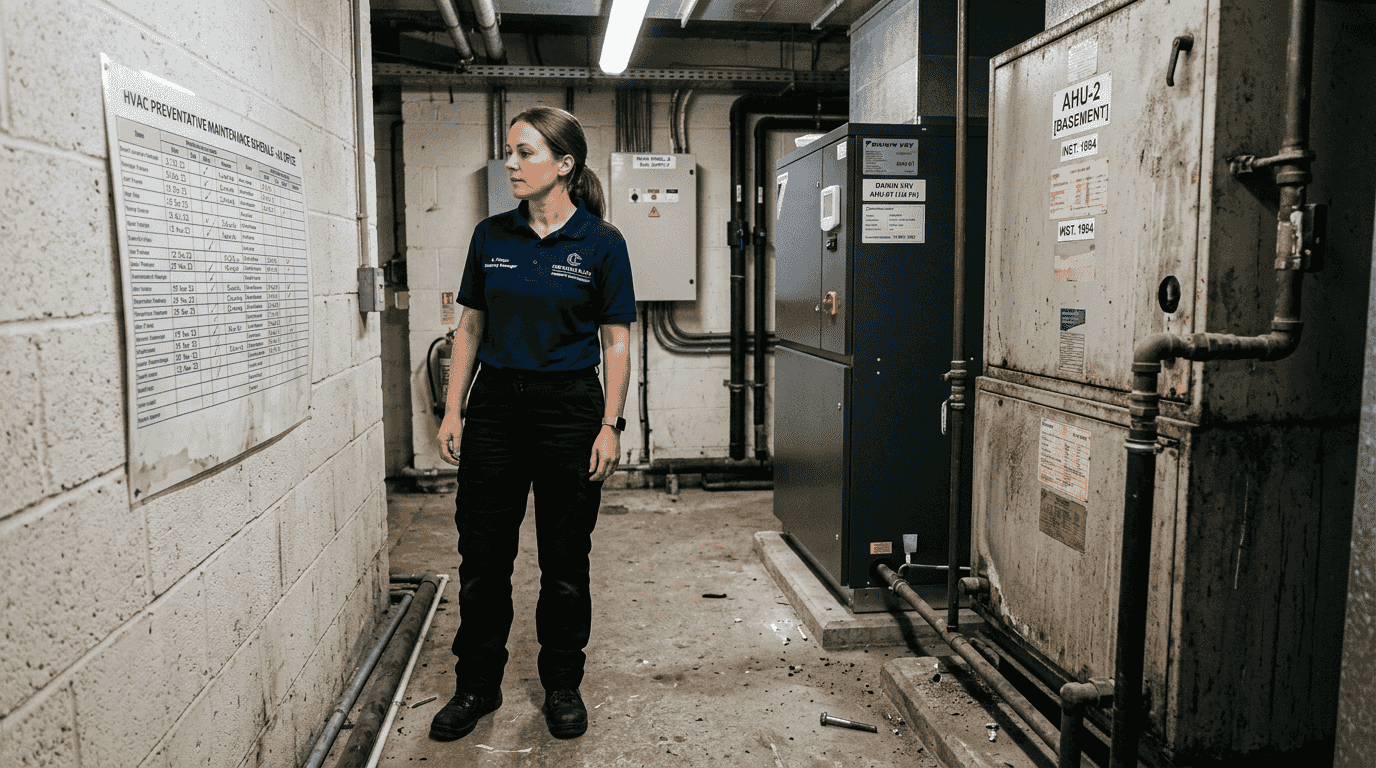
Pro Tip: Create a residential HVAC maintenance checklist specific to your system type and post it near your unit as a visual reminder.
System age and property type dramatically affect maintenance frequency. A five-year-old split system in a standard three-bedroom house needs less attention than a fifteen-year-old ducted system in a commercial office. Properties with pets require monthly filter changes instead of quarterly because fur and dander clog filters faster. High-pollen areas during spring and summer also demand more frequent filter maintenance.
| Property type | Filter frequency | Professional service |
|---|---|---|
| Standard residential | Every 2-3 months | Annually |
| Homes with pets | Monthly | Annually |
| Light commercial | Monthly | Bi-annually |
| Heavy commercial | Fortnightly | Quarterly |
Tailoring your plan prevents both under-maintenance and wasteful over-servicing. Review your system’s manual for manufacturer recommendations, then adjust based on actual usage patterns and environmental factors. Coastal properties face salt corrosion requiring more frequent outdoor unit cleaning, whilst urban locations deal with higher particulate pollution affecting filters.
Investing in regular HVAC maintenance pays dividends through lower energy bills, fewer emergency repairs, and extended equipment lifespan. The initial time and cost investment quickly returns through reliable performance and peace of mind.
Step-by-step guide to executing your HVAC maintenance plan
Executing your maintenance plan systematically ensures nothing gets overlooked. Breaking tasks into monthly, quarterly, and annual schedules makes the workload manageable and maintains consistent system performance.
Monthly maintenance routine
- Inspect and clean or replace air filters depending on type and condition
- Check condensate drain pans and pipes for blockages or standing water
- Clear leaves, grass clippings, and debris from outdoor unit surroundings
- Verify thermostat displays correct temperature and responds to adjustments
- Listen for unusual sounds like grinding, squealing, or rattling during operation
These tasks take 15-20 minutes and prevent 80% of common HVAC problems. Dirty filters alone reduce efficiency by up to 15%, forcing your system to work harder and consume more electricity. Setting a monthly calendar reminder ensures you never skip this crucial step.
Pro Tip: Take photos of your outdoor unit monthly to track debris accumulation patterns and identify the best times for thorough cleaning.
Quarterly inspection checklist
- Examine visible ductwork for gaps, disconnections, or damage
- Test all vents and registers to ensure unobstructed airflow
- Inspect insulation on refrigerant lines for deterioration
- Check outdoor unit for rust, corrosion, or physical damage
- Verify electrical connections are tight and free from corrosion
Quarterly checks catch developing issues before they become emergencies. A small duct leak wastes conditioned air and increases energy consumption, whilst corroded electrical connections create fire risks. These inspections complement your monthly tasks by examining components that change more slowly.
Refer to an air conditioner maintenance checklist tailored for UK homes to ensure you’re covering all critical points. Regional climate variations mean coastal properties need different attention than inland locations.
Annual professional servicing
Schedule comprehensive professional maintenance every spring before cooling season begins. Starting with a preventive schedule of annual professional servicing alongside your DIY tasks creates a robust maintenance programme. Technicians will:
- Measure refrigerant charge and check for leaks using specialised equipment
- Clean evaporator and condenser coils thoroughly
- Test electrical components including capacitors and contactors
- Calibrate thermostats and verify control sequences
- Inspect and adjust dampers for optimal airflow distribution
- Lubricate motors and check belt tension where applicable
Professional servicing costs £80-150 for residential systems but prevents repairs costing hundreds or thousands. Many providers offer maintenance contracts bundling annual service with priority emergency callouts and discounted repairs.
Special circumstances require adjusted schedules. Homes with multiple pets need monthly filter changes year-round, not quarterly. Allergy sufferers benefit from adding air purifiers and increasing filter maintenance frequency. Commercial properties with constant occupancy may need bi-annual professional servicing to maintain performance and comply with warranty terms.
Following HVAC servicing best practices ensures your system delivers reliable comfort whilst minimising running costs. Documentation proves essential for tracking maintenance history and demonstrating compliance during inspections or warranty claims.
Troubleshooting common HVAC maintenance challenges
Even with diligent planning, you’ll encounter obstacles. Recognising common mistakes and knowing how to address them keeps your maintenance plan on track.
The biggest error homeowners make is neglecting filter maintenance. A clogged filter forces your system to work exponentially harder, increasing energy consumption and stressing components. Set phone reminders or use smart home systems to automate alerts. Missing just three months of filter changes can reduce efficiency by 15-25%, erasing any energy savings from your maintenance efforts.
Refrigerant leaks present another frequent challenge. Small leaks gradually reduce cooling capacity whilst increasing energy consumption. You might notice ice forming on refrigerant lines, reduced cooling performance, or hissing sounds near the outdoor unit. Never attempt DIY refrigerant repairs. Only F-Gas certified engineers can legally handle refrigerants in the UK. Ignoring leaks damages your compressor, the most expensive component to replace.
Warning signs requiring immediate professional attention
- Refrigerant lines covered in ice or frost
- Water pooling around indoor or outdoor units
- Burning smells or visible smoke
- Circuit breakers tripping repeatedly
- System cycling on and off every few minutes
Documentation failures create problems during compliance audits or warranty claims. Keep detailed records of every maintenance task, including dates, work performed, and any parts replaced. Photograph filter conditions before and after cleaning to demonstrate maintenance frequency. This evidence proves invaluable when claiming under warranty or applying for energy efficiency grants.
Aging systems and banned refrigerants create unique challenges. Older systems or those using banned refrigerants need upgrades or frequent checks to maintain performance as F-Gas regulations phase out high global warming potential refrigerants like R410A. If your system uses R410A or older refrigerants, plan for eventual replacement rather than investing heavily in repairs.
Oversized systems cycle on and off frequently, never running long enough to dehumidify properly. This creates comfort problems and increases wear on components. Undersized systems run continuously without achieving target temperatures. Both scenarios waste energy and shorten equipment lifespan. If your system seems incorrectly sized, consult professionals about replacement options.
Smart thermostats sometimes create confusion when their learning algorithms conflict with manual adjustments. Understanding your thermostat’s features prevents fighting with automation. Most allow you to disable learning modes if you prefer manual control. Airflow issues often stem from closed vents in unused rooms, a common mistake that unbalances your system and reduces efficiency.
“Systems without maintenance can lose 5-25% efficiency annually, with dirty filters alone reducing efficiency by up to 15%, making regular HVAC maintenance essential for cost control.”
Preventive maintenance dramatically reduces breakdown frequency. Well-maintained systems experience 95% fewer emergency failures than neglected ones. The time invested in routine maintenance returns through reliable operation and lower total ownership costs.
Measuring success and maintaining your HVAC plan long-term
Tracking performance metrics transforms your maintenance plan from a task list into a strategic asset. Measuring success helps you refine your approach and demonstrate the value of your efforts.
Monitor three key performance indicators monthly: energy consumption, system runtime, and indoor temperature stability. Compare your electricity bills year over year, accounting for weather variations. A well-maintained system should show stable or decreasing energy usage despite similar weather patterns. Sudden spikes indicate developing problems requiring investigation.
System runtime data reveals efficiency trends. Modern systems cycle appropriately to maintain temperature whilst dehumidifying. Excessive cycling or continuous runtime suggests sizing issues, refrigerant problems, or failing components. Smart thermostats track runtime automatically, generating reports showing daily and monthly patterns.
Temperature stability matters more than absolute temperature. Your system should maintain setpoint within one degree consistently. Wide temperature swings indicate airflow restrictions, refrigerant issues, or failing controls. Document any comfort complaints from occupants as these often precede measurable system failures.
Documentation methods and tools
- Physical logbook kept near the system for quick task recording
- Spreadsheet tracking dates, tasks, costs, and observations
- CMMS software automating reminders and generating compliance reports
- Mobile apps designed specifically for HVAC maintenance scheduling
- Cloud storage for photos, receipts, and professional service reports
Digital documentation offers advantages for multi-property managers or commercial applications. CMMS platforms send automatic reminders, track multiple systems simultaneously, and generate audit-ready reports instantly. For single-property homeowners, a simple spreadsheet or dedicated notebook works perfectly well.
Compliance documentation proves essential for F-Gas and TM44 inspections. Maintaining records is crucial for compliance, warranties, and grant applications like the Boiler Upgrade Scheme. Inspectors need evidence of leak checks, refrigerant quantities, and maintenance frequency. Missing documentation can result in fines or failed inspections.
| Monitoring tool | Best for | Key features | Typical cost |
|---|---|---|---|
| Physical logbook | Single properties | Simple, always accessible | £5-15 |
| Spreadsheet | 1-5 properties | Customisable, free software | Free |
| CMMS software | 5+ properties | Automated, comprehensive | £20-100/month |
| Smart thermostat | Any property | Real-time data, remote access | £150-300 one-time |
Pro Tip: Photograph your system’s data plate showing model and serial numbers, then store the image with your maintenance records for quick reference during service calls.
Regular maintenance saves 15-30% energy and extends system lifespan up to 15 years, making documentation efforts worthwhile for tracking these substantial benefits. Calculate your annual energy savings by comparing bills before and after implementing your maintenance plan. This quantifies the return on your time and money investment.
Review your maintenance plan annually to identify improvement opportunities. Are certain tasks taking longer than expected? Do specific seasons create recurring problems? Adjust task frequency and timing based on actual experience rather than generic recommendations. Your plan should evolve as you learn your system’s unique characteristics.
Exploring comprehensive HVAC maintenance plan benefits helps justify the ongoing commitment required. Beyond energy savings, proper maintenance preserves property value, ensures occupant comfort, and provides peace of mind through reliable operation. Following a detailed UK AC maintenance guide keeps your approach current with evolving best practices and regulatory requirements.
Long-term success requires consistency more than perfection. Missing occasional tasks happens, but returning to your schedule quickly prevents minor lapses from becoming major problems. The compound benefits of sustained maintenance far exceed sporadic intensive efforts.
Explore Akita AC’s expert air conditioning services
Building your own maintenance plan demonstrates commitment to system longevity and efficiency. However, professional expertise ensures nothing gets overlooked and complex tasks receive proper attention. Akita Air Conditioning specialises in comprehensive domestic air conditioning services and commercial air conditioning services throughout Suffolk, Norfolk, and Essex.
Our maintenance programmes combine your DIY efforts with professional servicing scheduled at optimal intervals. We tailor plans to your property type, system age, and usage patterns, ensuring you receive exactly the support you need without paying for unnecessary services. F-Gas certified engineers handle all refrigerant work safely and legally, whilst our transparent pricing eliminates surprise costs. Whether you need installation, routine maintenance, or emergency repairs, our team delivers reliable solutions backed by comprehensive warranties. Residents across East Anglia trust Akita for expert climate control that prioritises energy efficiency and long-term performance.
Frequently asked questions
How often should I schedule professional HVAC servicing?
Annual professional servicing suits most residential properties, ideally scheduled in spring before cooling season begins. Homes with pets, allergy sufferers, or heavy system usage benefit from bi-annual servicing to maintain optimal performance. Commercial properties typically need quarterly or bi-annual servicing depending on occupancy levels and operating hours. Your system’s age and manufacturer warranty requirements may specify more frequent professional attention.
What are the key UK regulations affecting HVAC maintenance?
F-Gas leak checks and TM44 energy inspections apply to commercial and landlord properties with systems containing significant refrigerant quantities or exceeding 12kW cooling capacity. Leak check frequency depends on refrigerant charge, ranging from annual to every three years. TM44 inspections occur every five years for qualifying systems. Residential homeowners face no mandatory servicing requirements but should maintain systems to preserve efficiency and warranty coverage. Refrigerant handling requires F-Gas certification regardless of property type.
Can I perform HVAC maintenance myself as a homeowner?
Homeowners can safely clean or replace filters monthly and clear outdoor debris without professional help. Visual inspections of ductwork, vents, and visible components fall within DIY capabilities. However, refrigerant checks, electrical testing, and internal component cleaning require professional expertise and certification. Attempting DIY refrigerant work violates UK law and voids warranties. Balancing DIY tasks with annual professional servicing provides comprehensive maintenance whilst controlling costs.
How does regular HVAC maintenance improve energy efficiency?
Regular maintenance saves 15-30% on energy by maintaining clean filters, optimal refrigerant charge, and properly functioning components. Dirty filters force systems to work harder, increasing electricity consumption by up to 15%. Refrigerant leaks reduce cooling capacity whilst increasing compressor runtime. Clean coils transfer heat efficiently, reducing the energy needed to achieve target temperatures. Proper maintenance ensures your system operates at designed efficiency rather than degrading over time.