

Air conditioning noise levels explained for UK homeowners
TL;DR:
- Most residential air conditioners vary in noise level from 19 to 65 decibels, affecting comfort and sleep quality.
- Choosing a quieter unit, such as a split system, and proper installation can significantly reduce indoor noise disturbances.
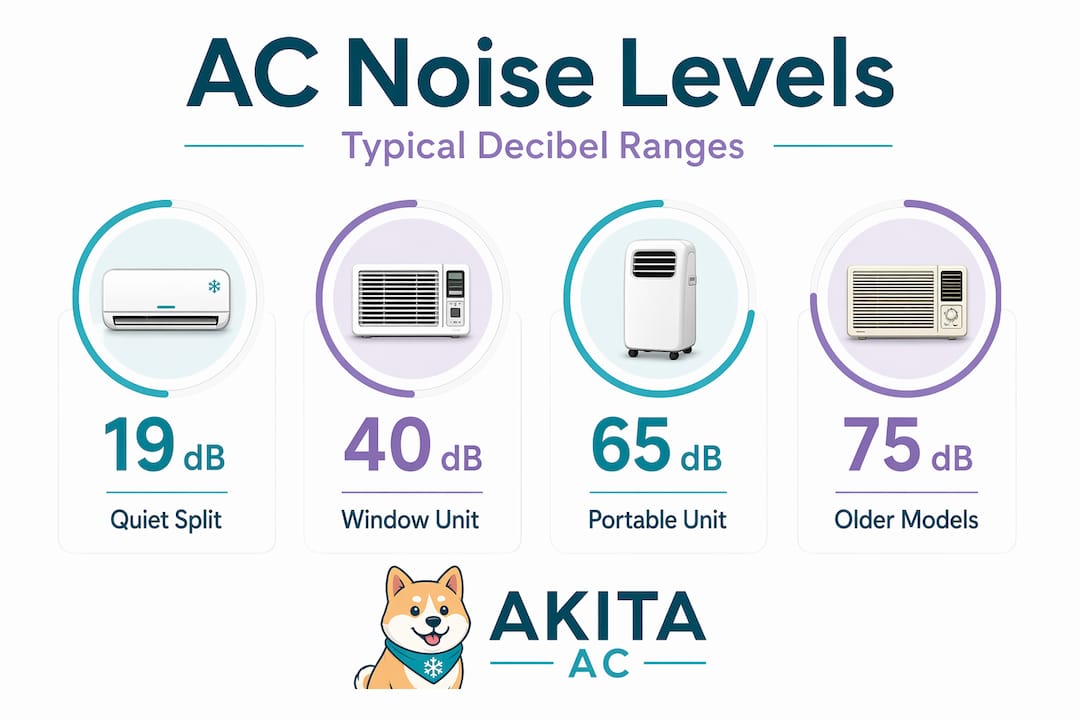
Most homeowners shopping for an air conditioner focus on cooling capacity and running costs, then get a nasty surprise when the unit arrives and turns out to be louder than expected. Here is the short version: split system indoor units operate as quietly as 19 dB, window units typically produce moderate noise levels suitable for most living spaces, and portable units can be noticeably louder, often reaching levels that are more intrusive indoors. A reading of 52 dB sits in the moderate range, roughly equivalent to gentle rainfall or a quiet conversation, and most people find it perfectly liveable in a lounge or kitchen.
What those numbers actually mean in practice depends on where the unit sits, what time of day it runs, and how sensitive you are to background sound. The explanation of noise levels in air conditioning is not complicated once you understand the decibel scale, and that understanding changes how you shop, where you install, and what you can do when a unit turns out louder than the spec sheet promised.
Common AC noise levels at a glance:
- Split system indoor unit: 19–45 dB (quietest option for bedrooms and offices)
- Window unit: 42–55 dB (acceptable for most living spaces)
- Portable unit: 45–65 dB (loudest, because the compressor sits inside the room)
- Central AC indoor unit: 35–55 dB (similar to a quiet office)
How decibels measure air conditioning sound
Sound intensity is measured in decibels (dB), and the scale is logarithmic rather than linear. A 10 dB increase corresponds to a tenfold rise in sound intensity, though your ear only perceives it as roughly twice as loud. That gap between physical intensity and perceived loudness is why the numbers can feel counterintuitive.
A 10 dB increase sounds twice as loud to the human ear, even though the actual sound intensity has increased tenfold. This is why moving from a 45 dB refrigerator hum to a 65 dB air conditioner feels far more dramatic than a 20-point jump might suggest.
To put the scale in everyday terms:
- 0 dB: near total silence
- 30 dB: a whisper or rustling leaves
- 40 dB: a quiet library or a running refrigerator
- 60 dB: a normal conversation
- 70 dB: a vacuum cleaner or city traffic heard indoors
- 90 dB: a lawnmower
Most residential air conditioners have noise levels that vary depending on type, age, and settings. The dBA weighting (A-weighted decibels) is the more accurate measure of perceived loudness, and most manufacturers use it on spec sheets, though dB and dBA are often treated as interchangeable for consumer products.
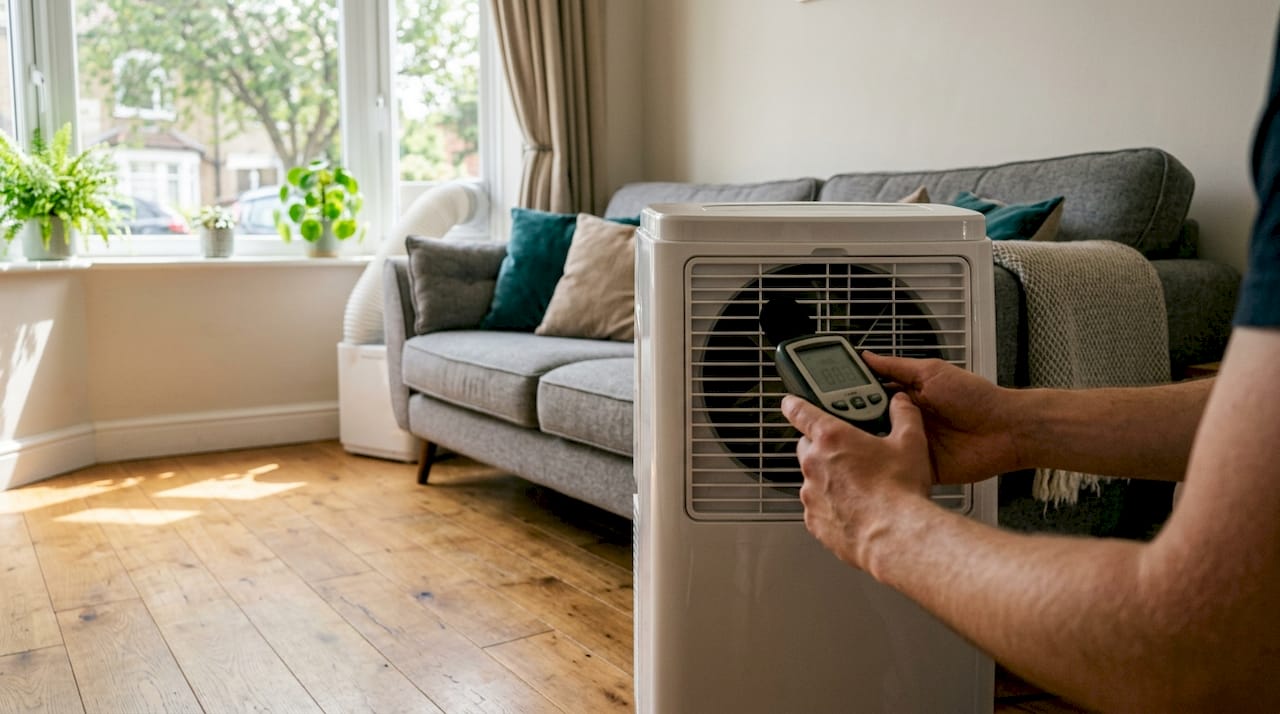
Typical noise levels by AC type and what affects them
The type of unit you choose is the single biggest factor in how much noise you will live with day to day. Split systems keep the compressor outside, which is why their indoor units can operate as quietly as 19 dB. Portable units put the compressor in the same room as you, which is why they are almost always the loudest option.
| AC type | Typical indoor noise range | Notes |
|---|---|---|
| Split systems have some of the lowest indoor noise levels among air conditioners | Quietest option; compressor is outdoors | |
| Window units produce moderate indoor noise levels, depending on model and installation | Noise varies with model and installation quality | |
| Central AC indoor units operate at modest noise levels similar to a quiet office | Similar to a quiet office at the low end | |
| Portable ACs generally have higher noise due to the indoor compressor | Compressor inside the room; loudest type |
Beyond unit type, several factors push noise up or down:
- Fan speed: Higher speeds move more air but generate noticeably more sound. A unit rated at 52 dB on its lowest setting can climb several decibels at full power.
- Compressor technology: Inverter compressors vary their speed to match demand rather than cycling on and off at full power, which keeps noise levels lower and more consistent.
- Installation quality: A unit mounted on a vibrating bracket or an ill-fitting window frame will rattle and hum far louder than the spec sheet suggests. Proper fitting on anti-vibration pads makes a measurable difference.
- Age and maintenance: Dirty filters, worn bearings, and loose panels all add noise over time. A unit that was quiet when new can become noticeably louder after a few years without servicing.
- Unit placement: Proximity to the listener amplifies perceived noise. A split system positioned high on a wall at the far end of a room will feel quieter than the same unit mounted directly above a sofa.
Pro Tip: Always check the spec sheet for separate dB ratings at low, medium, and high fan speeds. The headline figure is almost always the low-speed reading under lab conditions. Real-world noise at high speed or in a warm summer can be several decibels higher than advertised.
UK regulations on air conditioning noise: what you need to know
The UK does not have a single statute that sets a universal decibel limit for domestic air conditioning, but several overlapping frameworks govern what is acceptable. The Environmental Protection Act 1990 and the Noise Act 1996 give local authorities the power to act on noise that constitutes a statutory nuisance, which includes persistent sound from HVAC equipment that unreasonably interferes with a neighbour’s use of their property.
UK guidance generally recommends that indoor air conditioning noise should not exceed 40–50 dB in bedrooms at night and 50–60 dB in living areas during the day. These are not hard statutory limits for the unit itself, but they reflect the thresholds at which noise becomes a nuisance under environmental health law.
Key points for homeowners and installers:
- Outdoor units are the most common source of neighbour complaints. Placing a compressor unit directly beneath a neighbour’s bedroom window is a planning and noise risk.
- Permitted development rights for domestic AC installations in England require that outdoor units do not exceed certain noise levels at the boundary of the property. Your local planning authority can confirm the applicable limits.
- Night-time hours (typically 11 PM to 7 AM) attract stricter enforcement. Local authorities can issue noise abatement notices if a unit consistently disturbs neighbours during these hours.
- Commercial installations face more formal requirements under the Health and Safety at Work Act and relevant British Standards, including BS 8233, which sets design targets for indoor ambient noise.
Choosing a quiet AC installation from the outset is far simpler than retrofitting noise controls after a complaint. A well-sited, properly installed split system will almost always stay within acceptable limits without any additional treatment.
How to reduce and manage air conditioner noise
Reducing AC noise is rarely about buying a new unit. Most of the time, a combination of better placement, basic maintenance, and a few inexpensive additions brings noise down to a comfortable level.
- Use anti-vibration mounts: Rubber isolation pads under outdoor compressor units absorb vibration before it travels through the wall or floor. They are inexpensive and make a noticeable difference.
- Add a sound blanket to the compressor: Some higher-end units include a factory-fitted insulating wrap around the compressor. Aftermarket blankets are available for older units and can reduce compressor noise by several decibels.
- Service the unit annually: Clean filters, lubricated bearings, and tightened panels all reduce operational noise. An annual service also catches loose components before they become rattles.
- Choose the right fan speed: Running the unit on a lower speed setting during quiet hours keeps noise down without sacrificing much cooling performance in a well-insulated room.
- Position outdoor units carefully: Walls and fences can act as sound barriers. Placing the compressor in a corner where two walls meet, or behind a dense hedge, reduces the noise that reaches neighbours and open windows.
- Consider duct insulation for central systems: Airflow noise in ductwork is a common complaint with central AC. Wrapping ducts in acoustic insulation and ensuring they are correctly sized for the system’s output reduces this significantly.
- Upgrade to an inverter model: If your unit is old and noisy, the technology gap between a fixed-speed compressor from ten years ago and a modern inverter unit is substantial. Some current models operate as low as 19 dB on their lowest setting.
For bedroom installations specifically, a quiet bedroom AC setup makes a genuine difference to sleep quality. The goal is to keep the indoor unit below 40 dB at night, which modern split systems achieve comfortably on their lowest fan setting.
Ventilation noise in adjacent rooms is worth considering too. If you are also managing bathroom or washroom airflow, ventilation fan noise levels follow similar principles to AC units and respond to the same installation and maintenance approaches.
How AC noise affects your comfort and health at home
Noise from an air conditioner is not just an annoyance. At sustained levels, it affects how well you sleep, how easily you concentrate, and how relaxed you feel in your own home.
Sleep experts recommend bedroom noise levels below 45 dB for restful sleep. Consistent exposure to noise above 70 dB indoors can disrupt concentration and contribute to stress, though typical AC noise sits well below the threshold for physical hearing damage.
The effects vary considerably from person to person. Light sleepers may find a 45 dB unit intrusive at 2 AM even though the same sound would be unnoticeable during the day. Children and older adults tend to be more sensitive to background noise, which is worth factoring in when choosing a unit for a family home.
A few practical considerations:
- Daytime versus night-time sensitivity: The same unit will feel louder at night because ambient background noise drops. A lounge unit running at 50 dB during the day may feel uncomfortably loud in a silent bedroom at midnight.
- Frequency matters as well as volume: A low-frequency hum from a compressor can be more intrusive than a higher-pitched fan noise at the same decibel level, because low frequencies travel through walls more easily.
- Balancing cooling and quiet: Running a unit on a lower fan speed reduces noise but also reduces airflow. In a well-insulated room, this trade-off is usually acceptable. In a poorly insulated space, you may need to accept more noise to achieve adequate cooling.
Upgrading to a modern, energy-efficient unit often resolves noise problems at the same time as cutting running costs. The two goals align more often than not, because the same inverter technology that reduces noise also reduces energy consumption by matching output to demand rather than cycling at full power.
Key takeaways
Air conditioning noise levels typically range from 19 dB in the quietest split systems to 65 dB in portable units, with 52 dB representing a moderate level that most homeowners find acceptable in living areas but potentially disruptive in bedrooms at night.
| Point | Details |
|---|---|
| Decibel scale is logarithmic | A 10 dB increase sounds twice as loud to the ear, though sound intensity rises tenfold. |
| Quietest AC type | Split system indoor units operate from 19–45 dB, making them the best choice for bedrooms. |
| UK night-time guidance | Indoor bedroom noise should stay below 40–50 dB at night to avoid statutory nuisance issues. |
| Lab ratings understate real noise | Manufacturer dB figures are measured at low fan speed; real-world use is often louder. |
| Inverter technology helps most | Modern inverter compressors reduce noise and energy use simultaneously. |
Ready for a quieter home?

Akita installs modern, low-noise air conditioning systems across Suffolk, Norfolk, and Essex, with transparent fixed pricing and no hidden costs. Whether you are replacing a noisy old unit or fitting AC for the first time, Akita’s team will recommend the right system for your space and budget.
Explore domestic AC installation options, or get a fixed-price quote for a single-room split system that operates quietly enough for a bedroom. Akita also covers East Anglia installations across the region.