

Why is my air conditioner leaking water? Causes and fixes
TL;DR:
- Most air conditioner leaks are caused by clogged drain pipes or dirty filters.
- Regular maintenance and cleaning can prevent most leaks and prolong system life.
- Complex leaks involving refrigerant or electrical issues require professional repair and cannot be DIY fixed.
Why is my air conditioner leaking water? Causes and fixes
A puddle of water beneath your air conditioning unit is enough to send most homeowners into a panic. The good news is that a leaking air conditioner is one of the most common issues reported by UK residents, and in the majority of cases, the cause is something straightforward and entirely manageable. Whether you rent or own your home, understanding why it happens and what to do next can save you time, money, and a great deal of stress. This guide walks you through the most likely causes, practical fixes you can try safely at home, and the warning signs that mean it is time to call in a professional.
Table of Contents
- Main reasons your air conditioner is leaking water
- How to troubleshoot and fix basic air conditioner leaks
- When to call a professional for an air conditioner leak
- Preventing air conditioner leaks with regular maintenance
- The reality most homeowners miss about AC leaks
- Get expert help with air conditioning leaks
- Frequently asked questions
Key Takeaways
| Point | Details |
|---|---|
| Blocked drains common cause | Most air conditioner leaks are due to clogged drain pipes or dirty filters. |
| DIY for minor issues | Many leaks can be resolved at home with basic troubleshooting and cleaning steps. |
| Call professionals for major faults | If leaks persist or involve electrical or refrigerant issues, expert help is safest. |
| Prevention is key | Routine maintenance prevents most leaks and extends your AC’s lifespan. |
Main reasons your air conditioner is leaking water
Now that we have set realistic expectations about air conditioner leaks, let us look at the most likely reasons behind them. Water leaking from your unit is not random. It follows a pattern, and once you understand why condensation forms and where it should go, identifying the culprit becomes much easier.
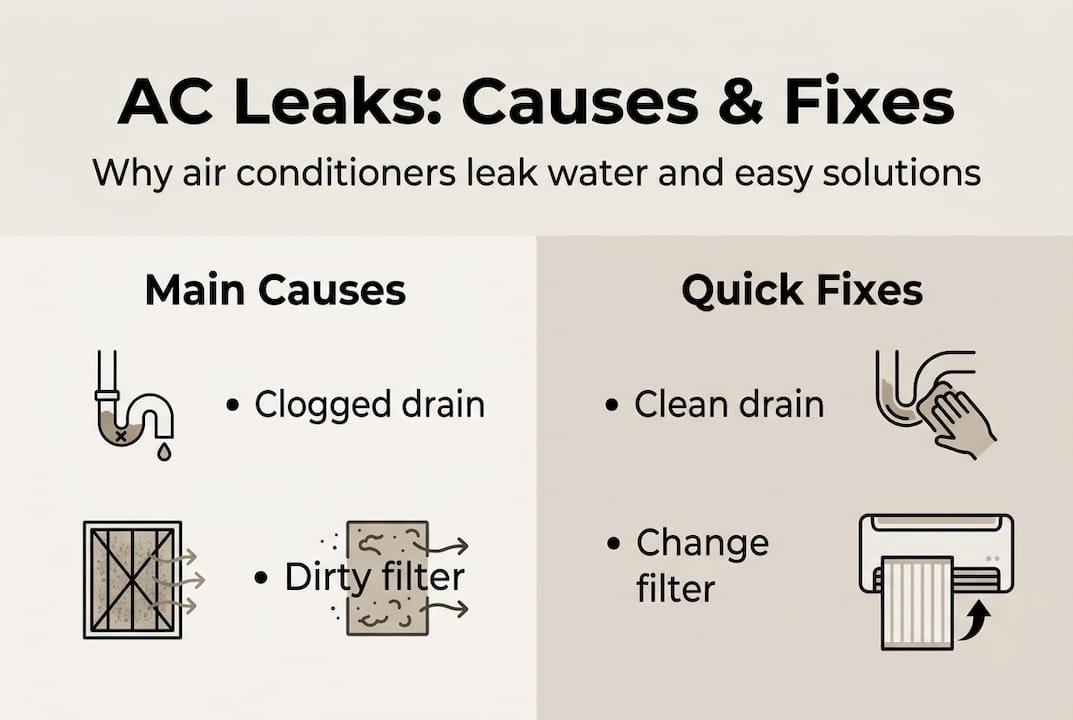
Air conditioning units naturally produce water as a by-product of cooling the air. Warm, humid air passes over cold evaporator coils, moisture condenses, and that water is supposed to drain away through a condensate drain pipe. When something interrupts that process, the water has nowhere to go except onto your floor or wall.
Clogged drain pipes and blocked air filters are leading sources of AC water leaks, and they account for the vast majority of cases seen in residential properties. Here are the most common culprits:
- Blocked condensate drain pipe: Algae, dust, and debris build up inside the drain pipe over time, creating a blockage. When water cannot drain freely, it backs up into the unit and spills out. This is particularly common in summer when the system works hardest.
- Dirty or clogged air filter: When an air filter becomes heavily soiled, airflow over the evaporator coils is restricted. The coils get too cold, ice forms on the surface, and when the unit cycles off, that ice melts rapidly and releases more water than the drain tray can handle.
- Low refrigerant levels: Refrigerant is the substance that makes cooling possible. If levels drop due to a leak in the system, the evaporator coils become abnormally cold, ice forms, and the subsequent melt causes water to overflow. This is a less common cause but one that requires professional attention.
- Improper installation: If your unit was installed at an incorrect angle, water will not flow toward the drain correctly. This is often seen in split systems where the indoor unit is not level, causing pooling on one side.
- Damaged or disconnected drain tray: The condensate tray sits beneath the evaporator coils and collects dripping water. Over the years, plastic trays can crack or corrode, and metal ones can rust through, allowing water to escape before it ever reaches the drain pipe.
Pro Tip: If you have a wall-mounted split system and notice water trickling down the wall behind the unit, a disconnected or cracked drain tray is often the cause. Run your hand carefully along the back of the indoor unit to check for moisture in unusual spots.
Understanding the importance of regular HVAC maintenance becomes clear when you realise how many of these causes develop slowly over months of use. None of them appear overnight. They are all the result of gradual wear, accumulation, or neglect that eventually tips over into a visible problem.
How to troubleshoot and fix basic air conditioner leaks
Once you know the most common causes, you can begin troubleshooting simple leaks yourself. The key word here is safely. Before you touch any part of your air conditioning unit, switch it off at the wall and isolate the power. Water and electricity are a dangerous combination, and no DIY fix is worth the risk of working on a live unit.
Here is a step-by-step approach to diagnosing and resolving a basic leak:
- Switch off the unit immediately. Turn it off at the thermostat or controller, then switch it off at the mains. If water has reached any electrical components, do not touch the unit at all and call a professional.
- Locate the indoor unit and inspect the surroundings. Check whether the water is coming from the front, the back, or the bottom of the unit. This gives you a strong first clue about the cause.
- Check the air filter. Remove the front panel of your unit and pull out the filter. If it is visibly grey, clogged with dust, or has not been cleaned in the last three months, this is almost certainly contributing to the problem. Rinse it gently under warm water, allow it to dry fully, and replace it before switching the unit back on.
- Locate the condensate drain pipe. This is usually a small pipe running from the indoor unit to an outside wall or into a drainage point. Check for any visible blockage at the exit point. You can try flushing the pipe with warm water from the indoor end using a small funnel, or use a wet and dry vacuum on the exterior end to draw out the blockage.
- Inspect the drain tray. Once the filter is out, look into the unit and check the condition of the drain tray. If it is full of standing water, the drain is blocked. If you can see cracks or rust, the tray itself needs replacing.
- Check the unit is level. Place a small spirit level on the indoor unit housing. It should sit perfectly horizontal or tilt very slightly toward the drain side. If it is noticeably off-level, the unit will need to be repositioned.
Homeowners can often resolve minor AC leaks with regular cleaning and maintenance, and following a structured AC maintenance checklist makes it far easier to stay on top of these tasks before they become problems.
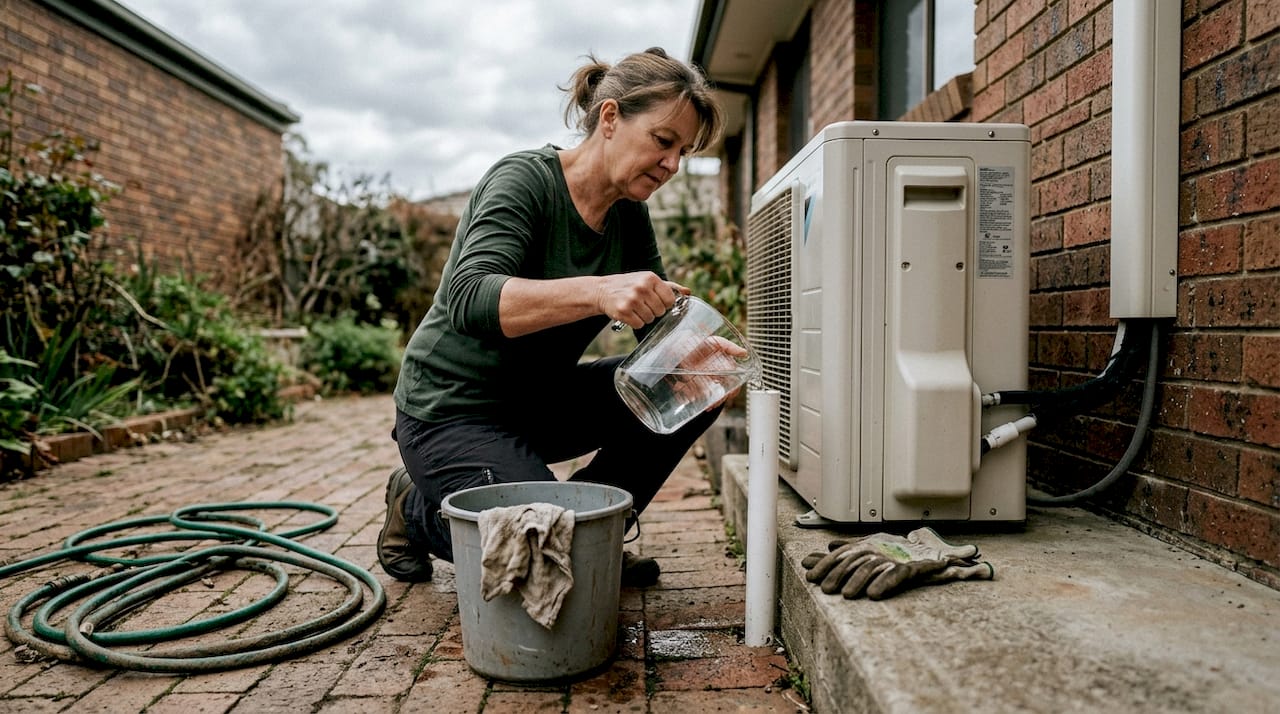
Pro Tip: A simple mixture of white vinegar and warm water poured slowly down the condensate drain pipe once every few months will help prevent algae growth and keep the pipe clear without any specialist tools.
| Quick DIY fix | Signs you need a professional |
|---|---|
| Cleaning or replacing a dirty filter | Ice forming repeatedly despite clean filter |
| Flushing a blocked drain pipe | Burning smell or electrical odour from unit |
| Repositioning a slightly tilted unit | Visible refrigerant oil stains near pipework |
| Emptying and cleaning the drain tray | Water leak near electrical components |
| Checking drain pipe for external blockages | Leak persisting after all DIY steps completed |
When to call a professional for an air conditioner leak
If a minor leak cannot be resolved or you have noticed warning signs, it is crucial to know when expert help is needed. There is a clear line between a clogged drain pipe you can flush yourself and a refrigerant leak that poses genuine health and safety risks. Crossing that line without professional knowledge can make things significantly worse.
Some leaks indicate serious faults requiring expert repair, such as refrigerant loss or electrical hazards, and these should never be approached as DIY projects. The signs that demand immediate professional attention include:
- A burning or electrical smell coming from the unit alongside the leak. This suggests water may have reached wiring or internal components.
- Ice forming on the evaporator coils or refrigerant pipes even after you have cleaned the filter. This points to low refrigerant, which is a sealed system issue requiring an F-Gas certified engineer.
- Oily residue or staining around the pipe connections on your outdoor unit. Refrigerant often carries compressor oil, and this residue is a telltale sign of a refrigerant leak.
- Water appearing near the electrical control box or dripping toward power sockets and switches in the wall.
- A leak that continues after you have completed all standard DIY checks. If you have cleaned the filter, cleared the drain, checked the tray, and confirmed the unit is level but the leak persists, there is likely an internal fault that requires diagnostic equipment to identify.
If you smell burning alongside a water leak, do not attempt any further investigation. Switch off the unit at the mains and contact a qualified engineer. Electrical fires linked to water ingress in HVAC systems develop quickly.
Understanding the AC repair workflow used by professional engineers can help you prepare better for a technician visit. Before the engineer arrives, note down when the leak first appeared, how often the system has been serviced, and any unusual sounds or smells you have noticed. This information helps the engineer diagnose the fault more quickly and reduces call-out time.
| Minor leak issue | Major leak issue |
|---|---|
| Blocked drain pipe | Refrigerant leak causing ice build-up |
| Dirty or clogged filter | Burnt or water-damaged wiring |
| Cracked drain tray | Compressor fault causing pressure issues |
| Slightly tilted unit | Persistent leaks with no identifiable cause |
Preventing air conditioner leaks with regular maintenance
Even when an immediate repair is not needed, the best long-term fix for leaks is preventative care. The vast majority of air conditioner leaks that engineers attend are entirely preventable. They are almost always the result of a unit that has been installed correctly and then simply forgotten about until something goes wrong.
Scheduled HVAC maintenance significantly reduces water leak risks and prolongs unit efficiency, which means fewer emergency call-outs, lower energy bills, and a longer working life for your system. The core tasks that prevent leaks from occurring are straightforward and do not require specialist knowledge to carry out regularly:
- Clean or replace the air filter every one to three months, depending on how often you run the system and whether you have pets or live in a dusty environment. A clean filter maintains airflow over the coils and eliminates one of the most common causes of icing and overflow.
- Flush the condensate drain pipe at least once a year, ideally before the summer season begins when demand on the system peaks. Use warm water or a diluted vinegar solution to keep algae and debris from building up.
- Inspect the drain tray for cracks, rust, or standing water during each filter clean. Catching a small crack early costs very little to fix. Waiting until the tray fails completely can cause water damage to ceilings, walls, and flooring.
- Book an annual professional service. A qualified engineer will check refrigerant levels, inspect electrical connections, clean internal components that are not accessible from the outside, and verify that the unit is draining correctly. This is also a requirement under many tenancy agreements in the UK, where landlords are legally obligated to maintain climate control systems in good working order.
- Keep the outdoor unit clear of debris. Leaves, dirt, and plant matter around the external unit can restrict airflow and contribute to internal pressure changes that affect how well the system manages condensate.
Following energy-saving maintenance steps as part of your routine does more than just prevent leaks. It keeps your unit running at peak efficiency, which directly reduces your electricity consumption. Studies on HVAC maintenance for UK homes consistently show that well-maintained systems use significantly less energy than neglected ones running under strain.
For homeowners who want a structured approach, the maintenance plan benefits of signing up with a professional service are substantial. Regular scheduled visits mean problems are caught early, parts are replaced proactively, and you avoid the cost and inconvenience of unexpected breakdowns. The benefits of regular HVAC care extend well beyond leak prevention and include better air quality, quieter operation, and significantly extended system lifespan.
The reality most homeowners miss about AC leaks
Here is what most guides about AC leaks do not tell you: the panic response is often the most expensive part of the whole ordeal. When homeowners see water on the floor, they either ignore it hoping it will resolve itself, or they immediately call for an emergency repair. Both responses tend to cost more than they should.
In our experience, the overwhelming majority of leaks come down to one thing: the system has been running without any meaningful maintenance for two or more years. A blocked drain, a saturated filter, an overlooked crack in a plastic tray. These are not failures. They are the entirely predictable consequences of normal use without routine care.
The troubleshooting guide for a non-cooling AC tells a very similar story. The systems that fail most often are the ones that nobody services. The ones that keep running year after year with minimal fuss are almost always on a regular maintenance schedule.
Simple, scheduled attention is genuinely all it takes to keep most units dry and efficient for a decade or more. Stop waiting for a leak to force your hand.
Get expert help with air conditioning leaks
Sometimes a leak goes beyond what a clean filter or a cleared drain pipe can fix, and that is completely normal. Persistent or complex leaks involving refrigerant, electrical components, or significant internal damage need qualified hands.
At Akita Air Conditioning, we provide professional air conditioning repair and servicing across Suffolk, Norfolk, and Essex. Whether you need a one-off diagnostic visit or a long-term maintenance plan to keep your system running cleanly, our team of qualified engineers is ready to help. We offer transparent pricing, no-surprise quotes, and expert advice you can trust. Do not let a small leak become a costly repair. Get in touch with Akita today and we will have your system back in perfect working order.
Frequently asked questions
Is it safe to use my air conditioner if it is leaking water?
It is best to switch off your air conditioner if water is leaking, as continuing to use it can worsen the issue or create electrical risks. Always isolate the power before inspecting the unit.
How often should air conditioner drain pipes be cleaned?
Ideally, clean drain pipes at least once a year to prevent blockages and leaks. Annual maintenance greatly reduces water leak risks and keeps the system running efficiently.
Can a leaking air conditioner damage my walls or floors?
Yes, persistent leaks may cause significant damage to walls, floors, or ceilings over time if not addressed quickly. Even a slow drip can lead to damp, mould, and structural deterioration.
Does home insurance cover air conditioner leaks?
Insurance may cover water damage caused by leaks but usually not the repair of the AC unit itself. Always check your specific policy, as cover varies considerably between providers.
Are air conditioner leaks more common in older systems?
Leaks are generally more frequent in older or poorly maintained air conditioning units, as components wear, seals degrade, and drain trays corrode over time.