

Solving air conditioner blowing warm air: UK guide
TL;DR:
- Common causes of warm air include dirty filters, incorrect thermostat settings, refrigerant leaks, and obstructions outside.
- DIY fixes include cleaning filters, checking thermostat modes, and clearing outdoor units; refrigerant and electrical issues require professionals.
- Regular maintenance prevents faults, improves efficiency, reduces costs, and ensures reliable cooling throughout the summer.
You switch on your air conditioning on one of the warmest days of the year, expecting that familiar rush of cool air, and instead get a blast of warmth. It is baffling, irritating, and surprisingly common for UK homeowners. While British summers are unpredictable, your air conditioning system absolutely should not be. The good news is that most causes behind an AC unit blowing warm air are fixable, some even without calling a professional. This guide walks you through the key reasons it happens, how to diagnose the fault yourself, and exactly when to hand it over to an expert.
Table of Contents
- Why is your air conditioner blowing warm air?
- Diagnosing common issues at home
- Main fixes for an air conditioner blowing warm air
- When to get professional help
- Why regular maintenance is the unsung hero for cool air reliability
- Restore home comfort with expert air conditioning solutions
- Frequently asked questions
Key Takeaways
| Point | Details |
|---|---|
| Check filters first | Most warm air problems are due to blockages or neglected air filters. |
| DIY fixes only go so far | If problems persist after basic steps, seek professional help to avoid bigger issues. |
| Annual maintenance prevents most faults | Scheduling yearly checks keeps your AC reliable and your home comfortable. |
| Correct installation matters | A system professionally installed and maintained provides long-term reliable cooling. |
Why is your air conditioner blowing warm air?
When your air conditioning unit stops cooling properly, the cause is rarely dramatic. In most cases, it comes down to one of a handful of common faults that affect systems across the UK every summer.
The most frequent culprits include:
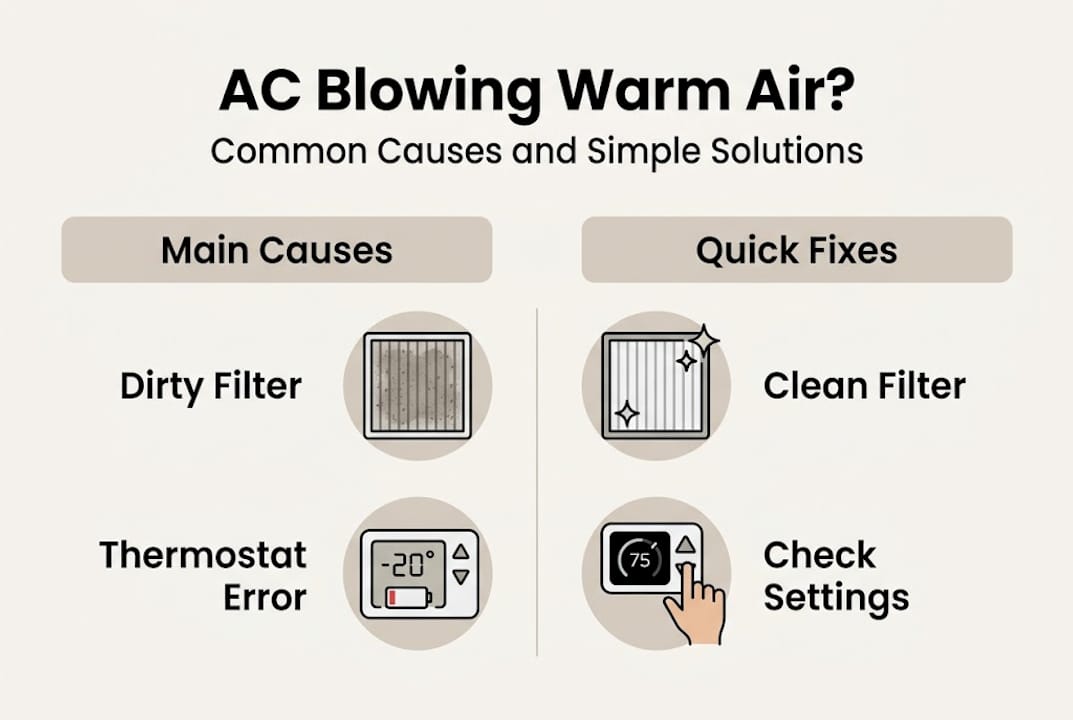
- Blocked or dirty air filters: A filter clogged with dust and debris restricts airflow, forcing the system to work harder while cooling less. Blocked filters are a frequent cause of warm air output, and many homeowners do not realise how quickly filters can become saturated, especially in older homes.
- Incorrect thermostat settings: If your thermostat is set to “fan only” or “heat” mode by mistake, the system will circulate air without cooling it. This is one of the most embarrassingly simple fixes, yet it catches people out regularly.
- Low or leaking refrigerant: Refrigerant is the substance that absorbs heat from inside your home and expels it outside. If levels drop due to a leak, the system cannot complete this process and warm air is the result.
- Electrical or sensor faults: Faulty wiring, tripped breakers, or a malfunctioning temperature sensor can all prevent the cooling cycle from activating correctly.
- Obstructions around the outdoor unit: The outdoor condenser unit needs clear space to release heat. Overgrown plants, garden furniture, or debris piled against it can severely boost cooling efficiency issues by trapping heat around the system.
Worth knowing: Your air conditioning system is essentially a heat transfer machine. When any part of that transfer process is blocked, whether by a dirty filter, a refrigerant shortage, or a physical obstruction, the result is the same: warm air coming from the vents.
For a broader overview, the air conditioning maintenance tips from Which? are a solid starting point for UK homeowners wanting to understand routine upkeep. Reviewing HVAC maintenance steps alongside this will help you build a clearer picture of what a well-maintained system looks like.
Diagnosing common issues at home
Understanding the causes is half the battle; here is how you can start diagnosing the problem yourself before spending a penny on a call-out.
Work through these steps in order:
- Check your air filter first. Locate the filter panel (usually behind a grille on the indoor unit), remove the filter, and hold it up to the light. If you cannot see light through it, it needs cleaning or replacing.
- Inspect your thermostat settings. Confirm the mode is set to “cool,” not “fan” or “heat.” Also check that the target temperature is lower than the current room temperature, otherwise the system has no reason to activate the compressor.
- Walk around the outdoor unit. Look for leaves, garden debris, or anything sitting within half a metre of the unit. Clear any obstructions and ensure the fins on the condenser are not bent or blocked with dirt.
- Listen carefully when the system runs. Clicking, rattling, or hissing sounds during operation can point to specific faults. A hissing or bubbling noise in particular often signals a refrigerant leak.
- Note any unusual smells. A musty odour usually points to mould inside the system. A burning smell warrants switching the unit off immediately and calling a professional.
Thermostat errors and clogged outdoor units are leading contributors to inefficient cooling, so steps two and three alone resolve a significant number of warm air complaints. For further detail on specific fault patterns, the guide to common air conditioning faults from The Heating Hub is a useful reference.
Pro Tip: Before calling an engineer, photograph the outdoor unit, the filter, and any visible frost or ice on the pipework. This information helps a technician diagnose the issue faster, often reducing call-out time and cost.
If the five steps above do not resolve the problem, it is a good signal that you need expert involvement. Information on how to upgrade your home HVAC may also be worth reading if your system is ageing and faults are becoming frequent.
Main fixes for an air conditioner blowing warm air
Once you have identified what might be wrong, it is time to take practical steps to fix the problem. Here is a structured overview of common issues and what to do about each one.
| Problem | DIY fix possible? | Recommended action |
|---|---|---|
| Dirty or blocked filter | Yes | Clean or replace the filter |
| Incorrect thermostat setting | Yes | Reset to “cool” mode, lower target temp |
| Obstructed outdoor unit | Yes | Clear debris, maintain 0.5m clearance |
| Frozen evaporator coil | Partial | Switch to fan only mode, let it thaw |
| Low refrigerant / leak | No | Contact a certified engineer |
| Electrical or sensor fault | No | Professional diagnostic required |
Regular filter changes drastically reduce warm air problems, and this is genuinely the single most impactful thing you can do without any tools or technical knowledge. Most manufacturers recommend checking filters monthly during heavy use and replacing them every three months at minimum.
For the issues you can address yourself, here are the quick wins:
- Replace or wash your filter. Reusable filters can be rinsed under cold water and left to dry before reinstalling. Disposable ones should be swapped out.
- Reset the thermostat. If your thermostat appears unresponsive, try replacing the batteries before assuming it is broken.
- Clear and clean the outdoor unit. Use a garden hose on a gentle setting to rinse the condenser fins from the inside out, removing accumulated dust and debris.
For warm air troubleshooting involving refrigerant or electrical components, attempting a DIY repair is not just ineffective, it can be dangerous and may void your warranty. In these cases, follow the structured AC repair steps and arrange a professional visit.
Quick stat: Systems with clean filters use up to 15% less energy than those with blocked ones, meaning a simple filter change saves money on running costs every month.
When to get professional help
DIY solutions are a great start, but some problems demand a professional’s touch. Knowing where that line falls is important, both for your safety and for protecting your system.
Call a certified engineer if you notice any of the following:
- Refrigerant leaks. Ice forming on the indoor unit, a hissing sound from the pipework, or a sudden and unexplained drop in cooling all point to refrigerant loss. This is not a DIY fix under any circumstances.
- Electrical faults. Tripped breakers that keep returning, burning smells, or visible damage to wiring mean the system needs to be isolated and inspected by a qualified engineer.
- Loss of airflow with odd sounds. If the fan appears to be running but very little air comes through the vents, combined with clicking or grinding noises, the compressor or fan motor may be failing.
- Repeated thermostat failures. If your thermostat resets or loses settings regularly even after new batteries, the control board may have a fault that requires replacement.
- Rising energy bills without explanation. A system working harder than it should to maintain temperature is a warning sign of underlying inefficiency.
Persistent warm air and leaks often indicate deeper system faults that worsen over time if left unaddressed. Delaying professional attention in these cases nearly always leads to more expensive repairs.
Pro Tip: If you ever smell something that resembles rotten eggs or a metallic burning odour near your AC unit, treat it as an emergency. Switch off the system at the mains and ventilate the room. While AC units themselves do not produce carbon monoxide, associated electrical faults can be serious. The NHS guidance on carbon monoxide safety is worth bookmarking.
If the fault is beyond a quick fix, exploring your options for an AC repair service with a trusted local provider is the most sensible next step. A professional assessment will confirm whether a repair or a replacement is the better investment.
Why regular maintenance is the unsung hero for cool air reliability
Most homeowners only think about their air conditioning when something goes wrong. That is completely understandable, but it is also the most expensive way to own a system.
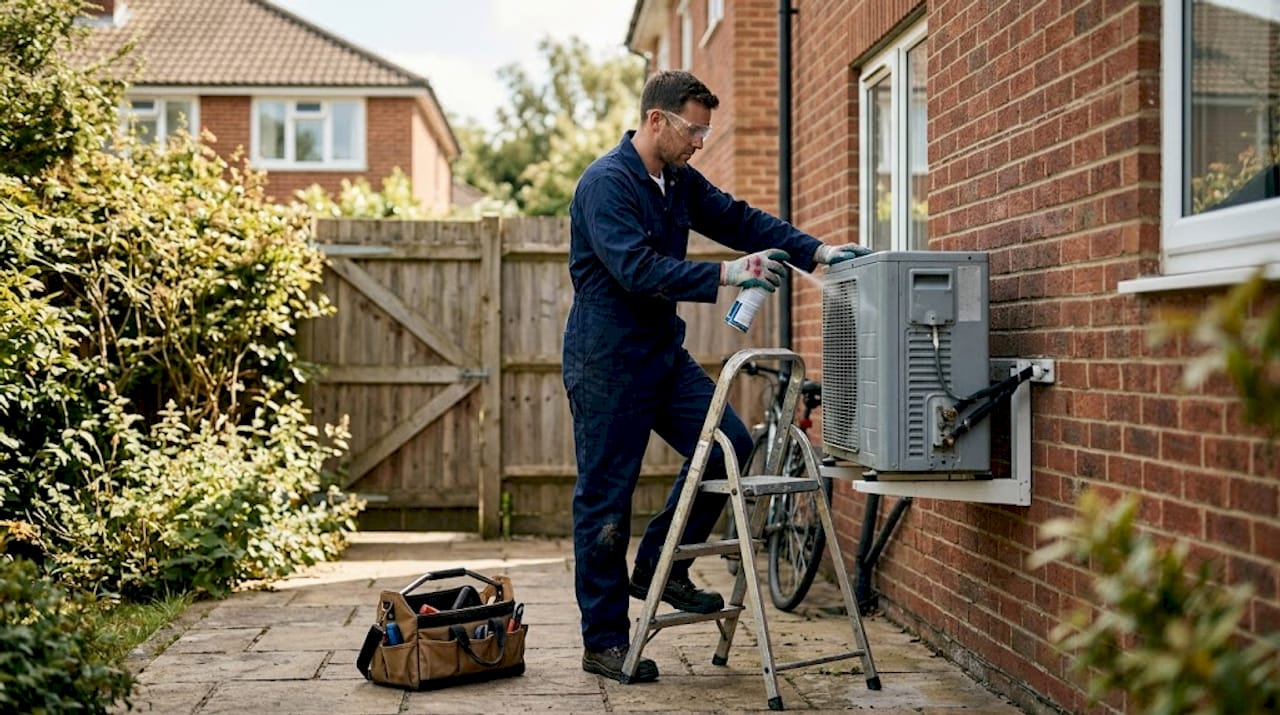
Here is the counterintuitive truth: the homeowners who spend a small amount annually on scheduled maintenance spend significantly less overall. Skipping regular maintenance leads to accumulated faults and higher running costs, not gradually but often in sudden, expensive failures at the worst possible time.
A well-maintained system is also noticeably quieter and uses less electricity. The cooling is more consistent, the air quality is better, and the lifespan of the unit is considerably longer. These are not marginal benefits. They represent real savings and comfort improvements year on year.
Annual maintenance resolves the vast majority of warm air issues before they even begin. A service engineer will clean components, check refrigerant levels, test electrical connections, and identify worn parts. Investing in home energy efficiency upgrades through regular servicing is simply smarter than waiting for a breakdown to force your hand.
Restore home comfort with expert air conditioning solutions
If you have worked through the steps in this guide and still cannot get your system running properly, or if you would rather have an expert handle it from the start, Akita Air Conditioning is here to help.
We provide domestic air conditioning installation and fast, professional repairs across Suffolk, Norfolk, and Essex. Our engineers are fully certified and experienced in diagnosing faults quickly, getting your home cool again without unnecessary delays. Whether you need an urgent fix or want to explore a fixed price AC installation for a new, energy-efficient system, we offer transparent pricing with no hidden surprises. Visit our AC repair service page to book an assessment and take the first step towards reliable, lasting comfort.
Frequently asked questions
What is the quickest fix for an air conditioner blowing warm air?
Often, cleaning or replacing the air filter and double-checking your thermostat settings will restore cool airflow within minutes. Blocked filters and incorrect thermostats are among the most frequent causes of warm air.
Can I fix refrigerant issues myself?
You should not attempt refrigerant repairs yourself, as these require a certified professional due to safety regulations and the risk of further damage. Professional intervention is required for any refrigerant-related fault.
How often should I schedule air conditioner maintenance?
Annual maintenance is recommended to keep your system working efficiently and to avoid unexpected issues like warm air output. Annual checks prevent breakdowns and keep running costs down.
How do I know if it is time to replace my air conditioning unit?
If your system is over 10 years old, requires frequent repairs, or struggles to maintain temperature consistently, replacement is likely the more cost-effective choice. Older units lose cooling capability and frequent faults are a strong signal that an upgrade is due.
Recommended
- Why your AC isn’t cooling properly: troubleshooting guide – Akita AC
- Boost air conditioning efficiency: expert steps for UK homes – Akita AC
- Solve air conditioning noise: UK guide for homes & businesses – Akita AC
- Top air conditioning solutions for UK summer heat – Akita AC
- Air conditioner troubleshooting guide: restore comfort fast