

Why upgrade to smart climate controls: savings and comfort
TL;DR:
- Smart climate controls can significantly reduce heating bills by automating energy-efficient behaviors. They improve comfort through precise zoning, remote access, and better temperature management.
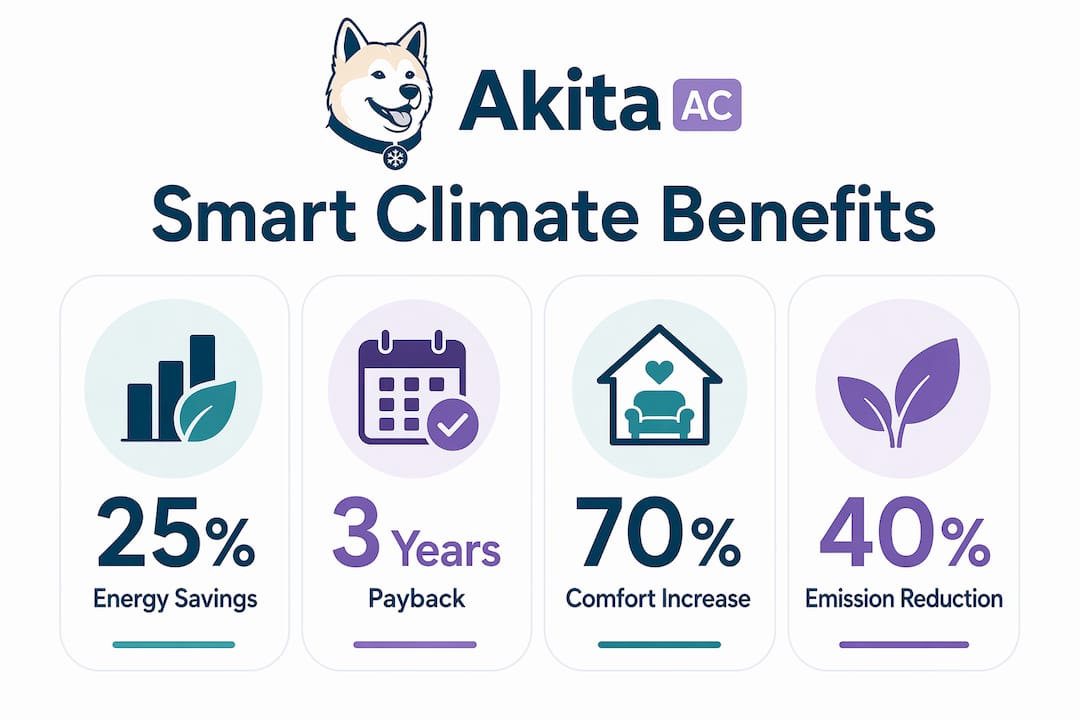
Smart climate controls are worth upgrading to because they cut heating bills by 10–15% annually, saving most UK households about £110–£300 per year, while giving you precise, automated control over when and where your home heats. That combination of lower bills and genuine convenience is what makes the upgrade compelling for most homeowners.
Here is what you get in practice:
- Lower bills through automated scheduling, presence detection, and room-by-room zoning
- Remote control via smartphone, so you can adjust heating from anywhere
- Reduced carbon footprint by eliminating wasted energy on empty rooms
- Better comfort through consistent temperatures tailored to your routine
- Future-proofing as new UK government rules push heating appliances toward smart-ready standards
The savings vary. A large house with inconsistent occupancy and no existing thermostatic controls will gain far more than a small flat where someone is home all day with a well-managed timer. But for most homes, the payback period is short and the lifestyle benefit is immediate.
How smart climate control systems actually manage your home
Smart climate controls do not make your boiler or heat pump more efficient. What they do is reduce wasteful heating habits such as warming empty rooms, running the heating longer than needed, or forgetting to turn it down when you leave. That distinction matters when you are setting expectations.
The core components of a smart system are described in detail in how thermostats transform HVAC efficiency:
- Smart thermostat — connects to your boiler via Wi-Fi, lets you set schedules, and responds to whether anyone is home
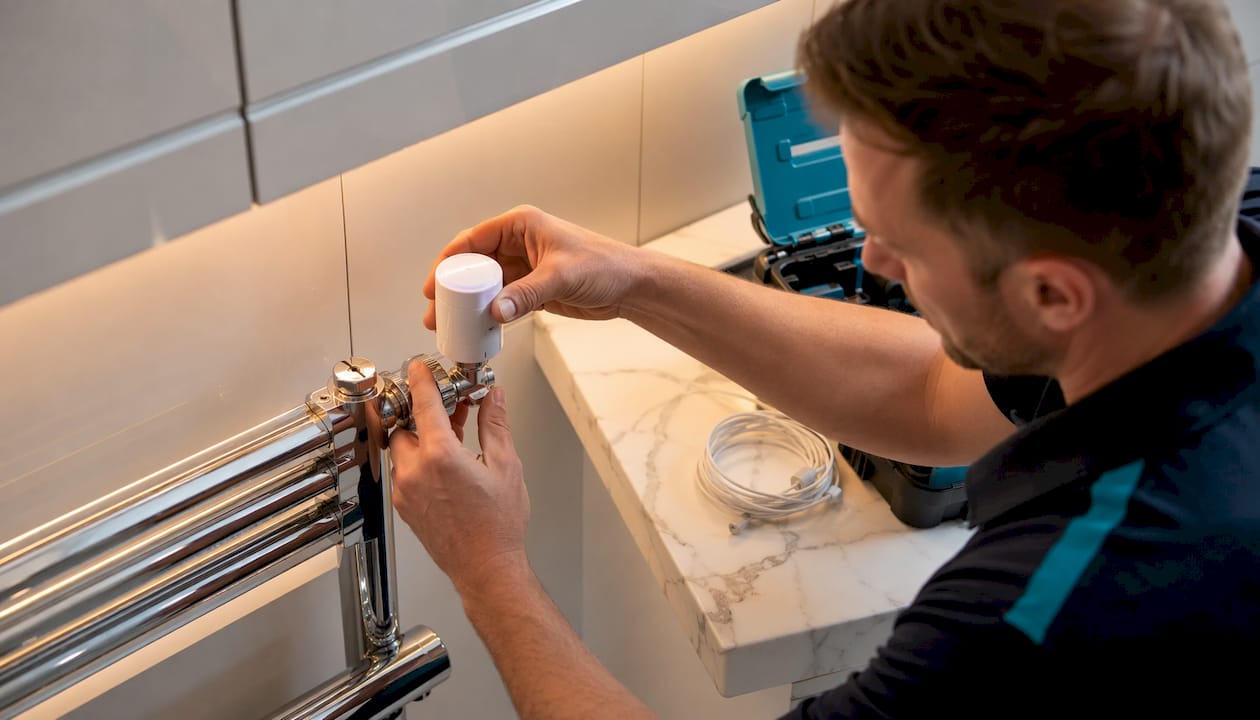
- Smart thermostatic radiator valves (TRVs) — control temperature room by room, so a spare bedroom does not heat to the same level as the living room
- Zoning setups — divide the home into distinct areas, each with its own schedule and target temperature
- Mobile app and remote access — adjust settings from your phone, whether you are on the sofa or on the bus home
These components integrate with existing gas boilers, heat pumps, and smart meters. If you are moving to a heat pump, the control setup needs particular attention: heat pump efficiency depends on steady, low-temperature operation, and controls that trigger frequent on/off cycles can undermine that. A system designed around gradual, consistent heat delivery suits heat pumps far better than one built around short bursts of high-temperature output.
The real benefits of upgrading to smart climate controls
The biggest gains come from three specific behaviours that smart controls automate: heating less often, heating to a lower temperature, and heating fewer rooms. Each of those changes reduces waste, and together they account for the bulk of the savings the Energy Saving Trust reports.
Energy efficiency is the headline benefit, but comfort is what most homeowners notice first. Being able to set the bedroom to 16°C overnight while the living room holds 20°C during the evening is something a single-zone system simply cannot do. The smart HVAC advantages extend beyond temperature too: scheduling heating to come on 20 minutes before you wake up, rather than running all morning, cuts runtime without any sacrifice in warmth.
Environmental impact is a growing consideration. Less wasted heat means lower gas consumption and reduced carbon emissions. Smart controls also pair well with time-of-use electricity tariffs, letting heat pumps run when grid electricity is cheapest and cleanest. The eco-friendly upgrade case is strongest for homes already insulated well enough to hold heat between heating cycles.
Pro Tip: If you already have a programmable thermostat and manual TRVs that you use consistently, a smart upgrade is primarily a convenience gain rather than a dramatic savings leap. Buy it knowing that, and you will not be disappointed.
What does it cost, and how quickly does it pay back?
The upfront cost depends on how much you are starting with. A single smart thermostat replacing a basic timer runs £150–£270, while a full set of smart controls including TRVs for a whole house typically costs £400–£900. Homes with no existing controls at all may pay around £550 for a complete installation.

| Upgrade | Typical annual saving | Upfront cost | Payback period |
|---|---|---|---|
| Smart thermostat (replacing basic timer) | £110–£300 | £150–£270 | — |
| Smart TRVs (full house) | £110–£300 | £400–£900 | — |
| Smart thermostat and TRVs combined | £110–£300 | £550–£900 | — |
The Energy Saving Trust puts typical savings at £110–£300 per year for a properly used programmer, thermostat, and TRV package. Larger homes with varied occupancy sit at the higher end; smaller, consistently occupied homes at the lower.
Before paying privately, check whether you qualify for the Warm Homes Local Grant, which can fund smart controls as part of a broader energy performance upgrade for low-income households in England. The Boiler Upgrade Scheme focuses on replacing fossil fuel heating rather than controls alone, but if a heat pump is part of your plan, the two schemes can work together.
What to check before you upgrade
Compatibility is the first thing to confirm. Most smart thermostats work with standard gas boilers, but some older or less common systems need an adapter or a different product entirely. Heat pump compatibility requires specific attention, as covered earlier.
Key questions to ask before committing:
- What controls do you have now? A home with no working thermostat gains the most. One with a modern programmer and well-used TRVs gains less in savings terms.
- Is your home well insulated? Smart controls cannot compensate for a poorly insulated building. If heat escapes quickly through the loft or walls, address that first.
- How variable is your routine? The bigger the home and the more varied the occupancy, the more there is to save through automation and zoning.
- Are you planning a heat pump? If so, choose controls designed to support steady low-temperature operation from the outset.
Security and privacy are worth a brief mention. Smart thermostats connect to your home Wi-Fi and, in most cases, a manufacturer’s cloud service. That means they carry the same considerations as any connected device: use a strong router password, keep firmware updated, and check the manufacturer’s data policy. The risk is low for most households, but it is not zero.
The HVAC finance options available through specialist installers can also reduce the upfront barrier significantly, spreading the cost over manageable monthly payments.
What Akita’s experience tells us about smart climate controls
Akita has installed and maintained climate control systems across Suffolk, Norfolk, and Essex for years, and the pattern is consistent: homeowners who gain the most from smart controls are those who pair the upgrade with a clear understanding of how their heating system actually behaves. The technology is only as good as the setup behind it.
Smart controls work best when the basics are right. The heating system needs a clear schedule, a sensible room temperature, working radiator controls, and a homeowner who understands how the system behaves. The smart part should make that easier, not more confusing.
Akita’s approach covers the full picture: transparent pricing, flexible finance, and aftercare that does not disappear after installation. Customers across East Anglia have reported noticeably warmer rooms without the bill spikes they expected, particularly after zoning was introduced to stop heating unused spaces during the working day.
Pro Tip: Ask your installer to walk you through the control settings at handover. A system you understand is one you will actually use correctly, and that is where the savings come from.
Akita also keeps pace with the regulatory direction of travel. New UK government smart appliance standards will require future heat pumps to be sold smart-ready, meaning the controls you install now should be chosen with that compatibility in mind.
Akita can handle your smart climate control upgrade
Cutting heating bills and improving home comfort does not require a complete system overhaul. For homeowners in Suffolk, Norfolk, and Essex, Akita offers domestic air conditioning installation and smart climate control upgrades with fixed, transparent pricing and no hidden costs.

Where other routes leave you sourcing equipment, booking separate trades, and hoping the controls integrate cleanly, Akita handles the assessment, installation, and handover as a single job. Flexible finance means the upfront cost does not have to be a barrier, and the aftercare keeps the system running as it should. If you are ready to stop heating rooms you are not in and start paying only for the warmth you actually use, get a quote from Akita and find out what the right setup looks like for your home.
Key takeaways
Smart climate controls deliver the most value when installed in larger homes with varied occupancy, paired with good insulation, and set up by an installer who explains the system at handover.
| Point | Details |
|---|---|
| Annual savings potential | Energy Saving Trust puts typical savings at £110–£300 per year for a full programmer, thermostat, and TRV package. |
| Upfront cost range | A smart thermostat alone costs £150–£270; a full system with TRVs runs £400–£900. |
| Insulation comes first | Smart controls cannot compensate for poor insulation; address loft and cavity walls before upgrading controls. |
| Grant eligibility | The Warm Homes Local Grant can fund smart controls for qualifying low-income households in England. |
| Akita’s offering | Akita installs smart climate control systems across Suffolk, Norfolk, and Essex with transparent pricing and flexible finance. |