

Eco-friendly HVAC upgrades: practical examples for homes
TL;DR:
- Eco-friendly HVAC upgrades such as heat pumps, smart thermostats, low-GWP refrigerants, and solar integration reduce energy use and carbon emissions. Proper building insulation and system sizing are essential to achieve maximum efficiency and cost savings. Combining renewable energy with advanced controls ensures the most sustainable heating and cooling solutions.
Examples of eco-friendly HVAC upgrades include heat pump systems, smart thermostats, low-GWP refrigerants, and solar-integrated climate controls. These technologies reduce both energy consumption and carbon emissions, making them the most practical route to sustainable heating and cooling for UK homes and commercial buildings. Systems like the Mitsubishi Electric Ecodan and the Viessmann Vitocal 150-A demonstrate that real-world efficiency gains are achievable today, not just in theory. Whether you manage a residential property in Suffolk or a commercial site in Norfolk, the right upgrade can cut running costs and future-proof your building against tightening energy regulations.
1. Examples of eco-friendly HVAC upgrades: heat pump systems
Heat pumps are the most widely adopted sustainable HVAC solution in the UK, and for good reason. They move heat rather than generate it, which makes them far more efficient than gas boilers or electric resistance heaters. The three main types are air-source, ground-source, and air-to-water heat pumps, each suited to different property types and budgets.
Air-source heat pumps extract heat from outdoor air and transfer it indoors. Cold-climate models, including mini-split systems from Mitsubishi Electric, operate below -20°F, delivering stable indoor temperatures without fossil fuels. That performance level removes the most common objection to heat pumps in the UK: that they struggle in cold weather.
Ground-source (geothermal) heat pumps draw on stable underground temperatures. Geothermal systems reduce cooling costs by up to 70% compared to traditional air conditioning. That figure reflects the consistency of ground temperature, which stays relatively constant year-round regardless of surface weather.
Air-to-water heat pumps are particularly useful for retrofit projects. The Mitsubishi Electric Ecodan system uses existing baseboard radiation and hydronic pipework, avoiding costly structural changes. A Canadian multi-unit building replaced its chiller with air-to-water heat pumps and achieved a natural gas reduction of 21,000 m³ and a 30-tonne CO2e annual decrease. That result shows the scale of impact possible in larger buildings.
- Air-source heat pumps suit most UK homes and require minimal groundwork
- Ground-source systems deliver the highest efficiency but need outdoor land for ground loops
- Air-to-water heat pumps connect to existing wet central heating systems
- Mini-split systems offer zoned control without ductwork
Pro Tip: Before choosing a heat pump type, check whether your radiators are sized for low-flow temperatures. Oversized radiators work well with heat pumps; undersized ones may need replacing to maintain comfort.
2. Smart thermostats and system controls
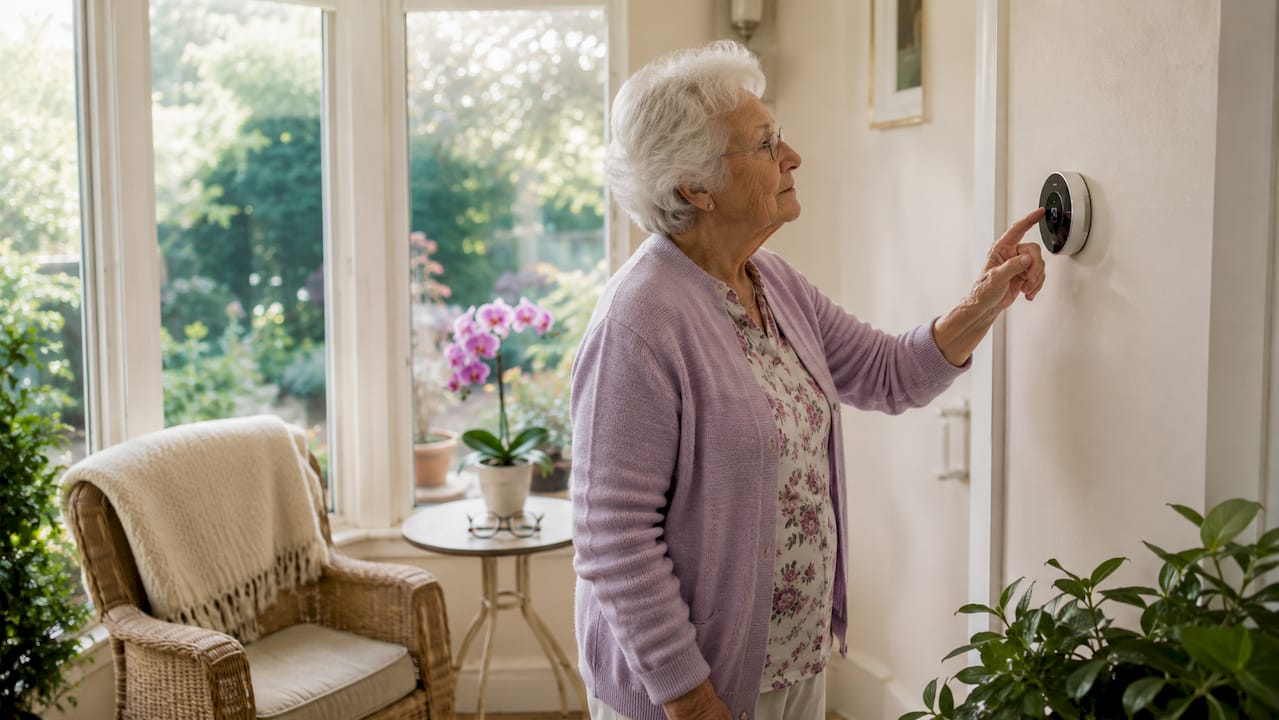
Smart thermostats are one of the most affordable eco-friendly heating options available, and they deliver a fast return on investment. A programmable thermostat alone reduces energy waste by stopping the system from running when a building is empty. Smart models go further by learning occupancy patterns and adjusting automatically.
The key benefits of upgrading to smart controls are:
- Scheduling: Set heating and cooling to match your working hours or occupancy patterns, so you never heat an empty building.
- Remote access: Adjust settings from a smartphone, which is particularly useful for business managers overseeing multiple sites.
- Learning algorithms: Devices like the Google Nest Learning Thermostat adapt to your routine over time, reducing manual input.
- Zoning integration: Pair smart controls with multi-zone systems to heat or cool only the rooms in use.
- Fan settings: Switching the system fan from “on” to “auto” reduces unnecessary air circulation and lowers electricity use.
Proper HVAC sizing and variable-capacity systems work best alongside smart controls, as they allow the system to modulate output rather than cycling on and off at full power. That combination delivers better dehumidification and more consistent temperatures.
Pro Tip: If you have a multi-zone system, install individual room sensors rather than relying on a single thermostat. A single sensor in a hallway can misread the temperature in occupied rooms by several degrees.
3. Sustainable refrigerants and ventilation technologies
The refrigerant inside your HVAC system has a direct impact on its environmental footprint. Older systems use refrigerants with high global warming potential (GWP), such as R410A. Newer systems use low-GWP alternatives, including R290 (propane) and R32, which significantly reduce the climate impact of any refrigerant leaks.
Upgrading to a system that uses R290 or R32 is one of the less-discussed but genuinely impactful examples of eco-friendly HVAC solutions. R290 has a GWP of just 3, compared to over 2,000 for R410A. That difference matters when you consider that refrigerant leaks are a common source of HVAC-related emissions over a system’s lifetime.
Ventilation technology is equally important, particularly in well-insulated buildings:
- Energy recovery ventilators (ERVs) transfer heat and moisture from outgoing stale air to incoming fresh air, reducing the energy needed to condition new air.
- Heat recovery ventilators (HRVs) recover heat from exhaust air without transferring moisture, making them better suited to humid climates or bathrooms.
- ERVs used alone in super-insulated homes can cause temperature stratification, where warm air pools near the ceiling. Supplemental air mixing devices resolve this issue.
- Both ERVs and HRVs improve indoor air quality by maintaining fresh air flow without opening windows, which is a measurable benefit for occupant health and productivity.
Combining low-GWP refrigerants with an ERV or HRV creates a system that is efficient, clean, and healthy to live or work in.
4. Integrating renewable energy with HVAC upgrades
Pairing HVAC upgrades with solar photovoltaic (PV) panels and battery storage is the most direct path to net-zero heating and cooling. A heat pump running on grid electricity still carries a carbon footprint. The same heat pump running on solar-generated electricity carries almost none.
The Viessmann Vitocal 150-A case study demonstrates this clearly. Integrating the heat pump with solar PV and battery storage in a 1930s Walthamstow retrofit enabled net-zero heating rather than incremental gains. That is a meaningful distinction. Without the solar and battery element, the same heat pump would still reduce emissions but would not eliminate them.
| Upgrade combination | Carbon impact | Best suited to |
|---|---|---|
| Heat pump only | Significant reduction | Most UK homes |
| Heat pump + solar PV | Near-zero operational carbon | Homes with south-facing roof space |
| Heat pump + solar PV + battery | Net-zero heating potential | New builds and deep retrofits |
| Solar PV + existing gas boiler | Partial reduction | Budget-limited retrofits |
Battery storage adds another layer of benefit. It allows the system to store surplus solar energy generated during the day and use it to run the heat pump in the evening, when grid electricity is more carbon-intensive. For business managers, this also reduces exposure to peak electricity tariffs.
Retrofitting solar PV onto an existing property is straightforward in most cases. New builds have the advantage of designing the roof orientation and insulation levels around the HVAC system from the outset, which produces better overall results. For existing properties, going green with a phased approach, starting with the heat pump and adding solar later, is a practical and financially manageable route.
5. How to choose the right eco-friendly HVAC upgrade
Choosing the right environmentally friendly HVAC technology depends on your building type, existing infrastructure, climate, and budget. The decision is not purely about which system is most efficient in isolation. It is about which system performs best in your specific property.
Start with the building envelope. Improving insulation and airtightness is the most cost-effective way to reduce HVAC energy consumption before spending on new equipment. Better insulation means a smaller, cheaper system can do the same job. This step is often skipped, which leads to oversized equipment and higher running costs.
Consider your existing heating distribution system. If your property has wet radiators, an air-to-water heat pump is the most practical upgrade. If it has no existing ductwork or pipework, a mini-split air-source system avoids the cost of installing new distribution infrastructure. Hydraulic design adjustments, such as resizing radiators or adding underfloor heating, are often necessary to achieve peak efficiency from a heat pump retrofit.
Get a proper load calculation done. HVAC load calculations account for room volume, insulation levels, window area, and occupancy to determine the correct system size. Oversized systems short-cycle, which wastes energy and reduces comfort. Undersized systems run constantly and still fail to maintain target temperatures.
| Property type | Recommended upgrade | Key consideration |
|---|---|---|
| Detached house with garden | Ground-source heat pump | Land area for ground loops |
| Terraced house, existing radiators | Air-to-water heat pump | Radiator sizing for low flow temps |
| Flat or apartment | Mini-split air-source system | No ductwork required |
| Commercial office | VRF system with smart controls | Zoning and occupancy scheduling |
| New build | Heat pump + solar PV + battery | Design roof and insulation first |
Key takeaways
The most effective eco-friendly HVAC upgrades combine efficient technology, correct sizing, and renewable energy integration to deliver lasting reductions in both running costs and carbon emissions.
| Point | Details |
|---|---|
| Heat pumps lead the way | Air-source, ground-source, and air-to-water systems each suit different property types and budgets. |
| Smart controls deliver fast ROI | Programmable and learning thermostats cut energy waste with minimal upfront cost. |
| Refrigerants matter | Switching to low-GWP refrigerants like R290 or R32 reduces lifetime emissions from leaks. |
| Solar integration unlocks net-zero | Pairing a heat pump with solar PV and battery storage eliminates most operational carbon. |
| Insulation comes first | Improving the building envelope before upgrading HVAC reduces equipment size and overall cost. |
Akita’s take on eco-friendly HVAC upgrades in the UK
The most common mistake we see is homeowners and business managers buying a new heat pump without addressing the building first. A high-efficiency system installed in a poorly insulated property will underperform every time. The technology is not the bottleneck. The building is.
The second misconception is that eco-friendly upgrades are all-or-nothing. They are not. A smart thermostat fitted to an existing system costs a fraction of a full replacement and can meaningfully reduce energy use within weeks. That is a legitimate first step, not a compromise.
What genuinely excites us about the current direction of HVAC in the UK is the convergence of heat pumps, solar PV, and smart grid integration. Systems are beginning to respond to grid carbon intensity in real time, running harder when renewable generation is high and easing off when the grid is coal-heavy. That is not a future concept. It is available now, and it changes the economics of electrification significantly.
The properties we see achieving the best results are not necessarily the ones with the most expensive systems. They are the ones where the upgrade was planned properly: insulation assessed, system sized correctly, and controls configured to match actual occupancy. That combination outperforms a premium system installed without thought every time.
— Akita
Ready to upgrade your HVAC system?
Akita specialises in domestic air conditioning installation across Suffolk, Norfolk, and Essex, with a focus on energy-efficient systems that reduce both bills and environmental impact. Whether you are replacing an ageing system or installing climate control for the first time, Akita provides fixed pricing, professional installation, and expert guidance on the right solution for your property.

For commercial properties, Akita’s commercial air conditioning services cover everything from multi-zone VRF systems to smart thermostat integration. Every installation is backed by warranty guarantees and ongoing maintenance options, so your system performs at its best year after year. Get in touch with Akita to discuss your upgrade and receive a transparent, no-obligation quote.
FAQ
What is the most efficient eco-friendly HVAC upgrade?
Ground-source (geothermal) heat pumps deliver the highest efficiency, reducing cooling costs by up to 70% compared to traditional air conditioning. Pairing any heat pump with solar PV and battery storage achieves the greatest overall carbon reduction.
Can I retrofit a heat pump to my existing central heating system?
Air-to-water heat pumps like the Mitsubishi Electric Ecodan connect to existing hydronic systems, including baseboard radiators, without major structural changes. Radiator sizing may need adjustment to maintain efficiency at lower flow temperatures.
Do smart thermostats work with eco-friendly HVAC systems?
Smart thermostats are compatible with most modern heat pumps and air conditioning systems. They improve efficiency by scheduling operation around occupancy and enabling remote control, which reduces energy waste significantly.
What refrigerant should an eco-friendly HVAC system use?
Low-GWP refrigerants such as R290 (propane) and R32 are the most environmentally responsible options currently available. R290 has a global warming potential of just 3, compared to over 2,000 for older refrigerants like R410A.
Should I improve insulation before upgrading my HVAC system?
Improving insulation and airtightness before installing new HVAC equipment reduces the required system size and lowers both capital and running costs. It is the most cost-effective first step for any property undergoing an energy upgrade.