

Must-have air conditioning upgrades for your home
TL;DR:
- Poorly configured and aging air conditioning systems increase energy costs and cause discomfort in Suffolk, Norfolk, and Essex properties. Upgrading with high-efficiency, correctly sized units like air-to-air heat pumps, sealing ductwork, and adding smart controls can significantly reduce bills and improve comfort. Proper system design, installation, and maintenance are essential to maximizing savings and future-proofing your investment.
If your energy bills have crept steadily upward while your rooms still feel stuffy in summer and cold in winter, your air conditioning system is likely working against you. Properties across Suffolk, Norfolk, and Essex face this exact problem. Older or poorly configured systems are often the biggest drain on a building’s running costs, and the must-have air conditioning upgrades available today are more accessible than most people realise. Whether you own a period farmhouse in Norfolk or a commercial unit in Ipswich, the right upgrades can cut bills, improve comfort, and future-proof your investment.
Table of Contents
- Criteria for choosing effective air conditioning upgrades
- Air-to-air heat pumps: versatile cooling and heating solutions
- Sealing and insulating ductwork to recapture lost energy
- Advanced compressor technology and smart controls for optimal efficiency
- Comparing essential air conditioning upgrades: which suits your property?
- Rethinking air conditioning upgrades for Suffolk, Norfolk and Essex homes
- Upgrade your air conditioning with Akita AC in Suffolk, Norfolk and Essex
- Frequently asked questions
Key Takeaways
| Point | Details |
|---|---|
| Grant support availability | Homeowners can access £2,500 grants for air-to-air heat pumps to reduce upfront costs. |
| Duct sealing benefits | Sealing and insulating ducts saves up to 30% on energy by preventing air leaks. |
| Advanced compressor savings | Variable-speed compressors cut energy use up to 40% compared to old units. |
| Smart control efficiency | Smart thermostats and zoning reduce cooling of unoccupied rooms, lowering bills by 10-20%. |
| System design matters | Proper sizing and ductwork condition are essential for achieving upgrade savings. |
Criteria for choosing effective air conditioning upgrades
Understanding air conditioning upgrade benefits before you spend a penny is the smartest move you can make. Not every upgrade delivers the same return, and several common mistakes lead homeowners and businesses to spend money without seeing meaningful change.
The most important factor is energy efficiency rating. Look for systems rated using SEER2 (Seasonal Energy Efficiency Ratio) or SCOP (Seasonal Coefficient of Performance). These figures tell you how much cooling or heating you get for every unit of energy consumed. A higher number means lower bills. As high-efficiency upgrades experts note, upgrades must measurably improve energy use, comfort, and humidity control, and for systems over 10 to 15 years old, combining high-SEER units with proper insulation only yields real savings if ductwork and controls are correctly configured.
System sizing is the second critical factor. An oversized unit short-cycles, meaning it switches on and off rapidly without completing a proper cooling cycle. This wastes energy, increases wear, and leaves rooms feeling clammy. A Manual J load calculation gives you the precise cooling and heating requirements for your specific space, taking into account insulation levels, window orientation, and occupancy.
Key criteria to evaluate before choosing an upgrade:
- Energy efficiency ratings (SEER2 minimum 16 for new systems from 2026 onward; SCOP above 3.5 for year-round heat pump use)
- Correct system sizing based on a qualified load calculation
- Ductwork condition checked and sealed before any new equipment is installed
- Smart thermostat compatibility to allow demand-based control
- Zoning capability so you are only conditioning occupied spaces
Air-to-air heat pumps: versatile cooling and heating solutions
Having established what makes an upgrade worthwhile, the single most impactful change for most properties in eastern England is switching to an air-to-air heat pump. These systems work by extracting heat from outdoor air and either pumping it inside for warmth or expelling it outward for cooling. One unit, one installation, two functions.
The financial case is strong. Homeowners in England including those in Suffolk, Norfolk, and Essex can access a £2,500 grant under the expanded Boiler Upgrade Scheme for air-to-air heat pumps that provide both heating and cooling, reducing upfront costs by up to 50 to 70%. That is a significant reduction for a technology that genuinely changes how a building performs.
The efficiency figures back it up. A Suffolk home installation using a Viessmann Vitocal 150-A air source heat pump achieved a SCOP of 4.55, saving over 88% on heating costs compared to an electric boiler. That is not a marketing claim. It is a measured result from a real property in Ipswich.
Key advantages of air-to-air heat pumps for this region:
- Year-round operation without a separate heating system
- Grant eligibility under the Boiler Upgrade Scheme reducing installation costs
- High SCOP ratings delivering strong efficiency even in cooler UK temperatures
- Compact combined units that also supply hot water in some configurations
- Lower carbon output compared to gas or direct electric heating
Pro tip: Ask your installer to confirm the system’s SCOP at a design temperature of 7°C, which reflects typical Suffolk and Norfolk winter conditions. Headline efficiency figures are often quoted at higher ambient temperatures and will not reflect your actual savings.
Also worth noting: you can now explore air-to-air heat pump efficiency in detail to understand how these systems perform across different property types.
Sealing and insulating ductwork to recapture lost energy
Another often overlooked but essential upgrade involves addressing the duct system that connects your AC to every room. Most property owners focus entirely on the visible unit and ignore the network of ducts behind the walls and ceiling. That is a costly oversight.
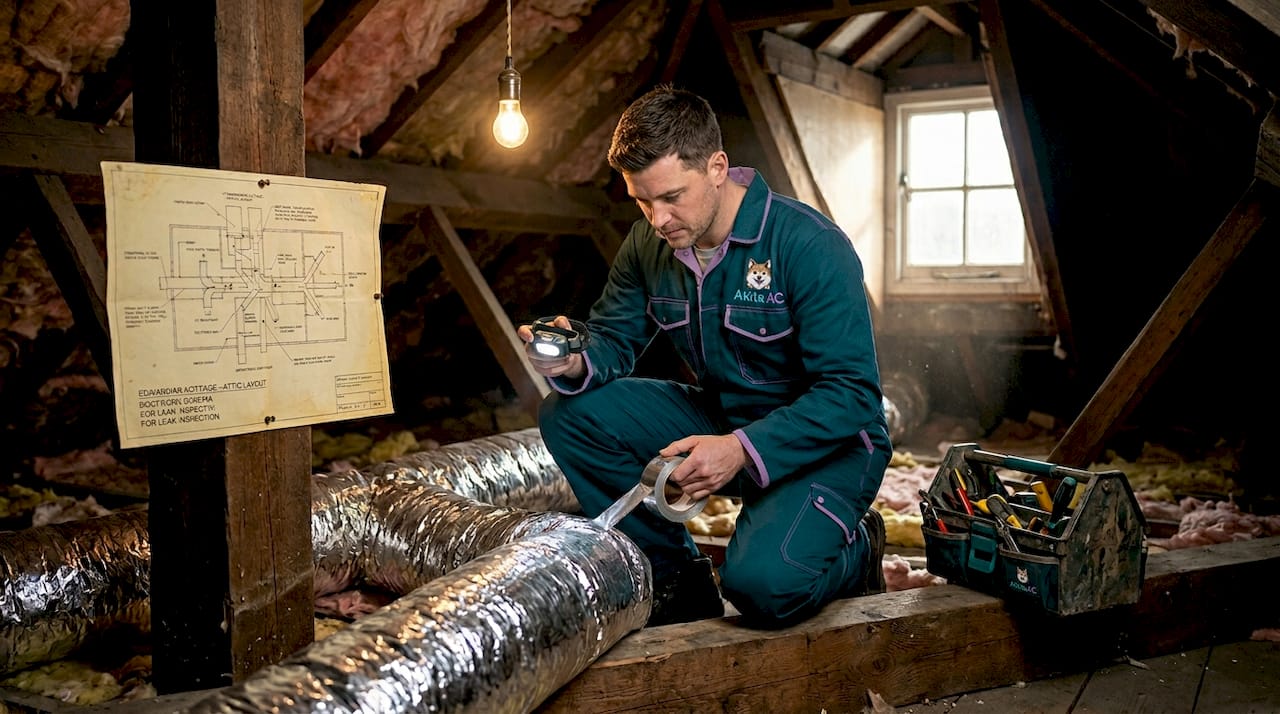
Leaky ductwork reduces HVAC energy efficiency by 20 to 30% and typically pays back within 2 to 4 years through monthly savings on energy bills. Put simply, you may be generating perfectly conditioned air and losing nearly a third of it before it reaches the room.
There are two main sealing approaches. Manual sealing uses mastic sealant or metal tape applied by a technician to visible joints and gaps. For older or larger duct systems, Aeroseal technology can seal up to 95% of duct leaks in a single day, with sustained energy savings of 15 to 30% per month. The aerosol process pressurises the ducts and releases adhesive particles that bind to leak points from the inside, reaching gaps that no technician could reach manually.
Insulating ducts that run through unheated spaces such as loft voids or garages with material rated at R-6 or higher can halve the thermal loss from those sections, meaning your system reaches target temperature faster and switches off sooner.
Benefits summary:
| Benefit | Impact |
|---|---|
| Energy loss reduction | 20 to 30% less wasted conditioned air |
| Payback period | 2 to 4 years on typical installations |
| Air quality improvement | Fewer contaminants entering duct system |
| Equipment lifespan | Reduced runtime lowers component wear |
| Comfort consistency | More even temperatures across all rooms |
Pro tip: Before any duct sealing work, ask for a duct blaster test. This pressurises your duct system and measures total leakage in cubic feet per minute. It gives you a baseline to compare against after the work is done, confirming the actual savings achieved. For broader guidance on duct sealing and insulation tips, it is worth reading up on the full process before booking a survey.
Advanced compressor technology and smart controls for optimal efficiency
Modern variable-speed compressors and smart HVAC controls represent two of the best air conditioning features you can add to any property. Together they address the two biggest inefficiencies in most existing systems: crude on/off operation and uniform cooling regardless of occupancy.
Older single-stage compressors run at full power or not at all. Variable-speed compressors, by contrast, modulate their output continuously. On a mild day they might run at 40% capacity. On a hot August afternoon they ramp up to full. This prevents the temperature swings that make rooms uncomfortable and reduces energy use by up to 40% compared to older units. From 2026, ENERGY STAR certified models require a minimum 16 SEER2 rating, which effectively mandates inverter technology for compliance.
Smart thermostat upgrades add a further layer of control. These devices learn your schedule, respond to occupancy sensors, and allow remote adjustment via a smartphone. When combined with a zoning system, they direct conditioned air only to rooms in use. Smart thermostats and zoning reduce unnecessary cooling by directing air to occupied rooms, saving 10 to 20% on energy bills.
| Feature | Single-stage compressor | Variable-speed compressor |
|---|---|---|
| Energy use | Fixed at 100% | Adjusts between 30 and 100% |
| Temperature consistency | Fluctuates ±2°C | Steady within ±0.5°C |
| Humidity control | Basic | Precise |
| Lifespan expectancy | 10 to 12 years | 15 to 20 years |
| Noise level | Higher at start-up | Consistent and low |
For businesses with large open-plan offices or multi-room properties in Essex, zoning is not a luxury. It is a practical necessity. A meeting room used for two hours a day does not need the same conditioning as a workshop floor running eight-hour shifts.
Comparing essential air conditioning upgrades: which suits your property?
Having covered the individual options, an air conditioning upgrade comparison helps put them side by side. No single upgrade is universally best. The right choice depends on your property’s age, existing infrastructure, and budget.
As energy-efficient upgrade guidance consistently emphasises, achieving real savings requires attention to ductwork, controls, and system design, not just selecting a high-spec unit.
| Upgrade | Estimated cost | Payback period | Best suited for |
|---|---|---|---|
| Air-to-air heat pump | £3,000 to £8,000 (post-grant) | 4 to 8 years | Full system replacement, year-round use |
| Duct sealing | £300 to £1,500 | 2 to 4 years | Any ducted HVAC system |
| Variable-speed compressor | £2,000 to £5,000 | 5 to 7 years | Newer builds, larger properties |
| Smart thermostat with zoning | £300 to £2,000 | 1 to 3 years | Multi-room homes and commercial spaces |
Key guidance for matching upgrades to your situation:
- Older property with poor insulation: Start with duct sealing and insulation before any new equipment
- Full system replacement: Opt for an air-to-air heat pump with variable-speed technology and apply for the BUS grant
- Budget-conscious first step: A smart thermostat with basic zoning delivers fast payback with minimal disruption
- Commercial property: Zoning and inverter-driven systems offer the greatest ongoing savings across variable occupancy patterns
Rethinking air conditioning upgrades for Suffolk, Norfolk and Essex homes
Here is an uncomfortable truth that most upgrade guides avoid: technology alone does not save money. The installations that underperform almost always share one common thread. Either the ductwork was in poor condition and nobody checked, the system was oversized for the space, or the controls were never properly configured after installation. The hardware was fine. The setup was the problem.
According to Viessmann installer Jon Miles, proper system design is crucial to achieving high efficiency and running cost savings in Suffolk homes, directly challenging the myth that heat pumps underperform in UK climates. The Ipswich case study did not achieve 88% heating cost savings because of a premium brand. It achieved those savings because the installer sized the system correctly and configured it for the property’s specific heat loss profile.
There is also a persistent misconception worth addressing. Many homeowners in this region assume that heat pumps are only viable in new-build properties with underfloor heating. This is simply not accurate. Modern air-to-air units perform efficiently in older, less-insulated buildings when the system is properly designed, and the HVAC upgrade expert insights bear this out consistently.
The most resilient approach is to treat your air conditioning system as an integrated whole. Seal the ducts, insulate properly, size the equipment correctly, add smart controls, and then choose the most efficient unit your budget allows. That sequence matters. Reversing it is the most common and costly mistake we see.
Regulatory change is also coming. Refrigerant phase-downs and tightening energy performance requirements will affect older systems within the next five to ten years. Investing now in a properly designed, energy-efficient system protects you from both rising energy costs and forced upgrades under future legislation.
Upgrade your air conditioning with Akita AC in Suffolk, Norfolk and Essex
If the options above have made the path clearer, the next step is getting a professional assessment from a team that knows these regions and their specific property types. Akita AC provides domestic air conditioning installation and commercial air conditioning services across Suffolk, Norfolk, and Essex, with fixed-price quotes that remove the uncertainty from budgeting.
Akita specialises in modern, energy-efficient systems including air-to-air heat pumps and variable-speed inverter technology, and every installation comes with professional aftercare and local support. Whether you are looking at a fixed price AC installation for a single room or a full commercial fit-out, Akita’s team provides tailored advice based on your building, your usage patterns, and your budget. No hidden costs, no guesswork.
Frequently asked questions
What is the Boiler Upgrade Scheme grant for air-to-air heat pumps?
The Boiler Upgrade Scheme offers homeowners in England, including those in Suffolk, Norfolk, and Essex, a £2,500 grant towards the installation of an air-to-air heat pump, significantly reducing the upfront cost of switching to an efficient combined heating and cooling system.
How much can duct sealing reduce my energy bills?
Duct sealing reduces HVAC energy losses by 20 to 30% and typically pays for itself within 2 to 4 years through lower monthly heating and cooling costs, making it one of the fastest-returning upgrades available.
Are variable-speed compressors worth upgrading for older AC systems?
Yes. Variable-speed compressors reduce energy use by up to 40% compared to units over 10 years old, delivering significant savings alongside better humidity control and a quieter, longer-lasting system.
Can smart thermostats really save energy?
Smart thermostats with zoning cut unnecessary cooling by directing conditioned air only to occupied rooms, saving 10 to 20% on energy bills while making your home or workplace noticeably more comfortable.
What maintenance should I do before upgrading my air conditioning system?
Have your ductwork inspected and sealed if needed, confirm your insulation levels in any unconditioned spaces, and commission a Manual J load calculation so your new system is sized correctly from day one rather than being oversized or underpowered.