

When to schedule climate control inspections (and when not to wait)
Book routine climate control inspections before the season that stresses the system most: spring for cooling, autumn for heating, at least once a year for most homes. Dual-season climates and commercial buildings need biannual checks. That’s the baseline. Some situations override the calendar entirely.
If your system is making grinding or screeching noises, giving off a burning smell, leaking refrigerant or water, blowing noticeably weak air, or switching on and off in short bursts, stop reading the calendar advice and call a technician today. Those are failure signals, not maintenance reminders.
What to book routinely:
- Pre-season tune-up (spring for AC, autumn for heating)
- Annual or biannual full inspection depending on system age and use
- Filter and coil checks between professional visits
When to request an emergency visit instead:
- Burning smells or visible sparking
- Refrigerant or water leaking near indoor or outdoor units
- Frequent short-cycling or total loss of airflow
Key Takeaways
Scheduling a climate control inspection before peak season, and calling immediately for burning smells, leaks, or airflow loss, prevents most emergency breakdowns.
| Point | Details |
|---|---|
| Time it seasonally | Book cooling checks in early spring and heating checks in early autumn, 4 to 6 weeks ahead. |
| Match frequency to use | Annual for most homes, biannual for hard-used or older systems and dual-season climates. |
| Watch for urgent signals | Noise, burning smells, leaks, weak airflow, or short-cycling mean call now, not later. |
| Prepare before the visit | Clear access to units, secure pets, and have service history and symptoms noted down. |
| Book with Akita | Akita offers certified technicians, transparent pricing, and priority slots through maintenance plans. |
Where to check further guidance
- Energy Star’s checklist covers homeowner and professional maintenance tasks.
- Gov sets UK intervals for larger systems.
- Commercial inspection rules are jurisdiction-specific, so check local regulations before assuming UK intervals apply.
Table of Contents
- How to schedule climate control inspections around the seasons
- What information should you have ready when booking?
- What does a professional HVAC inspection actually include?
- How should you prepare your home before the technician arrives?
- How do you choose a technician and avoid scheduling pitfalls?
- Does proactive scheduling actually save money?
- Book your climate control inspection with Akita
- Frequently asked questions
- Sources
How to schedule climate control inspections around the seasons
The timing rule is simple: get ahead of demand, not behind it. Schedule cooling system checks in early spring, ideally February through April, before the first real heat pushes everyone else’s units into overdrive and booking slots vanish. Heating systems want the same treatment in early autumn, roughly September through October, before the first cold snap sends every technician in your area scrambling.
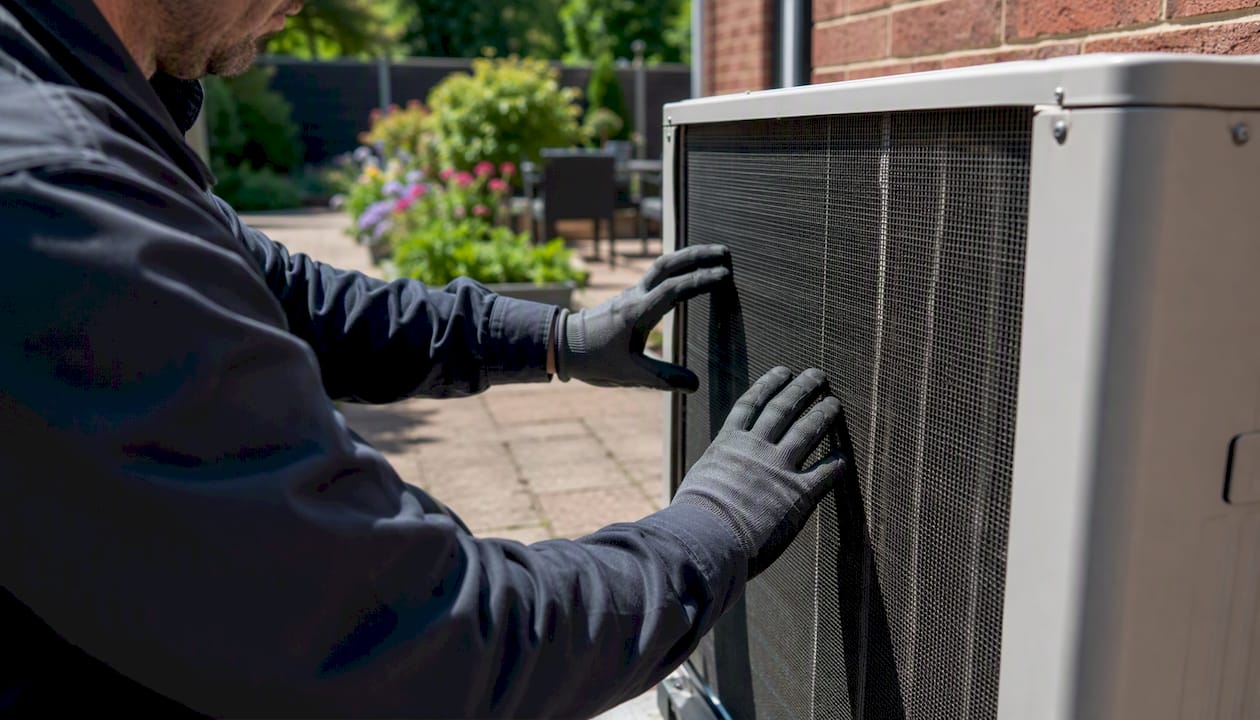
Frequency depends on how hard the system works and how old it is. Most residential setups do fine with one professional inspection a year. Homes running systems hard, older units, or households in climates with genuine heating and cooling seasons back to back should schedule twice a year. Heatable’s maintenance guidance recommends annual professional checks as the baseline, with DIY limited to filter cleaning and keeping outdoor units clear of debris.
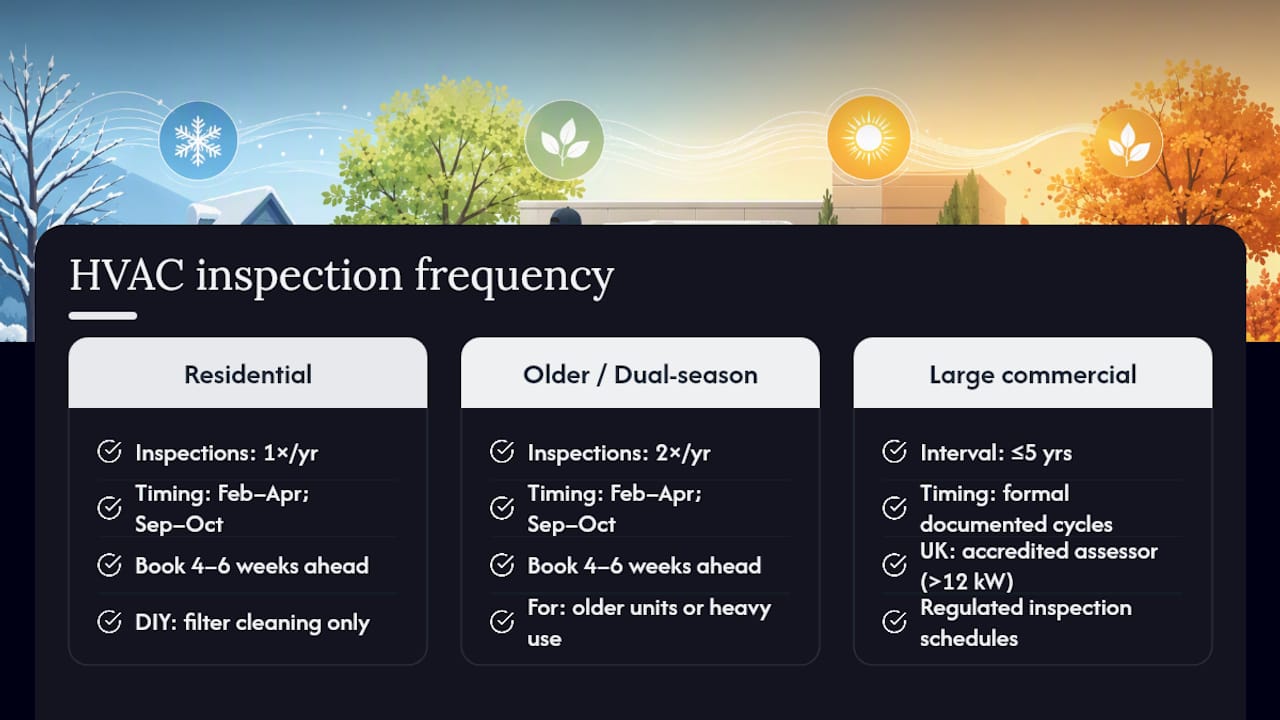
Larger and commercial systems follow different rules entirely. In the UK, systems with an effective rated output above 12 kW must be inspected by an accredited assessor at intervals not exceeding five years. That regulatory example illustrates a wider point: bigger systems need formal, documented inspection cycles rather than an informal annual glance, even where local rules differ from the UK framework.
Book four to six weeks before your target window. Waiting until the first hot week of May or the first frost in November means competing with everyone else for the same handful of appointments.
What information should you have ready when booking?
A faster booking call starts with a few facts on hand. Have your property address, preferred dates and a realistic time window, plus your system’s make, model, and rough age. Describe the symptom, if there is one, rather than just saying “it’s not working properly.”
- Address and preferred appointment window
- System make, model and approximate age
- Symptoms or reason for the visit
- Access instructions and who will be home
It also helps, though it isn’t essential, to know your last service date, when the filter was last changed, and whether you’re on a warranty or maintenance plan.
Pro Tip: Take a short video of the unit running, including any noise, and a photo of the model plate. A technician who can see and hear the fault before arriving often diagnoses it faster and brings the right part on the first visit.
What does a professional HVAC inspection actually include?
A thorough inspection isn’t a five-minute glance at the thermostat. According to Angi’s breakdown of what a comprehensive AC inspection covers, a proper visit works through a defined sequence:
- Visual inspection of the full system, indoor and outdoor units
- Filter and coil check, cleaning where needed
- Refrigerant level and leak check
- Condensate line and drain inspection
- Electrical connections and safety device testing
- Blower and airflow assessment
- Thermostat calibration
- Ductwork check where accessible
Refrigerant work sits in its own category. F-Gas regulations and related good practice guidance on legal servicing requirements make clear that only certified engineers should handle refrigerant charging, repairs, and leak checks. That’s one reason DIY maintenance stops at filters and clearing debris around outdoor units.
Most residential inspections run typically for a duration sufficient to thoroughly assess the system, often between under an hour to a couple of hours. Coil cleaning, refrigerant top-ups, or multi-unit commercial buildings extend that considerably. At the end, expect a written report flagging anything found, along with recommended follow-ups. Some of these frame the visit not as a one-off check but as an operational survey that feeds into ongoing monitoring, particularly for buildings with multiple units or zoned controls. Common recommendations include capacitor replacement, coil cleaning, or an efficiency upgrade if the system is ageing.
How should you prepare your home before the technician arrives?
Clear access matters more than most people expect; for example, Empire Plumbing & AC’s HVAC maintenance services emphasize ensuring unobstructed access to indoor and outdoor units to facilitate thorough inspections and tune-ups. Make sure indoor units, outdoor condensers, and any electrical panels aren’t blocked by furniture, storage boxes, or overgrown planting. Secure pets somewhere they won’t interfere, and pull together any service history or warranty documents you have.
For roof units or plant rooms, confirm safe access in advance and pass on parking or entry details so the technician isn’t stuck waiting at the gate.
- Clear a path to indoor and outdoor units
- Secure pets away from the work area
- Have service history and warranty paperwork ready
- Note down any symptoms, times, and temperatures beforehand
Pro Tip: If you’ve noticed a problem, jot down when it happens, what the thermostat read at the time, and what it sounded like. “Struggles to cool past 3pm” tells a technician far more than “it’s not working right.”
How do you choose a technician and avoid scheduling pitfalls?
Credentials matter here more than a slick quote. Check for trade certification, refrigerant handling qualifications where relevant, valid insurance, and membership of a recognised trade body. Any technician working on refrigerant should hold the appropriate F-Gas certification, not just general HVAC experience.
- Verify trade certification and refrigerant handling qualifications
- Confirm insurance and trade body membership
- Ask for a written quote and a written report after the visit
- Book 4 to 6 weeks ahead of peak season
Maintenance contracts are worth considering if you want priority booking and lower emergency costs, an approach Akita’s guide to maintenance plans covers in more detail. Watch for red flags: quotes that skip a physical inspection entirely, technicians reluctant to open panels or run a visual check, or vague pricing with no written report at the end. Those shortcuts tend to cost more later, not less.
Does proactive scheduling actually save money?
Yes, and the case is straightforward. Energy Star’s maintenance checklist recommends routine checks specifically because small, cheap fixes caught early (a failing capacitor, a blocked drain, a slow refrigerant leak) prevent the kind of total system failure that happens during the worst possible week: the first heatwave or cold snap of the season.
The trade-off is simple. A routine inspection costs a fraction of an emergency call-out, and it happens on your schedule rather than during a heatwave when every technician in the region is booked solid. Technicians consistently report that homeowners who wait for a breakdown pay more, in both repair costs and inconvenience, than those on a maintenance plan. Akita’s own analysis of why regular inspections matter makes the same point: catching a failing part in March is a different conversation to replacing a dead compressor in July.
A technician’s-eye view on skipping inspections
Akita’s technicians see a clear pattern: preventable failures cluster around the households and buildings that skipped their pre-season check. Call-out volume spikes every summer during the first real heatwave, almost always concentrated among systems that hadn’t been inspected since the previous year.
Book your climate control inspection with Akita
Akita is built for exactly the scheduling problem this article describes: getting a pre-season slot booked before everyone else floods the calendar. Certified technicians, transparent pricing agreed before work starts, and flexible time windows mean you’re not guessing what the visit will cost or when someone will actually show up.
Booking is straightforward. Tell Akita your system’s make and age, describe any symptoms, and pick a window that suits your household or building schedule. Members of Akita’s maintenance plans get priority booking ahead of peak season, which matters most in the weeks right before summer heat or winter cold hits. If your inspection turns up a system that’s better replaced than repaired, Akita’s domestic air conditioning installation service picks up from there with fixed-price options, and commercial building managers can review the commercial air conditioning options for larger properties. Book your slot now, before the season fills the diary.
Frequently asked questions
How often should I schedule an HVAC inspection? Once a year for most residential systems, twice a year if the system is older, heavily used, or you live somewhere with distinct heating and cooling seasons back to back.
What’s the best time of year to schedule climate control inspections? Early spring for cooling systems and early autumn for heating, both ahead of the season that pushes demand for technicians up.
Can I do any of the inspection myself? Filter cleaning and clearing debris from outdoor units are fine for most homeowners. Coil cleaning, refrigerant handling, and condensate drain work need a certified technician.
What should I have ready when I call to book? Your address, preferred dates, system make and age, a description of any symptoms, and access details for the technician.
Which symptoms mean I shouldn’t wait for a scheduled visit? Burning smells, refrigerant or water leaks, grinding or screeching noises, significantly reduced airflow, or frequent short-cycling all warrant an immediate call.