

How to schedule AC servicing: a 2026 UK guide
TL;DR:
- Scheduling annual AC services in spring with a certified engineer protects your system, warranty, and energy bills in the UK.
- Delaying or skipping professional maintenance increases breakdown risk, lowers efficiency, and voids warranties.
Scheduling AC servicing is the act of arranging a professional maintenance appointment to keep your air conditioning system running safely and efficiently. Most UK homes need this done once per year, ideally in spring before the summer heat arrives. The process involves knowing the right timing, confirming your engineer holds F-Gas certification, and understanding what a standard service covers. Get these three things right, and you protect your system, your warranty, and your energy bills in one appointment.
How to schedule AC servicing: timing and frequency
The standard recommendation for domestic UK homes is one professional service per year. Spring is the best time for AC servicing because engineers are less busy and your system is ready before peak demand hits in summer.
Some households need twice-yearly maintenance. If you have pets, suffer from allergies, or run your system for more than eight hours a day, a second service in autumn makes sense. The additional session catches filter build-up and refrigerant issues before they become expensive faults.
UK law adds a layer of obligation for larger systems. Systems over 12kW require a TM44 energy inspection every five years, and all systems that use refrigerants must be handled by an F-Gas-certified engineer. Domestic systems under 12kW carry no mandatory annual servicing law, but skipping service still voids most manufacturer warranties.
| System type | Recommended frequency | Key consideration |
|---|---|---|
| Domestic, under 12kW, light use | Once per year | Spring service before summer |
| Domestic, under 12kW, heavy use or pets | Twice per year | Spring and autumn |
| Systems over 12kW | Once per year plus TM44 every 5 years | Legal compliance required |
| Commercial systems | Twice per year minimum | F-Gas log required |
What do you need to prepare before booking?
Preparing system information before you contact a provider speeds up the booking process and avoids delays on the day. Have the following ready:
- System model and brand: Found on the indoor unit’s label or your original installation paperwork.
- Installation date: Helps the engineer assess the system’s age and likely wear.
- Previous service records: Invoices and certificates prove maintenance history and support warranty claims.
- Warranty documentation: Check whether your warranty requires annual servicing by a qualified professional. Manufacturers often void warranties without proof of regular maintenance.
- Access details: Note whether the indoor or outdoor unit requires ladder access or is in a restricted space.
Cost is worth factoring in before you book. A domestic AC service in the UK typically costs between £80 and £150 per visit in 2026. That price usually covers a full inspection, cleaning, and minor adjustments.
Verifying your engineer’s credentials is non-negotiable. Only F-Gas-certified engineers are legally permitted to handle refrigerants in the UK. Ask for their F-Gas registration number before confirming any appointment.
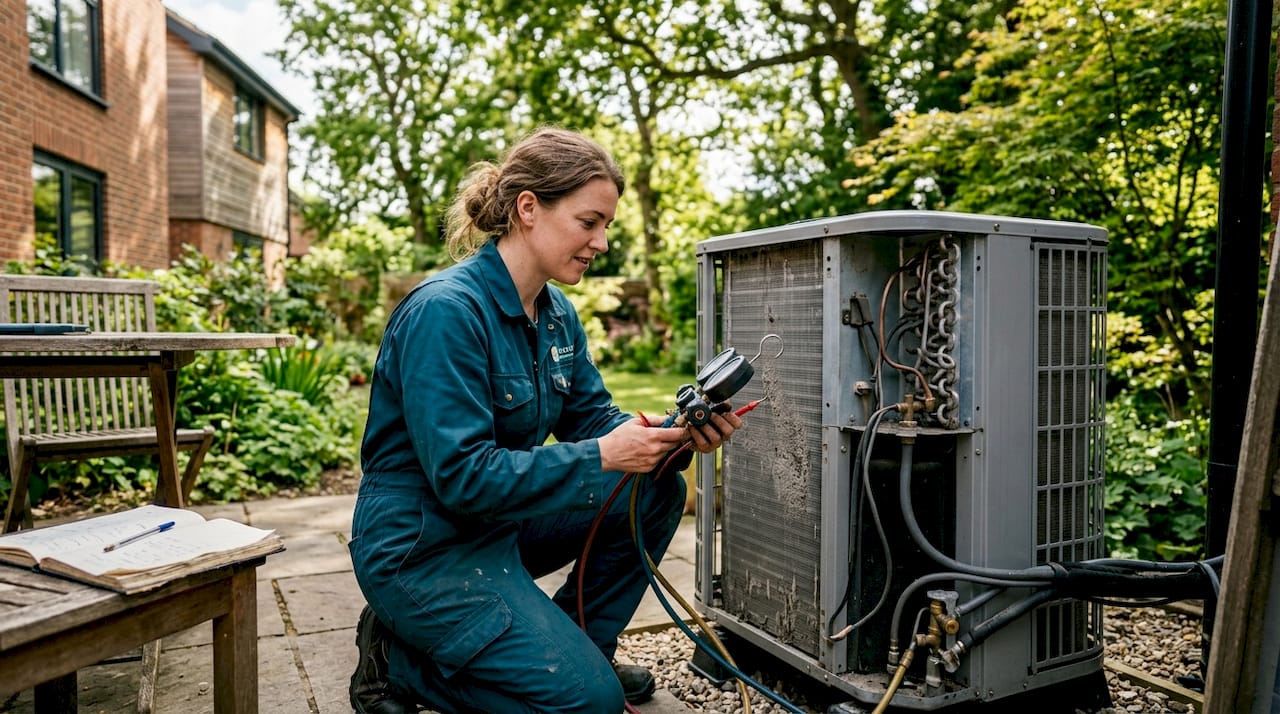
Pro Tip: Search the F-Gas Register on the Environment Agency website to verify any engineer’s certification before you book. It takes under two minutes and protects you from illegal or unsafe repairs.
Step-by-step guide to booking your AC service appointment
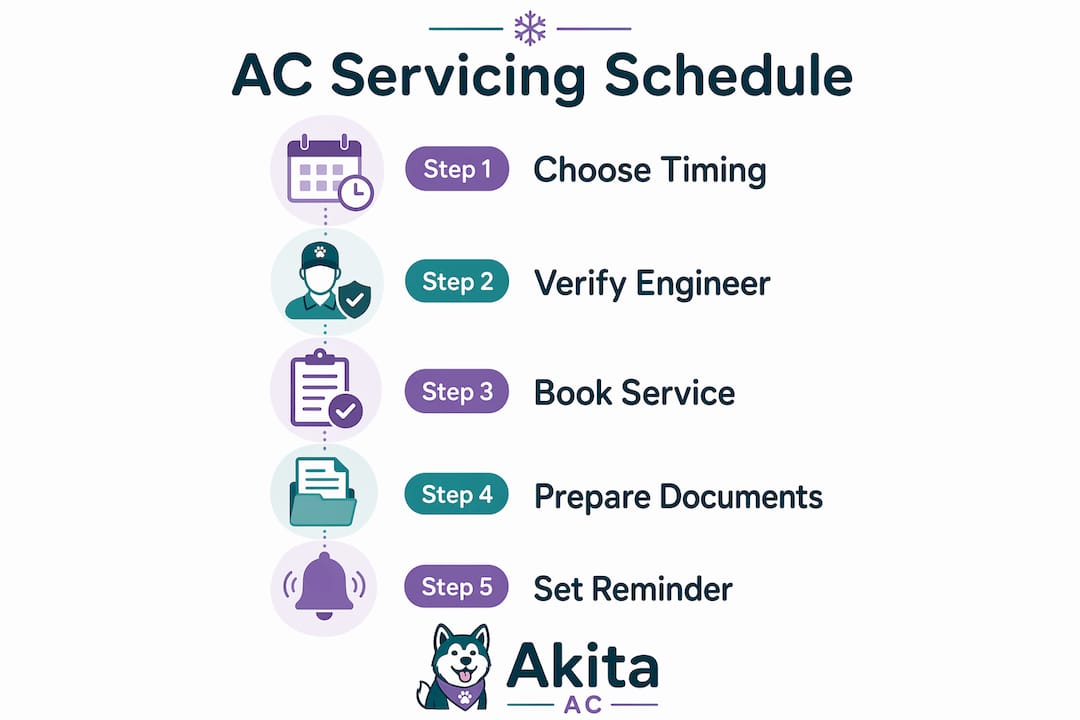
A clear process removes the guesswork from arranging maintenance. Follow these steps to book with confidence.
-
Research and shortlist providers. Search for local engineers with verified F-Gas certification and positive reviews. Check accreditation bodies such as Refcom or BESA for registered members. Aim for a shortlist of two or three providers.
-
Contact providers with your system details. Share your unit’s model, age, and last service date when you call or email. Detailed system information helps providers quote accurately and allocate the right amount of time.
-
Confirm certification and service scope. Ask specifically whether the engineer holds F-Gas certification. Confirm the service includes filter cleaning, coil inspection, refrigerant level checks, and electrical testing. A vague answer here is a red flag.
-
Choose your appointment date. Book in february or march if possible to beat the spring rush. If you have missed that window, avoid booking during a heatwave when engineers are stretched and response times slow. You can also schedule an appointment through providers who offer online booking to save time.
-
Prepare for the visit. Clear a one-metre space around both the indoor and outdoor units. Ensure the engineer can access your consumer unit if electrical checks are needed. Have your previous service records on hand.
-
Ask about ongoing maintenance plans. Many certified providers offer annual contracts that lock in a fixed price and priority booking. These plans suit homeowners who want to remove the scheduling effort entirely.
A typical service visit lasts between 45 minutes and two hours, depending on system complexity. Budget your day accordingly.
Pro Tip: Book your next service at the end of each visit. Engineers often offer a small discount for forward bookings, and you secure a slot before the diary fills up.
Common scheduling mistakes and how to avoid them
Most servicing problems trace back to a small number of avoidable errors. Knowing them in advance saves money and frustration.
- Booking an uncertified engineer. Using an engineer without F-Gas certification to handle refrigerants is illegal in the UK. It also invalidates your warranty and may leave your system in an unsafe condition.
- Delaying beyond the recommended interval. Skipping or delaying servicing reduces system efficiency, raises energy costs, and increases the risk of breakdowns at the worst possible time.
- Ignoring warranty requirements. Many homeowners assume their system is covered without checking. Manufacturers frequently void warranties when there is no documented proof of annual professional maintenance.
- Failing to confirm service scope. Not all providers include refrigerant checks or coil cleaning as standard. Confirm the full list of tasks before the engineer arrives.
- Ignoring early warning signs. Unusual noises, weak airflow, or warm air from a cooling unit all signal that you need a service call sooner than scheduled. Do not wait for the annual date if something feels wrong.
Keeping a dedicated folder with every service invoice, engineer certificate, and warranty document is the single most reliable way to protect your investment. If a dispute arises with a manufacturer or landlord, that paper trail is your evidence.
Set a recurring reminder in your phone or calendar for the same month each year. Pair it with a note of your engineer’s contact details so booking takes under five minutes.
How do you track and manage your servicing schedule?
Consistency is what separates a well-maintained system from one that fails mid-summer. A few simple habits make it easy to stay on track.
Use a digital calendar with an annual reminder set for february or march. Add a second reminder two weeks before the appointment to confirm the booking and prepare access. Google Calendar, Apple Calendar, and Outlook all support recurring annual events at no cost.
Maintain a dedicated folder, physical or digital, for all AC-related documents. Store service invoices, F-Gas certificates, warranty cards, and installation records together. A complete service record protects your warranty and gives any future engineer an accurate picture of your system’s history.
Consider an annual AC servicing contract with a certified provider. These agreements typically include priority booking, fixed pricing, and automatic reminders, removing the need to manage scheduling yourself. For homeowners who run their systems heavily, a contract is the most reliable option.
Review your AC maintenance checklist between professional visits. Tasks like wiping down the indoor unit, checking that the outdoor unit is clear of debris, and monitoring for unusual sounds take minutes and extend the life of your system.
Pro Tip: Photograph your outdoor unit at each service visit. A visual record of its condition over time helps engineers spot gradual deterioration that might otherwise go unnoticed.
Key takeaways
Scheduling AC servicing once a year in spring, with an F-Gas-certified engineer, is the most effective way to protect your system’s efficiency, warranty, and legal compliance.
| Point | Details |
|---|---|
| Annual spring service | Book in february or march before peak demand and engineer availability drops. |
| F-Gas certification required | Only certified engineers can legally handle refrigerants; always verify before booking. |
| Cost expectation | A domestic service costs £80–£150 and lasts 45 minutes to two hours. |
| Prepare before booking | Have your model, installation date, and previous service records ready to speed up scheduling. |
| Keep a service record | Store all invoices and certificates to protect your warranty and support future servicing. |
Akita’s view: why scheduling is the one habit worth keeping
Most homeowners contact us after something has gone wrong. A system that stopped cooling on the hottest day of the year, a warranty claim rejected because there are no service records, or an energy bill that crept up without anyone noticing why. In almost every case, the root cause is the same: the service appointment that never got booked.
F-Gas compliance is not a technicality. It is the legal boundary between a safe, properly maintained system and one that could cause harm or leave you with an unenforceable warranty. From our experience, homeowners who treat F-Gas certification as a genuine filter when choosing an engineer almost never end up with problems. Those who pick the cheapest quote without checking often do.
The balance between DIY maintenance and professional servicing is straightforward. Wipe down your unit, keep the outdoor condenser clear, and change or clean filters regularly. But leave refrigerant handling, electrical checks, and coil cleaning to a certified professional. That division of responsibility keeps costs manageable and your system in good condition year after year.
A step-by-step servicing guide can help you understand exactly what happens during a professional visit, so you know what to expect and what to ask.
— Akita
Akita’s domestic AC servicing: fixed pricing, certified engineers
Akita provides professional air conditioning servicing for homeowners across Suffolk, Norfolk, and Essex. Every visit is carried out by F-Gas-certified engineers, and pricing is transparent with no hidden call-out fees.
Whether you need a first-time service or want to set up a regular maintenance plan, Akita makes the process straightforward. You get a clear quote, a confirmed appointment, and a full service record on completion. Visit Akita’s domestic air conditioning page to request a quote or find out more about servicing packages available in your area.
FAQ
How often should I service my air conditioner?
Most UK homes need a professional AC service once per year, ideally in spring. Heavily used systems or homes with pets and allergy sufferers benefit from twice-yearly servicing.
What does a standard AC service include?
A typical service covers filter cleaning, evaporator and condenser coil inspection, refrigerant level checks, electrical connection testing, and condensate system checks. The visit usually lasts 45 minutes to two hours.
Do I legally need to service my home AC unit?
UK law does not require annual servicing for domestic systems under 12kW. However, systems over 12kW need a TM44 inspection every five years, and any engineer handling refrigerants must hold F-Gas certification.
How much does a domestic AC service cost in the UK?
A domestic AC service typically costs between £80 and £150 in 2026. That price generally includes a full inspection, cleaning, and minor adjustments.
What happens if I skip my annual AC service?
Delaying or skipping servicing reduces system efficiency, raises energy costs, and increases the risk of avoidable breakdowns. It also risks voiding your manufacturer warranty if proof of regular maintenance is required.