

How to maintain eco-friendly HVAC: a practical guide
TL;DR:
- Maintaining an eco-friendly HVAC system involves regular professional servicing, monthly filter cleaning, and steady operating habits. Proper commissioning and behavioral changes significantly improve system efficiency and prevent costly repairs.
Maintaining an eco-friendly HVAC system means combining regular professional servicing, consistent filter care, correct commissioning, and steady operating habits to keep energy consumption low and system lifespan long. The industry term for this approach is “sustainable HVAC maintenance,” and it applies equally to heat pumps, split systems, and ducted units. Annual MCS-certified servicing is a warranty requirement, not just good practice. Skipping it can void your compressor warranty and lead to repair bills exceeding £2,000. Get these fundamentals right, and your system will run efficiently for years.
How to maintain eco-friendly HVAC: essential tasks by frequency
Sustainable HVAC maintenance follows a clear schedule. Splitting tasks by frequency makes the whole process manageable and prevents the kind of neglect that quietly erodes performance.
Monthly tasks you can do yourself
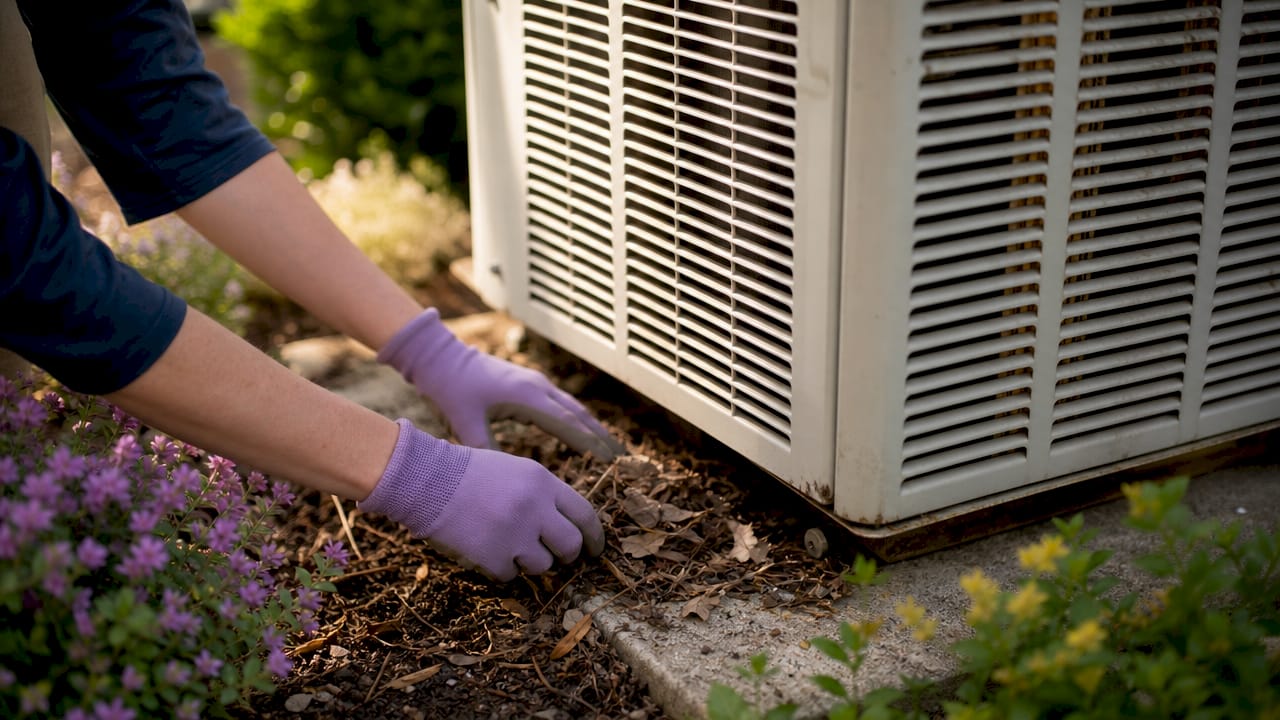
Air filter cleaning is the single highest-impact task a homeowner can perform. Cleaning filters every 1–2 months can save up to £300 annually on energy bills and improve the system’s Coefficient of Performance (COP) by 0.3 to 0.5 points. The COP measures how much heat output you get per unit of electricity consumed. A higher COP means lower running costs and a smaller carbon footprint.
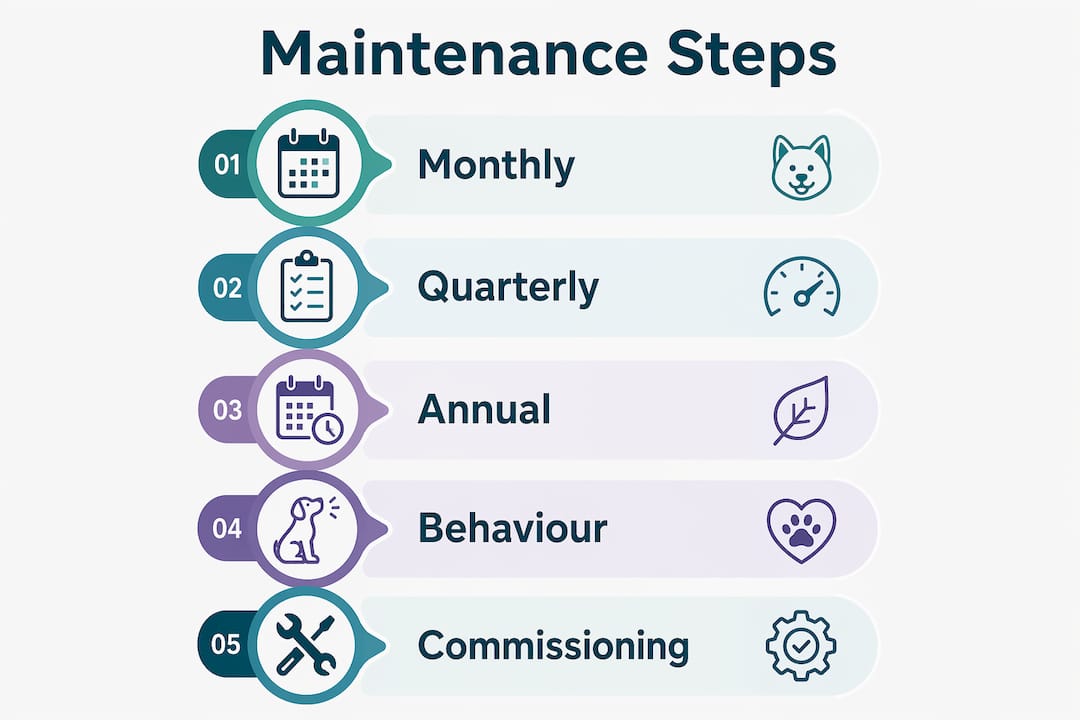
Inspect the outdoor unit at the same time. Clear away leaves, grass cuttings, and any debris that has gathered around it. Blocked outdoor coils and insufficient clearance can increase electricity use by up to 20%. Maintain at least 30 cm of clear space around the unit on all sides to prevent airflow restriction.
Pro Tip: Set a recurring calendar reminder on the first day of each month to check your filters and walk around the outdoor unit. A five-minute check prevents a £500 repair.
Annual professional servicing
Once a year, book an MCS-certified engineer to service the full system. This visit covers refrigerant leak detection under F-Gas regulations, coil cleaning, electrical connection checks, and a full performance assessment. Annual servicing costs £100–£200 and keeps efficiency within 2% of the system’s original rated performance. Without it, efficiency drops by 0.5–1.0% per year, which compounds quickly.
| Task | Frequency | Who performs it |
|---|---|---|
| Air filter cleaning or replacement | Every 1–2 months | Homeowner |
| Outdoor unit clearance check | Monthly | Homeowner |
| System pressure check (1.0–2.0 bar) | Monthly | Homeowner |
| Coil cleaning and refrigerant check | Annually | MCS-certified engineer |
| Full electrical and controls inspection | Annually | MCS-certified engineer |
For a deeper look at how routine care reduces running costs, the Akita guide on regular HVAC maintenance covers the financial case in detail.
How can behavioural changes improve your system’s efficiency?
Resident behaviour is the most significant factor influencing heat pump efficiency, more than the technology itself. That finding surprises most homeowners, who assume buying a high-spec system is enough. The way you operate the system day to day determines whether that efficiency is ever realised.
The “low and slow” principle
Heat pumps are not boilers. A boiler fires hard, heats water fast, and switches off. That cycling approach spikes electricity consumption by 20% or more when applied to a heat pump. Maintaining a steady, constant temperature is far more efficient than turning the system on and off throughout the day. The system works at a lower, gentler output continuously, which is exactly what it was designed to do.
Many homeowners carry over what Akita calls the “boiler mentality.” They crank the thermostat up when they feel cold and switch the system off when they leave the house. Both habits cost money and increase wear on the compressor.
Practical habits that protect efficiency:
- Set a consistent target temperature and leave it there, adjusting by no more than 1–2°C at a time.
- Use a programmable timer or smart thermostat to reduce output during unoccupied hours rather than switching the system off entirely.
- Avoid setting heating curves too aggressively. A gradual ramp from a lower overnight temperature is more efficient than a sharp morning spike.
- Keep internal doors closed in rooms you are actively heating or cooling to reduce the volume the system must condition.
Pro Tip: If you have a smart thermostat, use its “away” mode rather than switching the system off. Keeping the space at 16°C while you are out uses far less energy than reheating from cold.
For more guidance on reducing running costs through behavioural changes, Akita’s article on reducing HVAC energy costs is worth reading alongside this one.
What commissioning and setup decisions affect long-term performance?
Commissioning is the process of setting up your HVAC system after installation. It covers balancing heating circuits, configuring controls, setting operating parameters, and verifying that the system performs to its rated specification. Correct installation and balanced heating circuits prevent poor performance even when minimum installation standards are met on paper.
Poor commissioning is one of the most common causes of underperforming systems. A unit that is correctly installed but incorrectly commissioned will consume more electricity, struggle to reach target temperatures, and require more frequent maintenance. The homeowner rarely knows the difference until the energy bills arrive.
Questions to ask your installer at commissioning:
- Has the heating circuit been balanced so that all radiators or fan coil units receive the correct flow rate?
- Has the system been set to operate at the lowest practical flow temperature for the building?
- Is there a System Criteria Document that records the operating parameters, so future engineers can service the system correctly?
- Has the controls interface been configured for the building’s actual occupancy pattern?
- Has the refrigerant charge been verified against the manufacturer’s specification?
Commissioning combined with maintenance should be treated as an ongoing lifecycle activity, not a one-off event at installation. A well-commissioned system that receives annual servicing will consistently outperform a poorly commissioned system that is serviced every year. For a detailed breakdown of what commissioning involves, this HVAC commissioning guide covers the process from a homeowner’s perspective.
How do you troubleshoot and prevent common HVAC faults?
Most HVAC faults give early warning signs before they become expensive failures. Catching them early is the difference between a minor adjustment and a major repair.
Watch for these symptoms:
- Unusual noises. Rattling, grinding, or hissing sounds indicate loose components, debris in the fan, or a refrigerant leak. Do not ignore them.
- Pressure drops. System pressure below 0.5 bar requires repressurisation or engineer intervention. Check your pressure gauge monthly and log the readings.
- Reduced heating or cooling output. If the system runs longer than usual to reach the target temperature, blocked coils or a refrigerant issue is the most likely cause.
- Higher electricity bills without a change in usage. Skipping maintenance reduces SCOP (Seasonal Coefficient of Performance) from 3.5 to 2.8 over two years, which shows up directly in your energy bills.
Refrigerant pressure deviations of more than 5% indicate leaks that damage compressor longevity. This is not a homeowner fix. Call a certified engineer immediately if you suspect a refrigerant issue.
For water-based systems, check inhibitor levels in the heating circuit annually. Corrosion inhibitor protects radiators and the heat exchanger from scale and rust. A system without adequate inhibitor will develop blockages that reduce flow and force the pump to work harder.
Pro Tip: Keep a simple maintenance log. Note the date, pressure reading, filter condition, and any unusual behaviour after each check. This log is invaluable when an engineer visits and can support warranty claims.
For practical guidance on eco-friendly HVAC upgrades that complement good maintenance habits, Akita’s resource covers the most effective improvements for UK homes.
Key takeaways
Eco-friendly HVAC maintenance requires annual MCS-certified servicing, monthly filter cleaning, correct commissioning, and steady operating habits to preserve efficiency and protect your warranty.
| Point | Details |
|---|---|
| Annual servicing is mandatory | MCS-certified servicing costs £100–£200 and keeps efficiency within 2% of original rated performance. |
| Filter cleaning saves money | Cleaning filters every 1–2 months can save up to £300 annually and improves COP by 0.3–0.5 points. |
| Behaviour matters most | Running the system “low and slow” at a steady temperature reduces electricity use more than any single hardware upgrade. |
| Commissioning shapes long-term performance | Balanced circuits and correct operating parameters at installation prevent years of underperformance. |
| Early fault detection prevents major costs | Monitoring pressure monthly and acting on unusual noises or output drops avoids compressor failure and refrigerant leaks. |
What I have learned from years of HVAC maintenance work
The most common mistake I see is homeowners treating a heat pump like a boiler they happen to own. They switch it off when they go out, blast it when they return, and wonder why their bills are high. The technology is fundamentally different, and the operating logic has to change with it.
The second mistake is treating the annual service as optional. I understand the temptation. The system seems to be working fine, so why spend £150? The answer is that HVAC degradation is invisible until it is not. By the time you notice reduced output or a spike in electricity use, the efficiency loss has already been compounding for months. A £150 service call prevents a £2,000 compressor replacement.
What I find genuinely encouraging is how much impact small behavioural changes make. Adjusting a thermostat setting, clearing debris from an outdoor unit, and checking a pressure gauge once a month. These are not technical tasks. They take minutes. Yet they have a measurable effect on both running costs and carbon output. The homeowners who engage with their systems at this level consistently get better results than those who rely entirely on the annual service visit.
My honest advice: treat your HVAC system as a partnership. You handle the monthly checks and steady operation. A certified engineer handles the annual deep service. That division of responsibility keeps the system running at its best and keeps your warranty intact.
— Akita
Akita’s professional HVAC services for homeowners
Keeping your system running efficiently is easier with the right professional support behind you.
Akita provides certified installation, servicing, and maintenance for residential HVAC systems across Suffolk, Norfolk, and Essex. Every installation is commissioned to manufacturer specification, and annual service visits cover refrigerant checks, coil cleaning, and full performance verification. If you are considering a new system or want to bring an existing one up to standard, Akita’s domestic air conditioning installation service is the starting point. For homeowners who need a fast, fixed-price solution, the fixed-price installation option removes the uncertainty from the process entirely.
FAQ
What does annual HVAC servicing include?
An annual service by an MCS-certified engineer covers refrigerant leak detection, coil cleaning, electrical checks, and a full performance assessment. It costs £100–£200 and keeps efficiency within 2% of the system’s original rated performance.
How often should I clean my HVAC filters?
Clean or replace air filters every 1–2 months. Regular filter maintenance improves COP by 0.3–0.5 points and can save up to £300 annually on energy bills.
Is it better to leave my heat pump on all day?
Yes. Running a heat pump at a steady, constant temperature is more efficient than switching it on and off. Rapid cycling spikes electricity consumption by 20% or more compared to continuous low-temperature operation.
What pressure should my HVAC system run at?
System pressure should sit between 1.0 and 2.0 bar. If pressure drops below 0.5 bar, the system needs repressurisation or engineer intervention to prevent damage.
How do I know if my HVAC system was commissioned correctly?
Ask your installer for a System Criteria Document that records operating parameters. Signs of poor commissioning include uneven heating across rooms, longer-than-expected run times, and higher-than-expected electricity bills from the first month of use.