

Air conditioning upgrades in 2026: your complete guide
TL;DR:
- In 2026, air conditioning upgrades focus on advanced heat pump systems that provide year-round heating and cooling. Homeowners should choose inverter-driven units with low-GWP refrigerants and ensure proper installation to meet new regulations and maximize grants. Planning upgrades during refurbishment limits costs, boosts compliance, and future-proofs homes amid evolving standards.
Air conditioning upgrades in 2026 centre on advanced air-to-air heat pumps that cool in summer and heat in winter, making them a year-round investment rather than a seasonal luxury. The UK government now includes air-to-air heat pumps in the Boiler Upgrade Scheme, offering a £2,500 grant for homeowners replacing fossil-fuel heating. Updated Building Regulations Part F introduces new ventilation requirements for airtight homes, and the Future Homes Standard is pushing new builds toward zero-carbon-ready systems. For homeowners and business managers in Suffolk, Norfolk, and Essex, understanding these changes is the difference between a well-planned upgrade and an expensive retrofit.
1. Air conditioning upgrades in 2026: the technologies worth knowing
The best air conditioning systems in 2026 are inverter-driven split systems using low Global Warming Potential refrigerants. These are not incremental improvements. They represent a genuine shift in what a domestic or commercial AC unit can do.
Air-to-air heat pumps
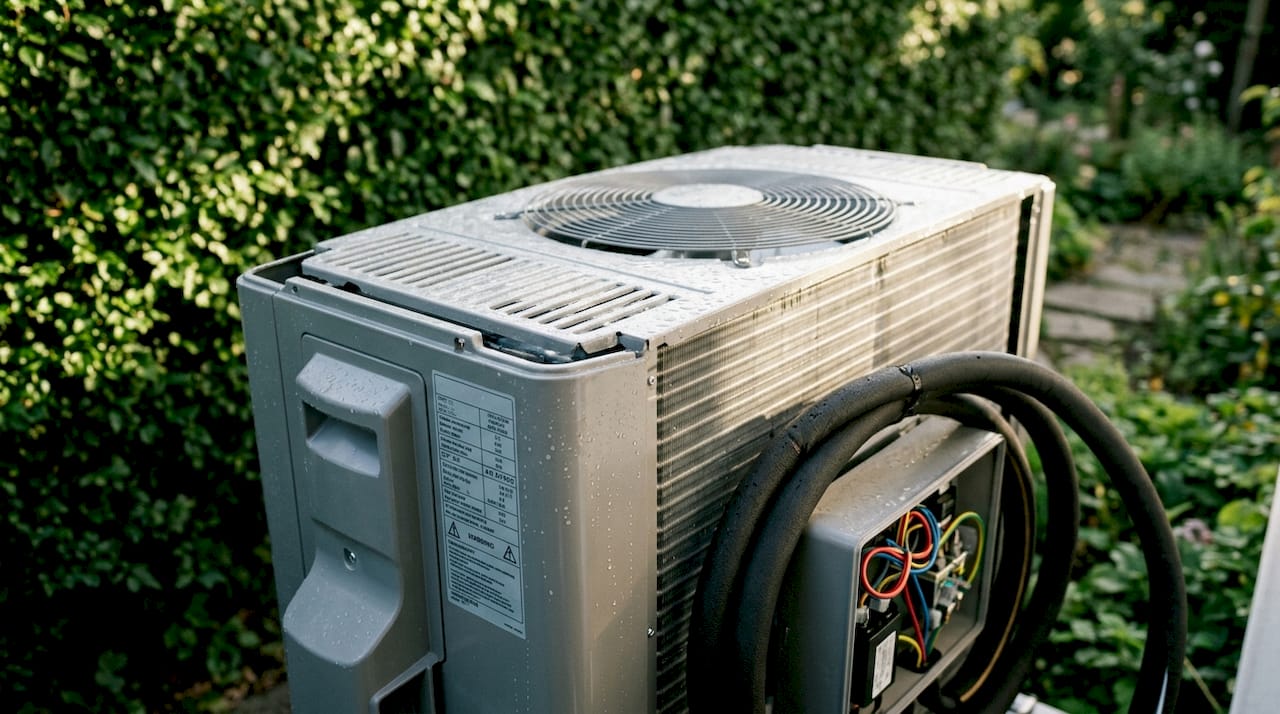
Air-to-air heat pumps are the headline technology for 2026. They deliver 3–4 kW of heat for every 1 kW of electricity consumed. That ratio makes them significantly cheaper to run than gas or electric resistance heating for individual rooms.
Inverter-driven systems with smart controls
Inverter technology adjusts compressor speed continuously rather than switching on and off. This reduces energy waste and keeps temperatures stable. Pairing an inverter unit with a smart thermostat or home automation system adds scheduling, remote control, and energy monitoring. The 2026 market trend firmly favours this combination for both residential and commercial properties.
Low-GWP refrigerants
Refrigerant choice matters for regulatory compliance. R-32 is replacing R-410A across the industry because it has a lower Global Warming Potential and meets tightening F-Gas regulations. Systems using R-32 are better positioned for long-term compliance as restrictions on high-GWP refrigerants increase through the late 2020s.
Emerging technologies
AI-driven controls that learn occupancy patterns and adjust output accordingly are entering the mainstream. Thermal battery integration, which stores cooling or heating capacity during off-peak tariff periods, is also gaining traction for commercial buildings. These are not yet standard, but specifying infrastructure for them now avoids costly retrofits later.
Pro Tip: When comparing units, ask your installer for the Seasonal Energy Efficiency Ratio (SEER) and Seasonal Coefficient of Performance (SCOP) ratings. SEER covers cooling efficiency and SCOP covers heating. Higher numbers mean lower running costs year-round.
2. Installation considerations and regulatory requirements
Getting the installation right matters as much as choosing the right unit. Poor planning at this stage creates problems that are expensive to fix once walls are plastered and ceilings are finished.
The most common installation errors stem from ignoring four factors:
- System sizing. Correct sizing depends on insulation levels, room volume, glazing area, and building orientation. An oversized unit short-cycles, wearing out components faster. An undersized unit runs constantly without reaching the target temperature.
- Ventilation compliance. Updated Part F regulations require Mechanical Ventilation with Heat Recovery (MVHR) in homes with air permeability below 3 m³/h·m² at 50 Pa. MVHR installation typically costs £2,500–£4,500. Understanding how home ventilation works before specifying your system prevents costly compliance failures.
- Acoustic insulation. Outdoor units generate noise. Positioning and acoustic insulation must be planned before installation, not added as an afterthought. System design must integrate careful airflow mapping to avoid noise pollution, particularly in refurbished homes with limited wall cavities.
- MCS certification. Only MCS-certified installers can apply for Boiler Upgrade Scheme grants on your behalf. MCS certification requires businesses to employ a Technical Supervisor with Level 3 competence in Refrigeration, Air Conditioning and Heat Pumps. This is not a box-ticking exercise. It protects you as a consumer and validates the quality of the installation.
Pro Tip: Plan your AC installation at the same time as any refurbishment or extension work. Adding it mid-project costs far less than retrofitting after completion, when chasing cables and pipework through finished walls becomes a significant labour expense.
3. Financial benefits and grant schemes for 2026 upgrades
The financial case for energy efficient AC upgrades has strengthened considerably in 2026. Government grants, lower running costs, and rising energy awareness all point in the same direction.
-
Claim the £2,500 Boiler Upgrade Scheme grant. Air-to-air heat pumps qualify for a £2,500 grant in England and Wales when replacing fossil-fuel heating. The grant runs until 31 march 2028 or until funds are exhausted. Your installer applies through Ofgem and deducts the grant directly from your invoice, so you never handle the money yourself.
-
Compare with other heat pump grants. Ground source and air-to-water heat pumps attract higher grants under the same scheme. If your property suits those technologies, the financial calculation changes. Discuss all options with your installer before committing.
-
Calculate running cost savings. Split systems deliver heat at a fraction of the cost of direct electric heating. At current UK electricity tariff levels, the efficiency ratio of 3–4 kW heat per 1 kW electricity makes a meaningful difference to quarterly bills, particularly for rooms used frequently as home offices or living spaces.
-
Insulate before you size. Proper insulation before sizing reduces the unit capacity you need. A smaller unit costs less to buy and less to run. Loft and cavity wall insulation remain best practice even though pre-work EPC requirements have been removed from the grant scheme.
-
Use accredited installers only. The grant application process requires MCS-certified installers. Using an uncertified installer means losing the grant entirely. Verify MCS registration before signing any contract.
4. Common mistakes to avoid when upgrading
Most problems with air conditioning upgrades come from decisions made before installation begins, not from the equipment itself.
- Treating AC as an afterthought. Adding air conditioning after a refurbishment is complete significantly increases costs. Pipework routes, electrical supply, and wall penetrations all become more disruptive and expensive once a building is finished. Plan it in from the start.
- Ignoring ventilation. Airtight modern homes trap moisture and stale air. Installing a cooling system without addressing ventilation creates condensation, mould risk, and poor air quality. Part F compliance is not optional for qualifying properties.
- Skipping insulation improvements. Sizing a unit for a poorly insulated room means buying more capacity than you will need once insulation is improved. Ignoring insulation before sizing leads to oversized units, higher purchase costs, and inefficient operation.
- Choosing uncertified installers. An installer without MCS certification cannot access Boiler Upgrade Scheme grants. Beyond the financial loss, uncertified work may not meet Building Regulations, creating problems when you sell the property.
- Overlooking acoustic planning. Outdoor condenser units placed near bedrooms or neighbouring properties cause noise complaints. Acoustic barriers and careful positioning must be part of the design, not a correction made after complaints arise.
5. How to future-proof your heating and cooling
The Future Homes Standard requires new homes in England to be zero-carbon ready, with new builds from 24 march 2027 needing to reduce carbon emissions by at least 75% compared to the 2013 baseline. Gas boilers become impractical under this standard. Heat pumps become the default.
For existing homes and commercial buildings, the direction of travel is clear. Upgrading to an air-to-air heat pump now positions you ahead of regulatory requirements rather than scrambling to meet them later. Pairing your system with photovoltaic solar panels reduces your electricity costs further, since the heat pump draws from generation rather than the grid during daylight hours.
Building fabric improvements compound the benefit. Better insulation means a smaller, cheaper system achieves the same comfort level. Smart energy management systems that coordinate the heat pump, solar generation, and battery storage represent the logical endpoint of this approach. The HVAC trends shaping 2026 all point toward integrated, low-carbon systems rather than standalone cooling units.
Installer quality is a long-term investment too. The technical complexity of these systems is rising. Choosing a contractor with Level 3 qualified supervisors and ongoing training means your system is maintained correctly as technology and regulations continue to evolve. The energy efficiency case for upgrading now, rather than waiting, grows stronger each year.
| Future-proofing factor | Why it matters in 2026 |
|---|---|
| Air-to-air heat pump | Meets Future Homes Standard direction; eligible for Boiler Upgrade Scheme grant |
| Low-GWP refrigerant (R-32) | Compliant with tightening F-Gas regulations through the late 2020s |
| MVHR ventilation | Required for airtight homes under Part F; prevents moisture and air quality problems |
| PV solar integration | Reduces running costs by using generated electricity rather than grid supply |
| MCS-certified installer | Mandatory for grant access; ensures regulatory compliance and consumer protection |
Key takeaways
The most cost-effective air conditioning upgrades in 2026 combine air-to-air heat pump technology, MCS-certified installation, and the £2,500 Boiler Upgrade Scheme grant to deliver year-round comfort and measurable savings.
| Point | Details |
|---|---|
| Grant availability | A £2,500 Boiler Upgrade Scheme grant is available for air-to-air heat pumps replacing fossil-fuel heating until march 2028. |
| Technology choice | Inverter-driven systems with R-32 refrigerant offer the best balance of efficiency, compliance, and running cost savings. |
| Ventilation compliance | Homes with high airtightness require MVHR under updated Part F regulations; budget £2,500–£4,500 for installation. |
| Installer certification | Only MCS-certified installers with Level 3 qualified supervisors can access Boiler Upgrade Scheme grants on your behalf. |
| Planning timing | Integrating AC during refurbishment rather than after completion significantly reduces installation cost and disruption. |
Akita’s perspective on planning your 2026 upgrade
The single biggest mistake we see is homeowners treating air conditioning as a summer purchase. They call us in june, want it installed by july, and have not thought about heating, ventilation, or grants at all. By that point, the planning window for a well-integrated system has often closed.
Viewing air conditioning as a year-round tool changes the entire financial calculation. A system that heats in winter and cools in summer pays for itself faster than one used for three months a year. The Boiler Upgrade Scheme grant makes this argument even stronger, but only if you use a certified installer and plan ahead.
The regulatory picture is also moving faster than most homeowners realise. The Future Homes Standard, Part F ventilation updates, and F-Gas refrigerant restrictions are not distant concerns. They affect decisions being made right now about which systems to specify and which installers to trust. We have invested heavily in keeping our technical team qualified to Level 3 in Refrigeration, Air Conditioning and Heat Pumps precisely because the complexity of these systems is increasing.
My honest advice: start the conversation with a qualified installer before you start a refurbishment, not after. The cost difference between planning it in and retrofitting it later is substantial. The grant is real, the technology is mature, and the regulatory direction is settled. The only variable is timing.
— Akita
Akita AC: certified installations for 2026 upgrades
Akita installs energy-efficient air conditioning systems for homeowners and businesses across Suffolk, Essex, and Norfolk, with fixed-price packages designed around 2026 regulatory requirements.
Akita’s MCS-certified engineers handle the full Boiler Upgrade Scheme grant process, from application through Ofgem to deduction from your final invoice. Whether you need domestic air conditioning installation or a commercial AC solution for your business premises, Akita provides transparent pricing, flexible finance options, and systems specified to meet Part F ventilation compliance. Flexible finance is available for qualifying installations, and Akita’s maintenance memberships protect your investment long after installation day. Contact Akita for a no-obligation quote and grant eligibility check.
FAQ
What is the Boiler Upgrade Scheme grant for air conditioning?
The Boiler Upgrade Scheme offers a £2,500 grant in England and Wales for air-to-air heat pump installations that replace fossil-fuel heating. Installation must be carried out by an MCS-certified installer, and the grant runs until 31 march 2028 or until funds are allocated.
Do I need MVHR ventilation with a new air conditioning system?
MVHR is required under updated Building Regulations Part F for homes with air permeability below 3 m³/h·m² at 50 Pa. If your property meets this threshold through new build or major renovation, MVHR must be included in the design.
What refrigerant should my new AC system use?
R-32 is the current best-practice refrigerant for new installations in 2026. It has a lower Global Warming Potential than R-410A and meets tightening F-Gas regulations, making it the compliant and future-ready choice.
How do I check if my installer is MCS-certified?
Search the MCS installer database at mcscertified.com using your postcode. MCS certification is mandatory for Boiler Upgrade Scheme grant eligibility and confirms the installer meets the required technical standards.
Can air conditioning replace my gas boiler for heating?
Air-to-air heat pumps can replace gas heating for individual rooms or zones, delivering 3–4 kW of heat per 1 kW of electricity. They are most cost-effective for frequently used rooms such as living rooms and home offices rather than whole-house heating.