

The role of AC diagnostics: a guide for UK homes and businesses
TL;DR:
- AC diagnostics is a systematic process that detects faults and inefficiencies in air conditioning systems to ensure performance and compliance. It involves thorough assessment by qualified engineers, including visual inspections, electrical testing, pressure measurements, and control reviews, all typically completed within one hour. Regular diagnostics help prevent costly repairs, improve energy efficiency, and meet UK regulations like TM44 and F-Gas compliance.
AC diagnostics is the process of systematically identifying faults and inefficiencies within air conditioning systems to maintain optimal performance and regulatory compliance. For UK homeowners and businesses, this process is not optional. It is the foundation of every reliable, cost-effective HVAC maintenance strategy. The role of AC diagnostics spans everything from detecting a refrigerant leak before it becomes a compressor failure, to satisfying legal requirements under TM44 and F-Gas regulations. Whether you manage a single-room unit at home or a multi-zone commercial system across several floors, structured diagnostics protect your investment and keep your system running as it should.
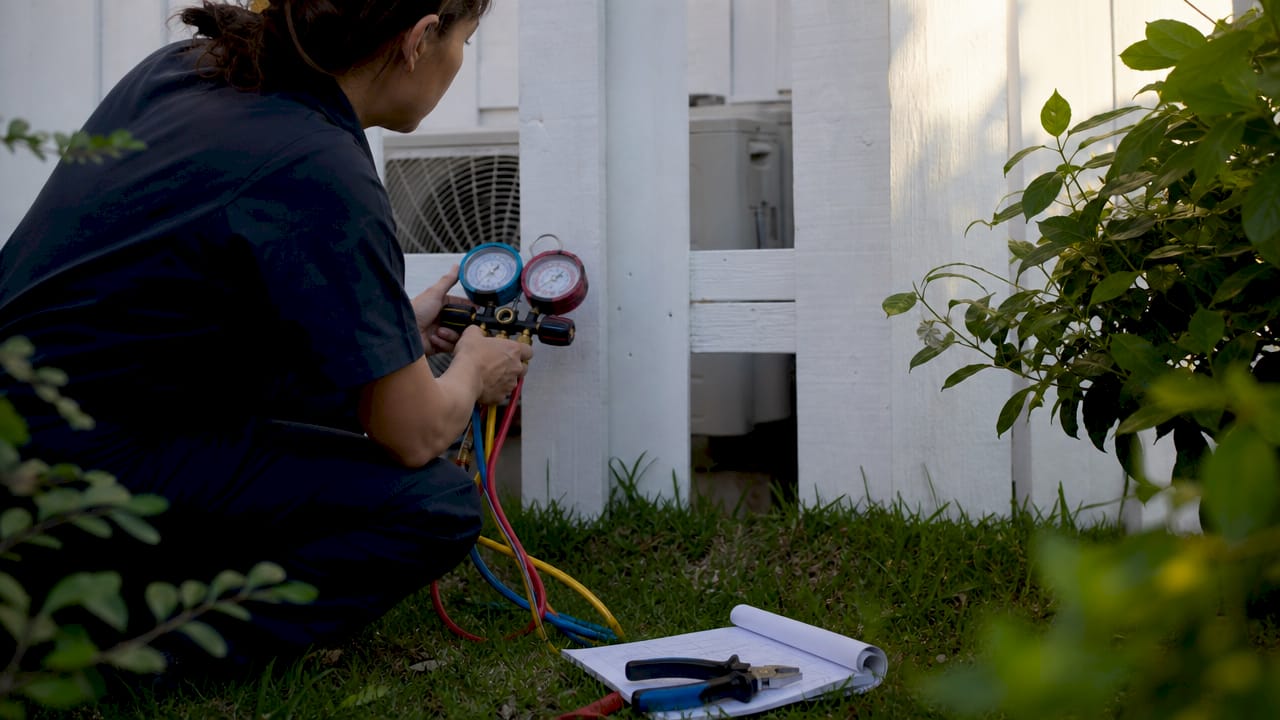
What does the role of AC diagnostics actually involve?
AC diagnostics is the industry term for a structured assessment carried out by a qualified engineer to evaluate every major component of an air conditioning system. It goes well beyond switching the unit on and checking whether cold air comes out.
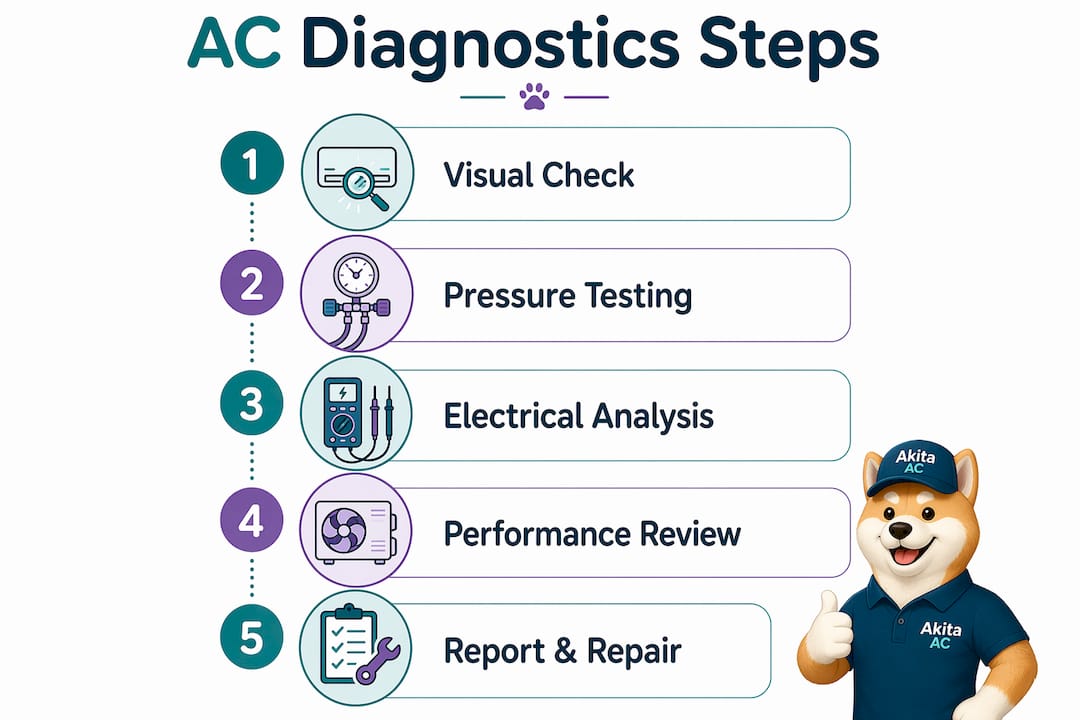
A thorough diagnostic session follows a clear sequence:
- Visual inspection. The engineer examines both the indoor and outdoor units for physical damage, corrosion, blocked filters, and obstructed airflow paths. Debris around the condenser coil is one of the most common causes of reduced efficiency.
- Electrical testing. Voltage and amperage readings confirm that the compressor, fan motors, and capacitors are drawing the correct load. Thermostat calibration is also checked at this stage.
- Refrigerant pressure and vacuum testing. Digital manifold gauges measure system pressures against manufacturer specifications. A vacuum test confirms the circuit is sealed before any refrigerant is added or recovered.
- Airflow and duct performance measurement. Airflow velocity and duct performance are measured to identify blockages or leaks in the distribution system that reduce comfort and waste energy.
- Control strategy review. The engineer checks programming, scheduling, and sensor accuracy to confirm the system operates efficiently under real conditions.
Professional diagnostics incorporate vacuum testing, electrical load checks, and control strategy reviews that go well beyond a simple visual check. These advanced steps reveal hidden inefficiencies that a surface inspection would miss entirely.
A full diagnostic session typically lasts under one hour, including refrigerant recovery and pressure testing. That is a short window of time relative to the problems it can prevent.
Pro Tip: Ask your engineer to confirm the system’s cooling output during the visit. On a warm day, a healthy system should produce a meaningful temperature differential between supply and return air. If the numbers are off, you have a starting point for the repair.
How do UK regulations shape AC diagnostics requirements?
The legal framework around air conditioning in the UK makes structured diagnostics a compliance requirement, not just good practice.
- TM44 inspections apply to all commercial air conditioning systems with an output above 12kW. These inspections must be carried out every five years by an accredited energy assessor. Fines for non-compliance range from £300 to £1,000 depending on building size. The inspection covers system efficiency, controls, and documentation.
- F-Gas regulations require mandatory leak checks for systems holding refrigerant above the 5 tonnes CO2 equivalent threshold. Depending on the charge size, checks are required every six months to annually. Penalties reach up to £5,000 per offence for breaches.
- SFG20 standards are the recognised best practice benchmark for HVAC maintenance and diagnostics across the UK. Following SFG20 satisfies the expectations of insurers, facilities managers, and building inspectors alike.
- Documentation and reporting are as important as the diagnostic work itself. A written report proves compliance and creates a maintenance history that supports warranty claims and future assessments.
TM44 inspections frequently highlight energy waste and control inefficiencies that building managers had no idea existed. The most effective approach is to treat the report as a working document, not a filing exercise. Acting on its recommendations is where the real value lies.
The F-Gas and TM44 frameworks exist to protect both the environment and building occupants. Refrigerant leaks release potent greenhouse gases, and inefficient systems consume far more electricity than necessary. Diagnostics are the mechanism that keeps both risks in check.
What faults do AC diagnostics commonly uncover?
The most frequent issues that structured diagnostics reveal include:
- Low refrigerant charge. This is the symptom most owners notice first, because the system stops cooling effectively. The cause, however, is almost always a leak rather than simple depletion.
- Electrical faults. Failing capacitors, loose connections, and overloaded circuits are common in systems over five years old. These faults rarely announce themselves before causing a compressor failure.
- Compressor wear. Pressure testing identifies a compressor that is struggling before it fails completely, which is the most expensive single repair on any AC system.
- Blocked or damaged ductwork. Restricted airflow reduces output and forces the system to work harder, increasing energy consumption and wear.
- Control and sensor errors. A thermostat reading two degrees high will cause the system to run longer than needed, wasting energy silently every day.
Homeowners frequently mistake poor cooling for low refrigerant, ignoring deeper electrical or compressor faults underneath. Skipping diagnostics and simply regassing the system addresses the symptom while the actual fault continues to develop. The result is a repeat call-out within months and a bill that grows each time.
Proper diagnostics protect warranties and avoid long-term damage by identifying the root cause on the first visit. Many manufacturer warranties require documented evidence of professional maintenance. Without it, a warranty claim can be refused even when the fault is clearly a manufacturing defect.
Pro Tip: If your system has been regassed more than once in three years without a confirmed leak repair, request a full diagnostic before agreeing to any further refrigerant top-ups. Repeated regassing without a root cause fix is a sign the underlying fault has never been properly identified.
What are the practical benefits of AC diagnostics for homeowners and businesses?
Regular AC system troubleshooting and performance evaluation deliver measurable advantages that go beyond simply keeping the unit running.
Energy savings and running costs
Diagnostics identify inefficiencies that inflate electricity bills. A system running with a partially blocked condenser, an overcharged refrigerant circuit, or a miscalibrated thermostat consumes significantly more power than a correctly maintained unit. Addressing these issues after a diagnostic assessment brings running costs back in line with the manufacturer’s rated efficiency.
Comfort and indoor air quality
Blocked filters and damaged ductwork reduce airflow and allow dust, mould spores, and allergens to circulate. A diagnostic assessment that includes air duct condition checks catches these issues before they affect the health and comfort of occupants. For businesses, poor air quality directly affects staff productivity and customer experience.
Preventing unplanned downtime
Commercial AC systems deteriorate gradually, and the decline is often invisible until a component fails entirely. A system that stops working during a heatwave or a busy trading period creates immediate disruption and emergency repair costs that are far higher than planned maintenance. Regular diagnostics give facilities managers early warning of components approaching failure, allowing repairs to be scheduled at a convenient time.
System longevity
A system that receives annual diagnostics and prompt repairs consistently outlasts one that is only attended to when something breaks. Every hour a fault runs undetected adds wear to connected components. Catching a failing capacitor early, for example, prevents it from taking the compressor with it when it eventually gives out.
| Benefit | What diagnostics deliver |
|---|---|
| Lower energy bills | Identifies inefficiencies that inflate running costs |
| Better air quality | Detects blocked filters and duct issues affecting occupant health |
| Fewer breakdowns | Flags failing components before they cause system failure |
| Longer equipment life | Prevents secondary damage caused by undetected faults |
| Regulatory compliance | Provides documented evidence for TM44 and F-Gas requirements |
Key takeaways
AC diagnostics is the most cost-effective tool available to UK homeowners and businesses for maintaining system performance, meeting legal obligations, and avoiding expensive unplanned repairs.
| Point | Details |
|---|---|
| Diagnostics go beyond visual checks | Vacuum testing, electrical load analysis, and pressure testing reveal faults a surface inspection misses. |
| Regulatory compliance depends on diagnostics | TM44 and F-Gas requirements carry fines of up to £5,000 for non-compliance. |
| Repeated regassing signals a missed diagnosis | Topping up refrigerant without finding the leak wastes money and leaves the fault unresolved. |
| Commercial systems degrade silently | Regular diagnostic assessments give early warning before a gradual fault becomes a full breakdown. |
| Documentation protects your warranty | Written diagnostic records support manufacturer warranty claims and prove compliance to inspectors. |
Why I think most people underestimate what diagnostics actually do
The calls Akita receives most often follow a familiar pattern. A homeowner has had their system regassed twice in two summers. A business owner has replaced a component that failed again six months later. In almost every case, the root cause was never properly identified. A quick fix was applied, and the underlying fault kept running.
What surprises people most is how much a one-hour diagnostic visit can reveal. Electrical faults that look like refrigerant problems. Duct leaks that look like undersized units. Control errors that look like mechanical failures. The AC troubleshooting process exists precisely to separate the symptom from the cause, and that distinction is where the real money is saved.
The other thing worth saying plainly: TM44 and F-Gas compliance are not bureaucratic box-ticking exercises. They exist because poorly maintained systems leak refrigerant into the atmosphere and consume electricity that nobody budgeted for. A diagnostic report that sits in a drawer helps nobody. The businesses that get genuine value from their HVAC investment are the ones that read the report, act on the recommendations, and schedule the next assessment before the deadline arrives.
For homeowners, the advice is simpler still. Book a diagnostic before summer, not during it. An engineer who finds a fault in april can fix it before the system is needed. An engineer called out in july during a heatwave is working against a queue of emergency calls.
— Akita
How Akita supports your AC system from diagnosis to installation
Akita provides professional air conditioning diagnostics, servicing, and installation across Suffolk, Norfolk, and Essex for both homes and businesses.

Whether you need a domestic AC installation or a fully managed commercial air conditioning service that covers diagnostics, compliance reporting, and ongoing maintenance, Akita’s engineers carry the qualifications and equipment to do the job properly. Every visit is backed by transparent, fixed pricing with no hidden charges. Akita also offers flexible finance options, making it straightforward to act on diagnostic findings without delay. If your system is due a check or you want to understand what a diagnostic assessment involves for your property, the Akita team is ready to help.
FAQ
What is the role of AC diagnostics?
AC diagnostics identifies faults, inefficiencies, and compliance issues within air conditioning systems through structured testing. It prevents repeated repairs by finding the root cause rather than treating symptoms.
How long does a professional AC diagnostic take?
A professional AC diagnostic typically takes under one hour, covering pressure testing, electrical checks, and airflow measurement. Complex faults may require additional time.
Are AC diagnostics legally required in the UK?
Commercial systems above 12kW require TM44 inspections every five years under UK energy performance regulations. F-Gas regulations also mandate regular leak checks for systems above the 5 tonnes CO2 equivalent threshold.
How often should I arrange AC maintenance diagnostics?
Annual diagnostics are best practice for most residential and commercial systems. Systems subject to F-Gas regulations may require checks every six to twelve months depending on refrigerant charge size.
Can diagnostics improve my energy bills?
Yes. Diagnostics identify inefficiencies such as blocked components, refrigerant imbalances, and control errors that increase electricity consumption. Addressing these findings after a full HVAC diagnostic assessment brings running costs back to the system’s rated efficiency.