

Why commercial system servicing matters for your business
TL;DR:
- Regular commercial system servicing ensures UK businesses stay compliant with legal regulations and safety standards. It reduces risks of hazards like Legionella and carbon monoxide while improving energy efficiency and protecting warranties. Scheduled maintenance also provides valuable records that support insurance claims and operational continuity.
Commercial system servicing is the scheduled inspection, maintenance, and repair of HVAC and related building systems to keep them safe, efficient, and legally compliant. For UK business owners and managers, understanding why commercial system servicing is necessary is not optional. Three regulatory pillars govern this area: TM44 inspections, the SFG20 standard, and F-Gas regulations. Neglecting any one of them exposes your business to fines, voided insurance, and serious safety hazards. The good news is that a structured servicing regime addresses all three simultaneously.
Why commercial system servicing is a legal requirement in the UK
UK law places clear duties on building operators to maintain their mechanical and electrical systems. These are not advisory guidelines. They carry real penalties.
The key obligations are:
- TM44 inspections: Any air conditioning system with 12kW or more cooling capacity must be inspected by an accredited energy assessor at least every five years. The inspection evaluates efficiency and identifies opportunities to reduce energy consumption.
- F-Gas recordkeeping: Operators of equipment containing 5 tonnes CO2 equivalent or more of refrigerant must keep detailed maintenance records for a minimum of five years. Failure to produce these records during an inspection is a criminal offence.
- Health and Safety at Work Act 1974: This Act places a duty of care on employers to maintain safe working environments. The SFG20 standard, published by the Building Engineering Services Association, provides definitive guidance on planned preventative maintenance to meet this obligation.
- Penalties for non-compliance: Businesses that fail TM44 requirements or cannot produce F-Gas records face enforcement action from local authorities and the Environment Agency. Fines and prohibition notices are both possible outcomes.
The SFG20 standard is particularly important because it translates broad legal duties into specific, auditable maintenance tasks. Following SFG20 gives you a defensible paper trail if your compliance is ever questioned.
How does regular servicing protect people and reduce risk?
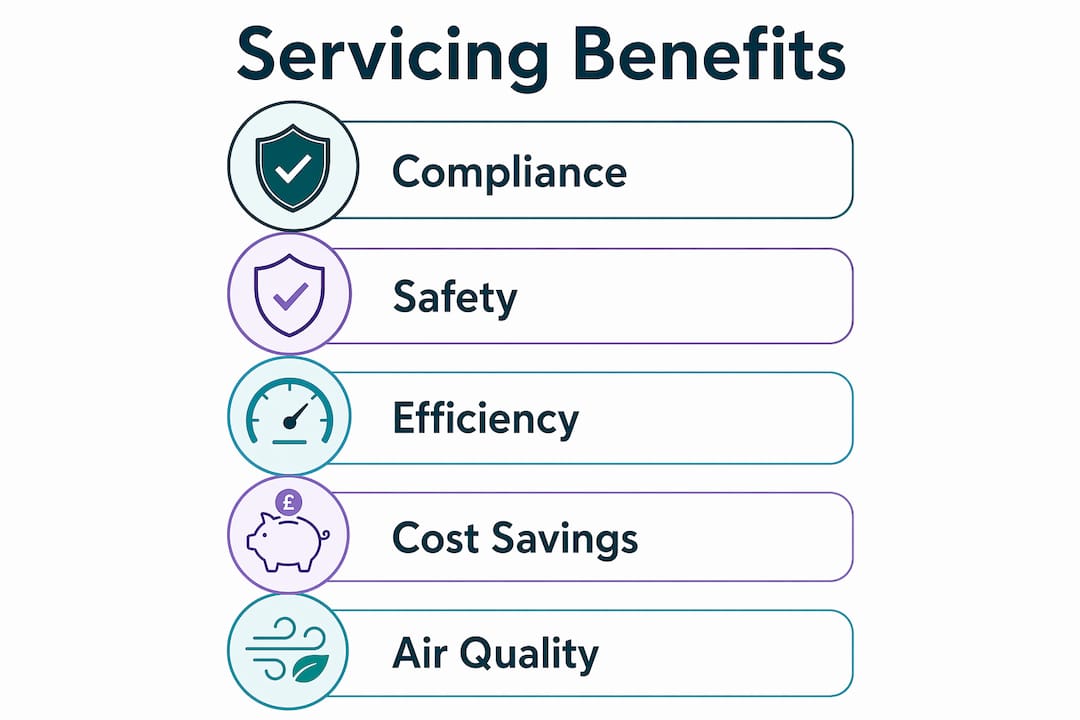
Poor maintenance of commercial HVAC systems creates hazards that go well beyond a broken thermostat. Failing to maintain services per SFG20 increases the risk of Legionella outbreaks, carbon monoxide exposure, and costly system breakdowns. Each of these carries potential liability for the building operator.
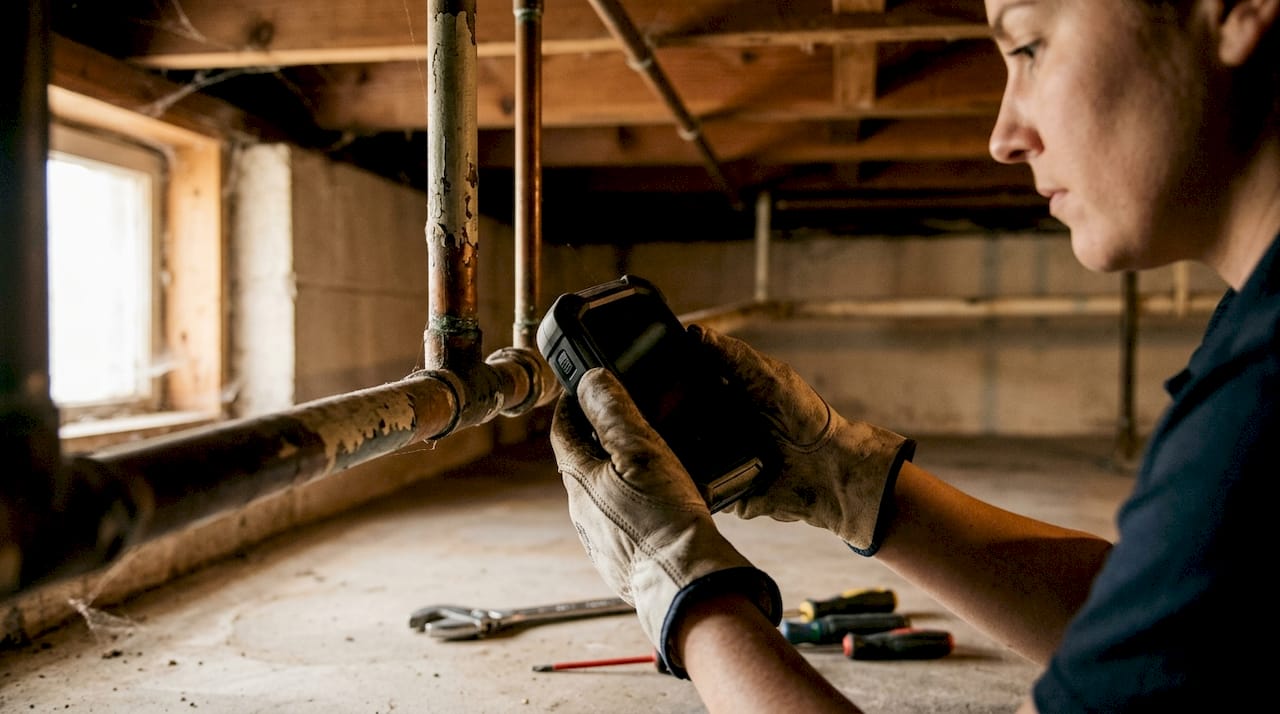
Regular commercial servicing reduces risks of carbon monoxide exposure, fire, and Legionella outbreaks by ensuring hygiene and safety interlocks are tested at every visit. A trained engineer will check that ventilation pathways are clear, that water systems are not harbouring bacterial growth, and that electrical components are functioning within safe parameters.
Serviced systems also deliver measurably better indoor air quality. Filter and coil cleanliness directly reduces the circulation of allergens and mould spores. For businesses where staff spend long hours indoors, this has a direct effect on productivity and sick-day rates.
Pro Tip: Ask your servicing engineer to provide a written hygiene report after every visit. This document protects you if a staff member or visitor ever raises a health complaint linked to indoor air quality.
Reducing liability exposure is another concrete benefit. A business with documented, regular servicing is in a far stronger position if a personal injury claim arises from a system-related incident. Courts and insurers both look for evidence of reasonable maintenance.
What are the economic benefits of commercial system servicing?
The financial case for regular upkeep is straightforward. Well-maintained HVAC systems use 10–20% less energy than poorly maintained units. For a commercial building running air conditioning year-round, that saving compounds into a significant annual reduction in energy bills.
The economic benefits extend well beyond energy costs:
- Fault detection before failure. A servicing engineer identifies worn components, refrigerant leaks, and electrical faults before they cause a full breakdown. Replacing a capacitor costs a fraction of replacing a compressor.
- Warranty protection. Ignoring servicing can void manufacturer warranties, leaving your business liable for the full cost of repairs that would otherwise be covered.
- Reduced business interruption. A system failure in a commercial kitchen, server room, or retail environment can halt operations entirely. The cost of lost trading hours typically dwarfs the cost of a service visit.
- Insurance implications. Many insurance policies require physical damage from an insured peril to trigger a business interruption claim. Mechanical breakdown alone may not qualify. This means a preventable HVAC failure could leave you with no payout and no cover for lost revenue.
The insurance point catches many business owners off guard. Property insurers distinguish between sudden accidental damage and gradual mechanical failure. A system that breaks down because it was never serviced is unlikely to generate a valid claim. Preventative maintenance is therefore not just a cost. It is a condition of your financial protection.
Pro Tip: Review your commercial property insurance policy specifically for the business interruption trigger clause. If it excludes mechanical breakdown, discuss a maintenance-linked endorsement with your broker.
What does a commercial servicing schedule actually involve?
Routine commercial system servicing covers a defined set of tasks, each tied to a specific regulatory purpose. Routine servicing includes filter changes, refrigerant leak checks, coil cleaning, and electrical system tests, all scheduled per SFG20 guidance.
The table below outlines the core tasks, their typical frequency, and the regulatory standard they address.
| Task | Typical frequency | Regulatory purpose |
|---|---|---|
| Air filter inspection and replacement | Every 3 months | SFG20 planned maintenance, indoor air quality |
| Refrigerant leak check | Every 6–12 months | F-Gas regulations |
| Evaporator and condenser coil cleaning | Annually | SFG20, energy efficiency |
| Electrical safety and interlock testing | Annually | Health and Safety at Work Act 1974 |
| TM44 energy efficiency inspection | Every 5 years | Building Regulations Part L |
| F-Gas maintenance record update | After every relevant service | F-Gas Regulation (EU) 517/2014 (retained in UK law) |
Recordkeeping is as important as the physical tasks. Every service visit should generate a written report that logs what was checked, what was found, and what action was taken. These records form your compliance audit trail for TM44, F-Gas, and SFG20 purposes. Without them, you cannot demonstrate that servicing took place, even if it did.
Frequency also depends on system type and usage intensity. A commercial rooftop HVAC unit running continuously in a busy office will need more frequent attention than a split system in a small meeting room. Your servicing engineer should tailor the schedule to your specific equipment and operating hours.
Pro Tip: Keep a digital folder with all service reports, F-Gas logs, and TM44 certificates. Organise them by year and system. If you ever sell the building or face an inspection, you can produce full compliance evidence within minutes.
Key takeaways
Routine commercial HVAC servicing is the single most effective way to protect your business from regulatory penalties, unexpected repair costs, and insurance gaps.
| Point | Details |
|---|---|
| Legal compliance is mandatory | TM44 inspections every five years and F-Gas records for five years are legal requirements, not recommendations. |
| Safety hazards are real | Unserviced systems risk Legionella, carbon monoxide exposure, and fire, all of which carry employer liability. |
| Energy savings are measurable | Properly maintained systems use up to 20% less energy, reducing operating costs directly. |
| Insurance cover depends on maintenance | Business interruption policies often exclude mechanical breakdown, making preventative servicing a financial necessity. |
| Records are as important as the work | Written service reports and F-Gas logs form your compliance audit trail and protect you during inspections or claims. |
Akita’s view: what most businesses get wrong about servicing
The most common mistake I see is treating servicing as a box-ticking exercise rather than a risk management tool. A business owner books an annual filter change, assumes the job is done, and moves on. That approach leaves significant gaps in both compliance and safety.
Changing filters is the starting point, not the finish line. Hygiene testing, electrical interlock checks, and refrigerant leak verification are all required under SFG20 and F-Gas rules. Without them, you are not compliant, regardless of how clean your filters are. I have seen businesses face enforcement action despite having a service contract, simply because the contract did not cover the full scope of required tasks.
The insurance angle is the one that surprises people most. Business owners assume that if something breaks, their insurer will cover the disruption. The reality is that a mechanical failure caused by neglect sits in a grey area that many standard policies exclude entirely. The cost of a missed service visit can therefore be far higher than the invoice itself.
My advice is to treat your HVAC maintenance workflow as a formal business process, not an ad-hoc task. Set calendar reminders, keep digital records, and use a servicing provider who understands SFG20 and F-Gas obligations. Compliance is not complicated when it is managed proactively.
— Akita
Akita’s commercial servicing and maintenance services
Akita provides commercial air conditioning installation, maintenance, and repair services across Suffolk, Norfolk, and Essex. Every service visit is carried out by qualified engineers who understand TM44, F-Gas, and SFG20 requirements, so your compliance records are accurate and complete.
Fixed-price installation options and fast air conditioning repair services mean you are never left waiting when a system fails. Akita also builds tailored servicing plans around your specific equipment and usage patterns, so you get the right level of cover without paying for tasks you do not need. Contact Akita to discuss a servicing programme that keeps your systems running, your staff safe, and your business compliant.
FAQ
What is commercial system servicing?
Commercial system servicing is the scheduled inspection, maintenance, and repair of HVAC and building systems to maintain safety, efficiency, and regulatory compliance. It covers tasks including filter changes, refrigerant checks, coil cleaning, and electrical safety testing.
Is commercial AC servicing a legal requirement in the UK?
Yes. Any air conditioning system with 12kW or more of cooling capacity must undergo a TM44 inspection at least every five years. F-Gas regulations also require detailed maintenance records for systems containing 5 tonnes CO2 equivalent or more of refrigerant.
How often should a commercial HVAC system be serviced?
Most commercial systems require a full service at least once a year, with filter inspections every three months. TM44 inspections are required every five years, and F-Gas records must be updated after every relevant service visit.
What happens if I neglect commercial system servicing?
Neglecting servicing can void manufacturer warranties, trigger enforcement action under F-Gas and TM44 regulations, and invalidate business interruption insurance claims. It also increases the risk of Legionella outbreaks, carbon monoxide exposure, and costly system failures.
How does servicing improve energy efficiency?
Well-maintained HVAC systems use 10–20% less energy than poorly maintained units. Clean coils, intact refrigerant charge, and unobstructed filters all allow the system to reach its target temperature with less electrical input, reducing running costs directly.