

What is a mini split system? Your 2026 guide
TL;DR:
- Mini split systems are ductless heating and cooling units that transfer heat, offering high efficiency without ductwork. They support individual room control, are easy to install, and can serve entire homes with multiple indoor units, making them a practical upgrade for UK homes. Regular filter maintenance and proper sizing are essential for optimal performance and air quality.
A mini split system is a ductless heating and cooling system made up of an outdoor compressor unit and one or more indoor air handlers that condition individual rooms without requiring ductwork. The industry term is “ductless heat pump” or “ductless air conditioning system,” and both names describe the same technology. These systems transfer heat rather than generate it, which is why they are dramatically more efficient than electric resistance heaters. For homeowners and renters in Suffolk, Norfolk, and Essex looking to heat or cool specific rooms without tearing up walls, a mini split is often the most practical solution available in 2026.
How does a mini split system work to heat and cool rooms?
A mini split moves heat between the inside and outside of your home rather than burning fuel or using electrical resistance to create warmth. This distinction matters enormously for running costs. Because the system is transferring energy rather than producing it, efficiencies reach 300–400% compared to a standard electric heater. Put simply, for every unit of electricity used, the system delivers three to four units of heating or cooling.
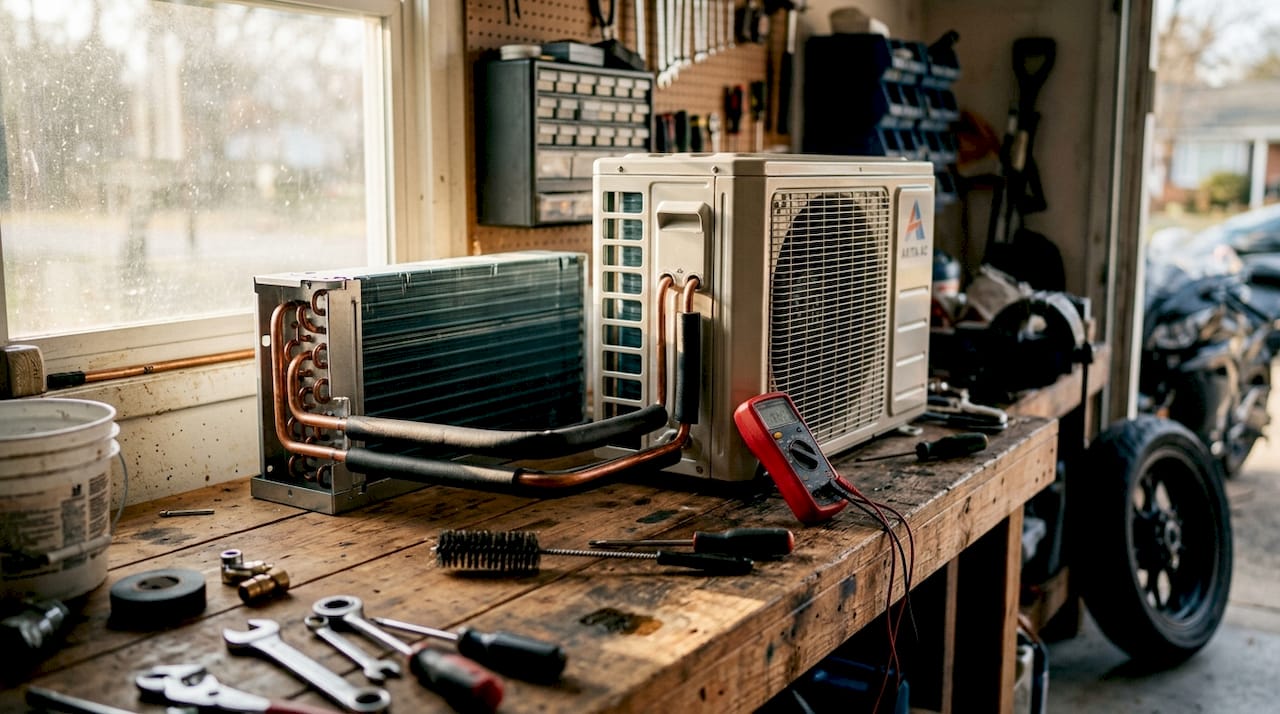
The process works through a refrigerant cycle shared between the outdoor compressor and the indoor evaporator coil. In cooling mode, the indoor unit absorbs heat from the room air and transfers it outside. In heating mode, the cycle reverses and the system extracts heat from the outdoor air, even in cold weather, and delivers it inside. Modern mini split heat pumps operate efficiently down to temperatures as low as -25°C, making them genuinely useful through UK winters.
Zoning is one of the most practical features of ductless systems. A single outdoor compressor can connect to up to 4–6 indoor units, each controlled independently. This means you can heat the living room while leaving the spare bedroom unheated, which is simply not possible with a traditional central air system.
Here is how the system operates step by step:
- The thermostat or remote signals the indoor unit to begin heating or cooling.
- The compressor outside activates and begins circulating refrigerant through the system.
- The indoor evaporator coil either absorbs heat from the room (cooling) or releases heat into the room (heating).
- The refrigerant returns to the outdoor unit to complete the cycle and repeat.
- Each indoor unit operates independently, so different rooms reach different target temperatures simultaneously.
Pro Tip: Set each indoor unit to a consistent temperature rather than switching it on and off repeatedly. Mini splits are most efficient when maintaining a steady temperature, not recovering from large swings.
What are the benefits of mini split systems compared to traditional ducted HVAC?
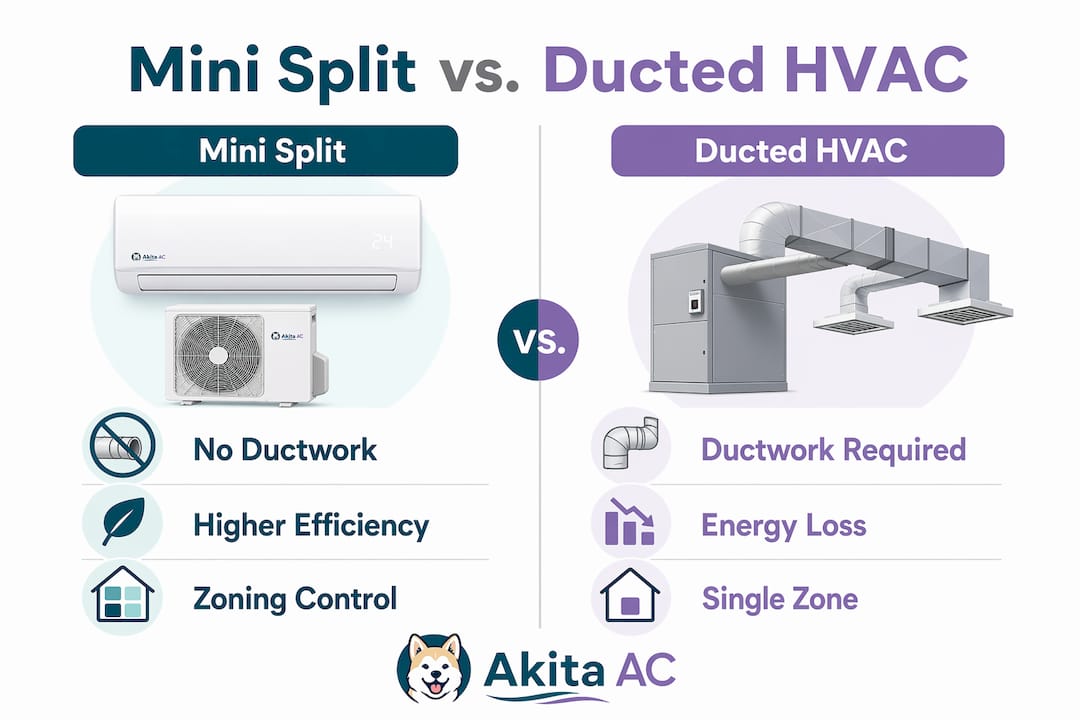
The single biggest advantage of a ductless system is energy efficiency. Traditional ducted HVAC loses 20–30% of conditioned air through leaks and heat transfer in the ductwork itself. Mini splits eliminate that loss entirely. The result is 30–50% greater energy efficiency compared to ducted systems. Over a heating season, that difference shows up clearly on your energy bill.
Beyond efficiency, the benefits stack up across several practical areas:
- No ductwork required. Older homes and rented properties rarely have existing ducts. A mini split works without them, which removes the largest cost and disruption of a traditional installation.
- Flexible zoning. Each indoor unit controls its own zone. Households with different temperature preferences in different rooms benefit immediately.
- Quiet indoor operation. Indoor units operate at 19–30 dB, which is quieter than a whisper. Most occupants forget the unit is running.
- Lower environmental impact. Higher efficiency means lower carbon output per unit of heating or cooling delivered, which aligns with UK net zero targets.
- Year-round use. One system handles both heating and cooling, replacing separate appliances and reducing clutter.
A point that surprises many homeowners: mini splits are not just for small spaces. With multiple indoor units, a single outdoor compressor can serve an entire home as the primary HVAC system. This makes them a genuine alternative to central air, not just a supplementary solution.
| Feature | Mini split system | Traditional ducted HVAC |
|---|---|---|
| Ductwork needed | No | Yes |
| Energy loss via ducts | None | 20–30% |
| Zone control | Per room | Whole home only |
| Indoor noise level | 19–30 dB | 40–60 dB typical |
| Installation disruption | Minimal | Significant |
Pro Tip: If you are renting, check your tenancy agreement before installation. Many landlords in the UK approve mini split installations because the process requires only a small conduit hole and leaves the property structurally intact.
For a detailed look at how ductless systems compare to other options, the energy efficient HVAC guide from Akita covers the full picture for UK homeowners.
What are the typical installation requirements for mini split systems?
Installation of a mini split is far less disruptive than fitting a ducted system. A professional typically completes the job in a single day. The key physical requirement is a single 3-inch hole through an exterior wall to run the conduit containing the refrigerant lines, electrical cable, and condensate drain. That is the extent of the structural work in most cases.
Several factors affect where and how the units are placed:
- Indoor unit height. The unit must sit with 6–12 inches of clearance from the ceiling to allow proper airflow. Crown moulding, ceiling beams, or fitted furniture can complicate placement.
- Wall type. The indoor unit mounts on an exterior or accessible interior wall. Solid stone or brick walls require specialist drilling but are not a barrier.
- Outdoor compressor location. The compressor needs a firm, level surface and adequate ventilation. It should sit away from bedroom windows, as it produces some noise during peak operation.
- Pipe run length. Refrigerant lines can run up to around 25 metres in most residential systems, giving flexibility in where the outdoor unit sits relative to the indoor unit.
- Electrical supply. A dedicated circuit is required. Your installer will confirm whether your existing consumer unit has capacity or whether an upgrade is needed.
The UK buyer’s guide from Akita covers placement decisions in detail, including how to handle listed buildings and conservation area restrictions that apply in parts of Suffolk, Norfolk, and Essex.
How does maintenance and air quality work with mini split systems?
Mini splits require less maintenance than ducted systems, but they are not maintenance-free. The most frequent task is cleaning the indoor unit’s filters, which should be done every two to four weeks during heavy use. Dirty filters reduce airflow, force the compressor to work harder, and raise running costs noticeably.
Here is a straightforward maintenance routine:
- Clean the indoor filters every two to four weeks by removing them, rinsing under warm water, and allowing them to dry fully before replacing.
- Wipe the indoor unit casing monthly to prevent dust build-up around the air intake.
- Check the outdoor unit each season for debris, leaf build-up, or obstructions around the casing.
- Book a professional service annually. A qualified engineer will check refrigerant levels, inspect electrical connections, and clean the evaporator coil properly.
- Monitor for unusual sounds or reduced output, which typically signal a refrigerant issue or a failing component that needs prompt attention.
On air quality, mini splits use low MERV-rated filters designed to protect the equipment rather than clean the air deeply. They capture larger dust particles but do not remove fine allergens, pollen, or airborne bacteria effectively. Homeowners with asthma or allergies should plan to use a standalone HEPA air purifier alongside the mini split. The indoor air quality guidance from HVAC specialists confirms that sealed modern homes benefit most from combining a mini split with dedicated filtration. A structured maintenance plan also helps sustain efficiency and catch issues before they become costly repairs.
Key takeaways
A mini split system delivers 30–50% greater energy efficiency than ducted HVAC by eliminating duct losses, providing zone control, and transferring heat rather than generating it.
| Point | Details |
|---|---|
| Core function | Mini splits transfer heat between indoors and outdoors rather than generating it, reaching efficiencies of 300–400%. |
| Energy savings | Eliminating duct losses saves 20–30% of energy compared to traditional ducted systems. |
| Zoning capability | One outdoor compressor supports up to 4–6 indoor units, each controlled independently by room. |
| Installation simplicity | A professional installs most systems in one day through a single 3-inch conduit hole. |
| Air quality limits | Mini splits use low MERV filters; homeowners with allergies should add a standalone HEPA purifier. |
Akita’s view on mini splits for UK homes
Mini splits are the most practical heating and cooling upgrade available to UK homeowners right now. We say that having installed systems across Suffolk, Norfolk, and Essex in properties ranging from Victorian terraces to new-build flats. The efficiency gains are real and measurable. Customers who switch from electric panel heaters or old storage heaters consistently report lower bills from the first winter.
The mistake we see most often is undersizing. Homeowners choose a single indoor unit to keep costs down, then find it cannot maintain comfortable temperatures across an open-plan ground floor in january. The right approach is to calculate the heat load for each zone properly before selecting unit sizes. Getting that calculation wrong costs more to fix than getting it right from the start.
One misconception worth addressing: mini splits are not just for cooling. In the UK climate, the heating function is the primary reason most of our residential customers install them. The ability to heat efficiently down to very low outdoor temperatures makes them a genuine replacement for gas boiler-fed radiators in many homes, not just a summer luxury.
The future for mini splits in UK homes is strong. As gas boiler regulations tighten and electricity tariffs increasingly reward off-peak usage, the case for heat pump technology grows each year. Installing a mini split now puts you ahead of that curve rather than scrambling to catch up.
— Akita
Ready to install a mini split system in your home?
Akita installs energy-efficient mini split systems across Suffolk, Norfolk, and Essex, with fixed-price quotes and no hidden costs. Whether you need a single unit for a bedroom or a multi-zone system for the whole house, the process starts with a straightforward assessment of your property and heating needs.

Every installation is carried out by qualified engineers who handle everything from the conduit hole to the electrical connection. Akita’s domestic air conditioning installation service covers the full process, and finance options are available if you prefer to spread the cost. Get in touch with Akita for a no-obligation quote and find out which system suits your home.
FAQ
What is a mini split system in simple terms?
A mini split is a ductless heating and cooling system with an outdoor compressor and one or more indoor units. It conditions individual rooms without requiring any ductwork.
How much does a mini split system cost to install in the UK?
Single-zone systems typically cost between £1,500 and £4,500 to supply and install. Multi-zone systems covering several rooms range higher depending on the number of indoor units required.
Can a mini split heat a room in winter?
Yes. Modern mini split heat pumps operate efficiently down to around -25°C, making them well suited to UK winters. They deliver heat by extracting warmth from outdoor air rather than burning fuel.
How often does a mini split need servicing?
Filters should be cleaned every two to four weeks during regular use. A full professional service, including refrigerant checks and coil cleaning, is recommended once a year.
Is a mini split suitable for a rented property?
Mini splits are a practical option for rented properties because installation requires only a small conduit hole through an exterior wall. Many landlords approve them, though you should confirm permission before proceeding.