

Understanding split systems: a UK buyer's guide
TL;DR:
- Split systems consist of indoor and outdoor units connected by refrigerant lines, providing energy-efficient, room-specific climate control. They utilize inverter technology for higher efficiency and can reverse refrigerant flow to offer heating capabilities even during cold UK winters. Proper professional installation, including leak testing and insulation, ensures system longevity and optimal performance.
If you’ve been comparing air conditioning options and found yourself confused by the terminology, you’re not alone. Understanding split systems is the first step towards choosing the right climate control for your home or business. Unlike window units or central air conditioning, split systems offer a distinct combination of energy efficiency, flexible installation, and room-by-room control that makes them the most popular choice for UK residential and commercial properties. This guide covers exactly how they work, what makes them worth considering, and what installation actually involves.
Table of Contents
- Key takeaways
- How split systems work
- The real benefits of split systems
- Types of split systems explained
- Installing a split system: what actually happens
- Is a split system right for your property?
- What I’ve learned after years of installations
- Get your split system installed professionally
- FAQ
Key takeaways
| Point | Details |
|---|---|
| Two-part design | Split systems use a separate indoor unit and outdoor compressor connected by refrigerant lines, with no ductwork required. |
| Zoning saves money | Independent room control conditions only occupied spaces, reducing energy waste significantly. |
| Inverter technology matters | Variable-speed compressors adjust output continuously, achieving higher SEER2 efficiency ratings and greater comfort. |
| Installation is manageable | A single small wall penetration handles all pipework, power, and drainage, making disruption minimal compared to ducted systems. |
| Professional commissioning is critical | Proper vacuuming and leak testing during installation directly protect the compressor and determine long-term reliability. |
How split systems work
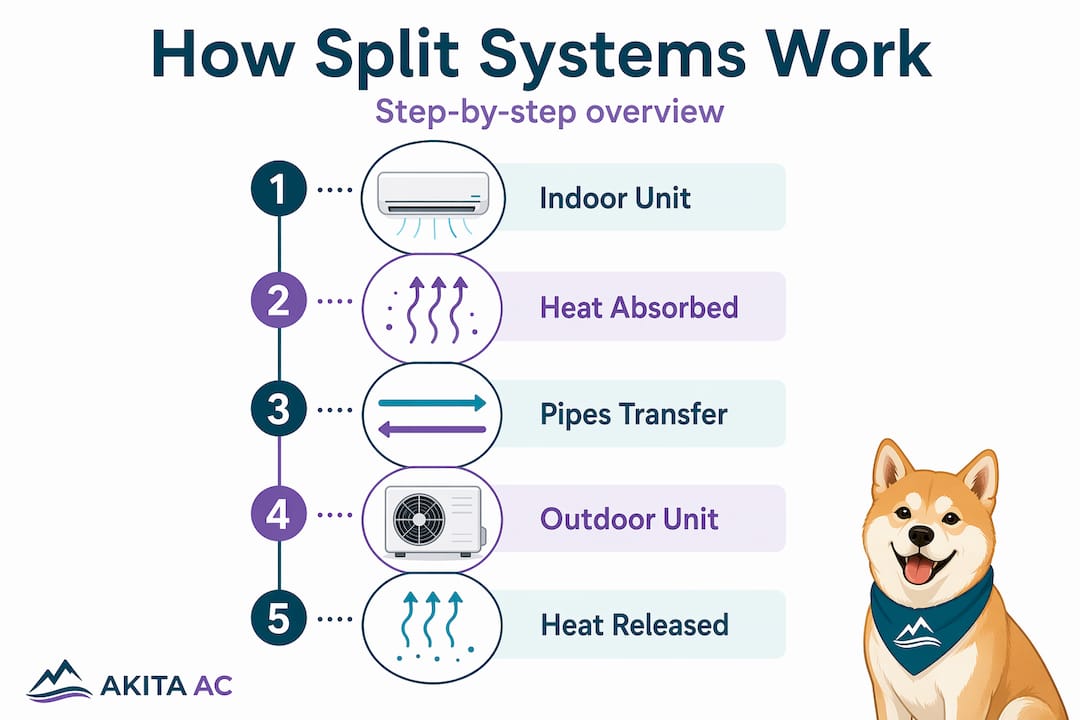
A split system air conditioner consists of two main components. The indoor unit, often called an air handler, sits inside your room. The outdoor unit houses the compressor and condenser and sits outside the building. The two units connect through a small hole in the wall via refrigerant lines and wiring, with no ductwork required at all.
The system works by moving heat rather than generating it. In cooling mode, the indoor unit absorbs heat from your room air through an evaporator coil filled with refrigerant. That refrigerant carries the heat outside, where the compressor and condenser release it into the outdoor air. The cooled refrigerant then circulates back inside and the cycle repeats.
Inverter compressors and why they matter
Most modern split systems use an inverter compressor, which is a variable-speed motor that adjusts its output to match the actual demand of the room. A traditional fixed-speed compressor simply switches on and off. An inverter variable speed compressor runs continuously at a lower, more efficient level instead, which dramatically reduces energy consumption and eliminates the temperature swings you feel with older systems. It is the single biggest reason why split systems can achieve SEER2 ratings of 20 and above.
Heating as well as cooling
The majority of split systems sold in the UK are heat pumps. A reversing valve in the outdoor unit switches the direction of refrigerant flow, turning the system into an efficient heater. In heating mode, the outdoor unit extracts heat from the outside air (even at temperatures well below zero) and transfers it inside. This makes split systems far more energy efficient than electric resistance heaters or gas boilers for supplementary room heating.
Pro Tip: Even on a cold UK winter day, the outdoor air contains enough heat energy for a heat pump to operate efficiently. You do not need hot weather to get useful heat output from a modern inverter split system.
The real benefits of split systems
The advantages over older HVAC approaches go well beyond just avoiding ductwork. Here is where split systems genuinely outperform the alternatives.

Energy efficiency. Ducted central air conditioning systems can lose a significant portion of their cooling or heating capacity through duct leakage and conduction losses before the air ever reaches the room. Split systems eliminate that entirely. Combined with inverter compressor technology, the energy savings from zoning are substantial. You condition only the rooms you actually use.
Room-by-room control. This is the feature that surprises people most. With a multi-zone setup, your bedroom can be 19°C while the living room runs at 21°C and the office stays off entirely. That level of individual control is simply not possible with a central system running a single thermostat.
Quiet indoor operation. Because the compressor and condenser are outside, the indoor unit produces very little noise. Most wall-mounted indoor units operate at around 19 to 26 dB on low speed, which is quieter than a whispered conversation.
Minimal installation disruption. You need one small hole through an exterior wall, roughly 65 to 75mm in diameter. There is no structural alteration, no ceiling void work, and no weeks of disruption. A typical single-room installation takes one day.
Air quality benefits. Most indoor units include built-in filters that capture dust, pollen, and other particles. Some higher-end models include additional filtration stages for allergens and bacteria, which is a genuine advantage for households with respiratory sensitivities.
Types of split systems explained
Not all split systems are the same. Choosing the right configuration matters before you speak to an installer.
| Type | Best suited for | Key advantage | Limitation |
|---|---|---|---|
| Single-zone mini-split | One room or open-plan space | Simple, cost-effective, easy to install | Only conditions one area |
| Multi-zone mini-split | Multiple rooms, one outdoor unit | Room-by-room temperature control | Higher upfront cost |
| Ducted mini-split | Larger homes, heritage properties | Concealed aesthetic, covers multiple rooms | Requires ceiling void space |
| Heat pump split system | Year-round UK climate use | Heating and cooling from one system | Output reduces in very cold conditions |
For most UK homes, a single-zone or multi-zone wall-mounted system is the practical answer. Ducted mini-splits suit situations where visible indoor units are not acceptable aesthetically, such as period properties or open-plan commercial spaces. VRF systems for large commercial buildings represent the upper end of the scale, with multiple indoor units across an entire building all connected to centralised outdoor equipment.
Installing a split system: what actually happens
Understanding the installation process helps you ask the right questions and avoid surprises. Here is a realistic overview of how a professional installation unfolds.
-
Site survey and positioning. The installer assesses the best location for both the indoor and outdoor units. The outdoor unit needs adequate airflow clearance and a stable mounting surface. The indoor unit position affects air distribution throughout the room.
-
Wall penetration. A 65 to 75mm hole through the exterior wall accommodates the refrigerant lines, power cable, and condensate drain. The hole should angle very slightly downwards towards the outside to assist condensate drainage.
-
Line set routing and insulation. The refrigerant pipes run from the indoor unit through the wall to the outdoor unit. Poorly insulated suction lines are one of the most common causes of condensation problems and reduced system efficiency. A professional installer uses properly insulated line sets and seals all gaps thoroughly.
-
Electrical connections. The outdoor unit connects to a dedicated circuit. Correct sizing of the circuit breaker and cable matters both for safety and for the unit’s warranty validity.
-
Deep vacuum and leak test. This is the step that separates competent installers from poor ones. Vacuuming to at least 500 microns removes all air and moisture from the refrigerant circuit before the refrigerant is released from the outdoor unit. Skipping or rushing this step introduces moisture into the compressor, which shortens its lifespan considerably.
-
Commissioning and testing. The installer checks operation in both cooling and heating modes, verifies airflow patterns, and confirms condensate drainage is working correctly.
Pro Tip: Always ask your installer for the vacuum hold reading before commissioning. A legitimate professional will have the equipment to show you the system held below 500 microns before releasing refrigerant. If they cannot demonstrate this, the installation is not complete.
A full residential installation guide covers the practical details in more depth if you want to prepare thoroughly before getting quotes.
Is a split system right for your property?
Most UK homes benefit from split systems, but there are specific situations where they make particular sense and a few where other options deserve consideration.
Split systems are a strong choice when:
- Your property has no existing ductwork and adding it would be prohibitively expensive or disruptive
- You want to condition specific rooms rather than the whole building
- You want a single system that handles both heating and cooling year-round
- Energy efficiency is a priority and you want the advantages of inverter technology
- You are running a small to medium commercial space such as an office, salon, or retail unit
Situations worth thinking carefully about:
- Upfront cost is higher than a simple window unit or portable air conditioner, though the running costs are significantly lower over time
- Multiple indoor units in the same property can become visually prominent if positioning is not planned carefully
- Heritage buildings with very thick stone walls may require longer line sets and more complex routing
SEER2 ratings provide a more realistic measure of real-world efficiency than the older SEER standard, because they are calculated at higher static pressure conditions. When comparing units, a higher SEER2 rating means lower running costs and a system that is better suited to the varied UK climate.
For a broader comparison of your options, the types of air conditioning systems guide for UK homeowners covers the full picture across ducted, split, and portable systems.
What I’ve learned after years of installations
I’ve worked with hundreds of homeowners and businesses across Suffolk, Norfolk, and Essex, and the same patterns keep appearing. The clients who are happiest with their split systems are the ones who planned the zoning properly before installation, not the ones who added units room by room as an afterthought. Getting the number and placement of indoor units right from the start makes an enormous difference to both comfort and running costs.
The biggest source of long-term problems I’ve seen is not the equipment itself. It is rushed installation. The vacuuming step in particular is where corners get cut. Skipping deep vacuum is the single most common reason a compressor fails prematurely, and the client rarely knows it happened until years later when the system stops working and the warranty is voided.
My honest advice on cost is this: the upfront price of a quality split system and a proper installation is real money. But the running cost difference compared to electric heating or an old, inefficient system typically pays that back within a few years in the UK climate. The clients who balk at the installation cost and choose a budget option almost always come back for a replacement sooner than expected.
— Akita
Get your split system installed professionally
Whether you are fitting a single unit in a home office or specifying a multi-zone system for a commercial premises, the quality of installation determines how well the system performs and how long it lasts.

Akita provides domestic split system installation across Suffolk, Essex, and Norfolk with fixed pricing, full vacuum commissioning, and systems from leading manufacturers. For businesses, Akita’s commercial air conditioning services cover everything from a single office unit to multi-zone configurations across larger premises. Every installation includes proper leak testing, insulated line sets, and a full operational check before sign-off. Contact Akita for a no-obligation survey and fixed-price quote.
FAQ
What is a split system air conditioner?
A split system is an air conditioning unit consisting of a separate indoor air handler and an outdoor compressor/condenser unit, connected by refrigerant lines through a small wall penetration. It requires no ductwork, making it suitable for most UK homes and businesses.
How is a split system different from central AC?
Central air conditioning distributes conditioned air through a network of ducts throughout a whole building from a single unit. A split system conditions individual rooms or zones directly, without ducts, which eliminates duct energy losses and allows independent temperature control per room.
How long does it take to install a split system?
A single-zone residential installation typically takes one day for a professional team. Multi-zone systems with several indoor units may take two days depending on the complexity of the line set routing and the number of rooms involved.
What maintenance does a split system need?
The filters in the indoor unit should be cleaned every four to six weeks during periods of regular use. An annual professional service covering refrigerant pressure checks, coil cleaning, and condensate drain inspection keeps the system running efficiently and protects the warranty.
Can a split system heat as well as cool?
Yes. Most split systems sold in the UK are heat pumps that use a reversing valve to switch between cooling and heating modes. They extract heat from outdoor air even in cold weather, making them an energy efficient heating option throughout the UK winter.