

Signs you need HVAC repair: a UK homeowner's guide
Your HVAC system is telling you something is wrong long before it breaks down completely. The most common signs you need HVAC repair are:
- Unusual noises (banging, grinding, whistling)
- Weak or inconsistent airflow from vents
- Unexplained energy bill spikes of 20–30% without increased usage
- Musty, damp, or foul odours when the system runs
- Frequent cycling on and off
- Inconsistent temperatures or persistent cold and hot spots
- Visible leaks or condensation around the unit or pipework
Catching these early matters. A small fault left unaddressed tends to become a costly repair or a full system failure. The sections below explain what each sign means, what to do about it, and when to stop troubleshooting and call a professional.
What the most common HVAC repair signs actually mean
Each of these warning signs points to something specific happening inside your system. Knowing what causes them helps you describe the problem clearly when you do call a professional.
-
Banging or kettling noises usually mean limescale build-up on the heat exchanger, which restricts water flow and causes localised overheating. Whistling points to trapped air or pressure fluctuations. Grinding suggests worn mechanical components, often a motor bearing or fan. Any persistent or irregular noise warrants a professional inspection rather than a wait-and-see approach.
-
Weak or inconsistent airflow often comes from a blocked filter, a failing fan motor, or ductwork that has developed a leak or obstruction. Beyond comfort, poor airflow forces the system to run longer to reach the target temperature, which pushes up running costs.
-
Energy bills rising by 20–30% without any change in usage is one of the clearest HVAC system warning signs. Ageing boilers can drop from around 90% efficiency to as low as 60–70%, and that gap shows up directly on your bill. Prompt repairs can often restore efficiency; on older units, replacement may be the more cost-effective route.
-
Musty or damp smells when the system runs frequently indicate mould or mildew growth inside the unit or ductwork. The EPA’s guidance on mould notes that mould can develop on virtually any surface where moisture is present, and a poorly maintained HVAC system is a common source. Foul or burning smells suggest electrical faults or overheated components and need attention quickly.
-
Frequent cycling (the system switching on and off in short bursts) stresses the compressor and motor far more than normal operation. It often points to an oversized unit, a refrigerant issue, or a faulty thermostat. Left unchecked, short-cycling accelerates wear and shortens the system’s working life considerably.
-
Cold or hot spots in specific rooms, even after bleeding radiators, suggest circulation problems, sludge build-up, or poor system balance. Thermostat malfunctions that cause unresponsive or inconsistent temperature control are another common culprit, and they require a professional inspection to diagnose properly.
-
Visible leaks or condensation around the boiler, pipework, or radiator valves should never be ignored. Even a small drip can lead to water damage and corrosion that worsens over time. Catching a leak early is almost always cheaper than dealing with the secondary damage it causes.
Pro Tip: Keep a simple log of when you notice each symptom, how long it lasts, and whether it coincides with particular weather or usage patterns. A technician can diagnose the problem far faster with that information than without it.

Safety warning signs that need immediate professional attention
Some HVAC problems are not just inconvenient. They are genuinely dangerous, and a few require you to act before you even pick up the phone to book a repair.
- A yellow or orange pilot light flame instead of a steady blue one signals incomplete combustion. This is a direct indicator of carbon monoxide risk and requires an immediate call to a Gas Safe registered engineer. Do not attempt to adjust or relight the pilot yourself.
- A rotten egg smell indicates a gas leak. Turn off your gas supply at the meter, open windows, and evacuate the property. Call the National Gas Emergency Service on 0800 111 999 before contacting any engineer.
- Carbon monoxide detector alarms, dark or sooty stains around appliances, or household members experiencing headaches and dizziness are all signs of CO exposure. Treat any CO alarm as a genuine emergency.
- Water leaking near electrical components creates an immediate risk of electric shock and short-circuit damage to the system.
- Burning or metallic smells from the unit suggest overheated wiring or components and should prompt an immediate shutdown of the system.
Safety notice: Gas-related HVAC repairs in the UK are legally required to be carried out by a Gas Safe registered engineer. This is not optional guidance; it is the law. You can verify any engineer’s registration on the official Gas Safe Register before they begin work.
The emergency actions are straightforward: evacuate immediately if you smell gas or suspect carbon monoxide, call the emergency gas helpline, and do not re-enter until the property has been cleared by a professional. Document everything for your insurer and future servicing records.
Simple checks you can do before calling a technician
Not every HVAC problem requires an immediate call-out. A few basic checks can rule out simple causes and save you the cost of an unnecessary visit.
- Check the thermostat settings. Confirm it is set to the correct mode (heating or cooling) and that the target temperature is actually higher or lower than the current room temperature. Replace the batteries if the display is dim or unresponsive.
- Verify the power supply. Check that the system’s circuit breaker has not tripped and that the isolator switch near the unit is in the on position.
- Inspect and replace the air filter. A blocked filter is one of the most common causes of weak airflow and short-cycling. Most manufacturers recommend replacing or cleaning filters every one to three months depending on usage.
- Check that all vents and registers are open and unobstructed. Furniture, curtains, or stored items placed directly in front of vents restrict airflow and can cause the system to work harder than necessary.
- Check the boiler pressure gauge. Pressure below 1 bar or above 2 bar causes unreliable performance. Repressurising is sometimes a straightforward DIY task, but recurring pressure drops indicate an underlying fault that needs professional diagnosis.
- Bleed radiators if some are cold at the top. Trapped air prevents hot water from circulating fully. This is a standard maintenance task any homeowner can carry out safely.
Stop here. Maintenance tasks like filter changes and radiator bleeding are within a homeowner’s remit. Internal mechanical repairs are not. Opening the unit, adjusting refrigerant, or attempting to fix electrical components yourself risks personal injury, voids manufacturer warranties, and may breach UK building regulations. If the basic checks above do not resolve the problem, book a professional.
You can find a useful pre-call checklist at Lucas Air Conditioning that covers the most common quick checks before arranging a service visit.
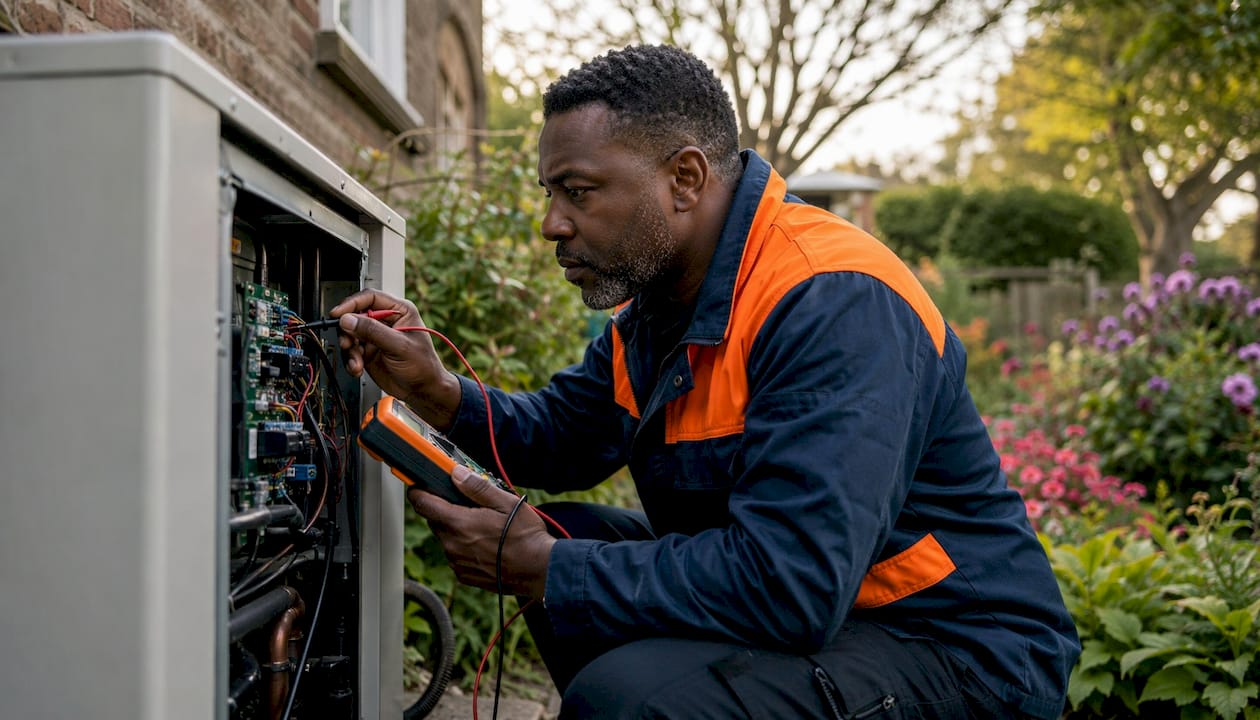
Should you repair your HVAC system or replace it?
This is the question most homeowners reach eventually, and the answer depends on age, repair history, and cost rather than any single symptom.
Older HVAC systems typically last 15–20 years, and well-maintained boilers can exceed that. Once a system passes the 15-year mark, the calculation shifts. Efficiency losses accumulate, parts become harder to source, and the cost of each repair starts to look less reasonable against the value of the unit.
- Repair makes sense when the system is under 10 years old, the fault is isolated and straightforward, and the repair cost is modest relative to the unit’s remaining value.
- Replacement becomes the better option when the system is over 15 years old, repairs are needed every season, or the cumulative repair costs are approaching the price of a new installation.
- Newer systems typically cut energy use by 20–30% compared to ageing units, which means the running cost savings often offset a significant portion of the replacement investment over time.
- Always obtain a detailed diagnostic report before committing to replacement. Frequent part replacements on an ageing unit can sometimes indicate improper original installation rather than end-of-life failure, and a proper diagnosis will distinguish between the two.
- Annual professional servicing is the single most effective way to extend a system’s working life. UK industry guidance for 2026 confirms that regular servicing also validates manufacturer warranties, which matters significantly when a repair claim arises.
For heat pumps specifically, repair costs above £1,500 typically make replacement more cost-effective, particularly on units over 12 years old. Common expensive repairs include compressor replacement (usually £1,500–£2,500) and outdoor coil replacement (£1,000–£2,000).
Understanding the benefits of regular HVAC maintenance before problems develop is far cheaper than reactive repair. If your system is approaching the 15-year mark, start budgeting for replacement rather than waiting for a complete breakdown.
Is your system telling you it needs attention? Akita can help.
If you have spotted any of the warning signs above, the next step is a professional diagnosis, not a guess. Akita specialises in domestic air conditioning installation and repair across Suffolk, Norfolk, and Essex, with transparent pricing and no-obligation assessments. Whether your system needs a straightforward repair or a full replacement, Akita’s engineers will give you an honest recommendation backed by proper diagnostics.
Key takeaways
A system showing multiple warning signs simultaneously is almost always heading for a breakdown; early professional diagnosis is consistently cheaper than emergency repair.
| Point | Details |
|---|---|
| Seven core warning signs | Unusual noises, weak airflow, energy bill spikes, foul odours, frequent cycling, cold spots, and visible leaks all indicate repair is needed. |
| Energy bills as an indicator | A rise of 20–30% without increased usage points directly to system inefficiency and warrants professional inspection. |
| Safety signs need immediate action | Yellow pilot flames, gas smells, and CO alarms require evacuation and emergency contact before any repair booking. |
| Gas Safe registration is the law | All gas-related HVAC repairs in the UK must be carried out by a Gas Safe registered engineer. |
| Repair vs replace threshold | Systems over 15 years old with recurring faults are usually more cost-effective to replace than to continue repairing. |