

What does an AC diagnostics cost, and is the fee refunded?
Expect to pay £90 to £150 for a professional air conditioning diagnostic visit, based on typical call-out and diagnosis pricing tables. Most engineers credit that fee against the repair bill if you go ahead with the work, so it rarely feels like money wasted.
If your system is blowing warm air, tripping its breaker, or making a noise it never used to make, the smartest move is to book a diagnostic before the fault gets worse or the compressor takes the strain. Before the engineer arrives:
- Write down exactly when the fault happens (constant, only on cooling mode, only after an hour of running)
- Note any error codes shown on the display or remote
- Have your system’s make, model, and serial number ready
Key Takeaways
A fair AC diagnostic costs a moderate amount typically credited against repair work in most cases, and should always include a written quote before parts are fitted.
| Point | Details |
|---|---|
| Expect a moderate fee | This covers the call-out plus up to one hour of assessment on most systems. |
| Fee often credited to repair | Ask upfront whether the diagnostic charge comes off the final repair bill. |
| Compressor faults are pricier | A failed compressor is among the costliest repairs and often points towards replacement instead. |
| Location and access change the price | Regional labour rates and difficult-to-reach units both push diagnostic quotes higher. |
| Akita credits diagnostics to repairs | Akita offers fixed call-out pricing across Suffolk, Norfolk, and Essex, with fees credited against repair work and membership plans that reduce future call-outs. |
Table of Contents
- What a diagnostic visit actually covers
- How much do common AC faults cost to fix?
- What makes AC diagnostic prices vary so much?
- Should you repair the AC or replace it?
- How can you cut the cost of a diagnostic visit?
- Do memberships and warranties reduce diagnostic fees?
- Why transparent pricing on diagnostics matters more than it seems
- Book a diagnostic with fixed, transparent pricing
- Sources
What a diagnostic visit actually covers
A standard visit is built around a simple structure: a call-out fee plus up to one hour of assessment, a pattern confirmed by fee pages across the industry. That hour buys a proper investigation, not a glance at the unit.
A typical assessment includes:
- Visual inspection of the indoor and outdoor units, pipework, and insulation
- Electrical testing of the compressor, fan motors, and control board
- Airflow checks across the evaporator and condenser coils
- Condensate drain inspection for blockages or slow flow
- Control and thermostat function checks
- Basic refrigerant pressure readings to flag obvious leaks or undercharging
Advanced leak detection, using nitrogen pressure testing or electronic sniffers, sits outside that standard hour and adds cost, because it takes specialist kit and more time to isolate a slow leak. Straightforward fixes, like resetting a tripped sensor or clearing a minor blockage, often get sorted on the spot. Anything needing parts or a full afternoon gets quoted separately before work starts.
Pro Tip: Ask whether the quoted diagnostic fee is fixed or time-based before booking. A fixed fee protects you if the fault turns out to be more complicated than expected.
How much do common AC faults cost to fix?
Diagnostic and call-out fees typically sit in the £90 to £150 band, and that figure is frequently credited against the repair once you approve the work. What happens after diagnosis depends entirely on what the engineer finds.
At the lower end, repairs are quick and relatively cheap:
- Condensate drain unblocking: often one of the cheapest fixes on the list
- Sensor or thermistor replacement: a low-cost part with straightforward fitting
- Fan motor replacement: moderate cost depending on unit size and access
Mid to high-cost repairs involve more labour, more specialist handling, or bigger components:
- Refrigerant leak repair and regas: pricier because it needs leak isolation, certified handling, and a full recharge
- Control PCB replacement: the board itself can be expensive, and diagnosis takes longer to confirm it’s the actual fault
- Compressor failure: among the most expensive single repairs on any system, and often the point where replacing the whole unit makes more financial sense than repairing it
On top of repair costs, out-of-hours call-outs typically carry a surcharge over the standard diagnostic fee, and some engineers add a carriage charge if a part has to be sourced and delivered urgently. Booking during normal working hours is the simplest way to avoid paying extra before any repair work has even started.
What makes AC diagnostic prices vary so much?
Two identical faults can generate two very different quotes, and the gap almost always comes down to a handful of factors explained in What Affects HVAC Service Pricing? - Strong Heating and Cooling rather than one engineer simply overcharging.
- Local labour rates: HVAC engineers charge more than many general trades because of the qualifications and specialist tools the job demands, and rates run noticeably higher in London and the south east than in other regions
- System type and access: a simple domestic split system takes far less time to assess than a multi-split, VRF, or rooftop commercial unit buried behind plant equipment
- Refrigerant handling: engineers who handle refrigerant must hold specific certification, a real overhead that gets reflected in day rates
- Parts availability: a common sensor is cheap and quick; a discontinued PCB for an older unit can mean delays and premium pricing
- Timing: evenings, weekends, and emergency same-day call-outs almost always cost more than a scheduled weekday slot
Ask an engineer to explain any of these before you accept a quote. A fair provider will tell you exactly which factor is driving the number up, as this breakdown of pricing structures makes clear.
Should you repair the AC or replace it?
Diagnostics exist to answer one practical question: is this system worth saving? The answer usually comes down to three checks.
- Check the age of the system. A unit under six or seven years old with a straightforward fault, like a sensor or fan motor, is almost always worth repairing. System age is one of the strongest signals for whether a repair pays off long term.
- Weigh the repair cost against a new unit. If a compressor has failed on an older system, the repair cost can sit uncomfortably close to the price of replacement, and a new unit comes with better efficiency and a fresh warranty.
- Look at the fault history. A system that’s had two or three leak repairs in as many years is telling you something. Repeated faults on the same unit rarely stop once you’ve paid for the third fix.
Always ask for a written quote for the repair alongside a replacement estimate. Comparing the two side by side, rather than reacting to whichever number the engineer mentions first, is the only way to make a genuinely cost-effective call. Akita’s guide to what drives a repair decision walks through this in more depth.
How can you cut the cost of a diagnostic visit?
The less time an engineer spends working out what’s wrong, the less you pay. A few minutes of preparation before they arrive makes a real difference.
- Record symptoms, error codes, and exactly when the fault occurs, then hand that over as soon as the engineer arrives
- Have your system’s make, model, and serial number ready, ideally photographed on your phone
- Clear the space around indoor and outdoor units so nothing needs moving before work can start
- Find your remote control and any past service records
- Ask on booking whether the diagnostic fee is credited against repairs, and request fixed pricing for parts and labour rather than an open-ended hourly rate
Pro Tip: If you manage a property with several AC units, ask about off-peak booking slots. Many engineers offer better availability, and sometimes lower rates, for midweek daytime appointments outside the summer rush.
Akita’s own troubleshooting checklist covers exactly what symptoms are worth noting down before you book.
Do memberships and warranties reduce diagnostic fees?
Ongoing agreements change the maths considerably. A typical membership plan bundles priority response with discounted or fully waived diagnostic fees, plus an annual health check that catches small issues before they become call-outs. Manufacturer or installer warranties can shift the cost entirely onto the provider if the fault is a known defect rather than wear and tear.
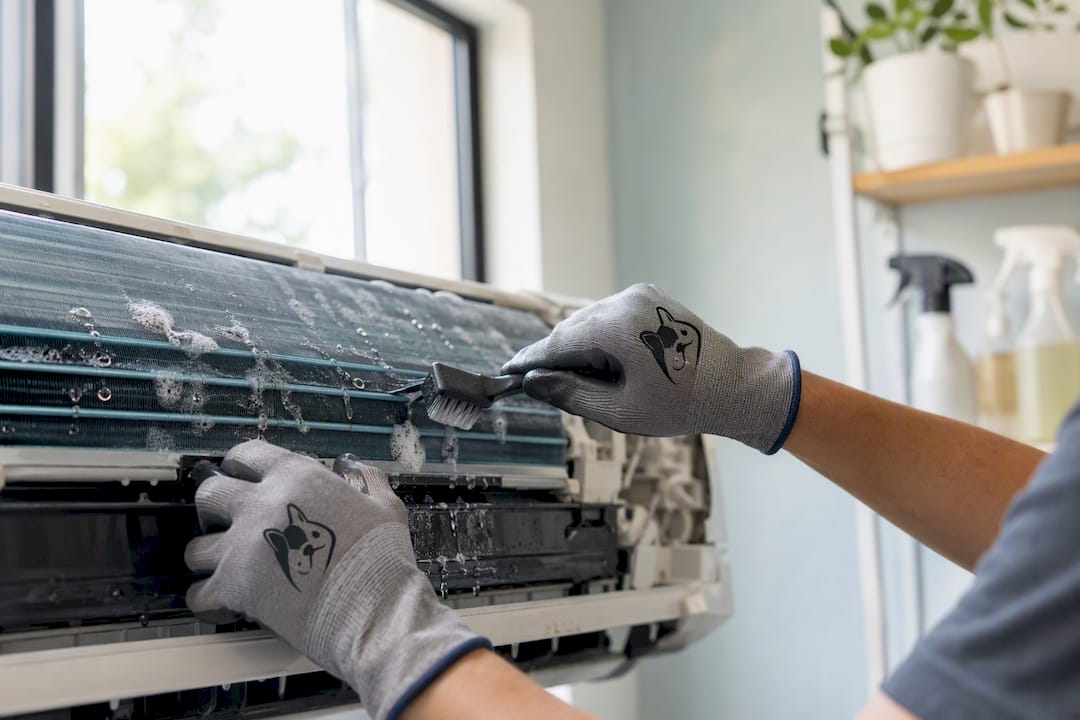
For anyone running multiple units, whether that’s a landlord with several rental properties or a business with a commercial system, a maintenance contract typically works out better value than paying for ad-hoc emergency visits one at a time.
Why transparent pricing on diagnostics matters more than it seems
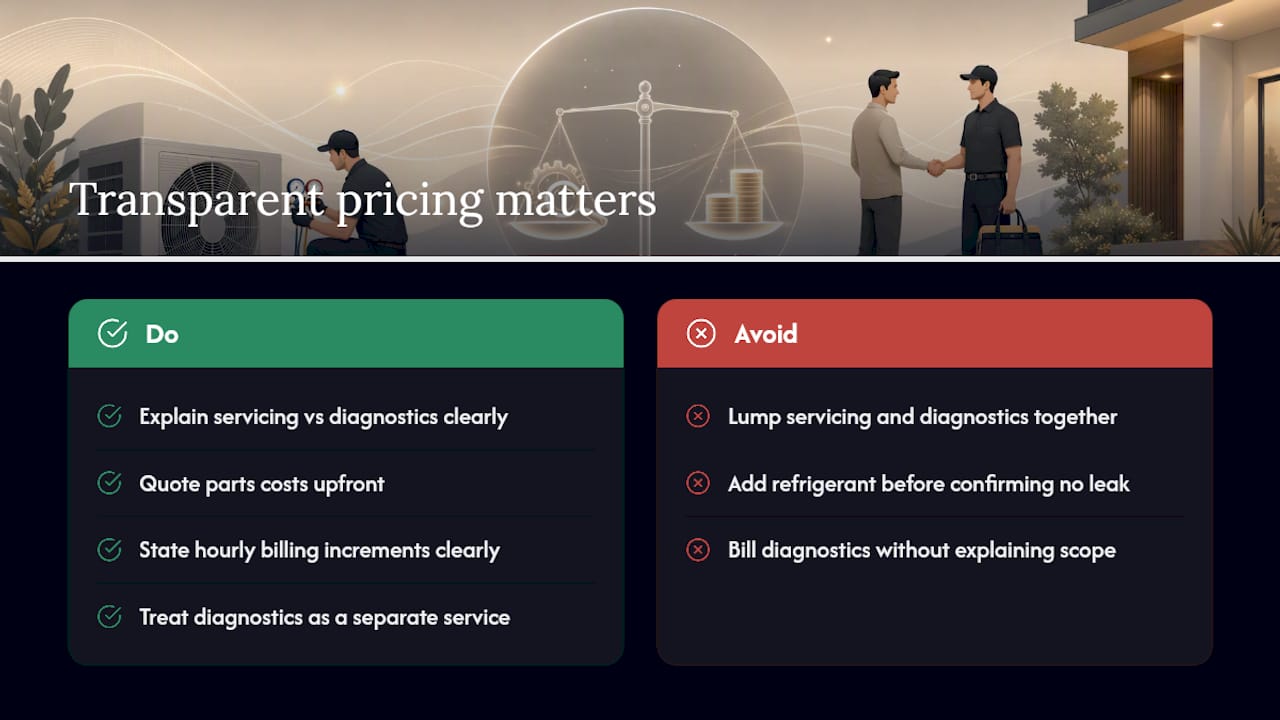
Homeowners often lump servicing and diagnostics together, but they’re not the same job. Servicing is preventative maintenance done on a schedule; diagnostics respond to an actual fault, and the billing works differently because the scope isn’t known until the engineer starts looking.
The confusion causes real friction. A customer books what they think is a “check-up” and gets a diagnostic bill because the system had already developed a fault nobody had spotted. Clear pricing structures, quoted parts, and hourly increments stated upfront solve most of that friction before it starts, which is exactly why we treat pricing transparency as non-negotiable rather than a nice extra. The habit of adding refrigerant to a system without first confirming there’s no leak is another one worth flagging: it treats a symptom while ignoring the cause, and the customer pays for gas that simply leaks straight back out.
— Akita
Book a diagnostic with fixed, transparent pricing
Akita runs a clear call-out and diagnostic structure across Suffolk, Norfolk, and Essex: you know the fee before the engineer arrives, and it’s credited against the repair if you go ahead with the work.
For properties with recurring issues or multiple units, an Akita membership can waive or reduce diagnostic fees altogether and gives you priority booking ahead of the summer rush. If diagnostics point towards a system that’s simply reached the end of its working life, Akita’s domestic air conditioning installation and commercial air conditioning installation pages set out fixed-price options rather than leaving you to guess at replacement costs. Before your visit, have your system’s model number, a note of the symptoms, and your service history ready. To get a diagnostic in the diary, visit Akita’s air conditioning repair and diagnostics page and book a slot that suits your schedule.
Sources
AC repair cost calculator · Diagnostic fee structures · HVAC engineer day rates · AC servicing frequency guide · Akita’s AC diagnostics guide · HVAC diagnostics and energy efficiency
- Air Conditioning repair cost calculator UK 2026 | Free tool
- Rates & Packages - Diagnostic Fee | Kensington Engineers
- HVAC engineer costs 2026: day and hourly rate guide
- How often should air conditioning be serviced? | UK guide