

How to extend HVAC lifespan: a practical guide
TL;DR:
- Consistent scheduled maintenance, including filter changes and professional servicing, significantly extends HVAC system lifespan. Proper airflow management and timely repairs prevent component wear and energy waste, saving costs and avoiding failure. Regularly inspecting and sealing the building envelope further reduces strain on the system, ensuring reliable operation for years to come.
Extending your HVAC system’s lifespan is primarily a function of consistent, scheduled maintenance rather than luck or equipment brand. A well-maintained system from manufacturers such as Trane can last 20 to 30 years, while a neglected one may fail in under a decade. The practical steps covered here, from filter changes and airflow management to bi-annual professional servicing, give homeowners and property managers in Suffolk, Norfolk, and Essex a clear framework for protecting one of the most expensive assets in any property. Follow these HVAC maintenance tips and you will spend less on emergency repairs and more on reliable, efficient comfort.
How to extend HVAC lifespan through filter care and airflow
Filter condition is the single highest-leverage factor affecting how hard your HVAC system works. A clogged filter forces the unit to draw air through a restricted medium, raising static pressure across the entire system and accelerating wear on the blower motor, heat exchanger, and coils. The fix is straightforward but frequently overlooked.
Trane recommends changing filters every one to three months and maintaining at least two feet of clearance around outdoor units. That two-foot rule matters because outdoor coils need unrestricted airflow to transfer heat efficiently. Shrubs, fencing, or stored garden equipment placed too close create a warm air pocket around the unit, forcing it to work harder during peak summer demand.
CBS News advises monthly filter checks and replacement every one to three months, with more frequent changes for households with pets or allergy sufferers. This is not overcaution. Pet dander and fine particulates load a filter far faster than a standard household environment, and a saturated filter can reduce airflow by 30 to 50 percent within weeks.
Indoor registers and return air grilles deserve equal attention. Furniture pushed against a return vent, or a register blocked by a rug, creates the same restriction as a dirty filter. The system compensates by running longer cycles, which compounds wear across every moving component.
- Check filters monthly and replace every one to three months, or sooner if visibly grey
- Keep outdoor units clear of vegetation, garden tools, and stored items within a two-foot radius
- Clear snow from heat pump outdoor units promptly, as blocked outdoor units reduce heat exchange efficiency
- Confirm all indoor registers and return grilles are fully open and unobstructed
- Vacuum register covers twice yearly to remove dust build-up that restricts airflow
Pro Tip: If you have a property with multiple zones or a large duct network, walk the building each season and physically check every register. It takes ten minutes and catches blockages that no thermostat reading will reveal.
What professional maintenance routines increase HVAC durability?
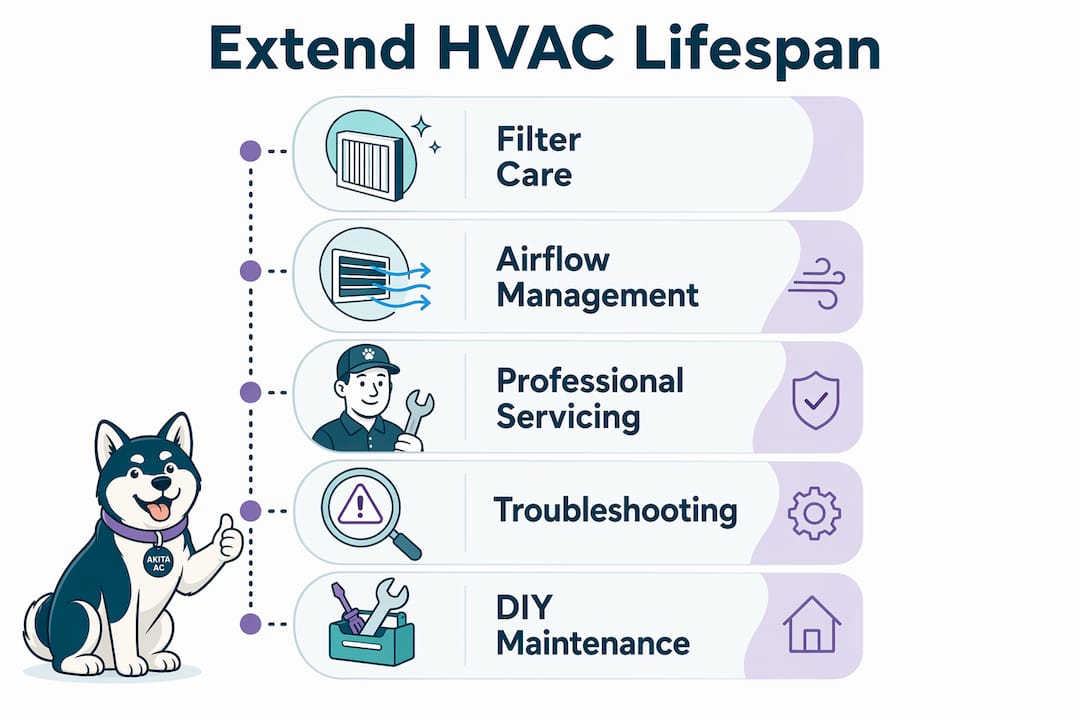
Bi-annual professional servicing is the single most impactful scheduled action you can take to prolong HVAC unit life. Regular servicing adds 3 to 7 years to system lifespan and can reduce energy consumption by 10 to 30 percent. Those are not marginal gains. For a system that costs several thousand pounds to replace, that translates directly into deferred capital expenditure.
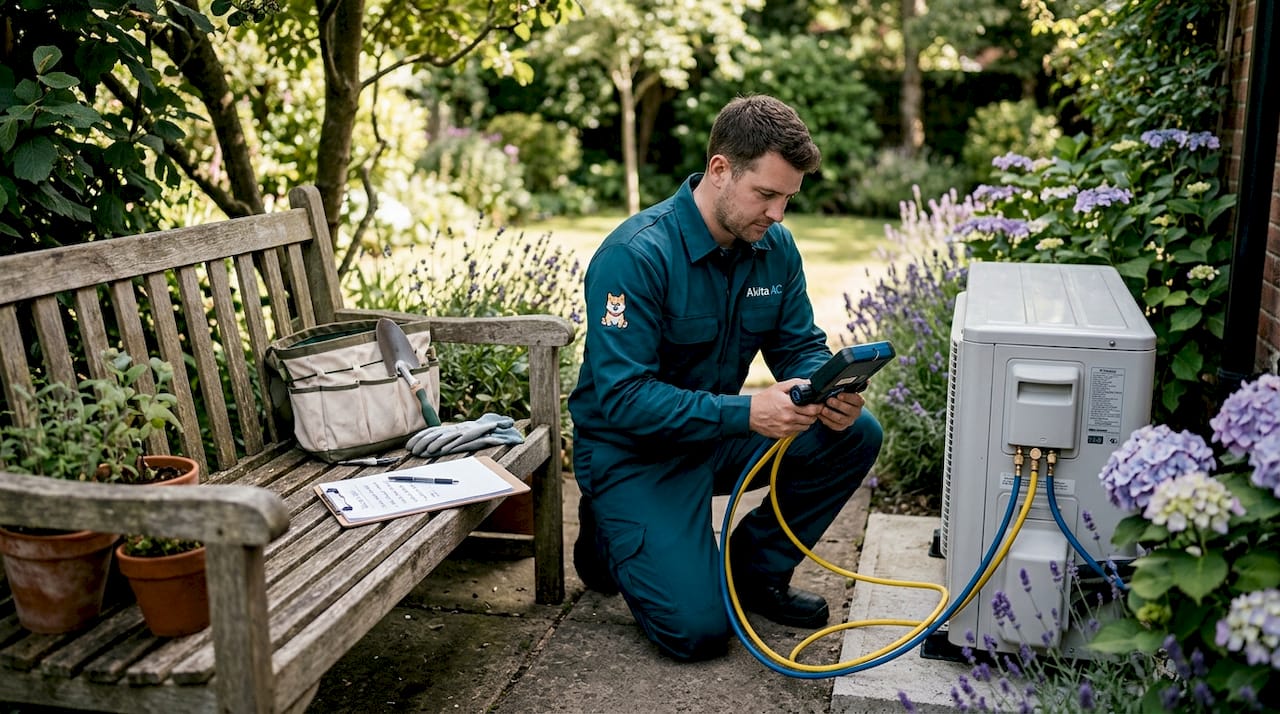
Trane’s guidance aligns with industry best practice: schedule spring and autumn visits covering the air conditioning system before summer and the heating system before winter. Heat pumps, which run year-round, require servicing twice yearly without exception. Each visit should cover a defined set of tasks that a qualified engineer completes systematically.
A professional spring service for air conditioning typically includes:
- Checking and topping up refrigerant levels if required
- Cleaning evaporator and condenser coils to restore heat transfer efficiency
- Inspecting and clearing the condensate drain to prevent blockages and microbial growth
- Testing electrical connections, capacitors, and contactors for wear
- Measuring airflow across the coil and comparing against manufacturer specification
- Calibrating the thermostat and testing all safety controls
An autumn heating service follows a parallel structure, focusing on heat exchanger integrity, burner operation, and flue safety. The key principle is that a professional identifies minor issues, a worn capacitor, a slightly low refrigerant charge, a partially blocked drain, before they become component failures. Waiting until the system stops working on the hottest or coldest day of the year guarantees both a higher repair bill and a longer wait for an engineer.
Pro Tip: Book your spring service in February or March, before the first warm spell. Engineers’ diaries fill quickly once temperatures rise, and scheduling before peak season means you choose the appointment time rather than accepting whatever slot remains.
How do common HVAC problems reduce system longevity?
The most common HVAC problems share a root cause: gradual efficiency loss that goes unaddressed until it becomes a failure. Dirty coils, worn parts, and poor calibration increase monthly energy bills and place sustained stress on components that were designed to operate within specific load parameters. Understanding these problems helps you spot them early.
Dirty evaporator and condenser coils are the most widespread issue in systems that receive infrequent servicing. A thin layer of dust on a coil surface acts as insulation, reducing the rate of heat transfer and forcing the compressor to run longer to achieve the same temperature change. Over a full cooling season, this compounds into significant compressor wear.
Blocked or leaking ductwork raises system static pressure, which has the same effect as a clogged filter. Airflow constraints from blocked vents and dirty coils increase static pressure, causing accelerated wear and energy waste. In older properties with flexible ductwork, sections can collapse or disconnect entirely, sending conditioned air into wall cavities rather than living spaces.
Drafty windows, unsealed loft hatches, and gaps around pipework penetrations force the HVAC system to condition air that immediately escapes the building envelope. The system never reaches the set temperature, so it runs continuously. This is one of the most underestimated contributors to premature system wear, and it costs nothing to address with draught-proofing tape and expanding foam.
- Inspect ductwork annually for disconnected joints, collapsed sections, or visible gaps
- Seal window and door frames with draught-proofing strips to reduce the heating and cooling load
- Check the condensate drain line each spring, as blockages cause water damage and system shutdowns
- Listen for unusual sounds such as rattling, grinding, or high-pitched squealing, which signal worn bearings or loose components
- Monitor your energy bills month on month. A sudden increase without a change in usage pattern is a reliable early warning sign
For a broader view of how household maintenance connects to HVAC performance, the annual home maintenance checklist from Fenelon Handyman Services offers a useful month-by-month framework that integrates HVAC tasks with wider property upkeep.
What tools and tips help with effective DIY HVAC maintenance?
Effective DIY maintenance does not require specialist equipment. The tools that cover the majority of homeowner tasks are inexpensive and widely available. What matters more than the tools is the discipline to use them on a consistent schedule.
| Task | Tool or material needed | Recommended frequency |
|---|---|---|
| Filter replacement | Replacement filter (correct MERV rating for your system) | Every 1 to 3 months |
| Outdoor unit clearance | Garden shears, brush, or vacuum | Monthly during growing season |
| Register and grille cleaning | Vacuum with brush attachment, damp cloth | Every 3 months |
| Condensate drain flush | Distilled white vinegar, funnel | Every 6 months |
| Coil surface inspection | Torch, coil cleaner spray | Annually, before professional service |
One advanced technique worth adopting from commercial HVAC practice is pressure differential monitoring. Rather than replacing filters on a fixed calendar schedule, filter replacement guided by pressure drop exceeding 0.5 inches of water gauge above the clean baseline gives a more accurate picture of actual filter loading. In practice, this means a simple differential pressure gauge fitted across the filter housing. It costs under £30 and removes the guesswork entirely, particularly in properties with high dust loads or multiple occupants.
The Akita residential HVAC maintenance checklist covers the seven key tasks in sequence, with guidance on timing and frequency that translates directly into a repeatable annual routine.
Pro Tip: Set a recurring calendar reminder on the first day of each month to check your filter. Pair it with a task you already do, such as checking smoke alarm batteries, and it becomes automatic rather than something you remember only when the system starts struggling.
How to troubleshoot and avoid common HVAC maintenance mistakes
The most damaging mistake homeowners make is treating HVAC maintenance as reactive rather than scheduled. A system that appears to be working is not necessarily working efficiently, and the gap between adequate and optimal performance is where lifespan is lost.
“The best time to service your HVAC system is before you need it. By the time you notice a problem, the underlying cause has usually been developing for weeks or months.” This principle, consistent across industry guidance from Trane to Compare HVAC Pro, reflects the reality that most component failures are preceded by measurable warning signs that routine inspection would catch.
Recognising the early signs of inefficient operation protects both the system and your budget:
- Uneven heating or cooling across rooms suggests blocked ducts, a failing zone valve, or an undersized system running beyond its design capacity
- Higher energy bills without a change in usage pattern point to dirty coils, low refrigerant, or a failing compressor
- Short cycling, where the system switches on and off rapidly, indicates a refrigerant issue, an oversized unit, or a failing thermostat
- Excess humidity indoors during summer suggests the evaporator coil is not dehumidifying effectively, often due to low refrigerant or a dirty coil surface
- Unusual odours, particularly musty smells, indicate microbial growth in the condensate system or ductwork
Delaying a scheduled tune-up by even one season creates a compounding problem. A minor refrigerant undercharge identified in spring costs a fraction of the compressor replacement it causes if left through a full summer of operation. The HVAC maintenance and energy savings relationship is direct: systems that receive consistent care consume less energy and fail less often.
Key takeaways
Consistent filter maintenance, bi-annual professional servicing, and proactive airflow management are the three practices that most reliably extend HVAC lifespan and reduce operating costs.
| Point | Details |
|---|---|
| Filter replacement frequency | Replace filters every one to three months to prevent strain and efficiency loss. |
| Bi-annual professional servicing | Spring and autumn services add 3 to 7 years to system lifespan and cut energy use by up to 30 percent. |
| Outdoor unit clearance | Maintain two feet of clearance and clear snow promptly to protect heat exchange efficiency. |
| Early problem recognition | Monitor energy bills and listen for unusual sounds to catch issues before they become failures. |
| Seal the building envelope | Draught-proofing windows and doors reduces HVAC workload and prevents premature wear. |
What we have learned from years of HVAC maintenance in Suffolk and Norfolk
The homeowners who get the longest life from their systems share one habit: they treat HVAC servicing like a car service. They book it before they need it, they do not skip it when the system seems fine, and they act on the engineer’s recommendations rather than deferring them to next year.
What surprises most people we work with is how much of the damage we see is self-inflicted, not through negligence but through a lack of information. Furniture blocking return vents, filters left unchanged for two years, outdoor units buried under overgrown hedging. None of these are deliberate choices. They are simply things that fall outside the average homeowner’s awareness until something goes wrong.
The other pattern we observe consistently is the cost of timing. Homeowners who call us in July, when their system has stopped working during a heatwave, face longer waits, higher call-out costs, and in some cases, a system that has sustained damage that a spring service would have prevented entirely. Booking in February feels unnecessary when it is cold outside. By August, it feels obvious.
Our honest advice is this: set up a bi-annual reminder, book with a qualified engineer before the season changes, and do the filter checks yourself in between. That combination covers the vast majority of what determines whether your system lasts fifteen years or twenty-five.
— Akita
Let Akita protect your HVAC investment
Akita provides professional air conditioning installation and maintenance across Suffolk, Norfolk, and Essex, with service plans designed to keep your system running at peak efficiency year after year. Our engineers follow a structured seasonal servicing programme that covers refrigerant checks, coil cleaning, airflow testing, and full safety inspections, giving you documented proof of maintenance and protecting any manufacturer warranty. For homeowners and property managers who want the reliability of a scheduled service without the hassle of coordinating it themselves, our domestic air conditioning installation and maintenance service offers priority scheduling, transparent pricing, and flexible finance options. Contact Akita to book your next service before the season changes.
FAQ
How often should HVAC filters be changed?
Change HVAC filters every one to three months as a baseline. Households with pets, allergy sufferers, or high dust loads should check filters monthly and replace them as soon as they appear visibly grey or loaded.
What does bi-annual HVAC servicing include?
A professional spring service covers refrigerant levels, coil cleaning, condensate drain inspection, electrical component testing, and airflow measurement. An autumn service focuses on heating components, heat exchanger integrity, and safety controls.
How many years can regular maintenance add to an HVAC system?
Routine servicing adds 3 to 7 years to system lifespan. Well-maintained systems can operate reliably for 20 to 30 years, compared to under a decade for neglected units.
When is the best time to book an HVAC service?
Book your cooling system service in late winter or early spring, before the first warm spell. Scheduling before peak demand guarantees appointment availability and prevents emergency breakdowns during the hottest or coldest days of the year.
Can household draught-proofing genuinely extend HVAC lifespan?
Yes. Sealing gaps around windows, doors, and pipe penetrations reduces the heating and cooling load on the system, which means shorter run cycles and less wear on the compressor and blower motor over time.